


The global energy landscape is undergoing one of the most significant transformations in modern history. As artificial intelligence and the infrastructure needed to expand it unfolds at historic speeds, tech giants, utility operators, and policymakers are colliding with the moment to grab their share.
The sector is now demanding round-the-clock, consistent baseload power. Nuclear energy, which was once sidelined by decades of regulatory inertia and public skepticism, has catapulted to the position as a cornerstone of this new world. From bipartisan policy support on Capitol Hill to Wall Street capital flows and big tech power agreements, the momentum behind nuclear energy is accelerating.
At the same time, scaling a nuclear renaissance isn’t as simple as flipping a switch. Long lead times, complex supply chains, domestic fuel deficits, and shifting investment landscapes present both friction points and unprecedented opportunities.
We’ve unpacked the latest developments into five critical charts to help you navigate this massive energy transformation, along with analysis and strategic takeaways.
5 Nuclear Energy Charts to Watch Now
I. The AI & Data Center Power Surge
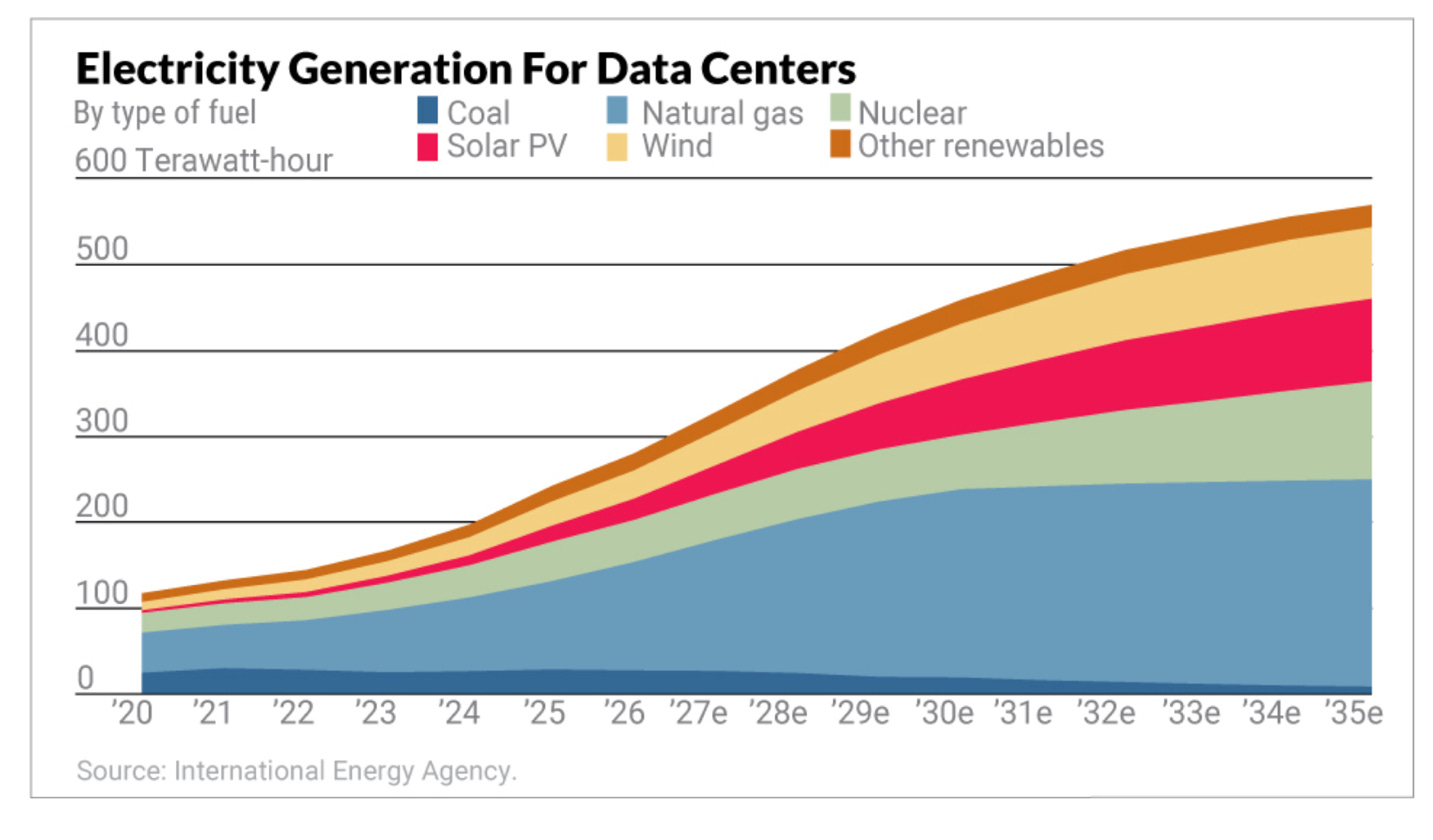
Data center power consumption is projected to surge dramatically over the next decade, climbing toward nearly 600 terawatt-hours by 2035. While natural gas will anchor near-term expansion of energy needs, nuclear generation and renewables (solar and wind) largely account for the lion’s share of long-term structural additions. The critical constraint for hyperscalers (massive data centers) is both generating power and ensuring constant, round-the-clock reliability.
What this means for strategic investors: Hyperscalers (think Microsoft (MSFT), Amazon (AMZN), Alphabet (GOOGL), Meta (META)) will increasingly sign long-term, high-premium power purchase agreements (PPAs) directly with nuclear operators. For strategic investors, looking beyond traditional utility valuations will be key to portfolio selection. That means instead of focusing on typical nuclear operators and co-located power assets, finding less traditional, off-grid or behind-the-meter baseload power to optimize performance.
II. Uranium’s 5-Year Outperformance Cycle
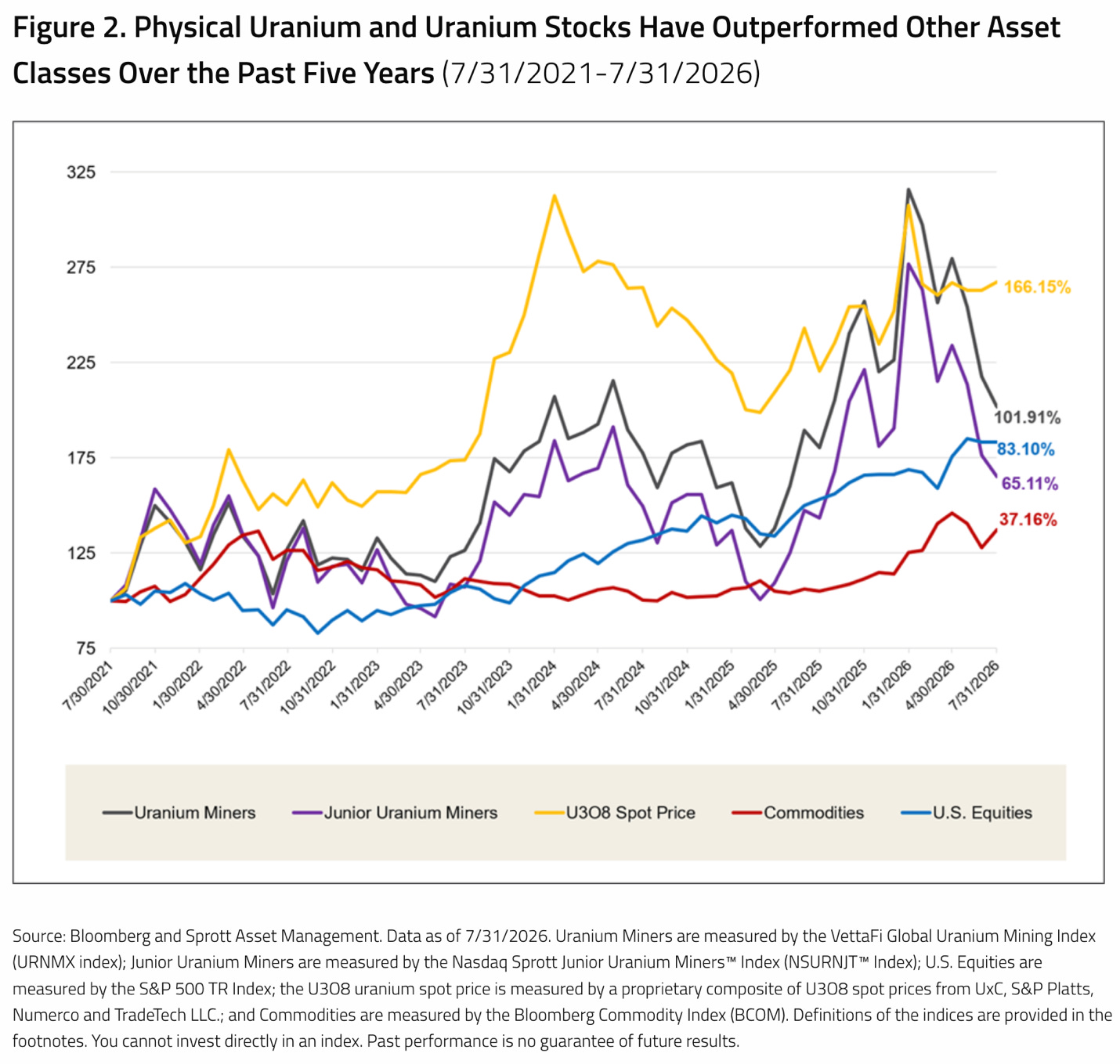
During the 5-year period from 2021 through mid-2026, physical uranium and uranium mining equities have considerably outpaced broader commodities and traditional U.S. equity benchmarks. Physical uranium leads the group with gains topping 166%, followed by senior uranium miners (+101.91%) and junior miners (+65.11%), outperforming the S&P 500 (SPY) (+83.10%) and broad commodities (+37.16%). While mining shares have experienced volatility and pullbacks at times, physical uranium pricing shows a persistent supply deficit.
What this means for strategic investors: The physical commodity market remains tightly constrained. That’s important because it has served to create a strong floor for long-term contract pricing between energy utilities and producers. Because of recent consolidation in mining equities, the moment we’re in has provided an entry point. What we’ve seen is that a strategy which combines physical uranium exposure (to mitigate operational mining risks) with top-tier, low-cost senior producers can offer balanced exposure for a portfolio over the long-term.
III. The U.S. Nuclear Pipeline: SMRs, Restarts and Uprates
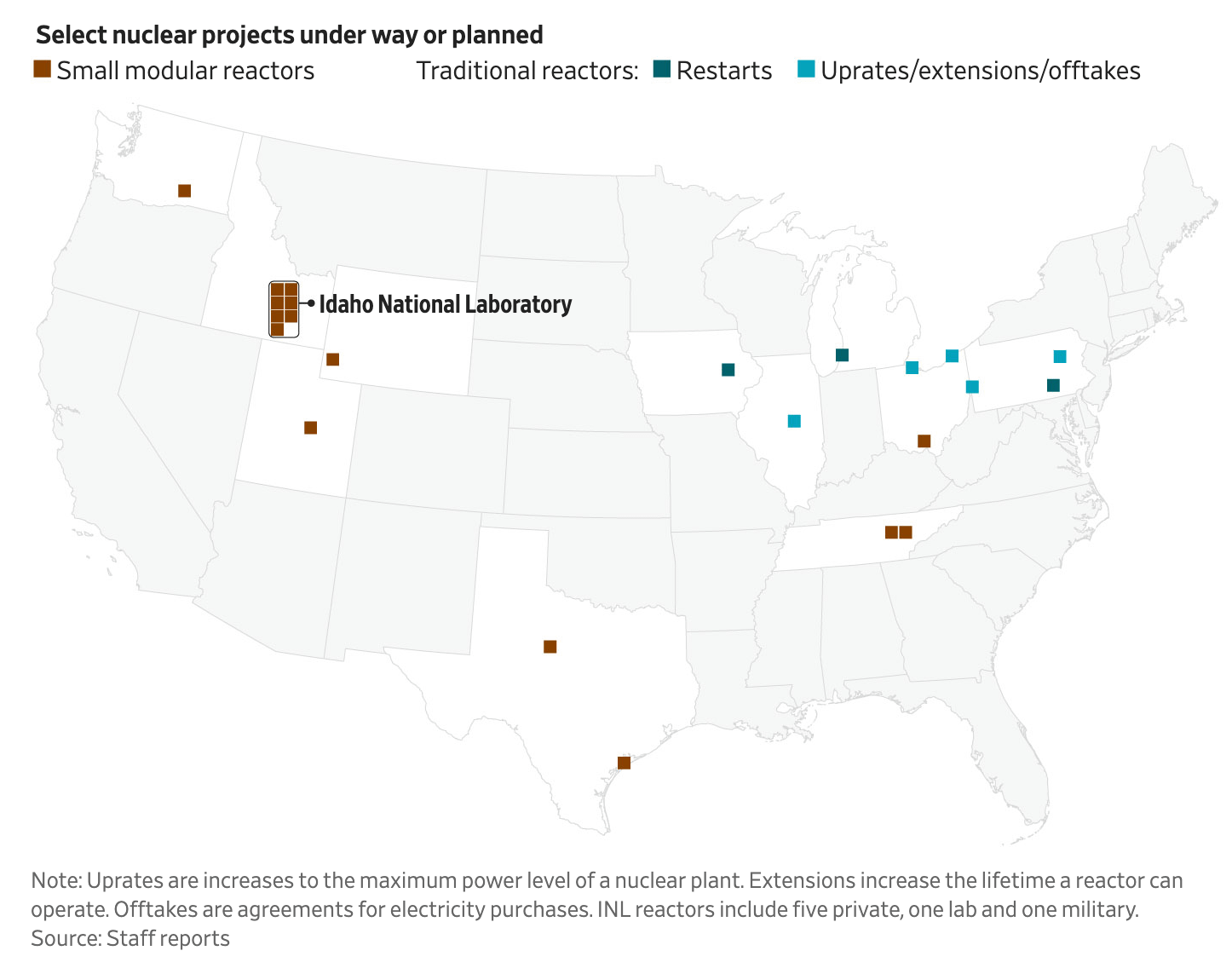
The picture for U.S. nuclear development is diversifying rapidly across three distinct tracks: Small Modular Reactor (SMR) development (heavily concentrated in the West and around key innovation hubs like Idaho National Laboratory), traditional plant restarts (in the Rust Belt and Mid-Atlantic), and capacity uprates/extensions at existing facilities. This reflects an urgent push to take advantage of existing licensed infrastructure while also laying the regulatory and infrastructure groundwork for next-generation modular deployment.
What this means for strategic investors: Near-term opportunities belong to engineering and utility firms that are able to make life extensions, uprates, and plant restarts happen. That’s because they largely have a regulatory pathway in place and are already established/credible. On the horizon, we see SMR pure-plays and advanced reactor developers as growth plays. That’s because long-term investors who are focused on developers with strong government backing (e.g., DOE cost-share awards) see how commercial partnerships with industrial end-users can be beneficial.
IV. Shifting Tides in Public and Political Sentiment
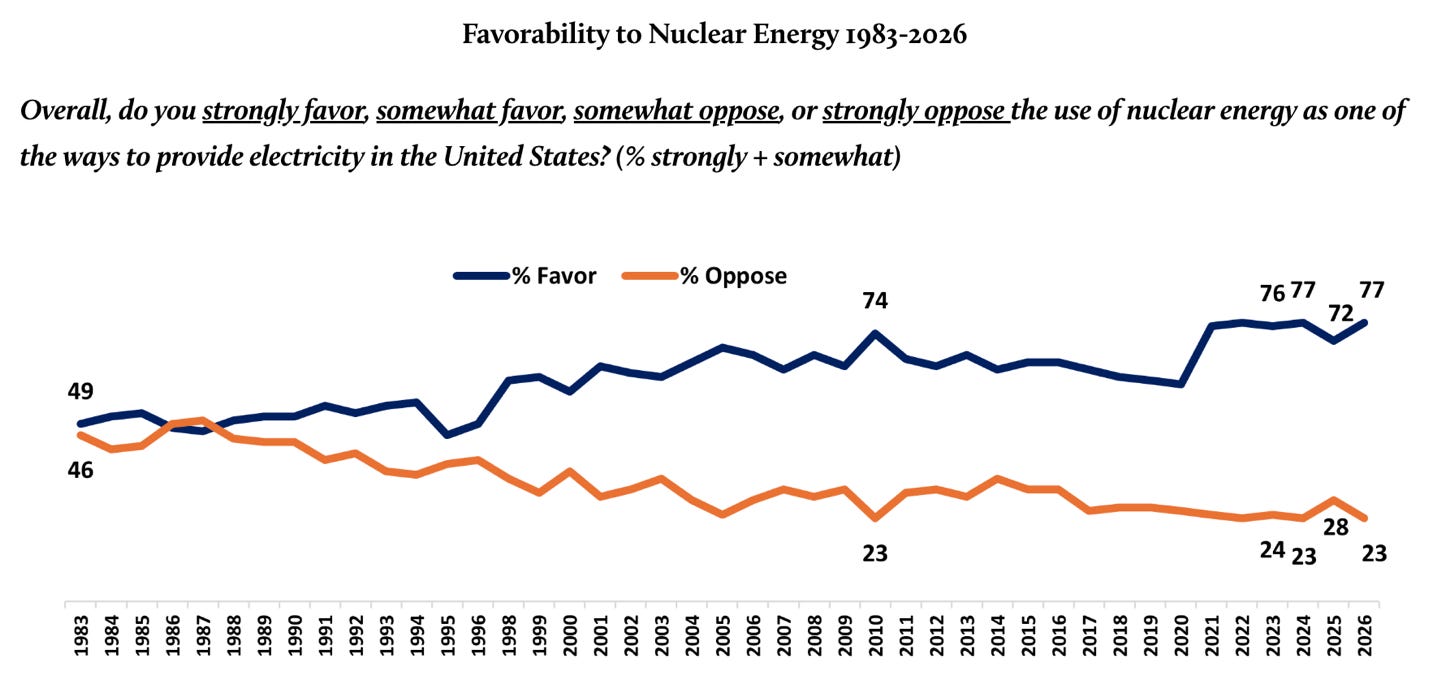
Public favorability toward nuclear energy in the U.S. is near record highs at 77%, while opposition is near historic lows at 23%. This shift in sentiment, up from historical lows in the 1980s and 1990s, has created an unprecedented moment in Washington. Nuclear energy is increasingly framed not as an ideological battleground, but as an economic, national security and grid-reliability imperative.
What this means for strategic investors: Favorable public sentiment drastically lowers political and regulatory risk. This opportunity also serves as a jolt for legislative support, streamlined licensing pathways and even elusive bipartisan federal incentives (such as production tax credits and loan guarantees). Companies operating within the domestic nuclear supply chain will benefit from potential de-risked capital expenditures and stronger policy positions across political election cycles.
V. The Critical Fuel Bottleneck: U.S. Import Dependency
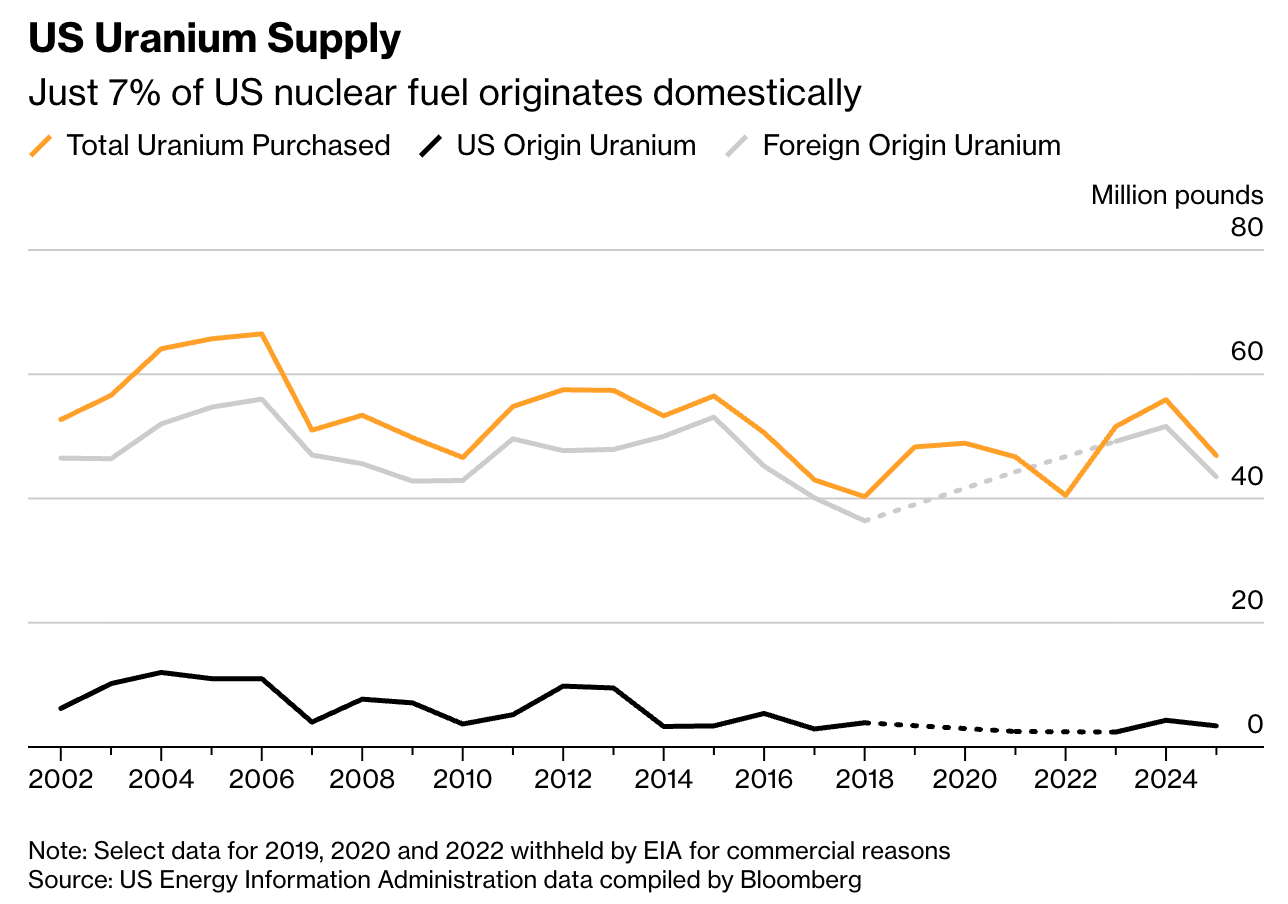
Despite surging demand for nuclear generation, domestic fuel security remains a major vulnerability. That’s because just 7% of U.S. nuclear fuel originates domestically, leaving energy utilities reliant on foreign sources for over 90% of their supply. With geopolitical fractures widening and import restrictions tightening around Russian enriched uranium, Western utilities will continue to face a severe bottleneck. That is increasingly true across the front end of the fuel cycle, from mining and conversion to enrichment and fuel fabrication.
What this means for strategic investors: The domestic supply-demand disconnect makes Western fuel-cycle infrastructure one of the highest-conviction themes for investors looking to the energy space. Strategic investors should target domestic conversion, enrichment capabilities, and allied-nation (U.S., Canada, Australia) resource development.

Comments
Log in or sign up to join the conversation.