

As we move further into the calendar year, we are getting more clarity on what has been happening with jobless claims. Historically, these have been a good short leading indicator for the unemployment rate and more broadly for the economy as a whole. What is currently happening with claims is both residual post-pandemic seasonality and a change in regime to lower claims that started at mid-year last year.
First, to this week’s numbers: initial claims rose 4,000 to 212,000. The four-week moving average rose 750 to 220,750. And with the typical one-week delay, continuing claims declined -31,000 to 1.833 million.
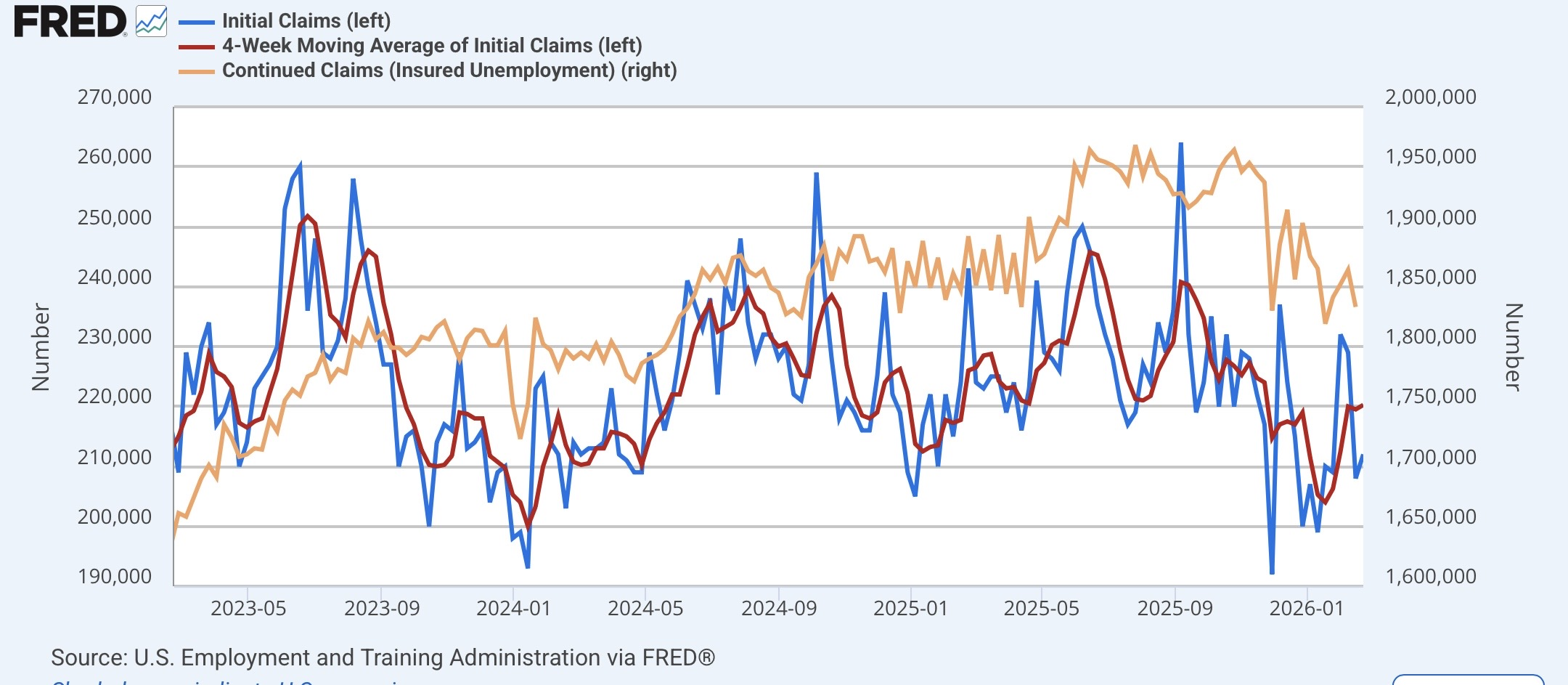
The one-week delay in continuing claims this week is likely unusually important because these reports for the week, including President’s Day, meaning government offices were open for one fewer day.
Note, though, that the post-pandemic seasonality, in which claims make lows at the turn of the year, rise to highs at mid-year, and then decline back down through the end of the year, looks more apparent now as we see initial claims and their four-week average moving higher since January.
But as usual, the YoY% change is more important for forecasting purposes; and it is here that we see continued evidence of a change in regime. On a YoY basis, initial claims were lower -7.1%, the four-week average down -2.5%, and continuing claims down -0.8%.
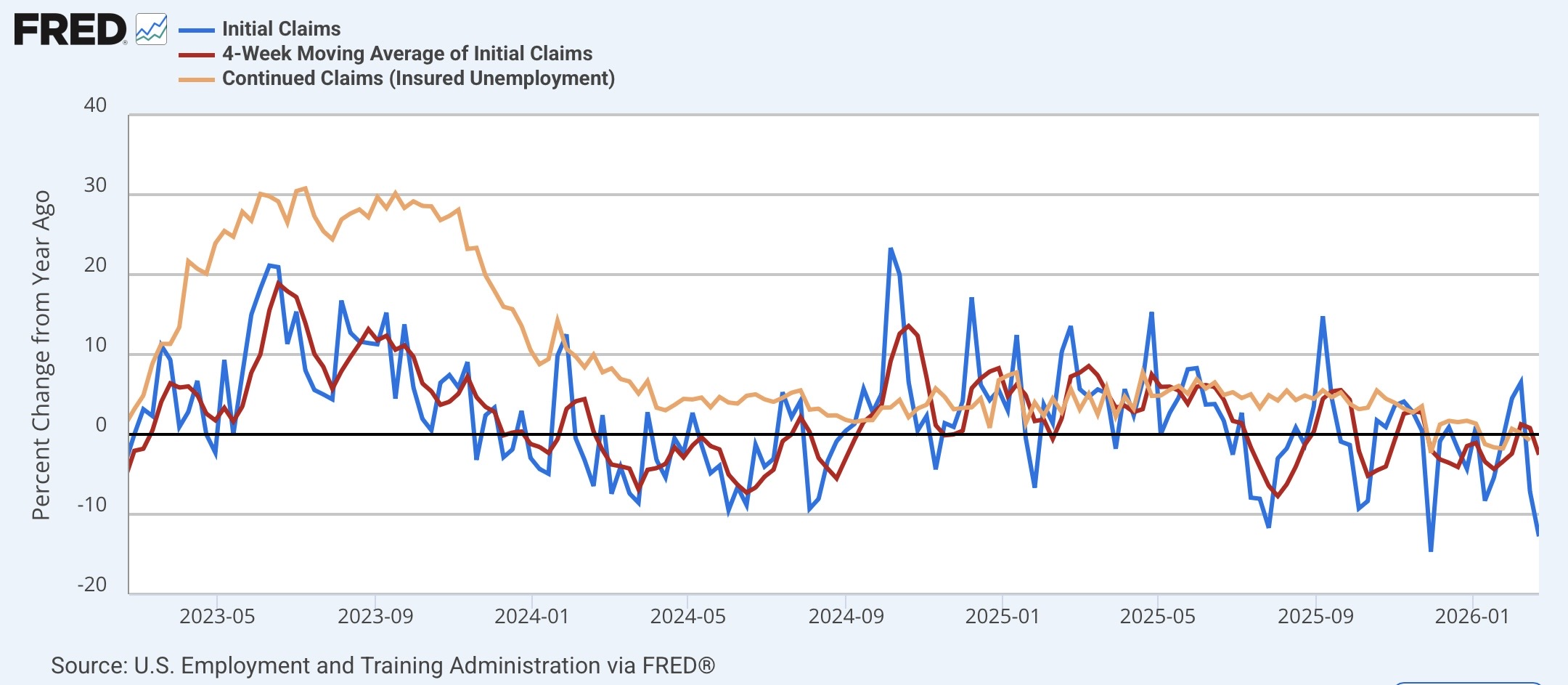
This is the trend of generally lower claims we have seen since the end of last June. This trend is a positive for the economy over the next few months. The reason for this regime change may have to do with the nearly complete cessation in new immigration, and fear and deportations driving immigrants already here not to show up for work or to file claims, leading to lower jobless claims. Since we have also seen a gain in AI data center-related employment, it could reflect a lower number of layoffs in nonresidential construction employment as well.
Finally, since we are close to the end of the month, let’s take a look at what this likely means for the unemployment rate (red in the graph below, left scale) in the next monthly jobs reports:
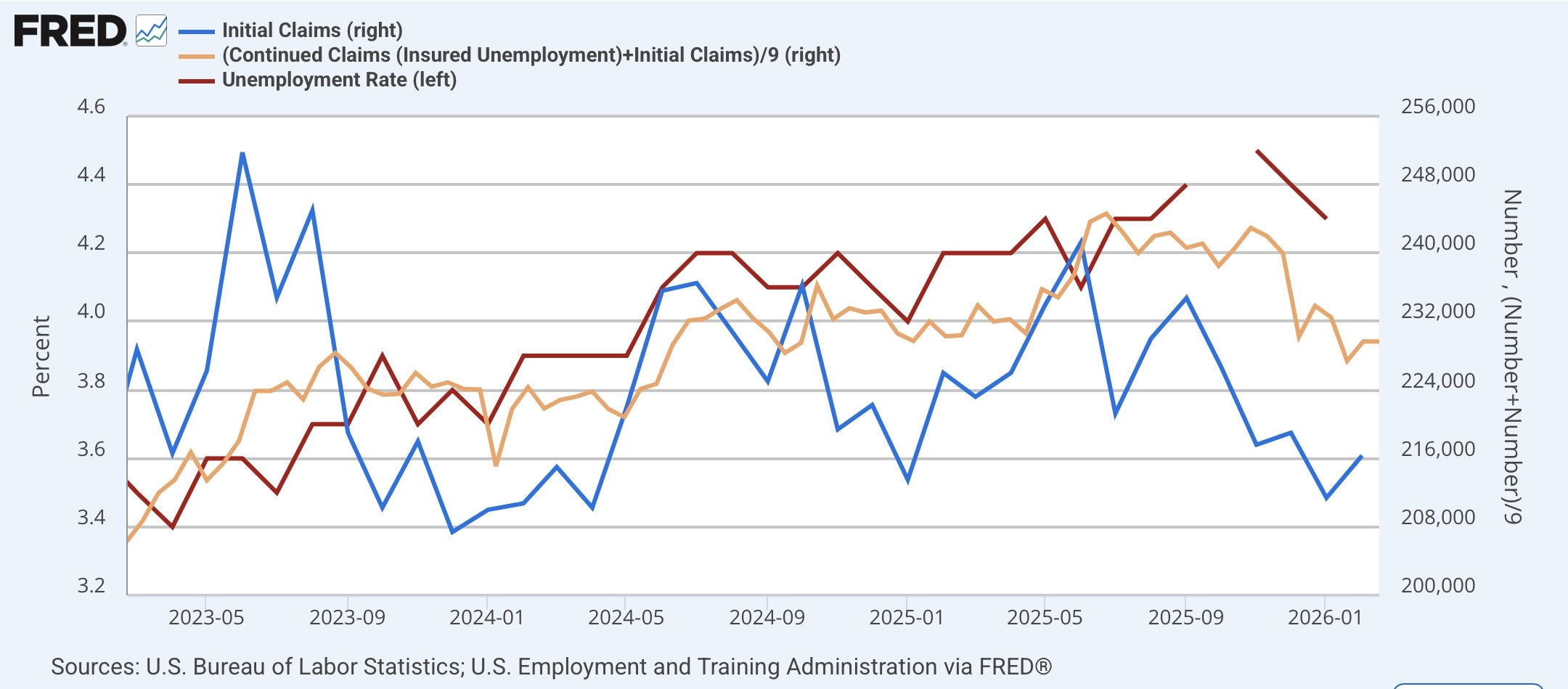
The downward trend in jobless claims strongly implies a declining trend in the unemployment rate over the next several months, towards 4.2% or even 4.1%.


Comments
Log in or sign up to join the conversation.