

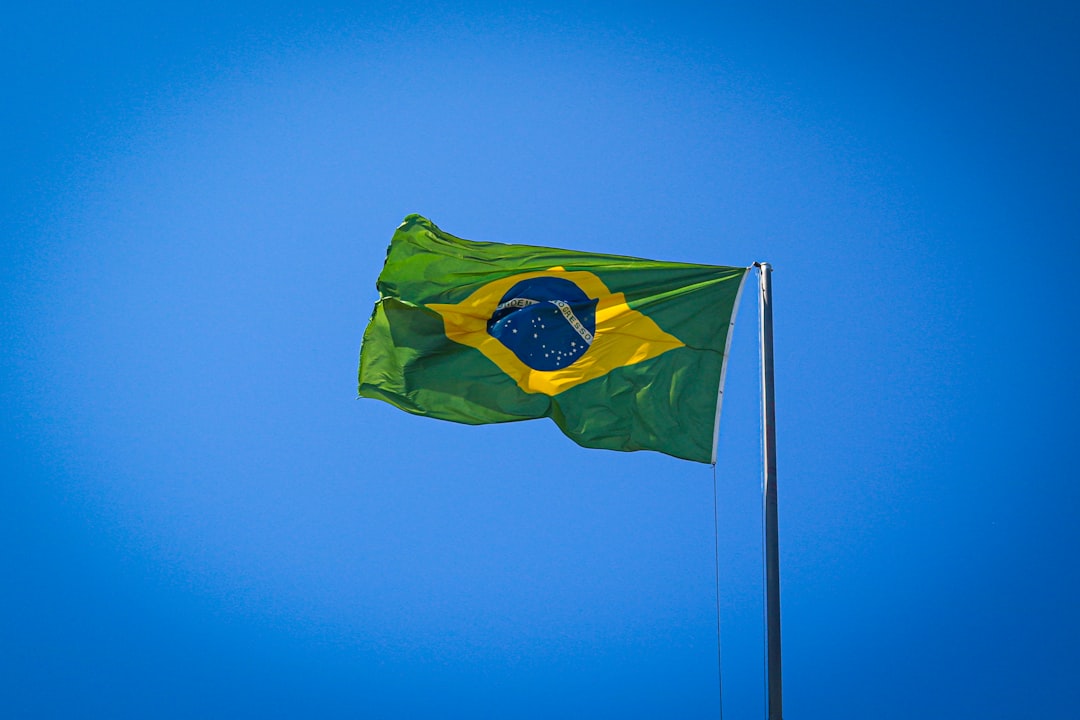
The global landscape is shifting rapidly, and while many headlines are understandably dominated by events in the Middle East, a massive opportunity is quietly taking shape in the Western Hemisphere.
We are thrilled to welcome back Brazilian geopolitical and economic expert Roberto Georg Uebel to share his latest dispatch and analysis. Roberto provides a firsthand look at a historic turning point in Brazil’s mineral policy. In fact, it is one that has captured the full attention of the White House.
As the race for critical minerals intensifies, Brazil is positioning itself as a dominant, strategic player. It is a market that savvy investors should be watching very closely right now.
Enjoy, Nomi.
After months of anticipation, the presidents of Brazil and the United States, Luiz Inácio Lula da Silva and Donald Trump, held a long meeting this Thursday, May 7, at the White House. The meeting lasted around three hours, an unusual length in presidential diplomacy. It addressed a wide range of issues, from the easing of trade tariffs to strategic topics such as rare earths and critical minerals.
What you should know is that this meeting followed a significant Brazilian policy event that received less attention internationally. Just hours before Lula da Silva landed at Joint Base Andrews, accompanied by a select group of ministers and executive secretaries, Brazil’s Chamber of Deputies unanimously approved the National Policy for Critical and Strategic Minerals. The vote took place amid a pre-election environment, in a harmony unusual in Brazilian politics, which has been marked by deep polarization.
That approval marks an important turning point in Brazil’s economic and industrial strategy amid the global race for resources essential to the energy transition, the technology industry and national sovereignty, as President Lula himself emphasized after the White House meeting. More than a new regulatory framework for mining, the policy seeks to position Brazil as a leading player in one of the most important geoeconomic disputes of the 21st century: the control of strategic mineral supply chains, including rare earths, lithium and other inputs that are essential for batteries, fertilizers, electric motors and defense technologies.
This sweeping legislation establishes an unprecedented governance structure for the sector, combining economic incentives, environmental requirements and industrial guidelines. Among its main provisions is the creation of the Special Council for the Industrialization of Critical and Strategic Minerals, linked to the National Council for Mineral Policy. This council will be responsible for defining which substances will be considered strategic, assessing projects and overseeing changes in corporate control among companies in the sector. In practice, the measure brings mineral policy closer to the logic of economic security and strategic planning by the Brazilian government.
One of the central points of the new policy, which Lula da Silva presented to Trump, according to participants in the meeting, is an attempt to break with Brazil’s historical role as a mere exporter of mineral commodities. The law prioritizes projects that carry out processing and industrial transformation stages within Brazilian territory, creating tax incentives proportional to the level of processing performed in the country. The goal is to integrate critical minerals into Brazil’s production chain, strengthen higher value-added sectors and reduce external dependence in areas considered sensitive.
At the same time, the bill seeks to respond to international pressure for sustainability and traceability. Access to funding incentives will be conditioned on compliance with environmental and social requirements, including dam safety standards, mechanisms to prevent environmental damage and dialogue with affected communities. The text also creates a low-carbon mining certificate and incorporates the concept of urban mining, encouraging the recovery of strategic minerals from electronic waste and discarded batteries.
In the financial area, another topic addressed in the meeting between the two presidents is the proposal, which expands the range of instruments to stimulate the sector by creating a Mineral Activity Guarantee Fund and authorizing incentivized debentures and tax credit models linked to company revenues.
It also establishes mandatory investments in research, development and innovation, with a focus on geological mapping, new extraction technologies and solutions to mitigate environmental impacts. The creation of a national mineral research network, bringing together universities, technology centers and companies, signals an effort to connect mining, science and industrial policy.
The key takeaway for the natural resource and commodities arena is that this new policy reflects a broader shift in how mining is perceived in Brazil’s public debate and private investment arena. Historically associated mainly with the export of raw materials, mining is now being treated as an instrument of industrial policy, economic security and geopolitical projection. In a context of growing competition among major powers for critical minerals, Brazil is seeking to transform its abundance of natural resources into industrial capacity and strategic influence.
Shortly after Lula da Silva returned to Brasília; after spending less than 24 hours in Washington, the bill was sent to the Federal Senate for a vote. It is also expected to be approved unanimously, since one of the requirements presented by U.S. counterparts for the creation of working groups on the topic over the next 30 days is a clear regulatory framework open to discussion.
By adopting this stance, the Brazilian government has signaled its desire to maintain strategic relations with Washington and rebalance its dependence on other powers, especially China and the European Union. One of Lula’s remarks in this regard was that Brazil is interested in attracting more U.S. investment in order, in his words, to balance relations with China, Russia and European countries.
Given Brazil’s turbulent pre-election environment, this suggests that Brasília expects Washington to offer not only relief from trade tariffs, but also a loyal partner in strategic sectors and an institutional guarantor for Lula da Silva’s government as he moves toward a fourth term.

Comments
Log in or sign up to join the conversation.