

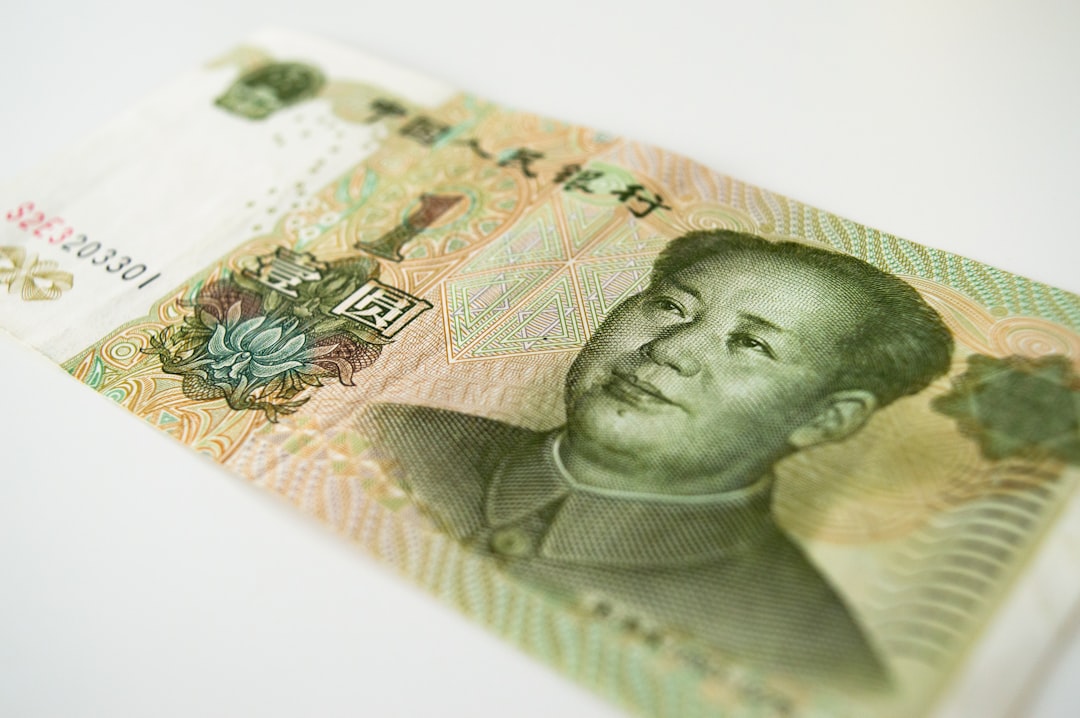
Last Friday, ICBC (Industrial and Commercial Bank of China), the world’s largest bank by assets, suspended retail leveraged precious metals margin trading on the Shanghai Gold Exchange. The cutoff date was July 24. Clients were told to close positions, liquidate holdings, or take physical delivery. After that, access through mobile banking, online platforms, and branches goes dark.
ICBC was acting alongside a who’s who of Chinese financial institutions – Postal Savings Bank of China, Ping An Bank, China Guangfa Bank, and China Construction Bank all adopted similar measures in the weeks before the deadline.
These institutions went about halting new account openings, closing dormant accounts, refunding idle margins, and raising the cost of staying in. Margin requirements on some products were pushed as high as 140%.
The banks say they’re protecting retail investors from volatility. And there’s certainly volatility to protect them from. Gold surged past $5,500 earlier this year before falling nearly 30%. Silver ran to $121 in January and now trades near $58.
Chinese regulators remember what happens when retail traders get caught on the wrong side of leveraged commodity products. In 2020, Bank of China’s “Crude Oil Treasure” product imploded when oil futures went negative, leaving retail investors owing money they never expected to lose. That wound hasn’t fully healed.
That’s why the official explanation for what just happened to silver makes sense.
But here’s the thing. This isn’t a temporary suspension.
Chinese banks have been gradually dismantling retail paper trading infrastructure since 2020. New retail accounts linked to the Shanghai Gold Exchange (SGE) were paused that year. By December 2025, banks were actively closing dormant accounts and returning unused margins. July 24 was the final cutoff. The paper layer is now gone and not coming back.
What’s left is physical pricing. And that’s worth understanding, because the Shanghai Gold Exchange doesn’t work like Western exchanges. On COMEX, the vast majority of contracts are settled in cash. Traders buy and sell paper claims on metal that most of them never intend to touch.
The SGE was built differently. It’s structured around actual withdrawal and delivery of physical bullion. When a contract settles on the SGE, metal moves. That’s been the design since the exchange opened in 2002.
When leadership Beijing shuts down the speculative paper layer on top of an exchange that was already anchored to physical metal, what remains is a system where Chinese investors must buy the real thing. Bars, coins, ETFs backed by physical holdings. In short, leadership in China is implementing policy that serves to pull its citizens out of paper silver and speculative leverage.
The Move That Didn’t Make Headlines
What most people missed is that six months earlier, Beijing started pulling physical silver off the global market too.
That’s when the political apparatus in Beijing reclassified silver under “dual-use export controls,” the category reserved for materials with both civilian and military applications. Exporting silver from China now requires government authorization. Only 44 companies have been approved to ship the metal abroad during the 2026-2027 period. Beijing has direct control over how much refined silver leaves the country.
If that sounds familiar, it should. It’s the same playbook China ran with rare earths. And with tungsten. And with antimony.
Those controls remain firmly in place today.
This matters because even when silver is mined in Mexico, Peru, or Australia, much of it still passes through Chinese smelters and refineries before it becomes usable metal. Beijing has put itself in charge of whether silver leaves or stays and where it moves.
Controlling the supply chain of silver is a bigger deal than it might sound. Elements such as rare earths, antimony, tungsten are used in highly specific, high-value applications. However, silver is in everything. We see it in solar panels. Its critical to electric vehicles. It drives AI data centers. Even military electronics and satellites draw on it. Medical equipment. 5G infrastructure. You name it.
That’s because silver’s one of the best electrical conductors on Earth, and there’s no easy substitute for most of its applications. You can’t just swap in copper or aluminum and get the same type of performance.
That makes demand inelastic. In the real world, if coffee doubled in price, some people might drink less. If insulin doubled however, diabetics would still need to buy it. Silver demand sits closer to insulin than coffee.
Meanwhile, supply can’t respond quickly because about 70% of the world’s silver comes up as a byproduct of copper, lead, and zinc mining. Output depends on those metals’ economics, not silver’s price.
Even without China’s moves, the strain has been visible for a while. It’s what took silver to $121 earlier this year. The metal has since pulled back to $58, largely on the back of CME margin hikes that forced leveraged longs to sell. But the margin hikes didn’t change mine supply. They didn’t change industrial demand. They didn’t fill the deficit. The fundamentals that drove silver to $121 are still intact.
Comments
Log in or sign up to join the conversation.