Lowe's Confirms The Renovation Freeze

Lowe's cut its full-year outlook as high mortgage rates and a "renovation freeze" stifle big-ticket DIY spending.

For the last two years, one of the simplest models in home improvement retail has been the housing lock in effect. Many homeowners secured very low mortgage rates during the pandemic, and moving today would mean giving up that loan for a much more expensive one. Housing turnover matters because buying a house often triggers spending on repairs, flooring, paint, appliances and renovations. This morning, Lowe's (LOW) confirmed that this freeze is lasting longer than expected. The company cut its full year comparable sales outlook from a range of flat to up 2% to flat, while moving its sales, margin and earnings outlook to the bottom of the previous ranges. Demand remains stronger in Pro, home services and online, but expensive discretionary do it yourself projects are still being delayed.

Main Note

Lowe's and the Renovation Freeze

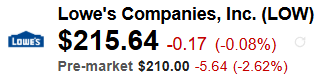
Lowes (LOW) Quote

Verdict: The housing cycle is dictating retail results. Lowe's is managing its operations well, but it cannot force consumers to take on major discretionary projects when financing costs remain prohibitive.

What happened

Lowe's reported second quarter sales of $25.96 billion, up from $23.96 billion one year ago, while comparable sales increased just 0.2%. Diluted earnings per share were unchanged at $4.27, while adjusted earnings per share increased 1.6% to $4.40. Both figures included an $0.11 benefit from tariff refunds. The real story was the full year guidance cut. Lowe's now expects $92 billion in sales, flat comparable sales and adjusted earnings of approximately $12.25 per share, all at the bottom of its previous guidance ranges. Pro, home services and online sales remained positive, but discretionary do it yourself demand continues to struggle.

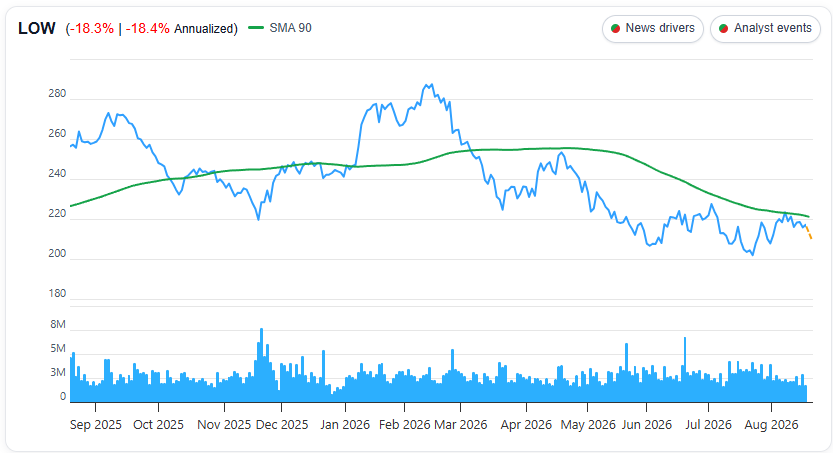
Lowes (LOW) Price Chart

Lowes (LOW) Price Chart

Why it matters

The home improvement industry relies on housing turnover. Buyers usually spend heavily on paint, flooring, and appliances in the first year after moving. With existing home sales essentially frozen by high mortgage rates, that natural demand catalyst simply does not exist right now.

What changed in the thesis

Investors who bought into home improvement retailers earlier this year were betting on a second half recovery. This guidance cut forces the market to delay that timeline. The story now requires patience, shifting the focus from a quick consumer rebound to a broader structural wait for lower interest rates.

What the market may be missing

There were real signs of progress underneath the weak outlook. Online sales increased 15.7%, while Pro and home services helped Lowe's produce its fifth consecutive quarter of positive comparable sales. However, the headline sales growth should not be confused with a broad organic recovery. Comparable sales increased just 0.2%, gross margin fell from 33.8% to 33.0% and operating margin declined from 14.5% to 13.7%. The digital and professional investments appear to be gaining traction, but Lowe's has not yet turned that growth into stronger operating leverage.

Valuation and expectations

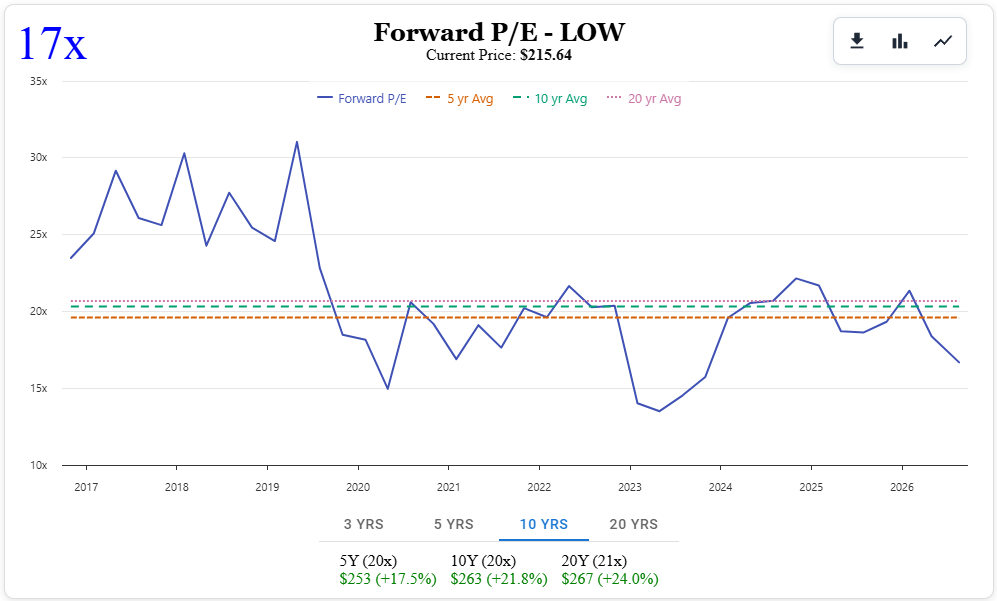
Analysts will have to lower revenue and margin estimates for the rest of the year to match the new guidance. However, the stock multiple might not compress much. If the market believes this is the absolute bottom of the cycle, investors may look past the current weakness and value the company on normalized future cash flow.

Lowes (LOW) Forward PE Ratio

Lowes (LOW) Forward PE Ratio

Bottom line

Lowe's is heavily exposed to the bond market, mortgage rates and housing turnover right now, but the Federal Reserve does not control this story by itself. Lower short term interest rates would help, but Fed rate cuts will not guarantee lower mortgage rates if inflation, oil prices and government borrowing keep long term Treasury yields elevated. For long term investors, the better signs of a recovery will be improving big ticket demand, stronger comparable sales and margins that stop moving in the wrong direction.

Pre Market Pulse

  • The 10 year Treasury yield remains near 4.7% after briefly touching roughly 4.75% yesterday. Long term yields are being pressured by concerns about government borrowing, stubborn inflation and the effect of higher oil prices, not particularly strong recent economic data.

  • The Nasdaq Composite fell 1.3% yesterday as higher long term borrowing costs and weakness in heavyweight technology stocks weighed on the market.

  • West Texas Intermediate crude oil rose roughly 0.5% yesterday to $84.94 per barrel and moved higher again this morning as hopes for a resolution to the conflict in the Middle East faded.

Why it matters this morning

Long term Treasury yields help anchor mortgage rates, making the bond market especially important for home improvement retailers. The Federal Reserve controls short term rates, but mortgage rates will not necessarily fall unless long term inflation expectations and Treasury yields also move lower.

Peer Read Through

Home Depot (HD)

In yesterday's newsletter, we looked at how Home Depot's expansion into the professional market is supporting growth while share buybacks remain paused as the company reduces debt. Lowe's results show why that professional strategy is becoming more important across the industry, but the two companies are not producing identical results. Home Depot reported 1.7% comparable sales growth and reaffirmed its full year outlook, while Lowe's comparable sales increased just 0.2% and management moved its guidance to the bottom of the previous ranges. The macroeconomic pressure is similar, but Home Depot appears to be absorbing it better right now.

Floor & Decor (FND)

This specialty retailer is highly sensitive to housing turnover because new floors are a classic post move renovation. The extended slump in existing home sales directly pressures their growth model.

Group takeaway

The entire home improvement sector remains sensitive to interest rates and housing turnover, but company specific execution still matters. Home Depot and Lowe's both produced positive comparable sales and higher total revenue, even without a major renovation recovery. The difference is where that growth is coming from. Smaller projects, professional customers, acquisitions and online sales are helping offset weak do it yourself demand. Investors need to separate organic comparable sales from growth created by acquisitions and business expansion.

What to Watch

  • Monthly existing home sales data to measure housing turnover.

  • The next Federal Reserve policy decision and corresponding bond market reactions.

  • Comparable store sales in the do it yourself segment next quarter.

  • Updates on the integration of recent professional acquisitions like Artisan Design Group.

Bottom line

The clearest signal for a turnaround will not come from a retail earnings report. It will come from a sustained drop in the 10 year Treasury yield.

STOCKS IN THIS ARTICLE

Also Mentions:

Comments