


If any Fed governors overstep the bounds of forward guidance, Chair Kevin Warsh can create as much confusion as needed before the FOMC blackout period begins. He speaks at an IMF fireside chat this Thursday, October 15, at 11:30 PM ET. It will give him the final say on what the Fed may or may not do at the October FOMC meeting, and I am certain it will lack clarity, offer few details, and keep everyone guessing as we head into the October 28 decision.
But with CPI and PPI already released by then, the meeting’s fate may already be sealed, and whatever he adds may prove insignificant. CPI is expected to rise by 0.6% m/m in September, a hot reading. More importantly, the October 2025 government shutdown is coming back in the y/y CPI prints, starting in October and running forward, and that is expected to push November CPI to 3.8% y/y and Core CPI to around 2.7%. In my view, the shutdown led headline and core CPI y/y rates to understate inflation.
Also, don’t be surprised if the PPI report suddenly matters less. The PCE report will no longer pull portfolio management fees from the PPI. That isn’t to say the PPI won’t matter, but the PCE no longer includes the report’s most volatile part.
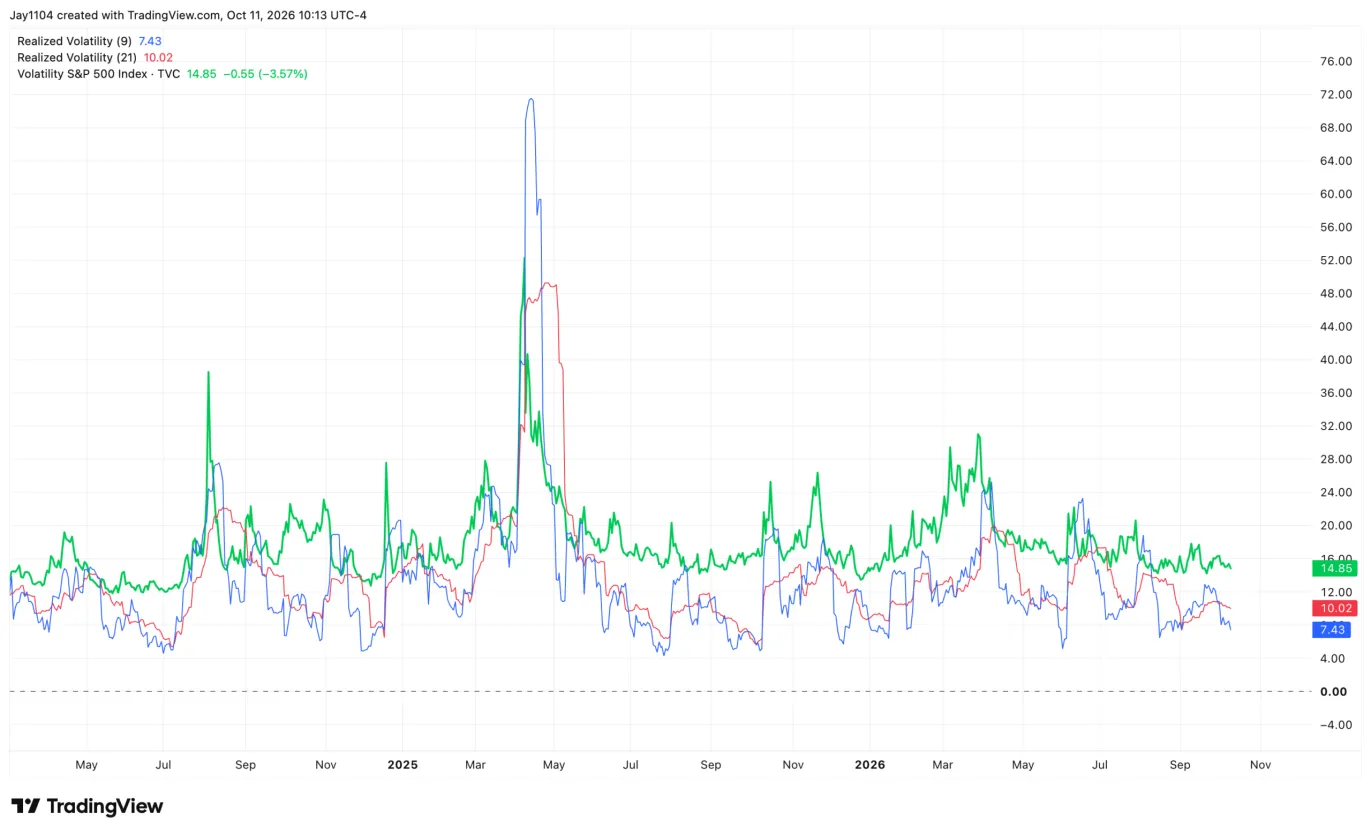
Moving on, to add to the volatility video and write-up presented on Saturday, I noticed, or perhaps forgot to check, what the S&P 500’s realized volatility is these days. The 9-day realized volatility is only 7.4, and the 21-day realized volatility is only 10.02. That means realized volatility is very low, and the S&P 500 needs daily moves of less than about 46 bps and 63 bps, respectively, to keep realized volatility from rising. We are at a point where the room for the VIX to fall seems limited. With CPI, PPI, retail sales, Kevin Warsh speaking, plus earnings season, a Fed meeting, and the upcoming midterm election, I think the market is unlikely to trade that tightly over the next three weeks.
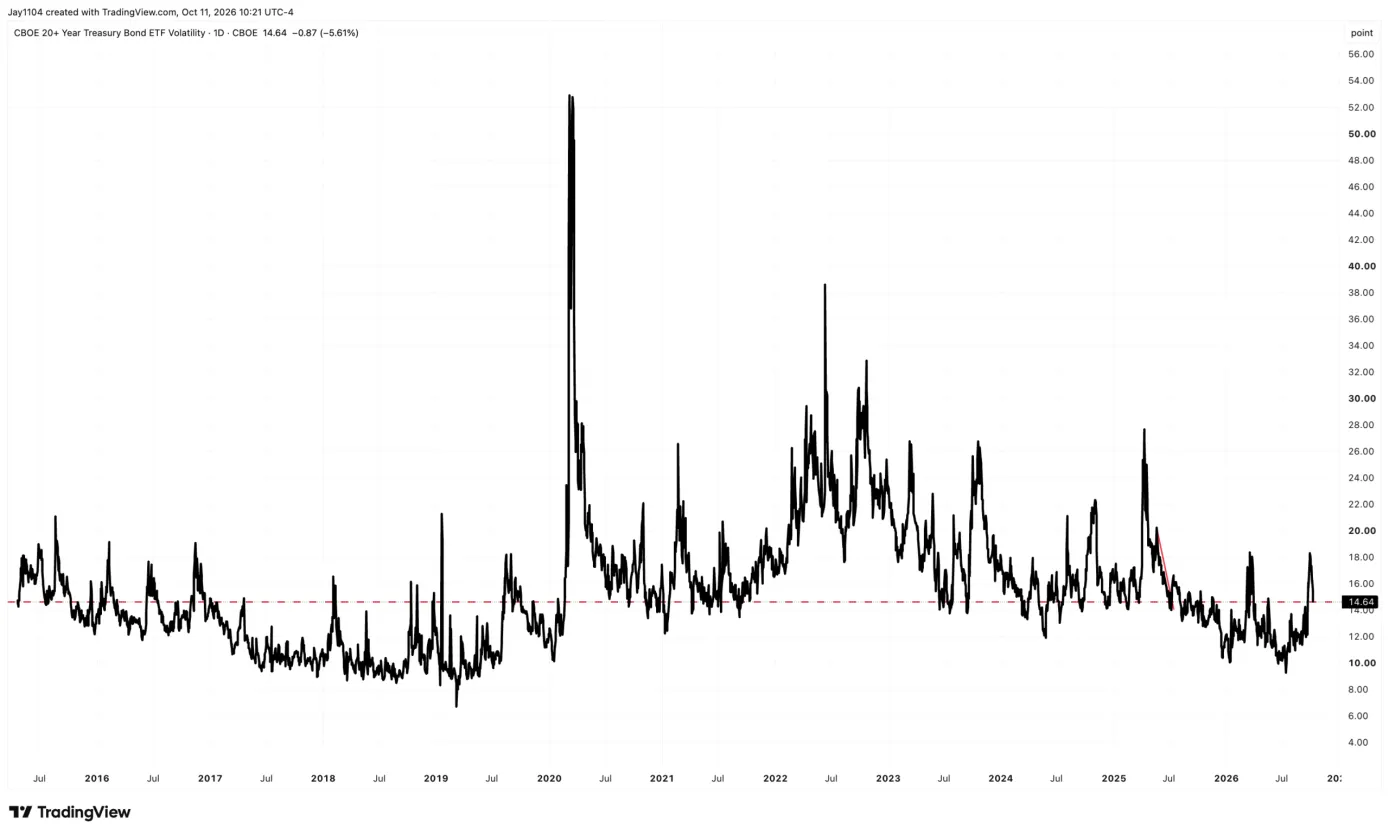
On top of that, the VXTLT has risen and fallen back down, and it now sits at what had been the floor throughout the 2021 to mid-2025 regime. So if VXTLT is now in a higher-implied-volatility regime, it should bounce from here. Historically speaking, it doesn’t have much further to fall either.
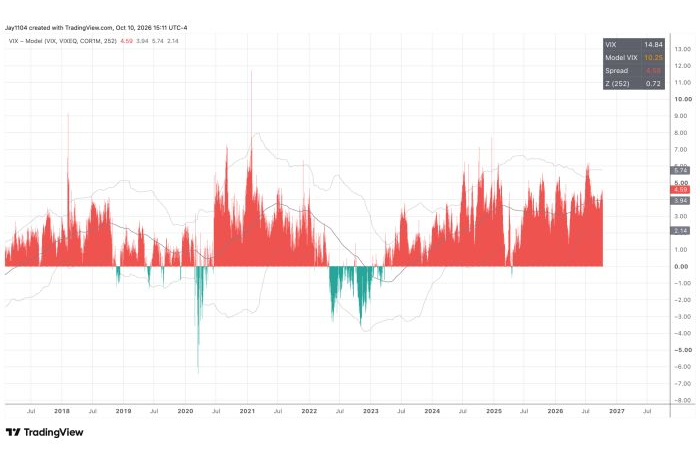
I’d argue that, given the calendar, this period of complacency has days numbered.

Comments
Log in or sign up to join the conversation.