


Never look a gift horse in the mouth. June’s CPI was that kind of gift horse, reversing all of the factors that have recently surged during the Iran war. As a bonus, inflation in shelter (1/3rd of the weight of the index) continued to abate.
Let’s start with the overall view. For the month, headline consumer prices declined by -0.4%. Excluding food and energy, they were unchanged. Excluding shelter prices, they declined -0.6%(!). On a YoY basis, headline price gains (blue) decelerated from 4.2% to 3.6%. Core price gains (red) decelerated by -0.2% to 2.6%. And ex-shelter, price gains (gold) decelerated -1.0% to 3.6%:
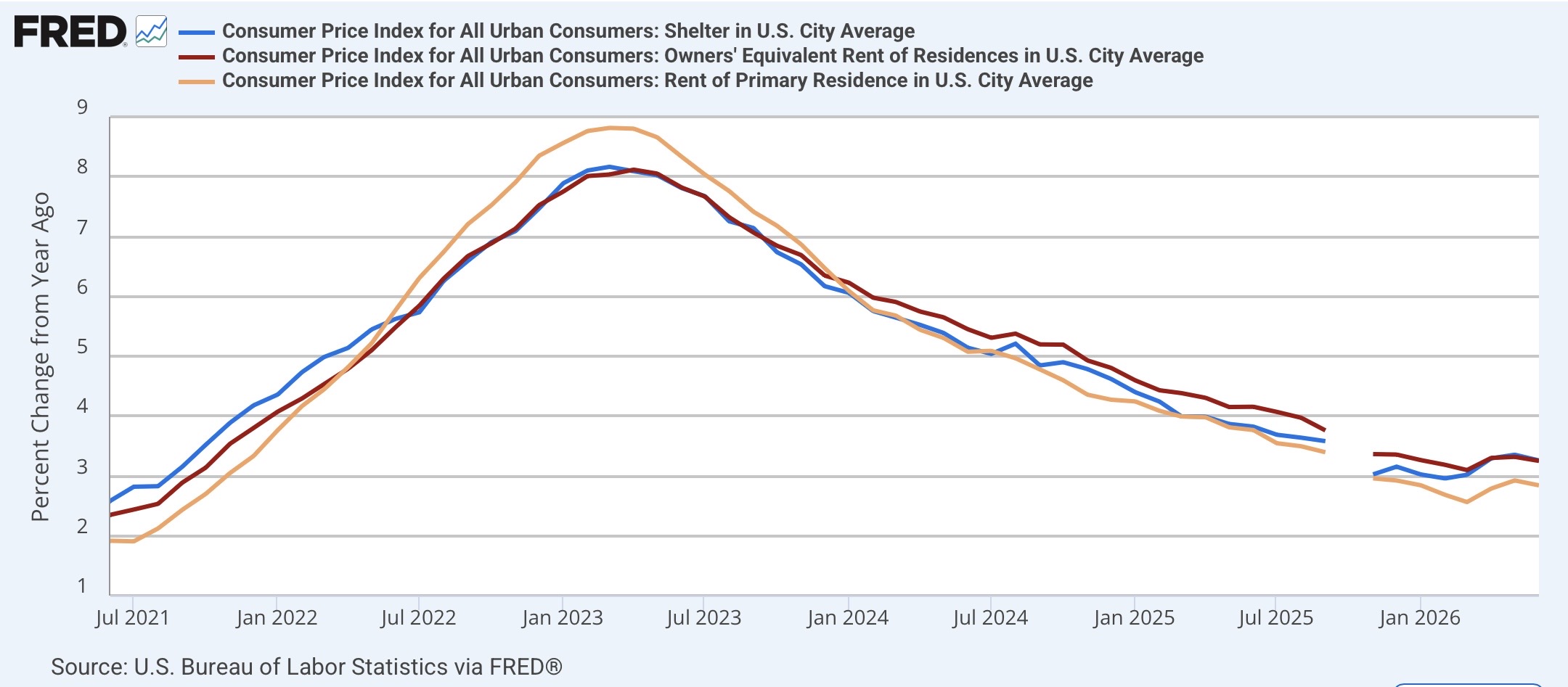
Shelter is 1/3ed of the entire index, and the good news continued there, as shelter prices increased only 0.1%, as did both of its components, rent and “owners’ equivalent rent.” This was one of the lowest increases in over five years. On a YoY basis, prices were still up 3.3%:
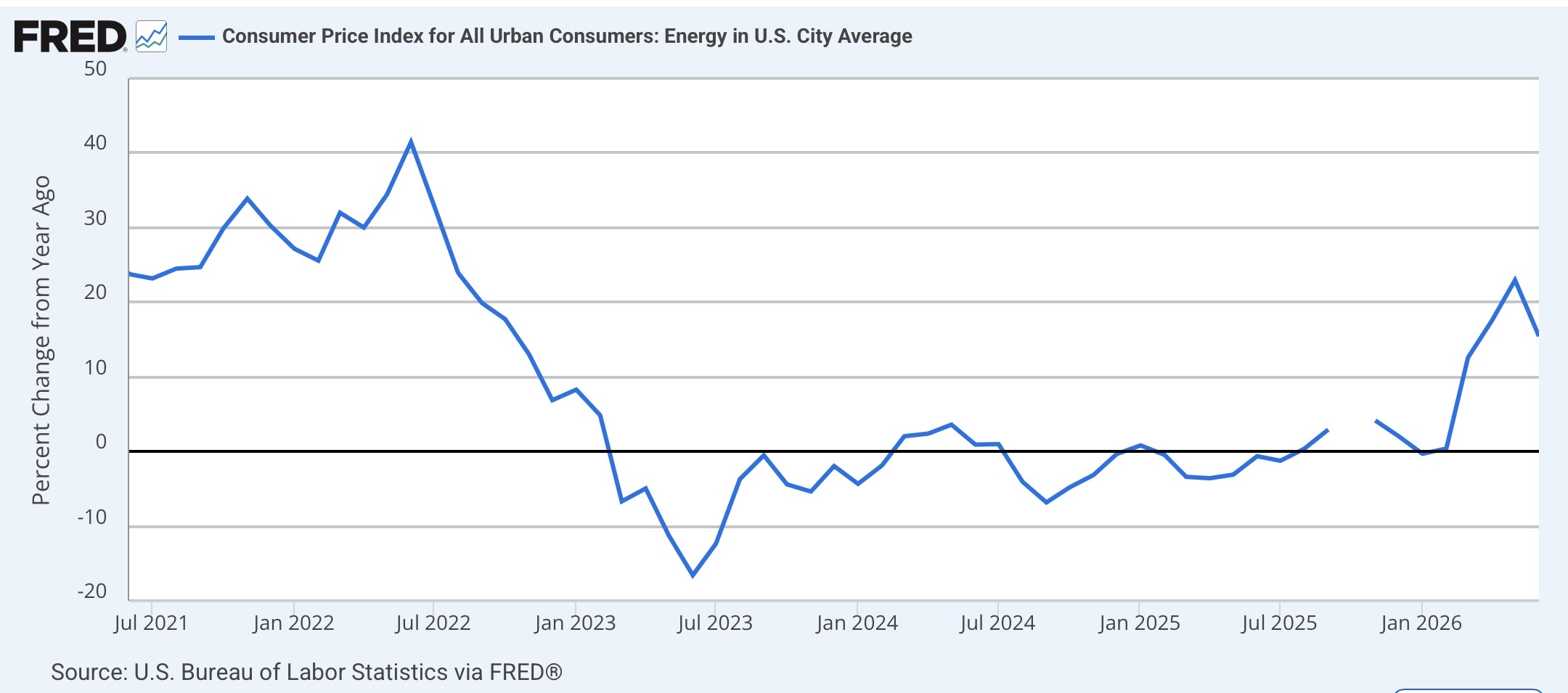
But of course, the big reason for the decline in headline prices was energy costs (including gasoline), which declined by -5.7% in June alone, reducing the YoY gains to 15.7%:
Although I won’t bother with graphs, the former problem children of new and used vehicles continued to sleep, with the price of new vehicles unchanged and used vehicles down -0.2%. On a YoY basis, they are up only 0.5% and down -1.8%.
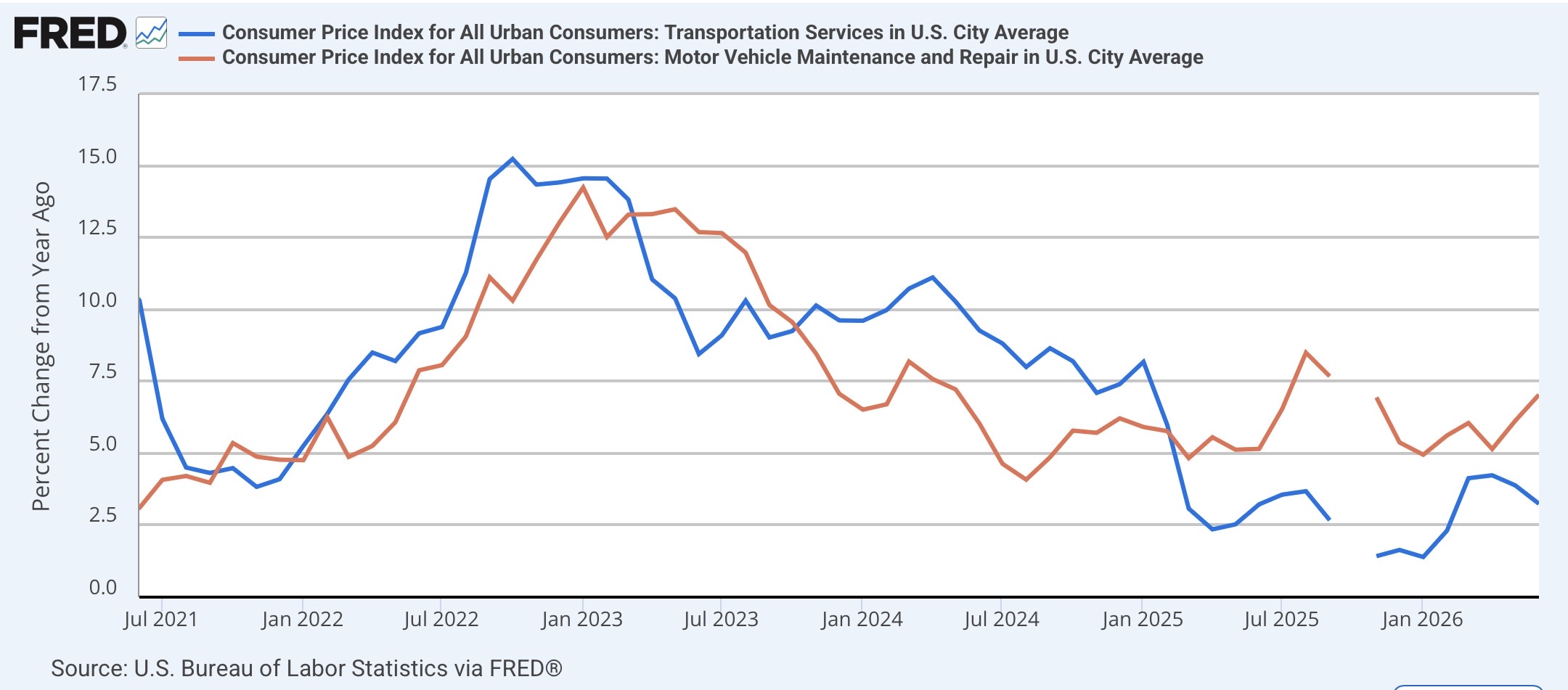
There was good news on our other recent “problem children” as well. Transportation services (including car insurance and repairs) declined by -0.3%. On a YoY basis, they are now only up 2.9%:
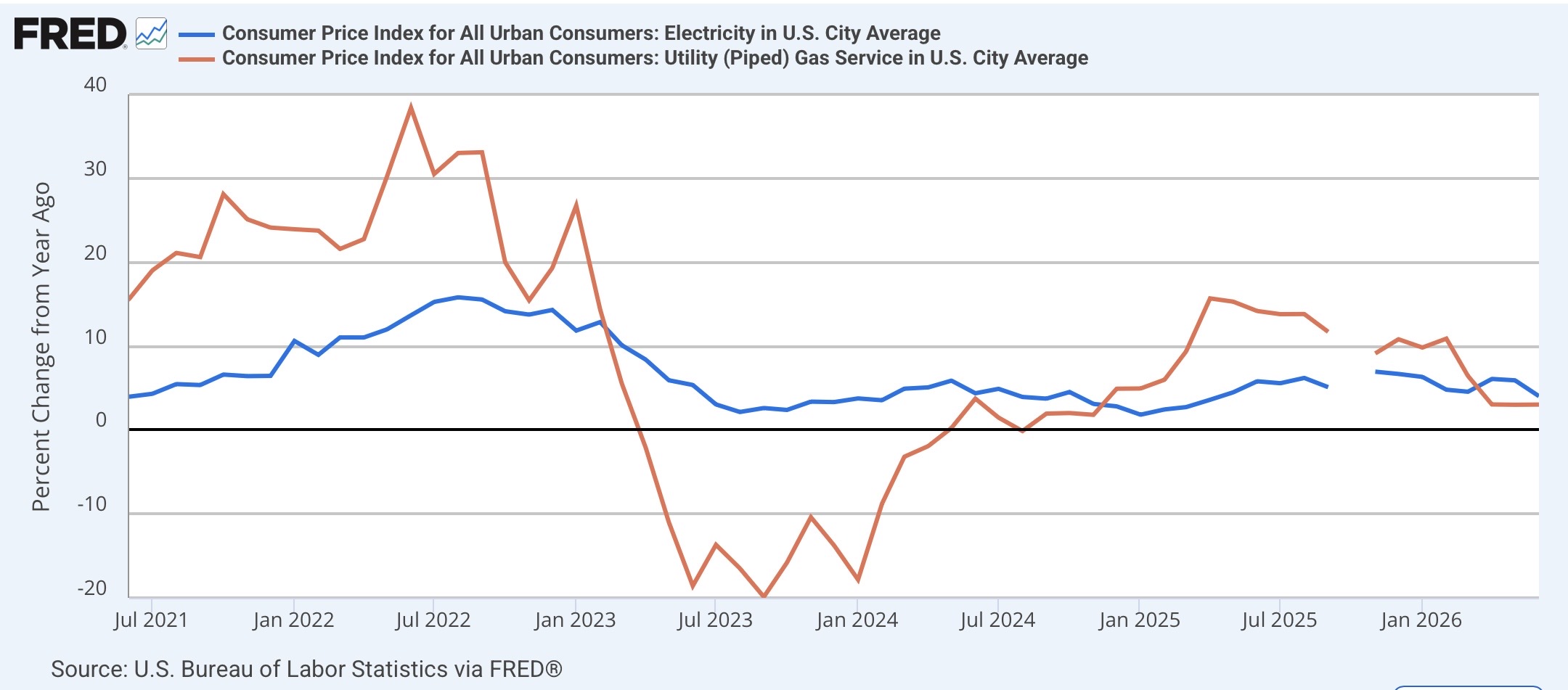
And the AI data center-related categories of electricity and utility services declined by -1.0% and were up by 0.5%, respectively. On a YoY basis, they are up 4.0% and 3.0% - not great but not as bad as in the past few months:
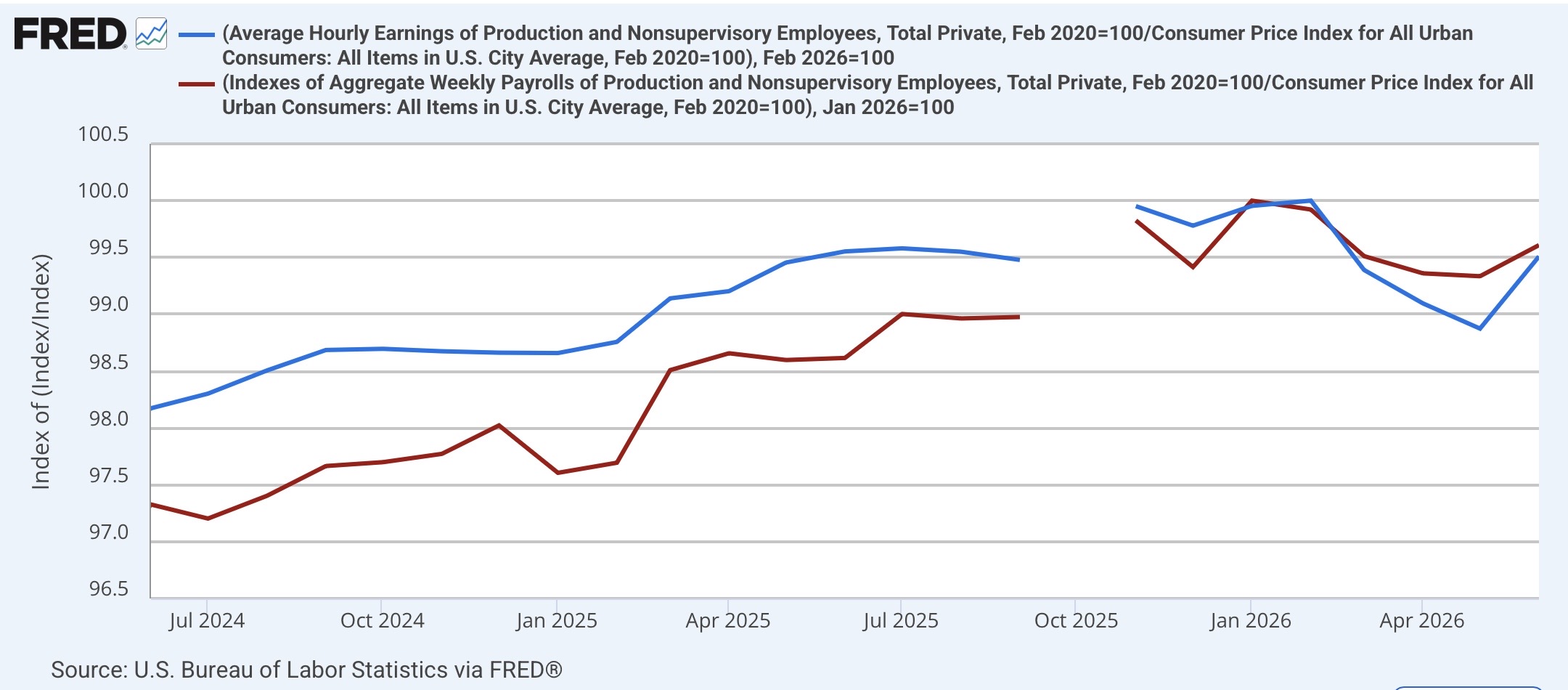
Finally, the decline in headline inflation was good news for both real nonsupervisory hourly wages (blue), up 0.6% for the month and slightly below unchanged YoY; and real aggregate nonsupervisory payrolls (red), up 0.3% for the month and up 1.0% YoY, although both remain about -0.5% below their February and January peaks, respectively:
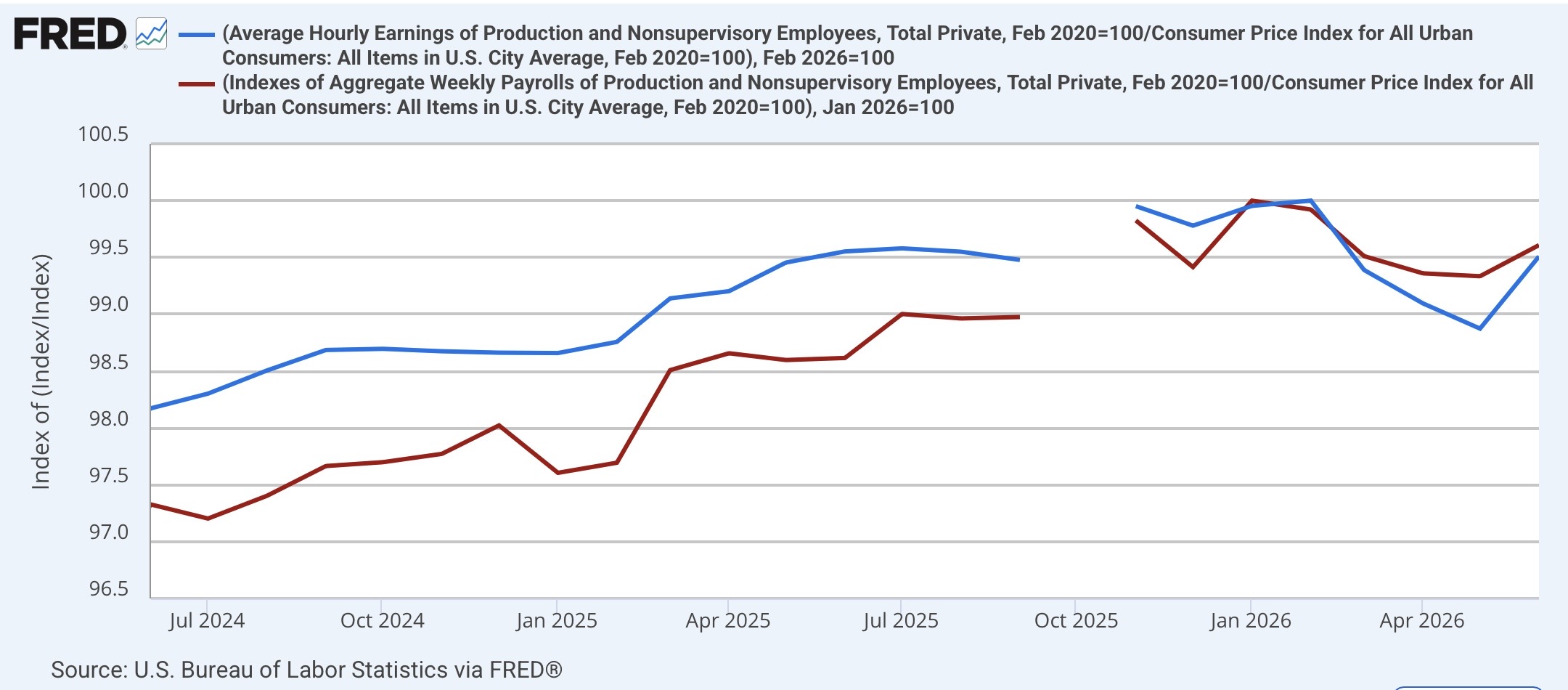
Recall that real aggregate nonsupervisory wages are an excellent short-term leading indicator for recession, and the fact that they rebounded in June means that, for now, recession risk is receding.
Comments
Log in or sign up to join the conversation.