

Let’s take our regular weekly look at jobless claims. In addition to being 1/2 of my “quick and dirty” forecasting system (the other 1/2 being stock prices), they have a 60 year history of being a good short leading indicator. [Later this morning we’ll get existing home sales, and I’ll update an overview of the housing market then.]
This week’s update is more confirmation for the “low-hire, no-fire” economy that has manifested this year, as well as evidence of some return to post-pandemic residual seasonality (claims rising to midyear, then declining to year end).
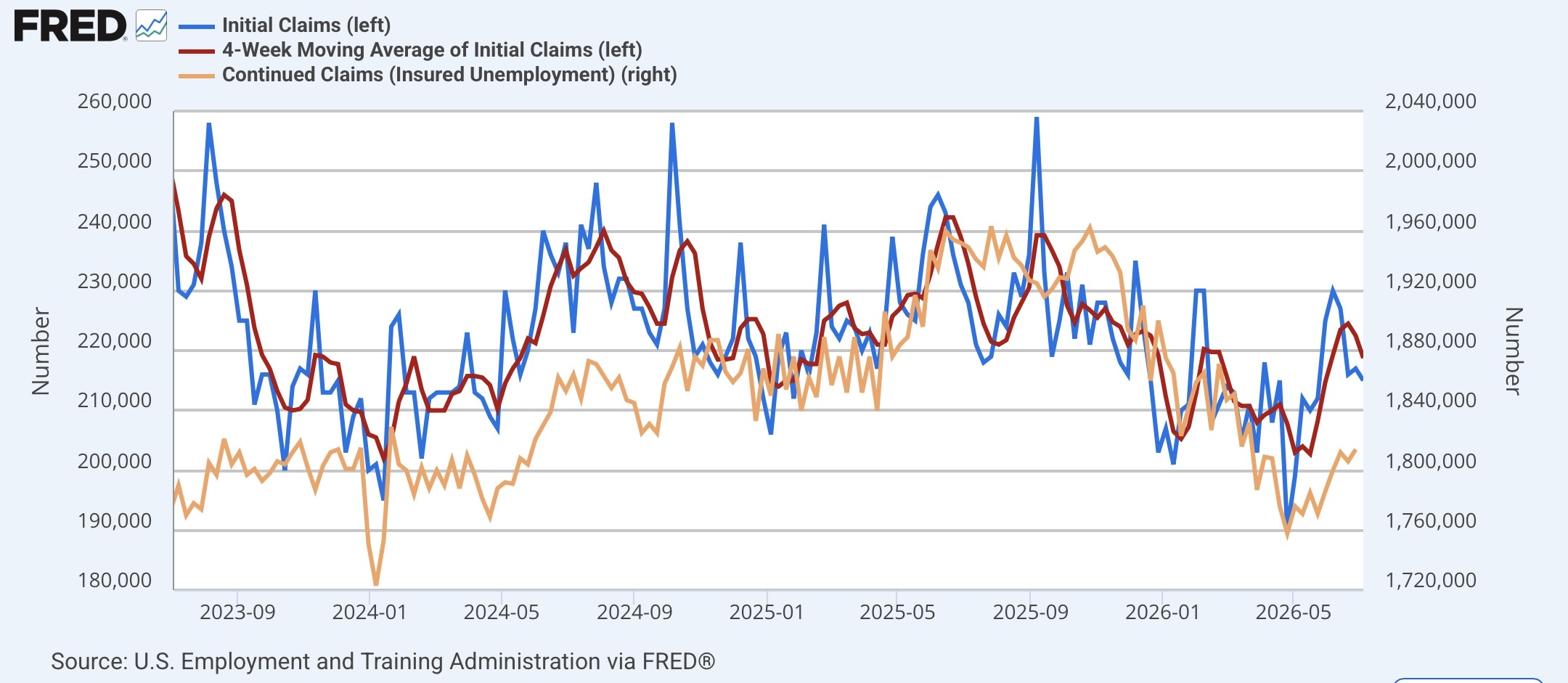
For the week, initial claims declined -2,000 to 215,000, and the four week moving average declined -3,750 to 218,750. Continuing claims, with the typical one week lag, rosse 8,000 to 1.814 million:
On the YoY% basis more important for forecasting purposes, initial claims were down -5.7%, the four week average down -6.7%, and continuing claims down -7.1%:
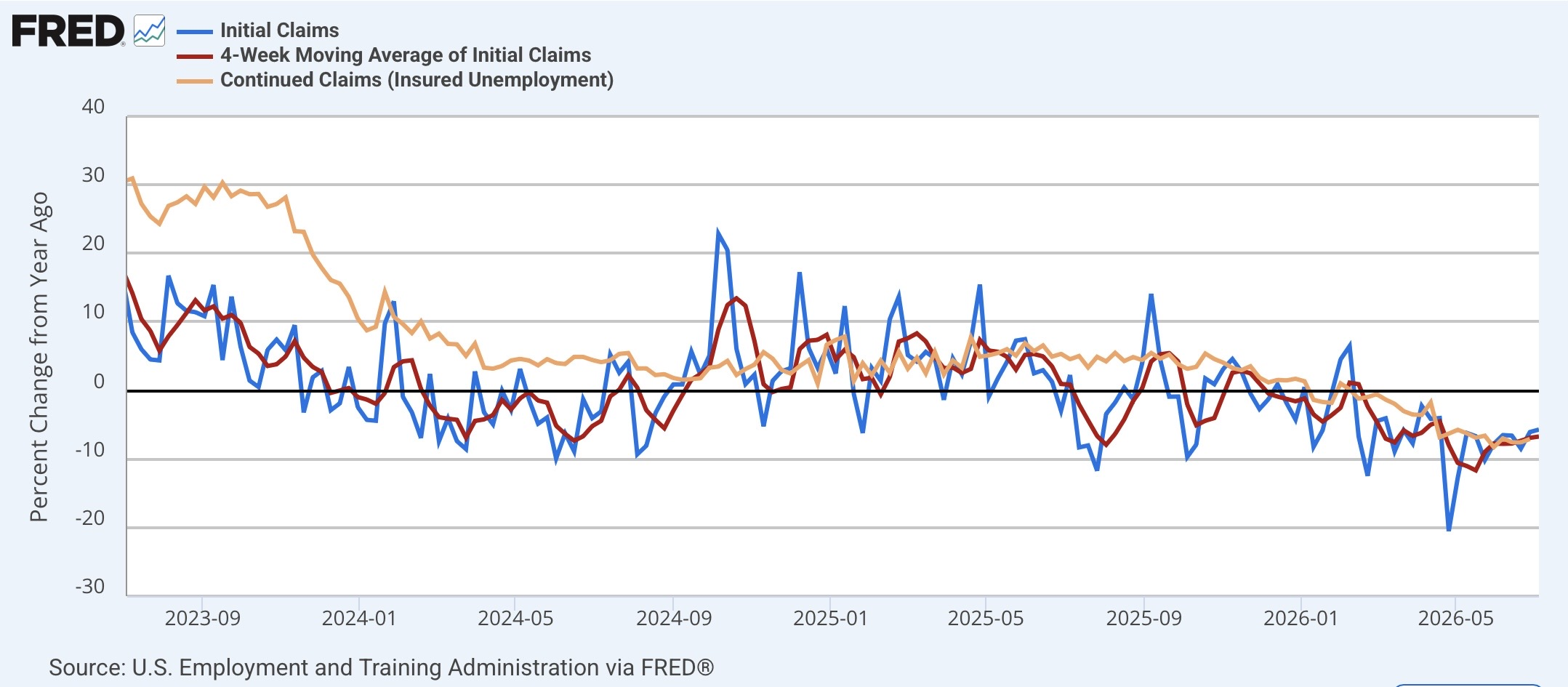
This indicates continued expansion for the next few months.
We’re not far enough along in July to warrant updating vis-a-vis the unemployment rate, but apropos of my comment above, here is what the “quick and dirty” forecasting model looks like through this week:
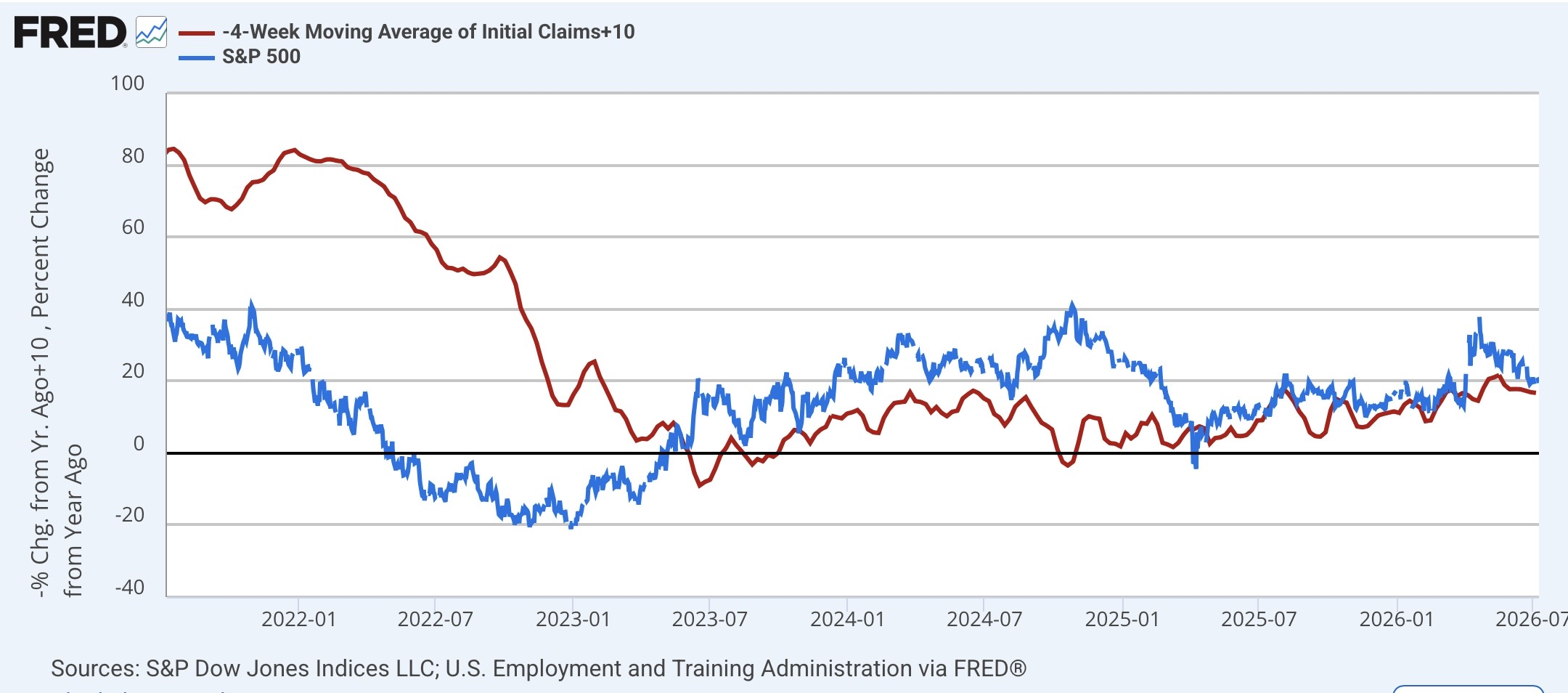
Both measures are above 0. Only when both are below 0 does the system trigger a recession watch, and only when they are sustained for a significant period of time (at least a month) does it trigger a warning.


Comments
Log in or sign up to join the conversation.