J.B. Hunt More Freight Is Hurting Margins

J.B. Hunt warned that rising driver and fuel costs will squeeze third-quarter margins despite recovering freight volumes.

Source: DepositPhotos

When a transport company sees a sudden burst in shipping volume, investors usually expect earnings to follow. Right now, J.B. Hunt (JBHT) is seeing stronger demand for its services while the cost of handling that freight is climbing. The company warned Tuesday evening that third quarter earnings are likely to fall from the second quarter. The issue is a timing mismatch between rising operating costs and the prices it can recover from customers. The question is how quickly that gap closes, not whether more freight is automatically bad for the business.

Main Note

The high cost of a freight recovery

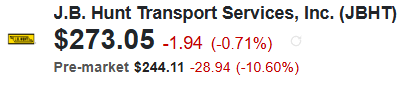
JB Hunt Transport (JBHT) Quote

Verdict: J.B. Hunt is handling more freight, but rising driver, fuel and outside transportation costs are putting pressure on profit before customer pricing fully catches up.

What happened

Management used Morgan Stanley (MS)’s Laguna conference on Tuesday evening to flag an expected 5% to 10% drop in earnings from the second quarter to the third. This was an unusual update from a company that normally avoids discussing results before a quarter ends. It is a warning about the current quarter, not a reported result or a year over year decline.

J.B. Hunt had already reported 10% year over year Intermodal volume growth in the second quarter, its first double digit increase in more than a decade. For the third quarter, management expects about $25 million in additional driver related costs and at least a $10 million fuel headwind compared with the second quarter. It also pointed back to a roughly 30% jump in spot transportation rates during the second quarter. The problem is that higher costs are squeezing profit, not that they erase revenue.

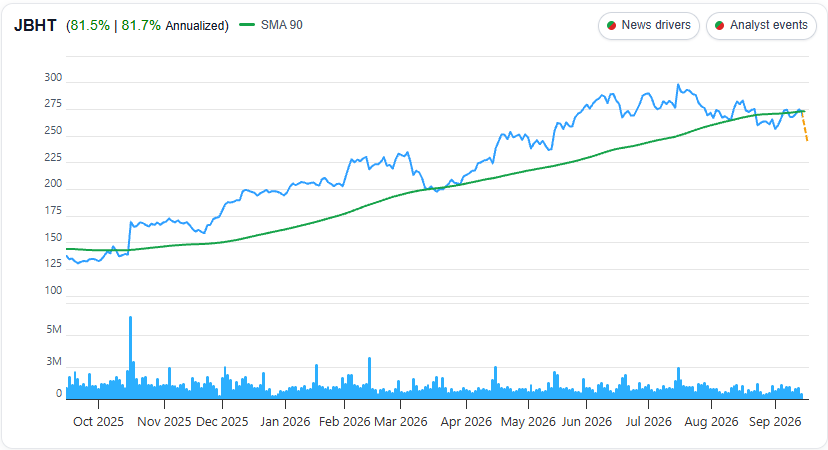
JB Hunt Transport (JBHT) 1 Year Chart

JB Hunt Transport (JBHT) 1 Year Chart

Why it matters

Many freight contracts lock in a base rate, but that does not mean the customer’s entire bill stays fixed. J.B. Hunt uses fuel surcharges to recover changes in diesel costs, although those adjustments can lag what it pays at the pump. Driver pay, recruiting costs and the price of hiring outside carriers can also rise before customer pricing catches up. That gap, rather than a complete inability to pass through fuel costs, is the squeeze investors need to watch.

What changed in the thesis

The warning raises a question about how quickly the recovery will reach the bottom line. Investors now need to see whether better customer pricing can catch up with higher costs without driving freight away. The 2027 intermodal bid season starts in October, but the repricing process takes months. Volume growth still matters. It just needs to come with acceptable returns.

What the market may be missing

The sheer surprise of the guidance cut might be blinding the market to a very real volume recovery. By paying premium rates to keep drayage capacity in house and issuing bonuses to retain drivers, management is choosing short term margin pain to protect long term service reliability and market share.

Valuation and expectations

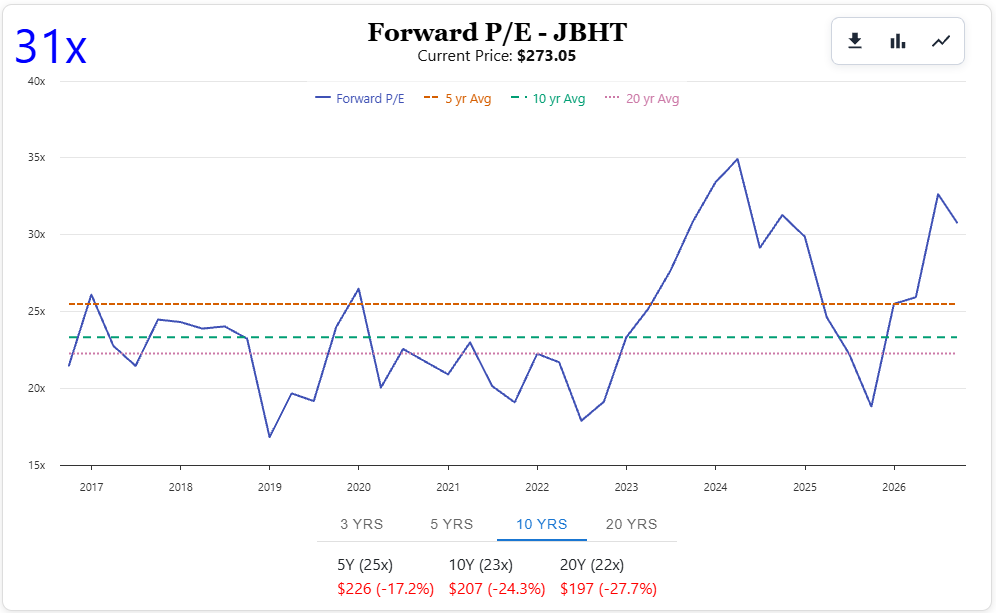
The stock previously traded at a premium multiple because investors trusted the predictability of its earnings. This sudden cut injects immediate estimate risk. The market is likely to compress the price to earnings ratio until management proves it can successfully reset contract rates higher.

JB Hunt Transport (JBHT) Forward PE Ratio

JB Hunt Transport (JBHT) Forward PE Ratio

Bottom line

A volume recovery only creates value if the pricing math works. The test is whether new contract rates and cost control turn more freight into better returns over the coming quarters. A few weeks of negotiations will not settle that question.

Pre Market Pulse

  • J.B. Hunt shares fell roughly 9% to trade near $249 in early morning action following the rare guidance cut.

  • Brent crude oil prices are trading above $105 per barrel amid Middle East tensions, adding direct cost pressure to the transport sector.

Why it matters this morning

Expensive diesel can squeeze transport profits when costs rise before fuel surcharges catch up. The speed of that adjustment matters, not just the level of crude oil prices.


Peer Read Through

Old Dominion Freight Line (ODFL)

The premium less than truckload operator recently reported higher yields and positive tonnage shifts but remains exposed to the exact same diesel price spikes.

Knight Swift Transportation (KNX)

The major truckload competitor recently saw logistics gross margins contract as purchased transportation costs outpaced customer pricing.

Schneider National (SNDR)

A direct intermodal competitor that recently raised full year adjusted earnings guidance while emphasizing cost reduction strategies to navigate the tightening capacity environment.

Group takeaway

The entire transport sector is dealing with identical fuel and third party capacity inflation. The market will likely separate these companies based on their ability to command premium pricing or aggressively cut internal costs.

What to Watch

  • The official third quarter earnings release in mid October to see the exact magnitude of the margin deterioration.

  • Updates on the October bid season for 2027 intermodal contracts to verify if pricing is moving higher to offset inflation.

  • Management commentary on long term intermodal margin targets, specifically whether they maintain or abandon their 10% to 12% goal.

Bottom line

The next round of contract talks will offer an early test of pricing power. The more important evidence will be the rates customers actually accept and the profits those contracts eventually produce.

STOCKS IN THIS ARTICLE

Also Mentions:

Comments