


Let's talk about James River Group (JRVR).
It is a strange feeling when I read that a press release tells you the book value went up, and then I work out that it actually went down.
Quick answer: James River (JRVR) reported tangible common equity per share of $9.01, up 1%, but that measure adds back a deferred retroactive reinsurance gain that rose 21.1 million. Without that one line, equity less goodwill and intangibles fell from 7.05 a share in December to 6.68 in June, minus 5.3%.
James River's second-quarter release opens with this statement. Tangible common equity per share is $9.01, an increase of 1% compared to December 31, 2025.
Why don't we start from where I started? What even is tangible common equity? The filing literally defines it. Shareholders' equity, plus the deferred retroactive reinsurance gain, less goodwill and intangibles.
That middle part. That is the focal point.
The deferred gain went from 86.7 million at year-end to 107.8 million at the end of June. That is up 21.1 million. The tangible common equity went up by 5.7 million. So the add-back is nearly 4x the entire reported increase.
So let us yank it out and run the cumulative. Equity minus goodwill, less tangibles: 7.05 a share in December. 6.68 in June. That is minus 5.3%.
Okay, so their words were that it's +1. The same exact measure without one line says -5.3.
Now, let's talk about that "line". Retroactive reinsurance accounting says you take the loss now and defer the benefit. The statement tells us exactly when the deferral starts, and I am quoting it verbatim. When recognized adverse prior-year development causes the cumulative amounts ceded to exceed the consideration paid, the agreements move into a gain position subject to deferral.
I really had to concentrate and read it twice. The balance only grows WHEN the reserves develop past what the covers cost. It is literally a running score of how wrong the reserves were.
It was 20.7 million at the end of 2023, and 58.0 at the end of 2024. 86.7 at the end of 2025. 100.9 in March. 107.8 in June. That is up 420% and not ONCE went down.
Over that same stretch, reported net adverse development ran at single-digit millions. First half of 2026: 404,000 dollars. That is because every development figure they print carries the phrase excluding adverse prior-year development subject to deferral under retroactive reinsurance accounting.
Okay, cool. It comes back through earnings eventually. How fast?
That is solvable when you account for the fact that both sides are disclosed. The first quarter: 14.8 million deferred; balance rose 14,189. So 611,000 came out. In the second quarter, 7.4 million deferred; balance rose by 6,927. So 473,000 came out.
Hmmm, here that is 1 million and 84 thousand released in half a year, on a 107.8.
Now drag it straight, and the number 50 years shows up. Casualty recoveries speed up as claims settle, so call 50 a floor. But even over 20 years at 10%, that balance is worth about 43$ of face value.
It goes into book value at a hundred.
Obviously, there was something that changed my mind. Let me make it make sense for you all. Look carefully at what got ceded to the last cover.
2025: 51.4 million, leaving 23.6. First quarter 2026: 16.2 million, leaving 7.5. Second quarter: 7.4, and then it is finished.
The second quarter did NOT develop 7.4 million. That is all the limit there was. Retained development added yet another 275,000 on top, so the real number is about 7.7.
Q1 had 23.6 of room and used about 16.2. There was nothing holding that one back.
So the real run rate on the 2010 to 2023 casualty book is 16.2 million, then 7.7 million. Let's call it 20 to 65 a year. And from Q3, there is literally no cover at all, because cumulative losses have gone through the 1,183.7 million retention and the 75 million layer sitting on top of it.
The reported 404,000 gives you NO way to see that.
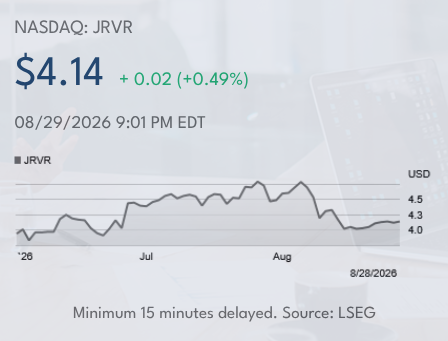
Before anyone brings it up, yes, Citizens flagged the cover burning down in May, and UBS cut to 4 dollars last week. The covers running out is not my finding. The release rate and the capped final cession are.
Let me put you all on a free test. Both E and S covers are empty. Now deferrals are impossible on either. The only cover with room is the Aleka loss portfolio transfer on the older Uber commercial auto book, and that one has no aggregate limit. Release is running at about half a million per quarter.
So the deferred gain has to fall in Q3. It would be the first fall in the series.
Falls to about 107.3; everything is behaving as it should.
Whether it's flat or higher, something definitely got ceded, and only Aleka can take it. That means the Uber book has reopened after 4 years, pinned at 451.4 million.
The second line to read is the reported development. If it is under 2 million, then I am wrong; the reserves have got there, and at 6x earnings, this is really cheap. Over 8, and common shareholders will starve.
There is one more thing that nobody seems to have said out loud. The revolver is 212.5 million, and 210.8 million of it is drawn. 99.2%. Undrawn capacity is 1.7 million. Operating cash flow was minus 5.9 million in the half. The holding company needs about 32 million a year for interest and preferred dividends.
And the credit agreement requires every regulated insurance subsidiary to hold an A.M. Best rating not lower than A minus. The rating is A minus. Outlook being negative and has been negative since December 2023. A.M. Best affirmed on 6 March, and their very own stated reason was the adverse development of the cover and loss portfolio transfer transactions. The filing saying the last one was exhausted landed on the tenth of August. 5 months later. And since then, it has been radio silence; nothing published.
Statutory surplus is 789.5 million against 339.6 required, and it is rising, so i am going to reiterate that this is not a solvency call and I am not making one. The E and S book ran a 92.9 combined in the quarter. Expenses are down 9%. That is all real.
What would really make me lose sleep over this is the Aleka cover. It is the only one with room. it has no cap, and the whole Q3 print rests on whether anything went into it.
Sell. Three to three fifty.


Comments
Log in or sign up to join the conversation.