


Image Source: Scott Graham on Unsplash
Back on Sept. 15 of last year, something noteworthy happened. The SPY (the exchange-traded fund that tracks the S&P 500) closed above the 660 mark for the first time. This week, the SPY pulled back to that exact same level.
Six months. And we’re right back where we started.
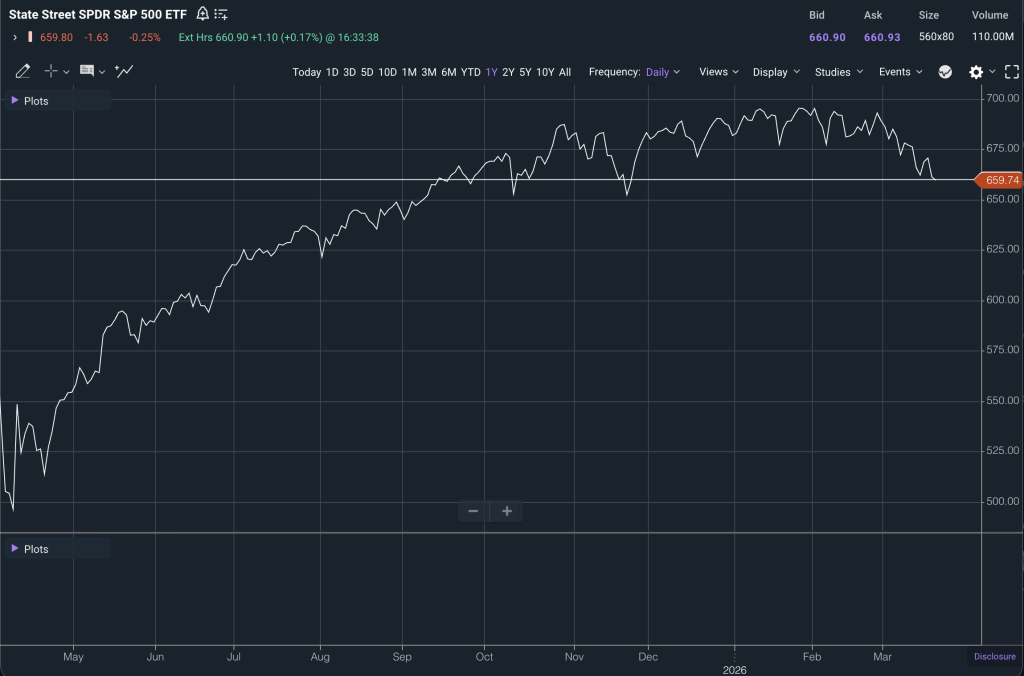
Now, I want to be clear: a lot has happened in between. The market ran higher after that September milestone, grinding its way toward the 700 level before reversing.
Beneath the surface, individual stocks have been on wild rides -- some names have doubled, while others have been cut in half. There have been plenty of opportunities for savvy traders to profit, and plenty of landmines for investors who weren’t paying attention.
But here’s what matters today: the broad market is no longer just “taking a breather.” It’s starting to break down.
The 200-Day Moving Average Just Gave Way
For technical traders, the 200-day moving average is one of the most closely-watched levels in the market. Think of it as the long-term dividing line between healthy bull markets and something more dangerous.
When stocks are trading above their 200-day, institutional money feels comfortable staying invested. When they break below it, alarm bells go off on trading desks across Wall Street.
This week, the S&P 500 tested (and briefly broke) its 200-day moving average for the first time since May of last year. That’s a significant development. Not a death sentence for the bull market. But a yellow light that’s turning red.
Why Investors Are Spooked
The market doesn’t move in a vacuum, and there are real reasons why investors are unsettled right now.
Geopolitical tensions — including rising uncertainty around oil markets and the broader impact of the conflict in the Middle East — have pushed energy prices higher and injected a fresh layer of anxiety into a market that was already running out of steam.
And then there’s the Fed. Wednesday’s Federal Reserve meeting made one thing crystal clear: the central bank is in no hurry to cut interest rates. Chairman Powell signaled that the Fed needs to see more progress on inflation before taking its foot off the brake.
For stock market bulls, that’s unwelcome news. The hope that falling rates would re-ignite the rally (propping up valuations and giving investors a reason to buy) has been pushed further into the future.
The market’s two great tailwinds, cheap money and geopolitical calm, are both working against us right now.
Time to Put the Defense on the Field
Here’s what I know from 25 years of watching markets: the best time to get defensive is before the breakdown becomes obvious to everyone. Not after the headlines are screaming in panic. Not after your account statement shows the damage. Now.
The data is telling us the market has gone nowhere for six months. The 200-day has been cracking. The Fed won’t ride to the rescue. Geopolitical risk is elevated.
That doesn’t mean we sell everything and hide under the mattress. My approach has always been to run a balanced portfolio, keeping some positions that will benefit from strong markets and some that will benefit from stocks falling.
Right now, it’s time to lean into the second half of that strategy. I plan to spend extra time this weekend going through my bearish watch list, identifying the names that look most vulnerable as this pullback deepens. These are companies with weak fundamentals, deteriorating charts, and plenty of room to fall.
Next week, we’ll be looking at put contracts on these names -- positions designed to grow in value as the stocks trade lower.
This is where our program earns its keep. When the easy “buy everything and hold” trade stops working, disciplined traders who know how to play both sides of the market have a massive advantage.
Don’t Get Caught Flat-Footed
If you’ve been riding the broad market higher since the lows of April last year, great. You’ve made money.
But the question now isn’t what you’ve made. It’s what you do next. The market just gave you a clear warning signal. The question is whether you’re going to act on it. This market isn’t just going to wait for you to get ready.
Here’s to growing and protecting your wealth.


Comments
Log in or sign up to join the conversation.