

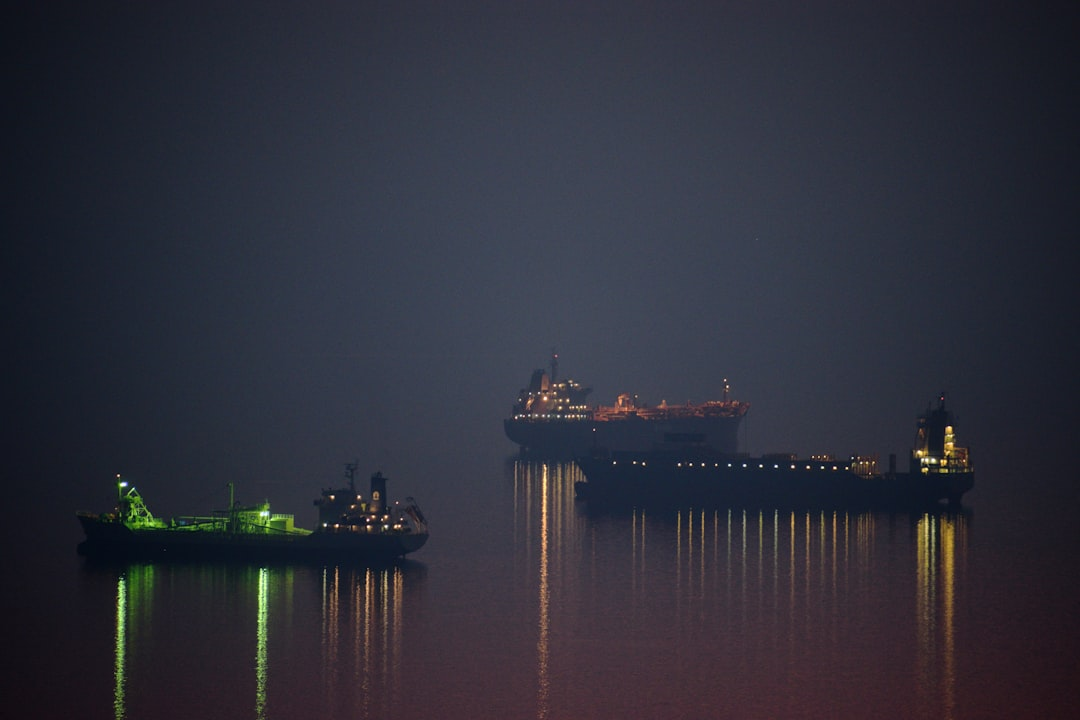
While one of the world’s most critical maritime chokepoints is making headlines for military posturing in the Middle East, a storyline under the surface is that the area could become ground zero for a sophisticated currency war.
For decades, the Strait of Hormuz has been the pulse of global energy. Roughly one-fifth of the world’s oil consumption passes through its narrow waters daily.
The International Energy Agency said in its monthly report, “The war in the Middle East is creating the largest supply disruption in the history of the global oil market.” That’s because the Strait of Hormuz is in the geopolitical crosshairs. As the U.S. war with Iran enters week three, the tiny “elbow” region waterway that is the Strait of Hormuz has become a central focal point.
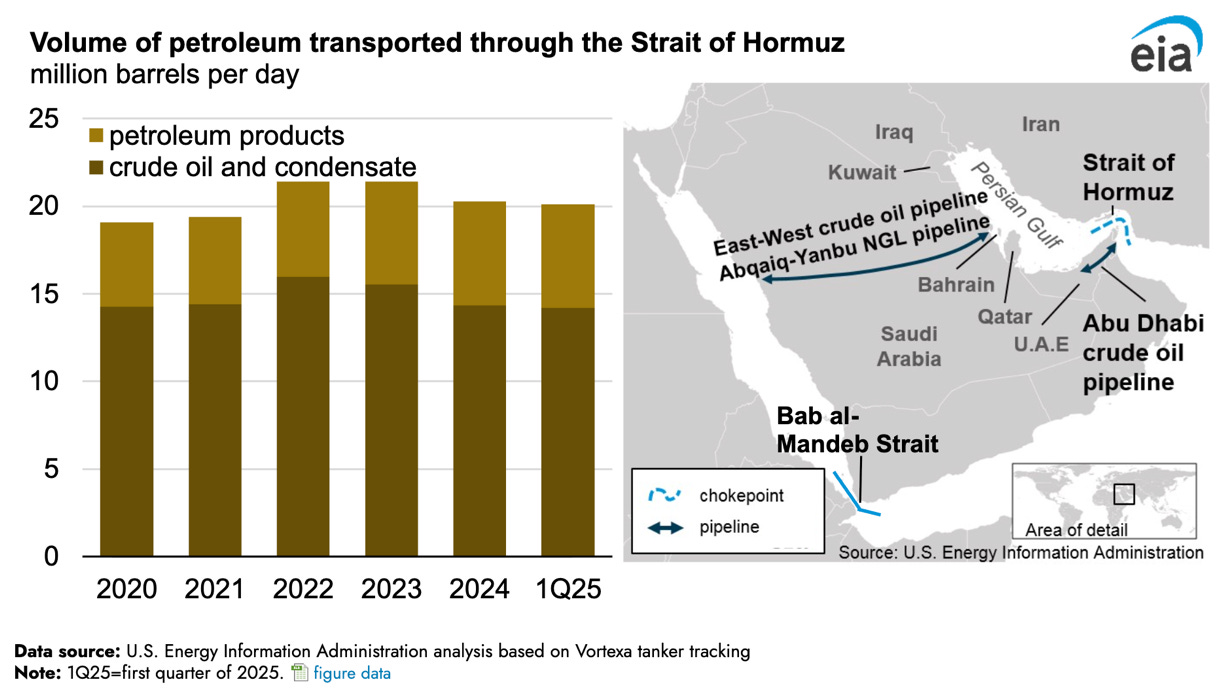
Historically, the “toll” for transit and the oil that passed through was paid in U.S. dollars, which have long been the bedrock of the petrodollar system. The Straight is the only route that connects oil-rich countries in the Persian Gulf to the world – a 21-mile waterway supply chain route that dictates a significant portion of global oil. On average, more than 130 commercial ships pass through the Strait daily, yet that has come to a standstill.
As we have seen with the recent escalations in Iran and throughout the Middle East, the structural backdrop of the global energy market is now shifting. Iran is taking direct aim at cargo ships, and specifically oil tankers, passing through the Strait of Hormuz.
Yet, the situation is set to potentially change beyond conflict and military escalations. Now, reports are detailing that Tehran might be considering a move that would directly challenge the dollar’s supremacy by allowing oil to pass through the Strait, provided that the oil cargo is traded in Chinese yuan.
The Mechanics: The Petrodollar in the Crosshairs
To understand why this matters, we have to look at the “Petrodollar.” The petrodollar isn’t just a buzzword. It’s a 50-year-old arrangement where major oil-producing nations price their exports in U.S. dollars. This creates a perpetual global demand for the greenback, allowing the U.S. to maintain its status as the world’s reserve currency.
When a nation like Iran threatens to swap the dollar for the yuan, they aren’t just selling oil; they are attacking the financial architecture that gives Washington its unique leverage. The proposal suggests a tiered system of transit where ships carrying yuan-denominated oil would receive safe passage, while dollar-denominated cargos would face the “friction” of Iranian bans, aggressions or attacks.
This is more than a blockade; it is a forced conversion of the global energy trade. By weaponizing the geography of the Strait, Iran is attempting to manufacture a “Yuan Zone” in the heart of the world’s most vital energy corridor. If successful, it would bypass the very mechanism that keeps the U.S. dollar dominant.
For Reference: Roughly 700 ships are currently sitting in the Persian Gulf with 400 oil tankers that are holding an estimated 200 million barrels of oil (enough oil to fuel the country of Japan for 2 months). Since the war started, 16 cargo ships are confirmed to have been attacked.
The Conflict: Trolling or Transacting?
Now, to be clear, this proposal may not be a solidified policy. As some analysts in China have noted, Beijing itself is urging caution both when navigating the war and getting overly involved.
The Chinese government is also realistic. China relies on a stable global economy, and an impact or potential upheaval of a portion of the oil-transit system could backfire on their own energy security.
There is also a distinct possibility that Iranian officials are simply “trolling” the U.S. leadership by dangling the threat of de-dollarization to incite anger or gain leverage in ongoing negotiations. However, in the world of macro economics and geopolitics, “trolling” can often become tomorrow’s policy.
What you should know is that when Tehran or other geopolitical allies float these ideas, they are testing the limits of not just the U.S. military’s capability to secure supply chains but the U.S. Treasury’s response. They are now observing how the markets react to the mere suggestion of a yuan-only corridor.
If the U.S. responds with further sanctions that fail to bite, it only emboldens the transition toward the yuan. We are seeing a real-time stress test of the dollar’s “exorbitant privilege.”
For reference: Matt Smith, a Lead Energy Analyst at Kepler, a company that tracks global trade and shipping, told CBS 60 Minutes that since the war began that Iran his research shows that the country has exported 100,000 more barrels of oil daily than it did before the war began. Meaning that the oil trade is favoring Iran for the free flow of traffic through the Persian Gulf, and a yuan-only corridor, though unlikely, could push that leverage further.
The Precedent: Russia’s Playbook
Currently, oil is overwhelmingly a dollar-denominated asset. The only major exception is Russia. That’s because the country saw its SWIFT system access, the method global financial transactions are made, become severed after it was hit with Western sanctions. Moscow has since pivoted to trading its crude in rubles and yuan.
Iran, also under the weight of heavy U.S. sanctions, could view the Russian model as a viable strategy. The reality is that if they can force a “yuan-only” corridor in the Strait, they effectively create a sanctions-proof trade loop with Beijing and its allies.
As one OpEd noted in the Wall Street Journal, China has a delicate balancing act to play, but its appetite for discounted, non-dollar energy is a powerful incentive – and an effort it has long looked to for diversification from Western influence.
This “Energy-Yuan Loop” is also a key goal for the BRICS+ alliance. By trading directly in local currencies, as Brazil and China have already begun to do, governments can bypass the U.S.-headquartered banking system entirely. Ultimately, while they are avoiding sanctions, they are also building a parallel financial reality that is immune to U.S. policy.
The Money Flow Reality
The implications for global liquidity are profound. If the Strait, a key gatekeeper of the world’s most essential commodity, becomes a yuan-denominated gateway, the demand for dollars around the world will drop to some degree.
Over time, this move could create a feedback loop where lower demand for dollars leads to a weaker currency. As we’ve detailed for months now, the expectation would be that moves like these could serve to make alternative currencies like the yuan, or others, more attractive for other governments and businesses looking to hedge against U.S. fiscal policy.
At Prinsights, we are tracking this shift not just in the Persian Gulf, but in the central bank reserves of nations across the globe. There is reason to believe that the “Petroyuan” is no longer a fringe theory. Instead, it is a structural challenge that is being debated in the highest offices from Tehran to Beijing.
The Bottom Line
Whether this plan is a serious strategic pivot or a case of diplomatic trolling, the signals continue to point to an era in which the U.S. dollar is continually tested.
If even a fraction of the oil flowing through Hormuz shifts to yuan, it weakens the U.S. dollar’s grip on global finance. This is a move away from a centralized dollar-standard toward a fractured, multi-currency energy market.
The Strait of Hormuz is no longer just a naval flashpoint and instead is becoming a monetary one. We will continue to watch the money flows and how we can position ourselves and the model portfolio in strategically valuable ways.
Comments
Log in or sign up to join the conversation.