

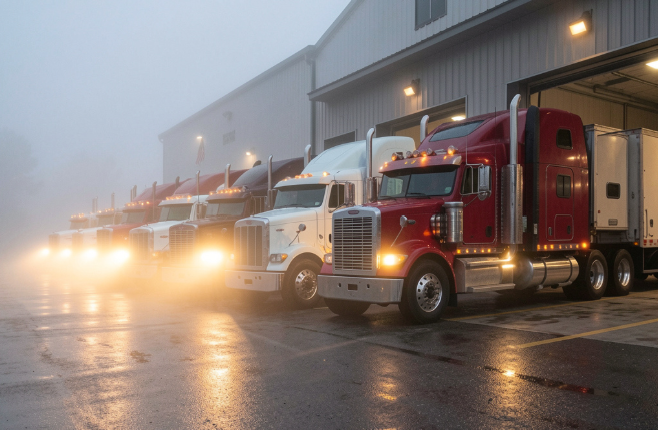
Purchasing a used commercial truck involves more than recording the vehicle's make, model, and VIN. Vehicle value, intended use, financing requirements, and how the truck fits into existing fleet operations may all be relevant to how commercial trucking coverage is placed or reviewed.
Purchasing a used truck may be a natural step for a trucking company looking to grow or replace equipment without substantially changing its fleet structure. From a commercial trucking insurance standpoint, however, the acquisition of a used vehicle may involve more than recording its make, model, and VIN.
Use, Value, Financing, and Fleet Composition May Influence Coverage Placement
There are meaningful differences between adding a truck to a fleet and replacing existing equipment.
Both situations may be relevant to coverage placement.
If the replacement vehicle differs from the unit being retired, those details may be relevant to existing coverage placement.
How Vehicle Information Connects to Physical Damage Coverage
Physical damage coverage in commercial trucking generally addresses damage to the insured vehicle resulting from collision, fire, theft, vandalism, or other covered causes, under the terms of the applicable policy.
After acquiring a used truck, the following vehicle information is typically relevant to coverage placement:
Year, make, and model;
VIN;
Purchase value;
Financing or leasing details;
Equipment specifications;
Intended use.
Vehicle value is particularly relevant to physical damage coverage. A used truck is worth treating as an individual piece of insured equipment, not simply an additional line on the fleet schedule.
Why the Intended Use of a Used Truck Matters for Coverage
The same used truck may serve a different function depending on the operation.
One carrier may use it for regional routes. Another may assign it to longer interstate trips. A third may dedicate it to a specific customer account.
This distinction is worth considering because vehicle information is not the only relevant element of the coverage picture.
A used truck acquired for a new route or a new customer relationship may introduce changes in mileage, territory, cargo type, or vehicle utilization — each of which may be relevant to coverage placement.
How Financing May Factor Into Coverage Placement
When a used commercial truck is purchased with financing, the lender or lessor may have specific requirements related to how the vehicle is covered.
Financing details are therefore worth reviewing alongside vehicle information before the truck enters regular operation.
Not every financing arrangement requires the same coverage treatment — the specifics depend on the terms of the financing and the applicable coverage.
An independent agency specializing in commercial trucking insurance may help identify how vehicle specifications, intended use, and financing details factor into coverage placement, and connect the operation to insurance carriers experienced in commercial trucking.
Understanding the Distinction Between Liability and Physical Damage Coverage
A used truck purchase is one context where the distinction between physical damage and commercial auto liability coverage becomes practically relevant.
Commercial auto liability coverage generally addresses damage caused to third parties — property damage or bodily injury — by the insured vehicle, under the terms of the policy.
Physical damage coverage addresses damage to the insured vehicle itself.
A vehicle purchase may affect physical damage coverage more directly, while liability considerations relate to the broader operation. Understanding that distinction may help clarify coverage responsibilities when equipment changes.
When a Used Truck Signals a Broader Operational Change
When a used truck not only replaces existing equipment but also introduces operational changes, a coverage review may be particularly relevant.
The purchase may signal a broader operational shift, such as:
Entering a new state;
Accepting different cargo;
Serving a new customer;
Increasing mileage;
Expanding fleet capacity.
In that context, a coverage review may involve analyzing not only the vehicle itself but also how the new operation differs from what existing coverage reflects.
Why Documentation Supports a Current Coverage Picture
Relevant documentation for a used truck acquisition typically includes:
Purchase agreement;
Vehicle information;
Financing documents;
Registration;
Equipment specifications.
Maintaining these records supports a more current and accurate picture of how the fleet is composed and how coverage aligns with actual operations.
Conclusion
Purchasing a used commercial truck may appear to be a straightforward equipment decision — but coverage considerations may accompany it.
Whether the truck replaces existing equipment or adds capacity, aspects worth considering include vehicle value, financing details, intended use, and physical damage coverage. If the purchase introduces changes in routes, cargo, customers, or operating territory, reviewing the broader coverage structure may be warranted.
Reviewing how a used truck fits into the broader operation — not only its vehicle specifications — may support a more accurate picture of how coverage aligns with current business activity.



Comments
Log in or sign up to join the conversation.