


Driving by the local gas station, motorists are taking a sigh of relief as pump prices have declined rapidly in recent weeks—-- a reflection in the hope for a US-Iranian peace agreement will put an end to the disruptions in the oil market. Bond investors, reacting to the prospects of future inflation, however continue to drive up yields, and central bankers talk up the need to curb inflation with higher rates for longer. The once tight correlation between oil prices, inflation and government bonds is coming apart.
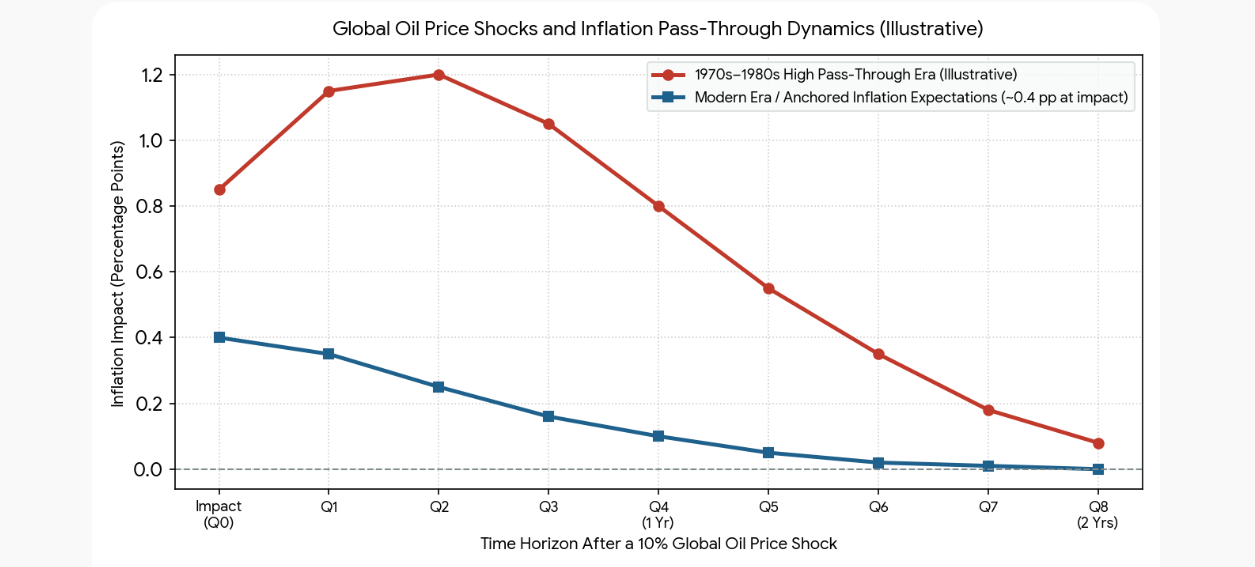
Historically, oil price shocks, such as those in the 1970s and 1980s, had an immediate effect of driving up prices across the board. At the same time, the drop in oil prices resulted in a rapid decline in the rate of inflation—-- a sharp doubled-edge sword. Today, inflation expectations seem to be well-anchored, such that despite a drop in the oil prices, consumer inflation seems very slow to react, putting central bankers on alert towards raising rates.
Earlier in the year, the tight correlation between oil and government borrowing costs has defined global bond markets,as the long end of the credit markets everywhere hit highs not experienced in over a decade. So, central bankers blamed the geopolitical situation for the need to raise rates, emanating from the Iranian conflict. But that conflict is in abeyance and oil is now flowing through the Straits of Hormuz close to pre-war levels
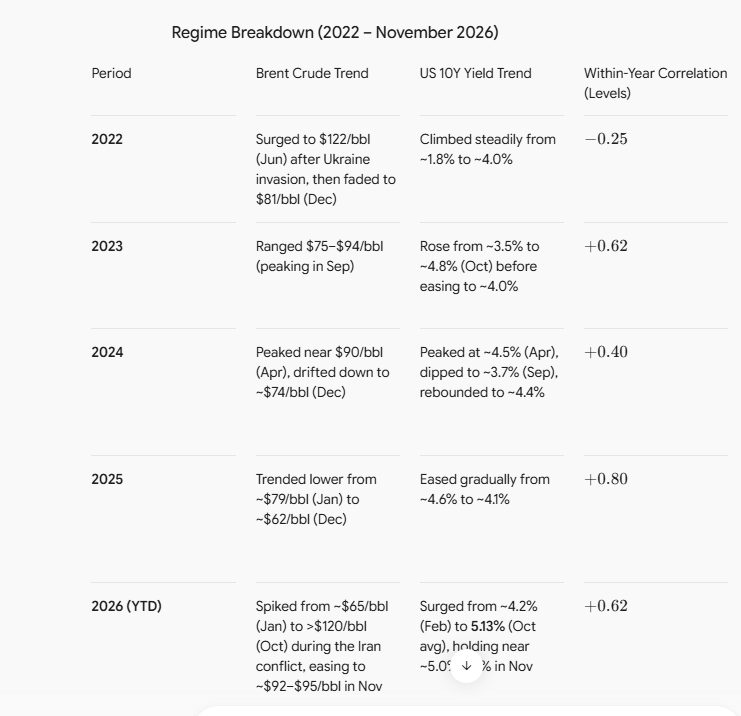
Starting in 2022, the correlation between oil prices and interest rates averaged around 25%, yet interest rates climbed steadily from 1.8% to 4%, as central banks moved off the ultra-low rates that characterized the 2020s. With the advent of the Iranian conflict, oil prices spiked from $65/bbl to $120/bb, accompanied by a surge in the 10-year yield from 4.2% to 5.1%. Current estimates put the oil-interest rate correlation at 20%-25%.
But despite steep falls in global crude benchmarks in recent weeks — in part on hopes for US-Iran peace talks — yields and expectations for rate rises have remained elevated, keeping up the pressure on governments’ and households’ finances. Central banks are focusing on a raft of conditions to guide their deliberations, and the oil prices seem to play a lesser role in their minds. Inflation is no longer confined to specific commodities, but is more generally pervasive, pushing the central bankers to tighten further.


Comments
Log in or sign up to join the conversation.