

The bond market was first out of the gate, anticipating an acceleration in the rate of inflation, when long term interest rates started to rise sharply at the end of February. Bond investors are always on the alert for any threats from a change in the rate of inflation. With the reduction in the oil flowing through the Straits of Hormuz driving up oil beyond $100/bbl, the warning bells went off in Europe and, perhaps, more importantly in Asia which receives a much greater proportion of their oil supplies than any other region. China receives 33% of its oil supplies passing through the Straits, Japan, 90%, and South Korea,70%.
The OECD inflation report projects the G20 inflation rate to reach 4% in 2026, considerably above its December 2025 forecast of 2.8%. As hostilities are prolonged, the OECD anticipates that the US inflation rate will be 4.0% in 2026, a marked upward revision from its December 2025 forecast of 3% The OECD is expecting a more persistent energy price shock, in addition to the impact from the 2025 US tariff increases. The OECD predicts both higher inflation and lower growth than the members of the FOMC
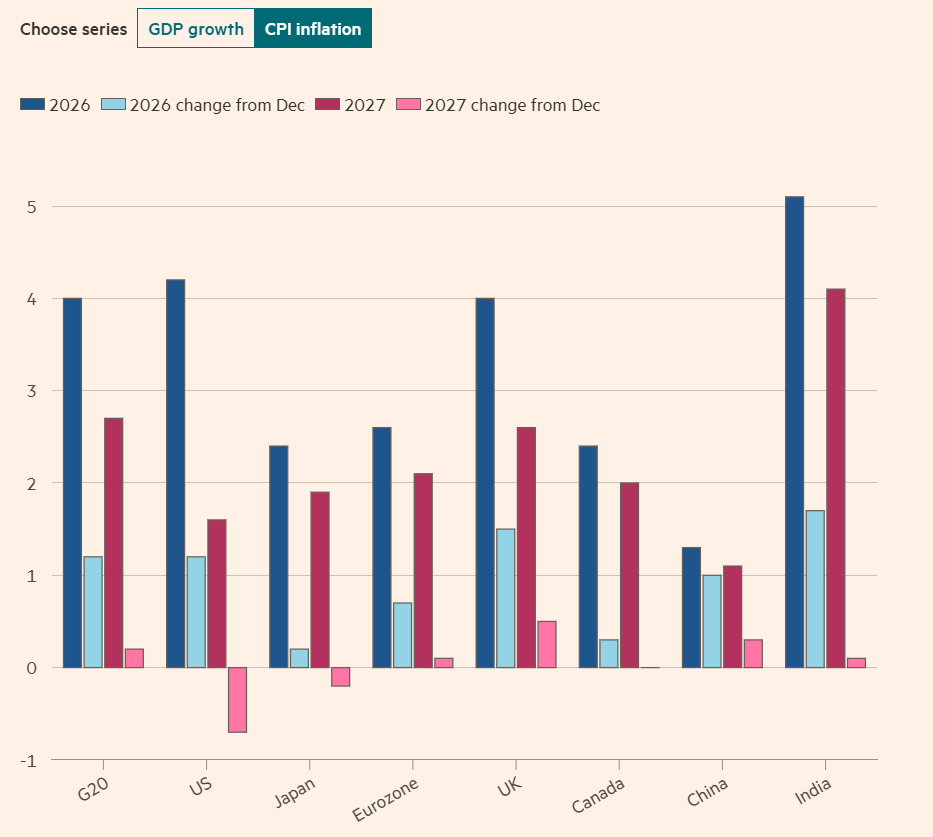
Source: OECD and Financial Times
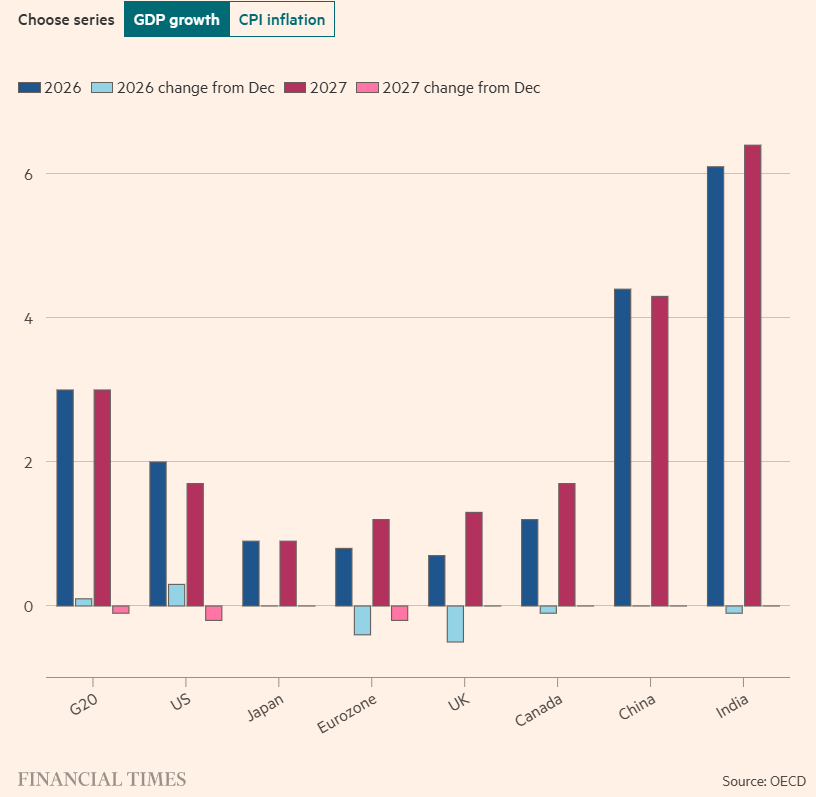
It is the deflationary impacts of the oil price shock that worries the OECD above all else. In its report on the outlook for growth, the OECD set out its warning that global GDP will drop to 2.9% in 2026, as energy prices raise costs and hence dampen overall demand. In addition, demand will be further affected adversely by the persistence of US tariffs. US growth will moderate to 2% in 2026, the Eurozone to 0.8%, and China to 4.4%, as higher energy works their way through the economy.
Meanwhile, as the war is ongoing, we can expect oil prices to remain at$100 bbl or more . And, the odds of these inflation forecasts to strengthen, leading to both higher costs of living and slower growth. Such a combination no central banker wants to deal with, given that bank policy can only aim at one of these two evils, but not both at the same time.

Comments
Log in or sign up to join the conversation.