


As people across the U.S prepared for a long holiday weekend, gold and silver came under pressure last Friday. Gold dipped to near $4,400 an ounce and silver to near $65.83, as the market reacted to the initial top banner from the August jobs report.
Before that point last week, gold and silver prices and the broader market rallied after Federal Reserve Governor Christopher Waller indicated a preference for holding interest rates at the September FOMC meeting. Friday’s data does not disrupt that outlook when you break down the composition of the numbers and account for the holiday trading environment.
Holiday liquidity distortions magnified the move. Because Friday was the day before U.S. Labor Day weekend, trading volume was notoriously thin.
When liquidity drops, algorithmic programs chasing surface-level headlines can cause outsized price swings. This sell-off had all the hallmarks of an illiquid pre-holiday overreaction that is likely to exhaust itself.
When evaluating the landscape further, mainstream and financial news headlines were heavily skewed by non-cyclical, seasonal hiring figures without examining them in greater detail.
The Real Breakdown
However, food services and drinking establishments added 59,000 jobs, while local government education added 42,000 positions due to the start of the school year. If we were to strip out those two specific sectors, it would leave the rest of the private-sector economy with a weak 61,000 job gain, in line with the low expectations the market actually anticipated.
Meanwhile, the U.S. unemployment rate remains stagnant. The jobless rate held perfectly flat at 4.1%. A flat unemployment rate does not reflect an overheating labor market that would force the Fed to shift its stance.
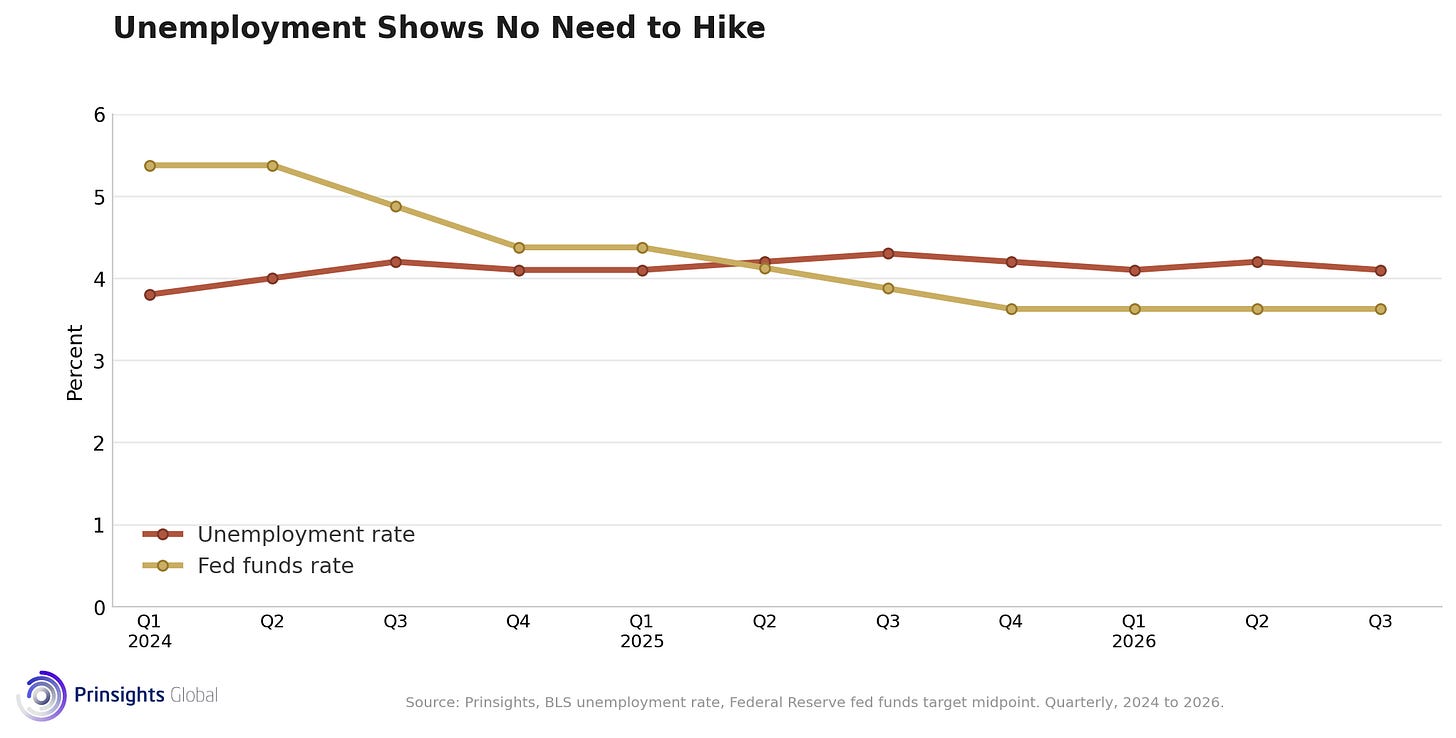
Wages are still losing ground to inflation. Average hourly earnings rose 3.1% year-over-year. With wage growth still failing to outpace sticky inflation (sitting at 3.4%), consumer purchasing power is actively degrading. The macroeconomic data gives the Fed very little reason to alter the course it hinted at last week.
President Trump called the report a win that beat every estimate “by double and triple,” then in the same breath told the Fed to “Lower the Rate.” That logic doesn’t quite follow.
That’s because, in a normal environment, cuts accompany waning economies, not “hot” ones. But in reality, that demand itself signals that the White House knows the overall payroll number was much weaker than the headline or the response to it.
For strategic investors, Friday’s sell-off in precious metals sbould be viewed mostly as an automated reaction to surface-level headlines, amplified by thin pre-holiday trading. Once the market fully processes that this print is just localized seasonal noise rather than economic acceleration, expect the gold and silver weakness to reverse, the same way the post-Jackson-Hole dip did.



Comments
Log in or sign up to join the conversation.