

Key Market Outlook(s) and Pick(s)
On Monday, I joined the great Stuart Varney on Fox Business’ Varney & Co. to discuss markets, the economy, outlook, rotation, SpaceX (SPCX), Tesla (TSLA), Cracker Barrel (CBRL), PayPal (PYPL), Baxter (BAX), and a lot more. Thanks to Stuart, Maggie Edwards, and Nick Palazzo for having me on:
On Tuesday, I joined the amazing Liz Claman on Fox Business’ The Claman Countdown to discuss markets, the economy, outlook, rotation, the consumer, the semiconductor trade, Oracle (ORCL), Dentsply Sirona (XRAY), and more. Thanks to Liz, Brooke Haliscak, and Jake Mack for having me on:
PayPal Update
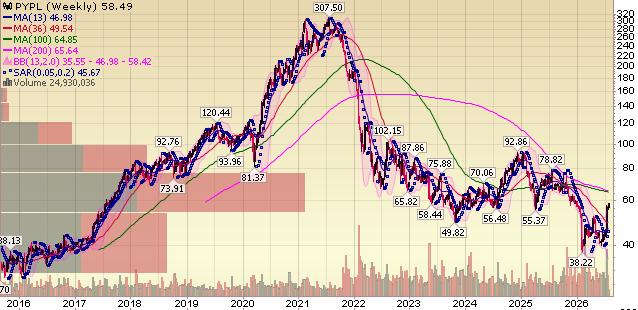
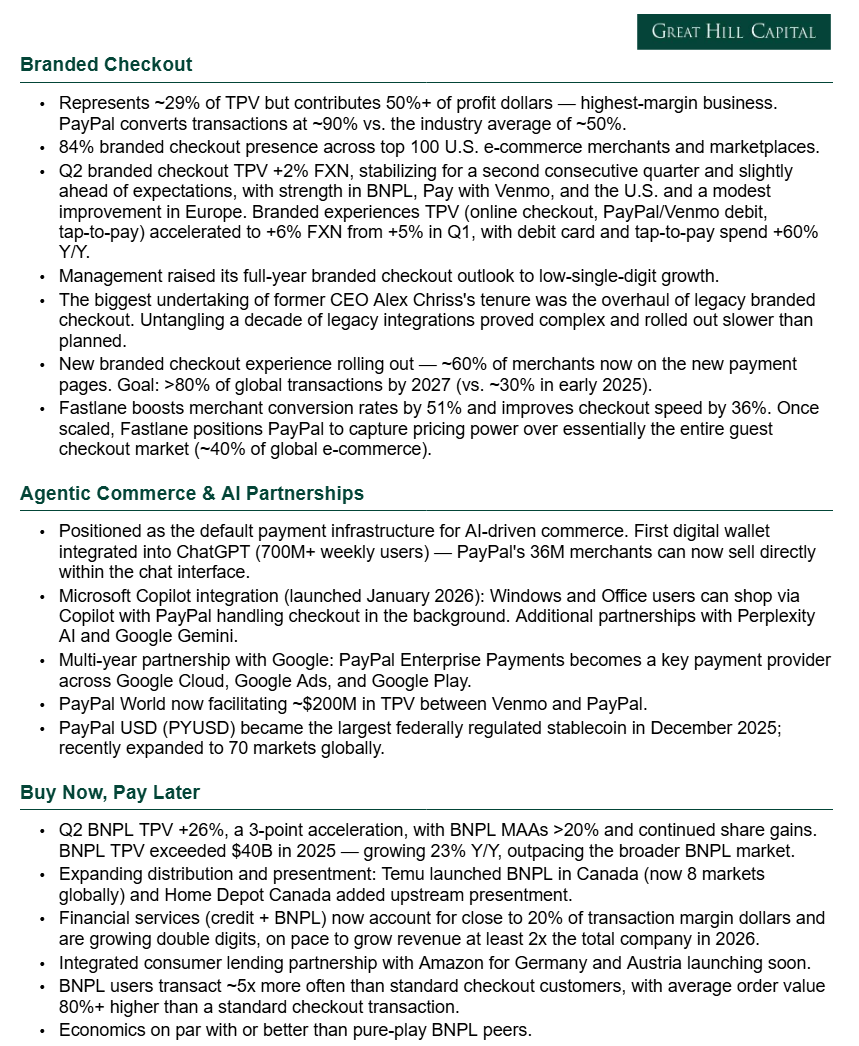
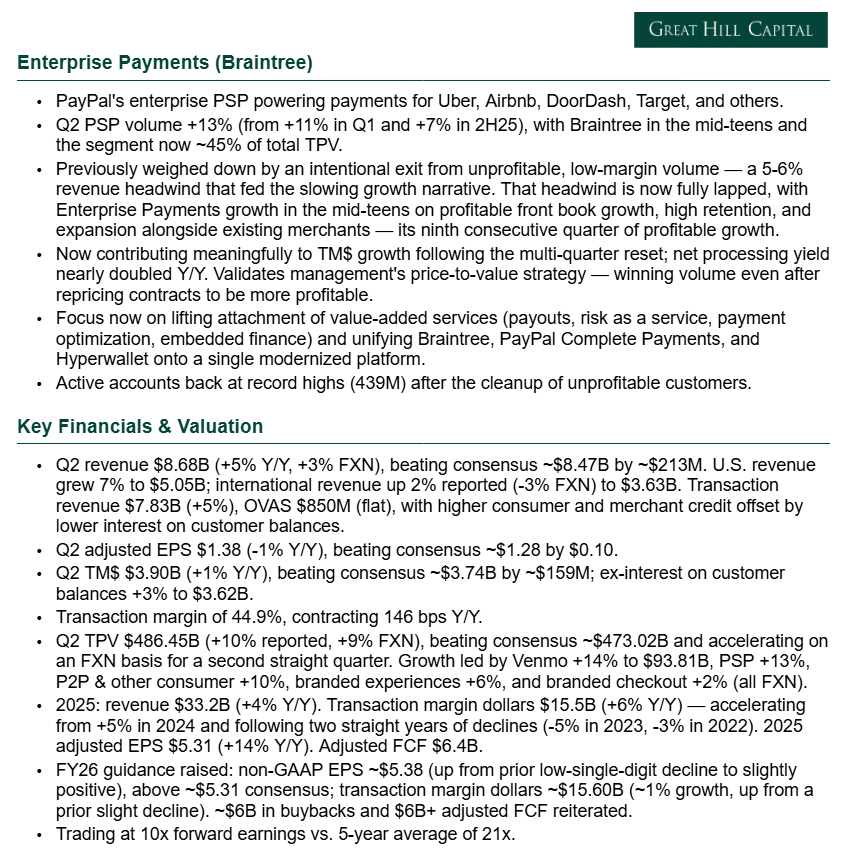
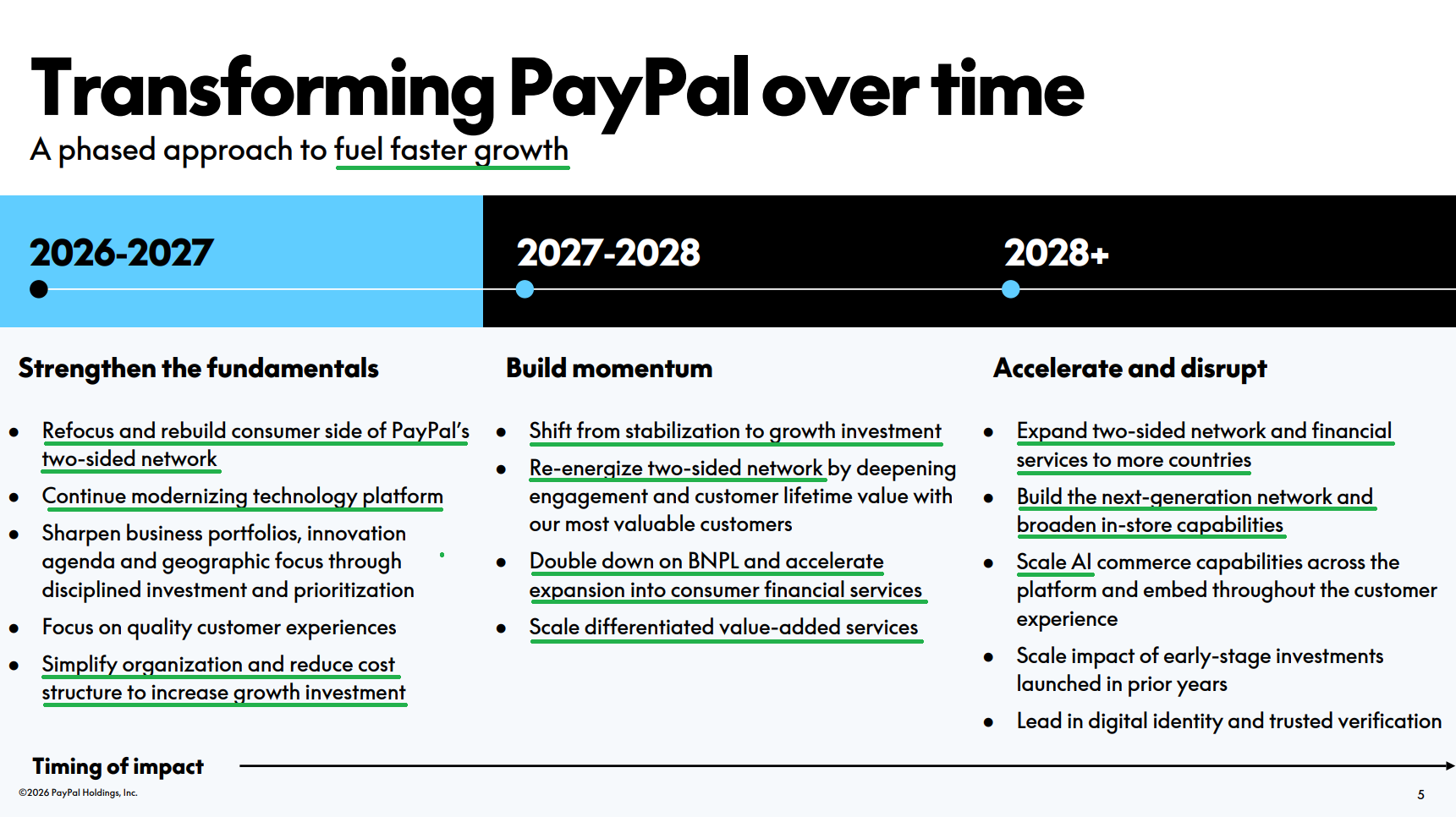
For newer readers, here’s a brief overview of the key drivers behind our PayPal thesis, an overlooked global payments leader with a cash machine core business funding aggressive buybacks and a long list of growth catalysts hiding in plain sight:
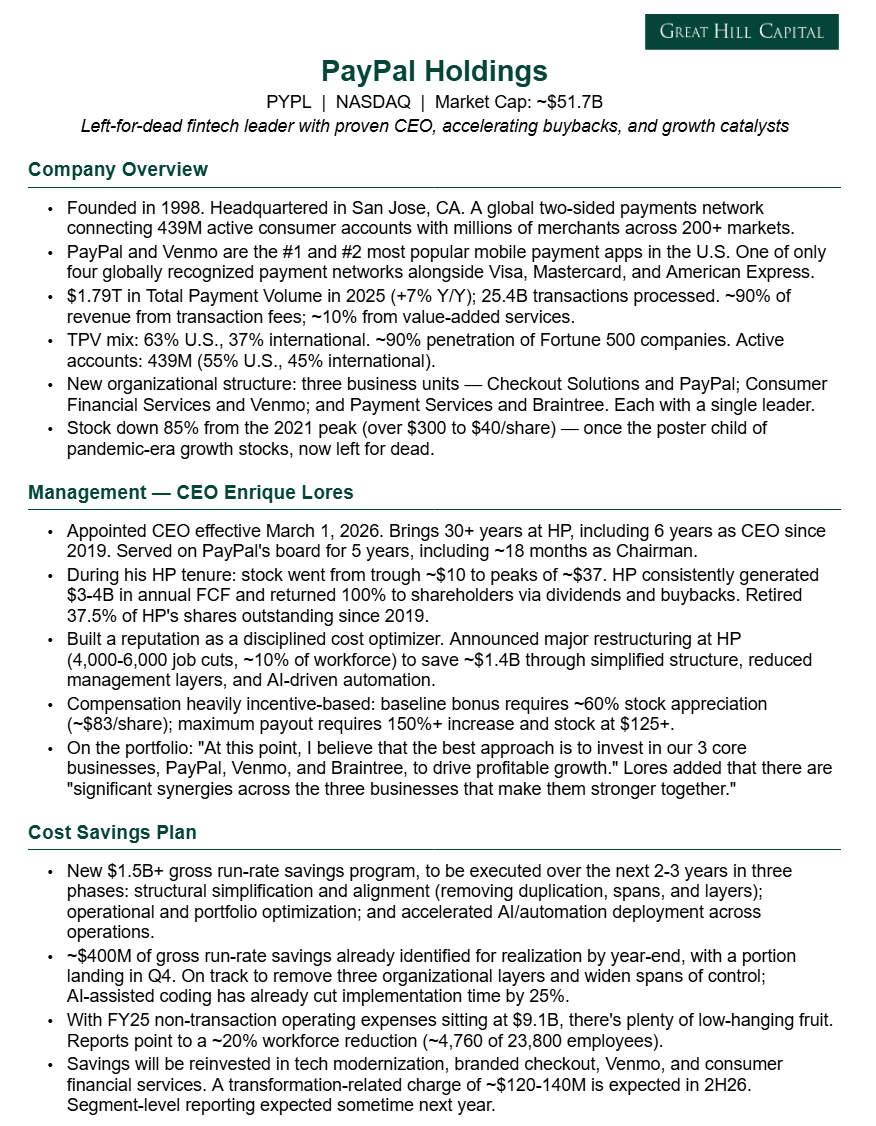
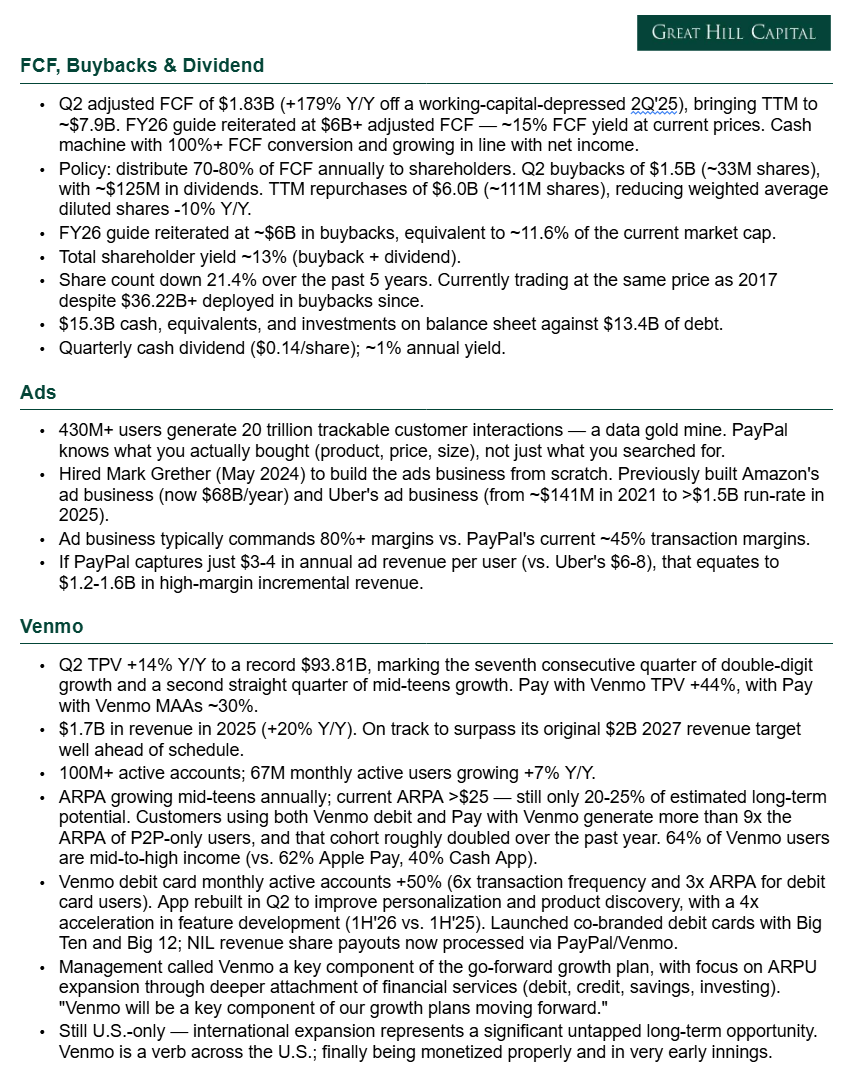
For a company that spent years overpromising and underdelivering, the fastest way to rebuild credibility is boring: say what you are going to do, then do it. In just his second quarter in the driver’s seat, Enrique Lores did exactly that.
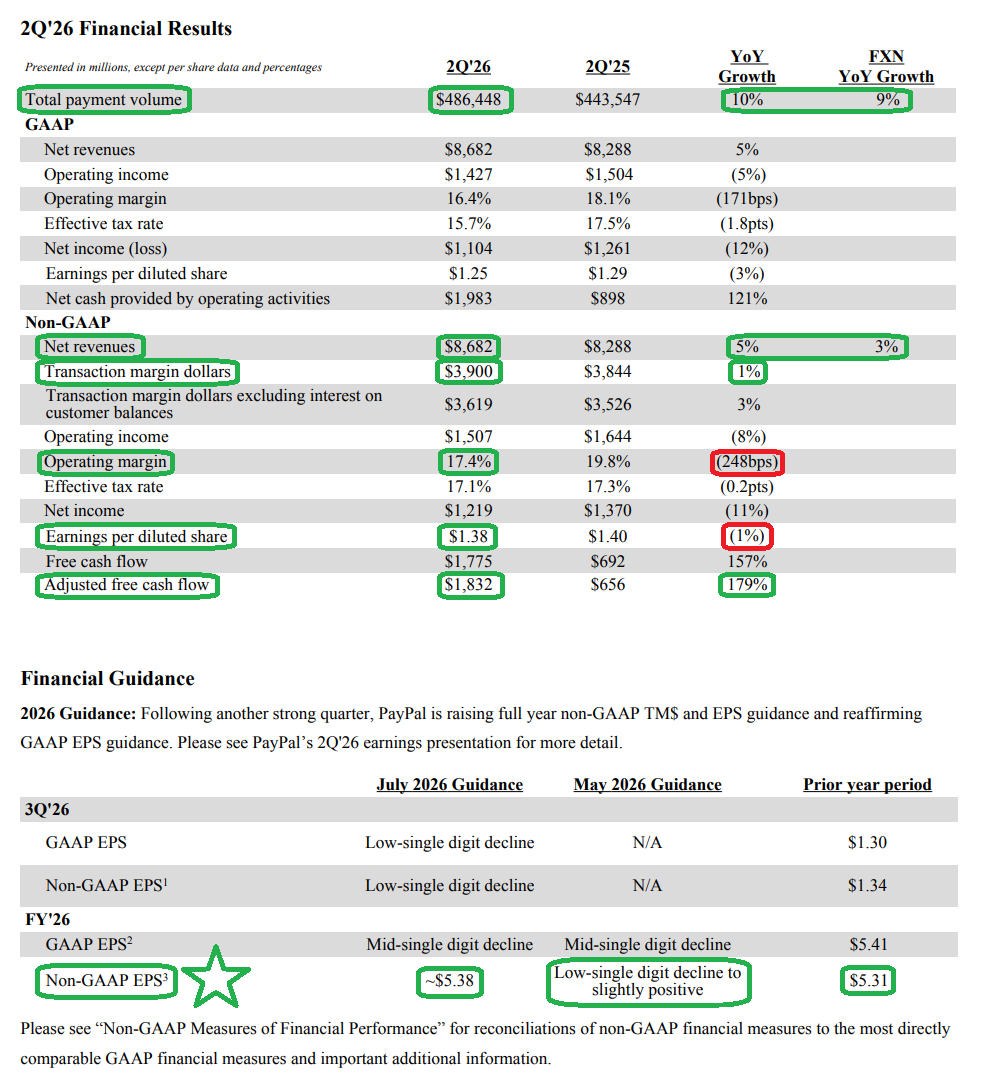
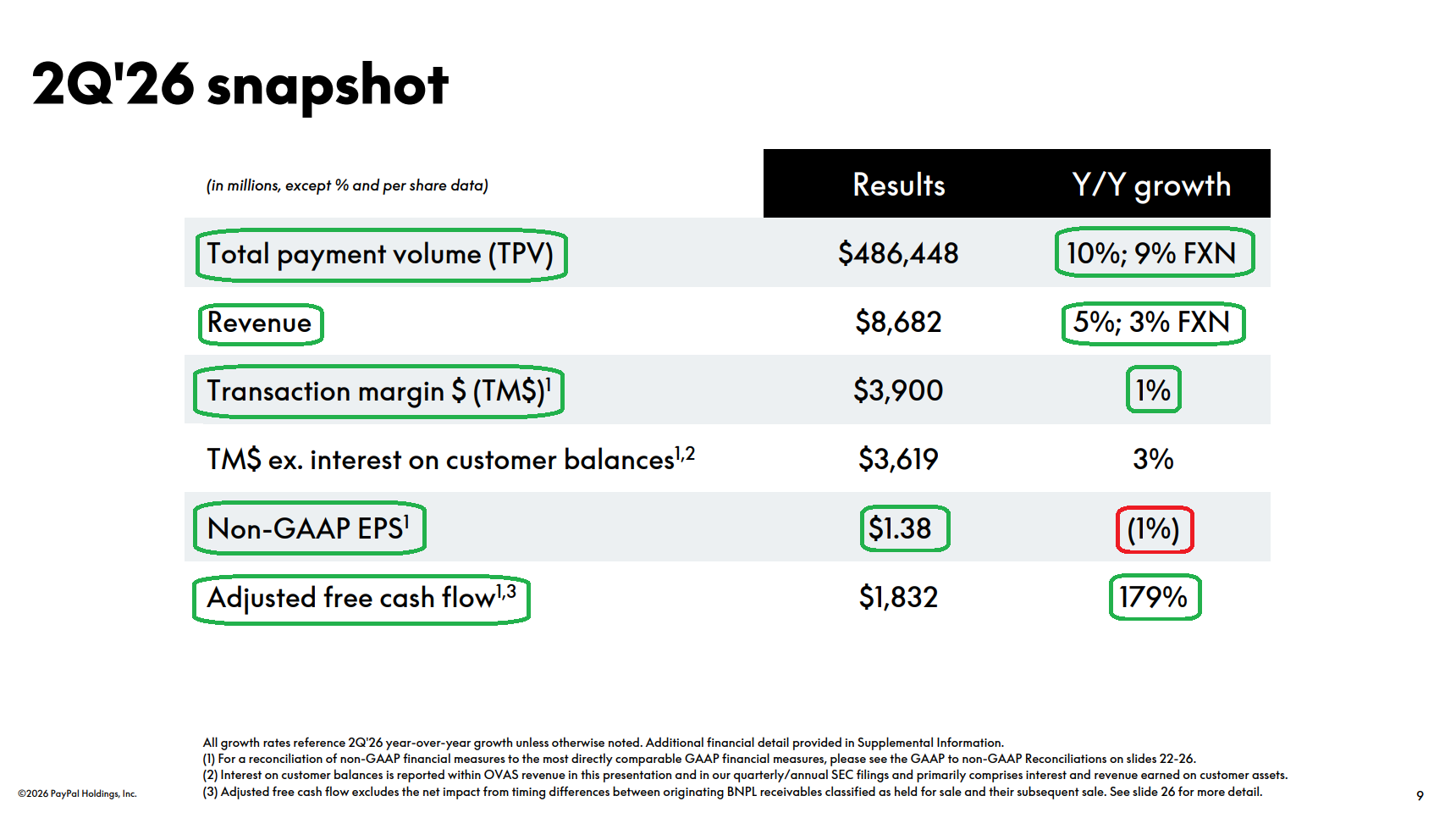
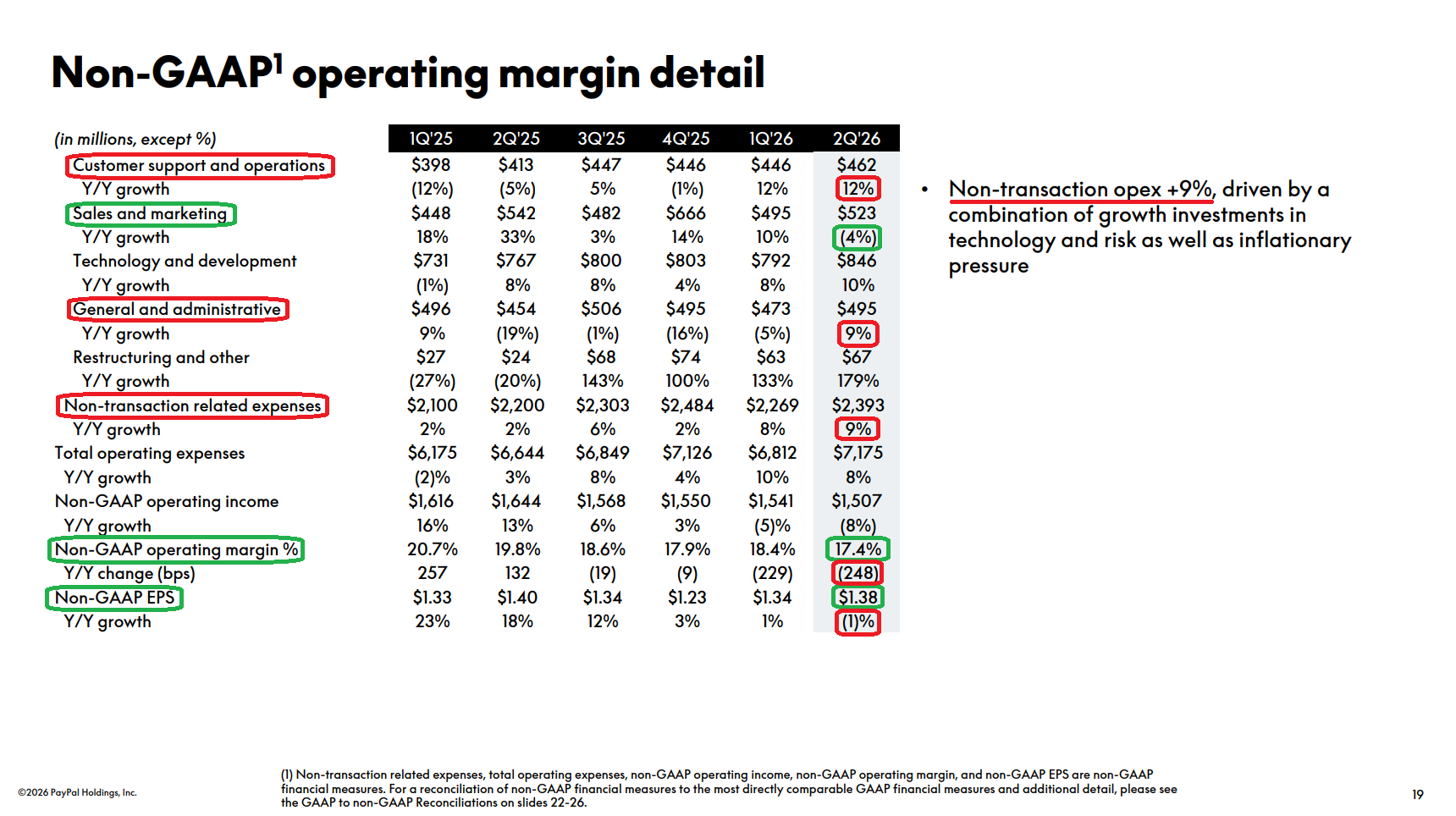
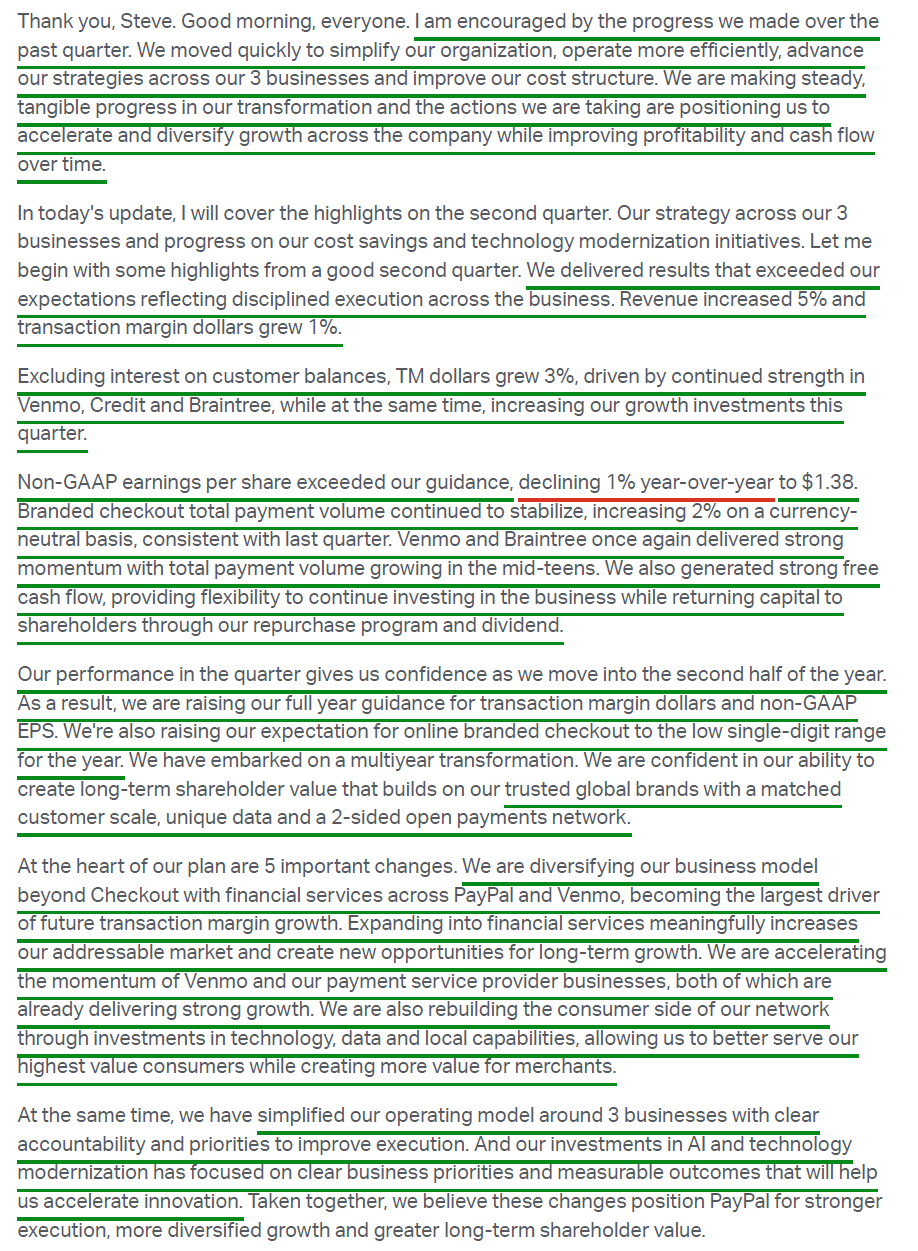
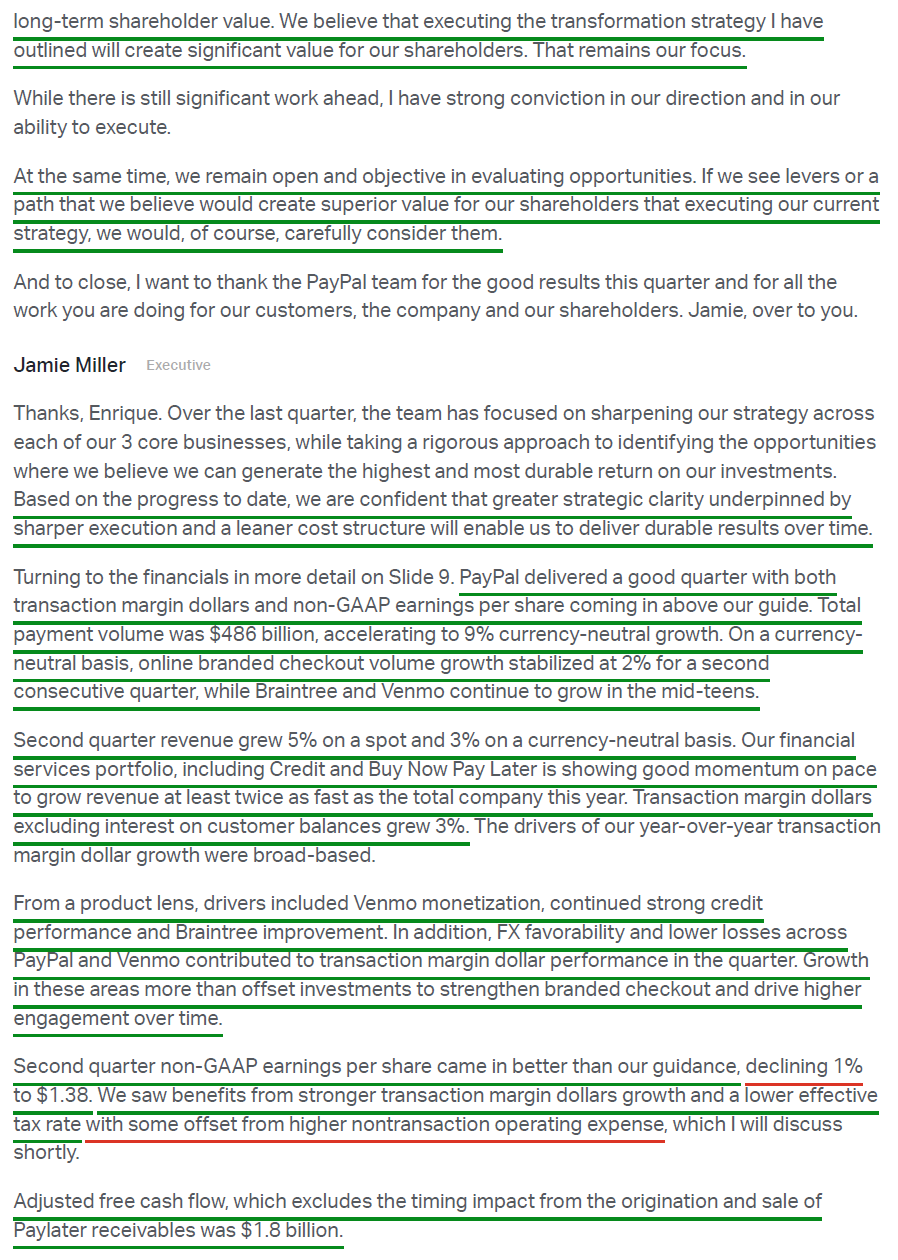
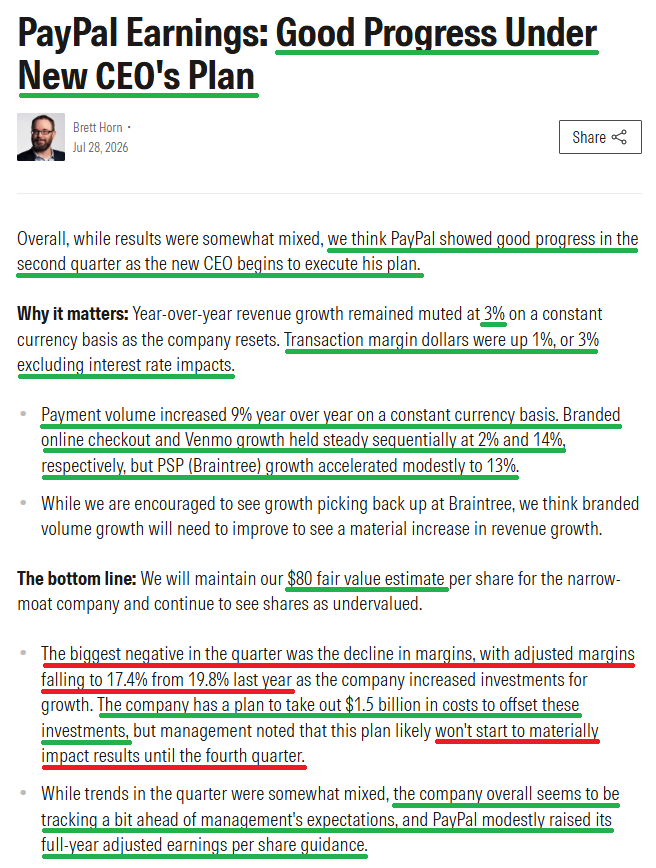
Management entered the second quarter guiding for a high-single-digit decline in earnings and a ~3% decline in transaction margin dollars as recently as May. Instead, PayPal delivered adjusted EPS of $1.38, down just 1% Y/Y and well ahead of the $1.28 consensus, while transaction margin dollars reached $3.90B, growing 1% Y/Y.
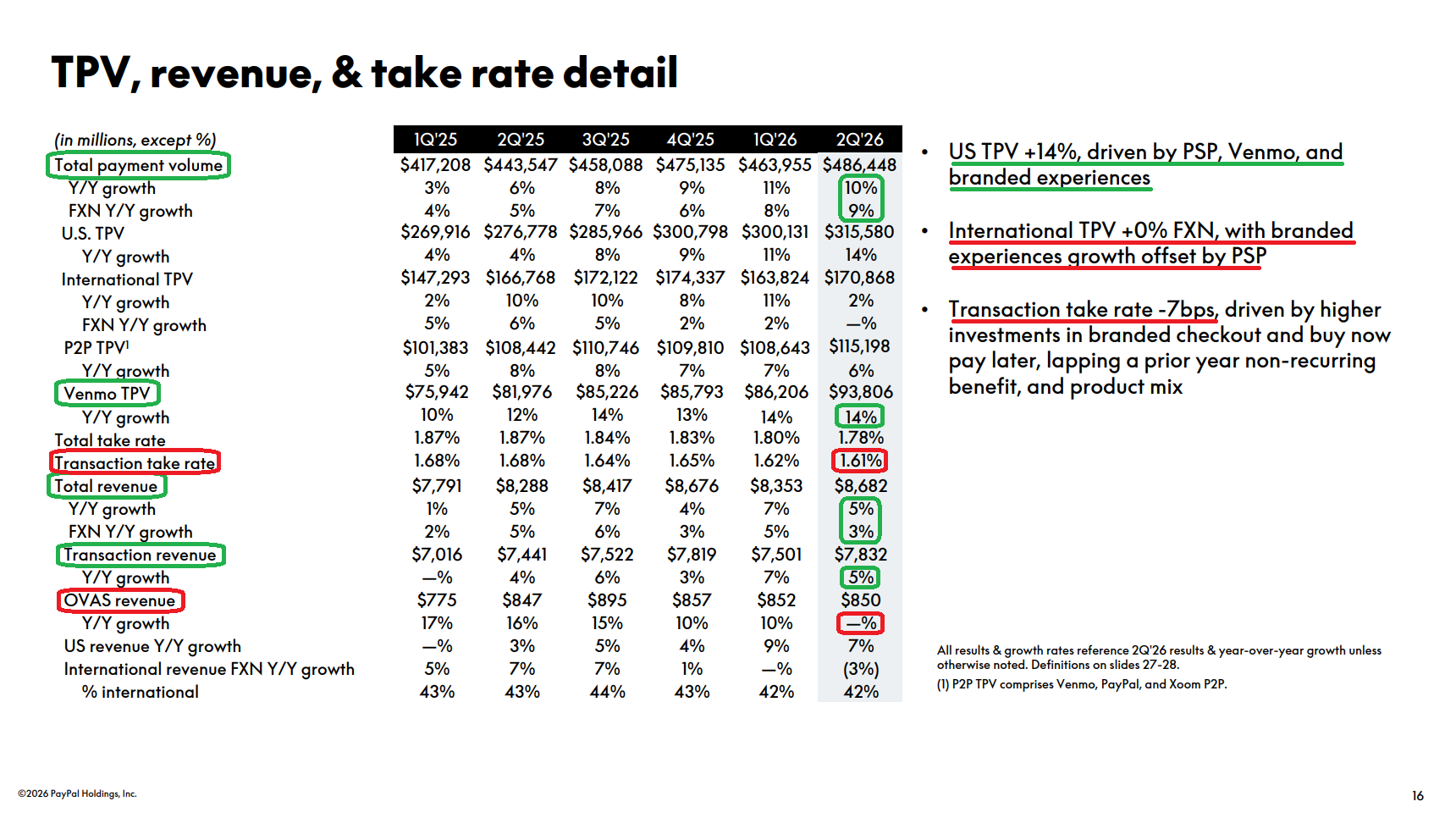
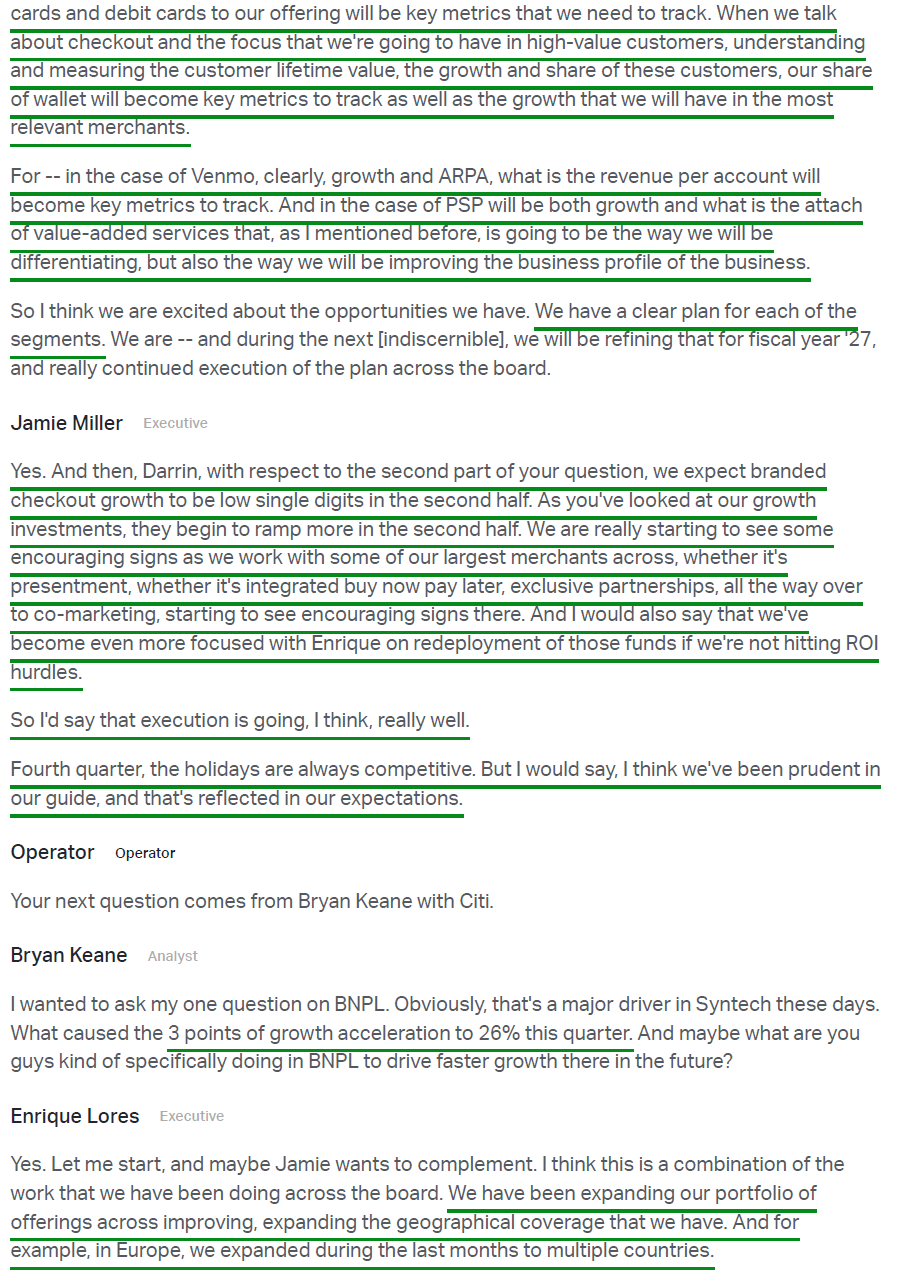
In fact, PayPal’s embrace of the “low expectations = secret to happiness” framework set the stage for a clean beat across the board. Revenue of $8.68B (+5%, +3% FXN) topped expectations by ~$213M. Total payment volume reached a record $486.45B (+10%, +9% FXN), beating estimates by ~$13B while accelerating on an FXN basis for a second consecutive quarter. Venmo TPV climbed 14% to a record $93.81B, marking its seventh straight quarter of double-digit growth. Braintree grew at a mid-teens rate for a ninth consecutive quarter of profitable growth. BNPL volume accelerated three points to +26%. And branded checkout, the centerpiece of the bear case, continued to stabilize at +2% FXN for a second consecutive quarter despite expectations for further deterioration.
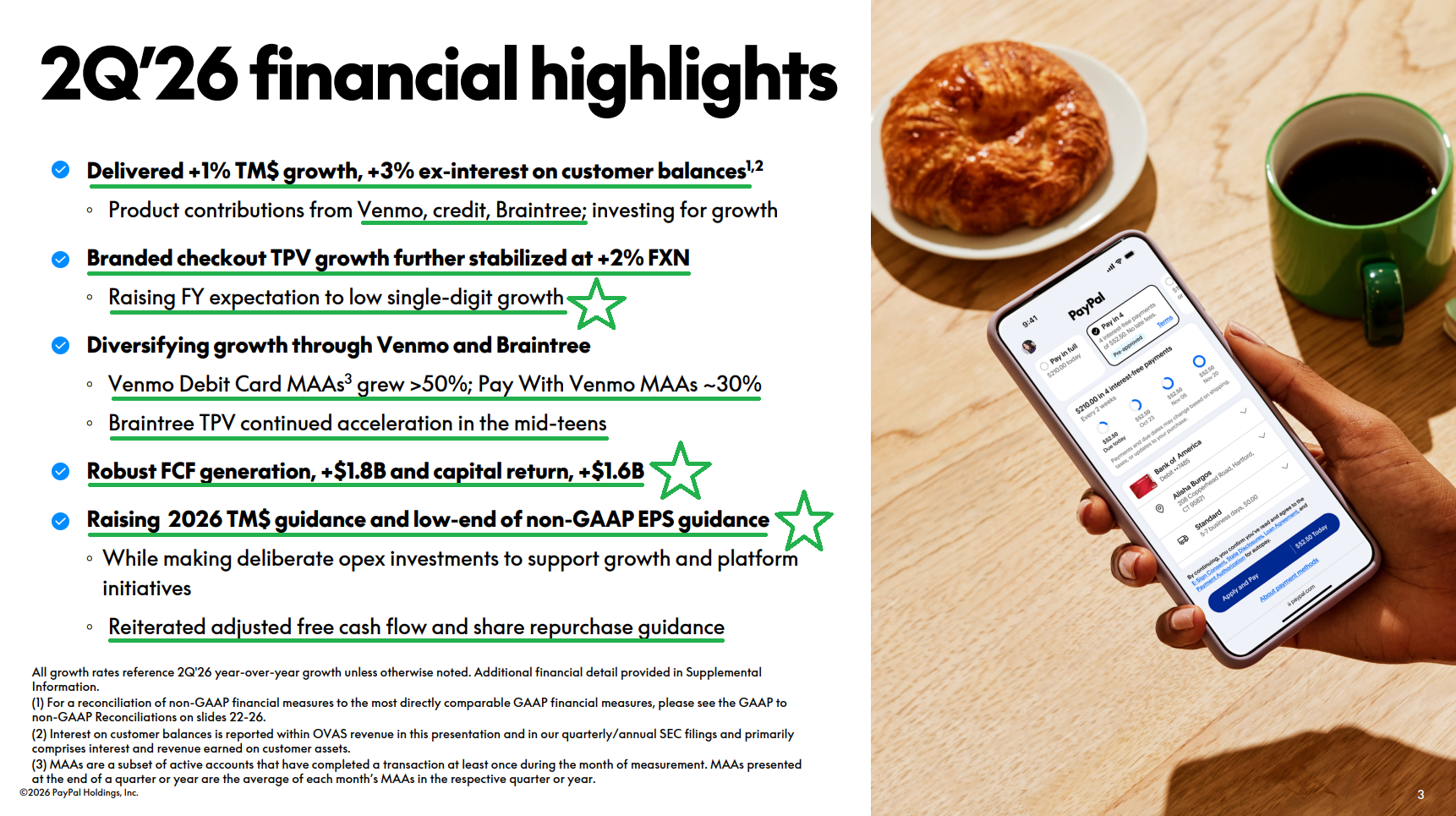
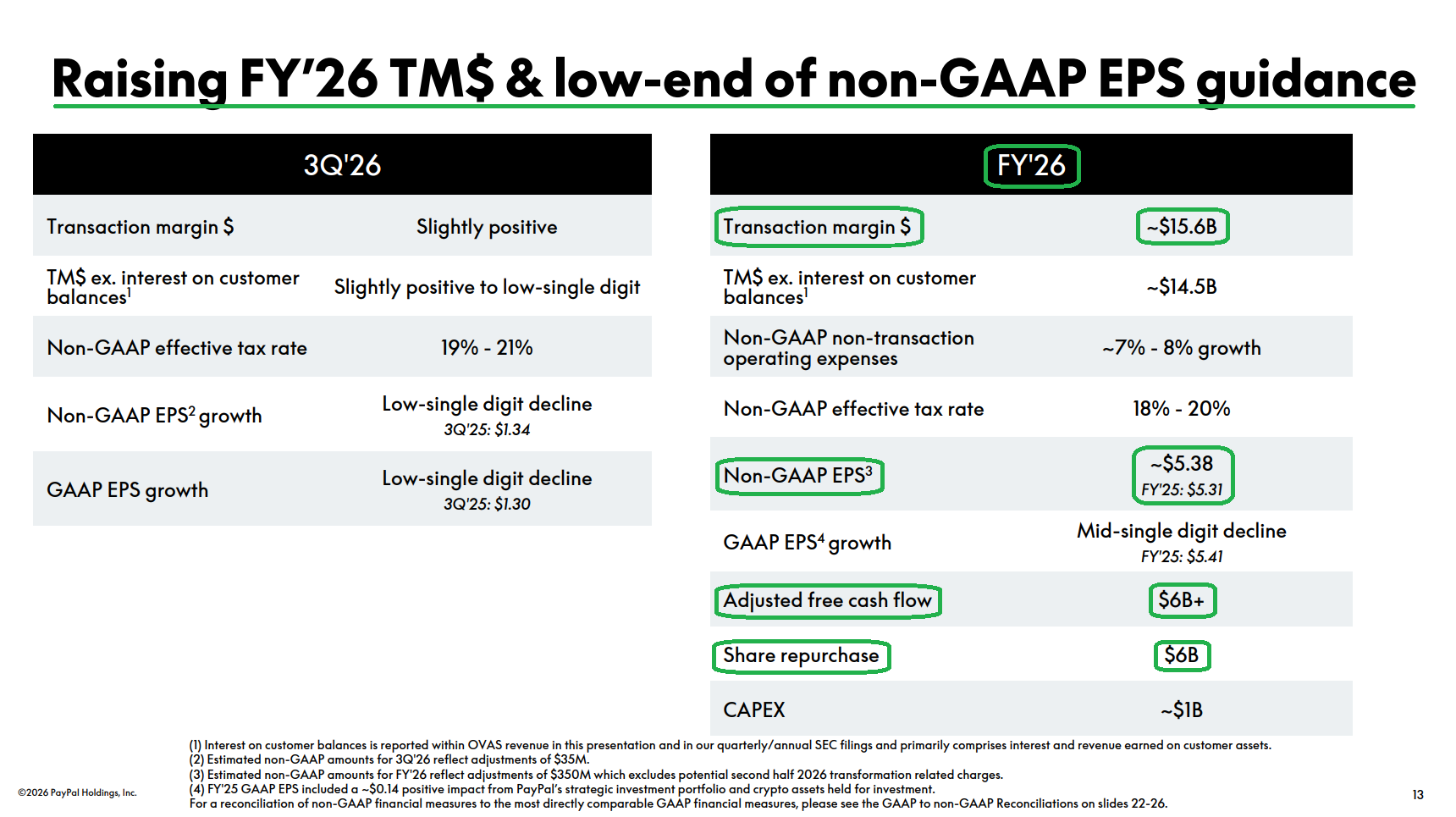
The strength of the quarter gave management the confidence to raise the bar on full-year expectations. Transaction margin dollars are now expected to reach ~$15.60B, implying ~1% growth versus the prior outlook for a decline. Non-GAAP EPS was raised to ~$5.38 (+1.3% Y/Y), a solid step up from prior guidance calling for a low-single-digit decline to slightly positive growth, while branded checkout is now expected to deliver low-single-digit growth rather than merely hold flat.
Yet the most important number this quarter wasn’t in the earnings release or the raised full-year outlook. It was $60.50.
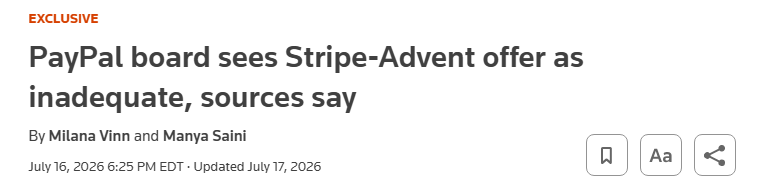
Earlier this month, Stripe and private equity firm Advent made a joint offer to acquire PayPal for $60.50 per share, valuing the company at $53.4B. We quickly came out publicly on the proposal, calling it an insulting offer that would steal material upside from existing owners. The board delivered the understatement of the year by calling it “inadequate,” leaving it at that.
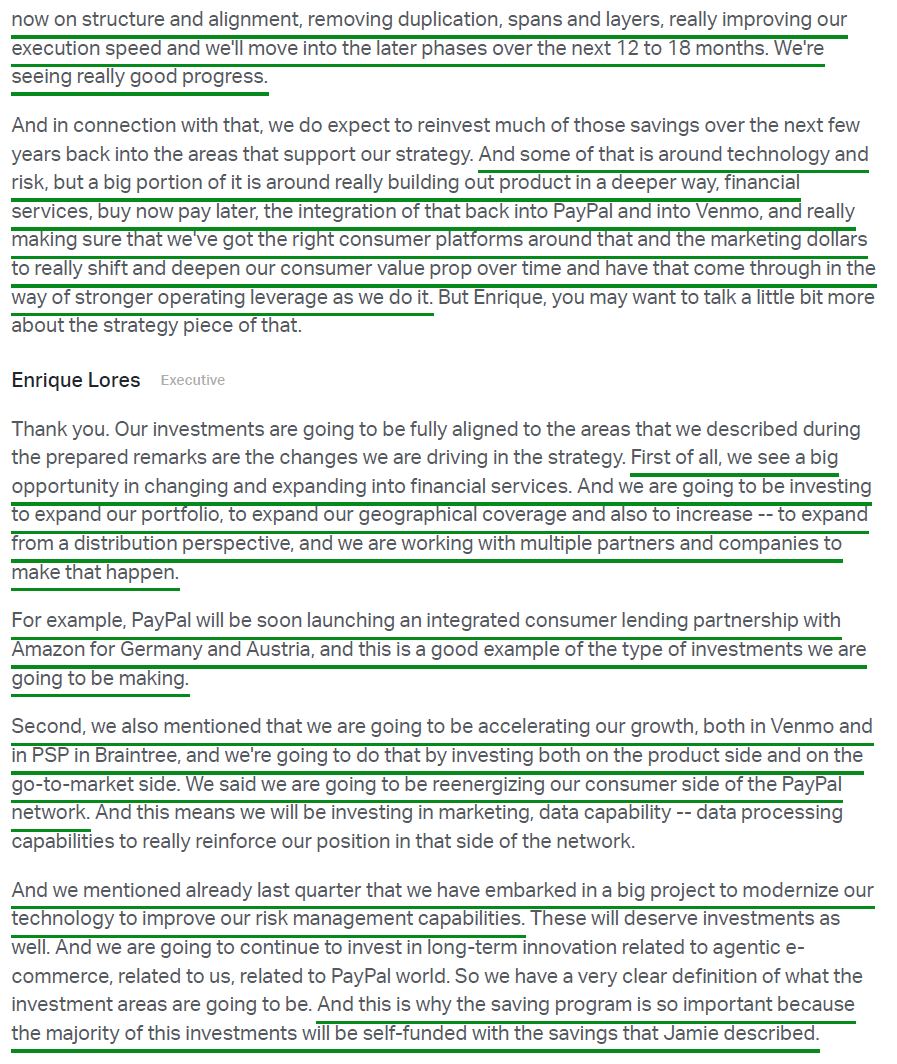
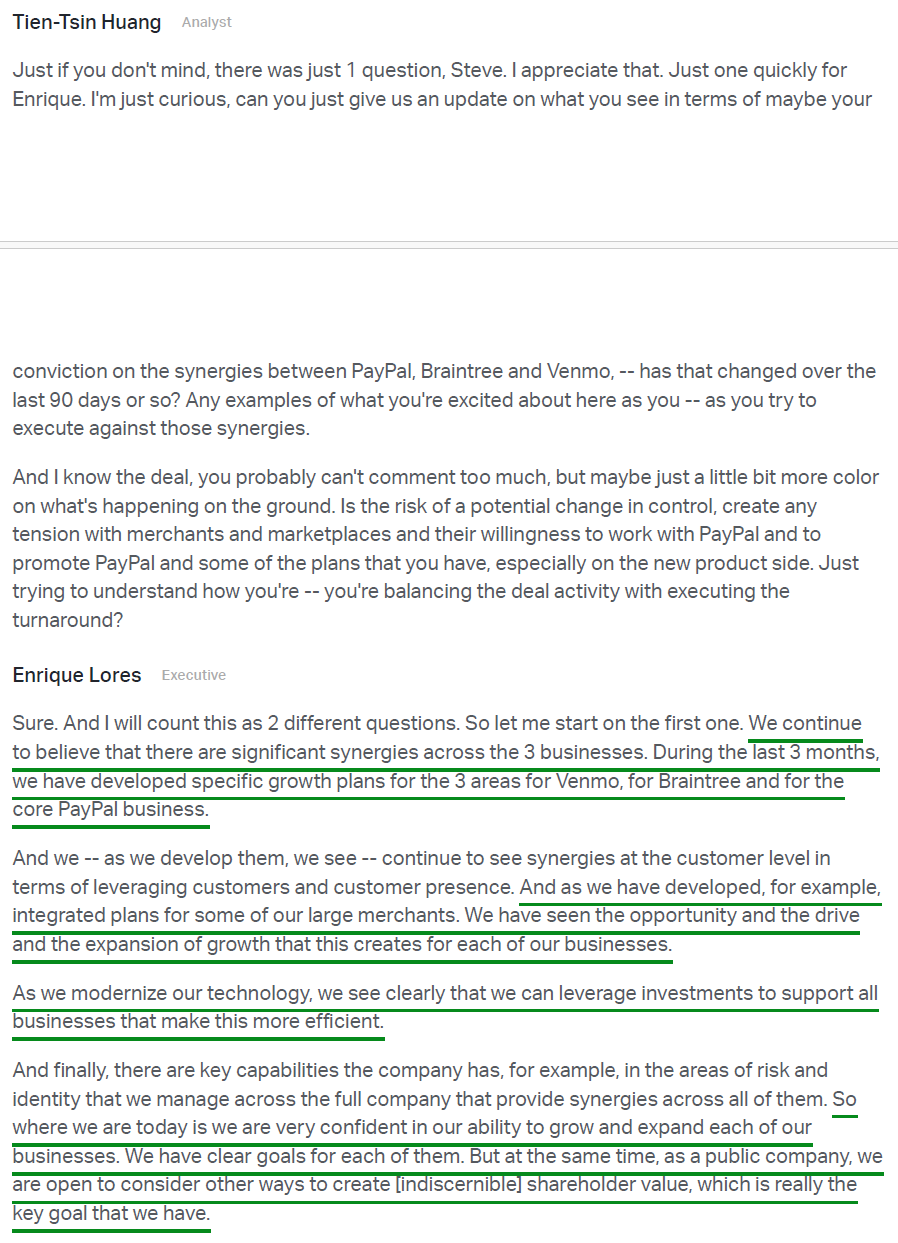
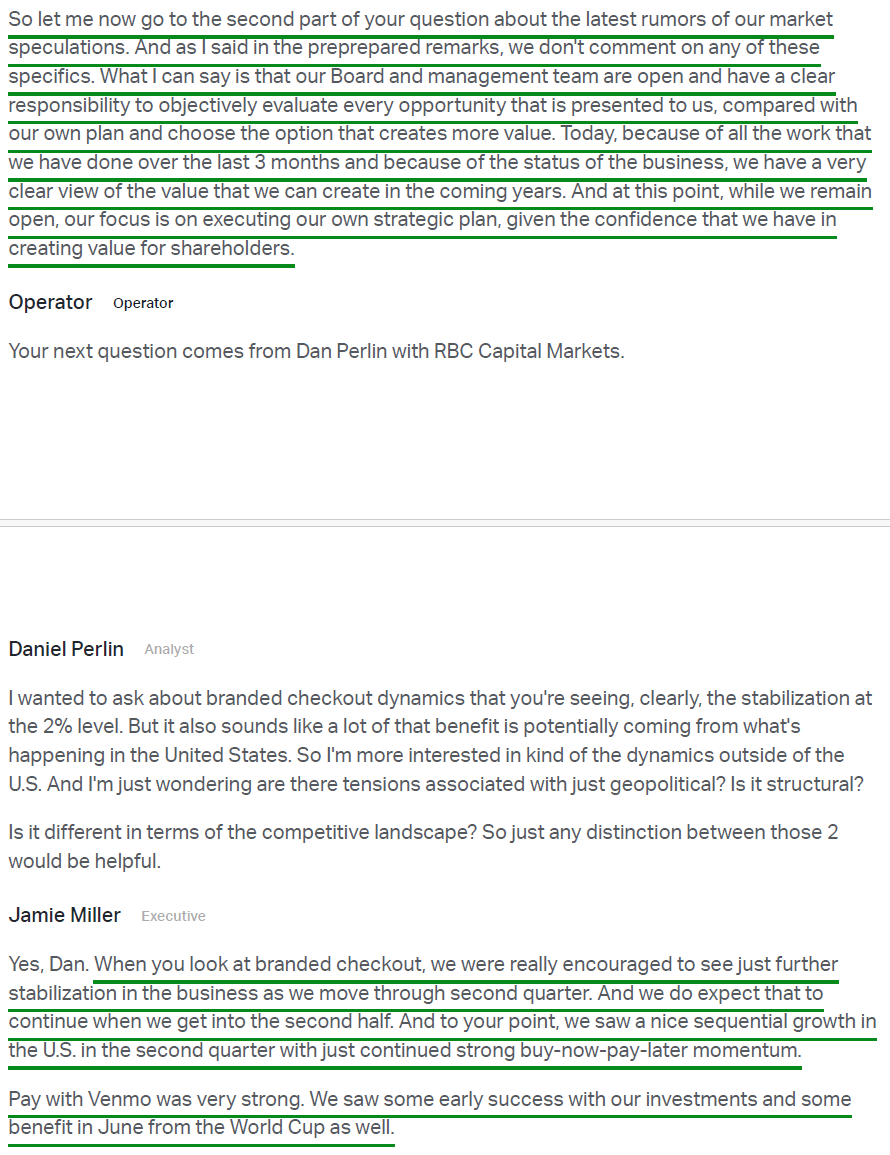
On the call, we got our first real look at where management stands:
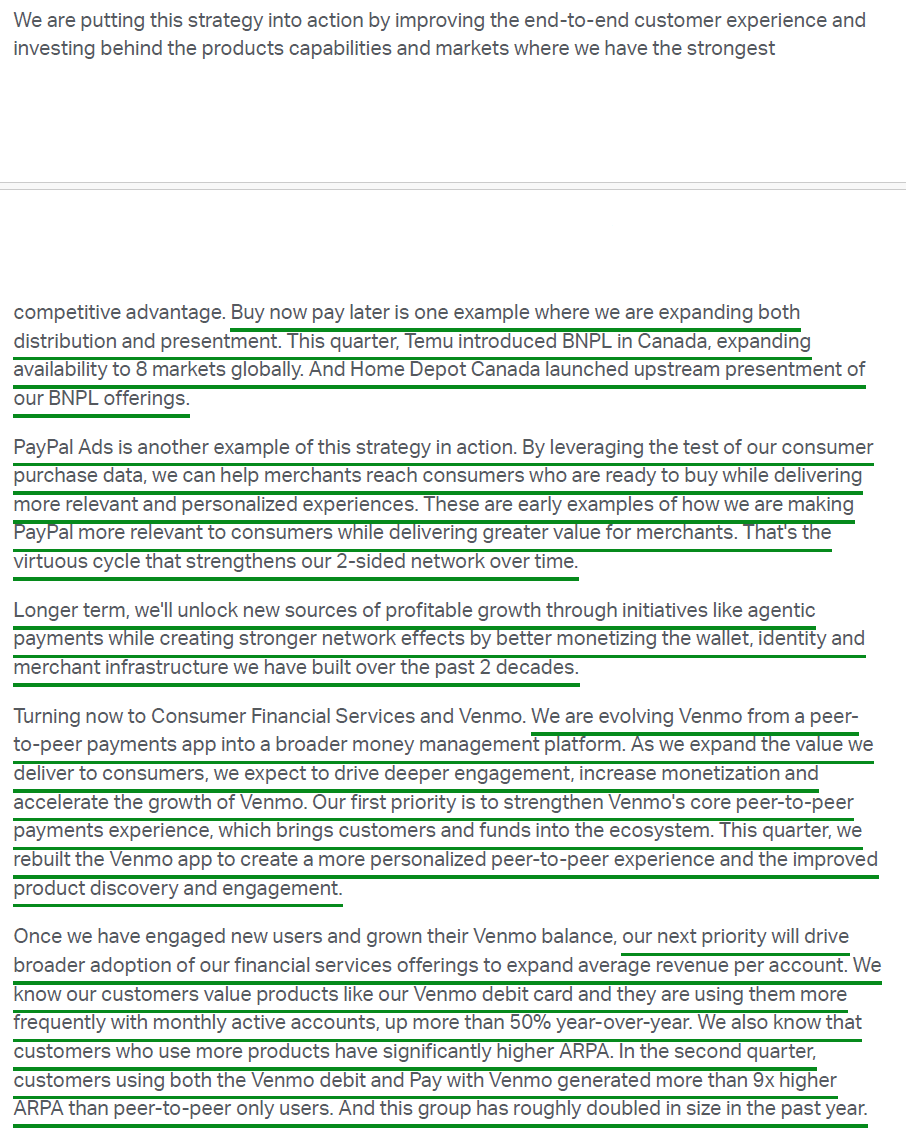
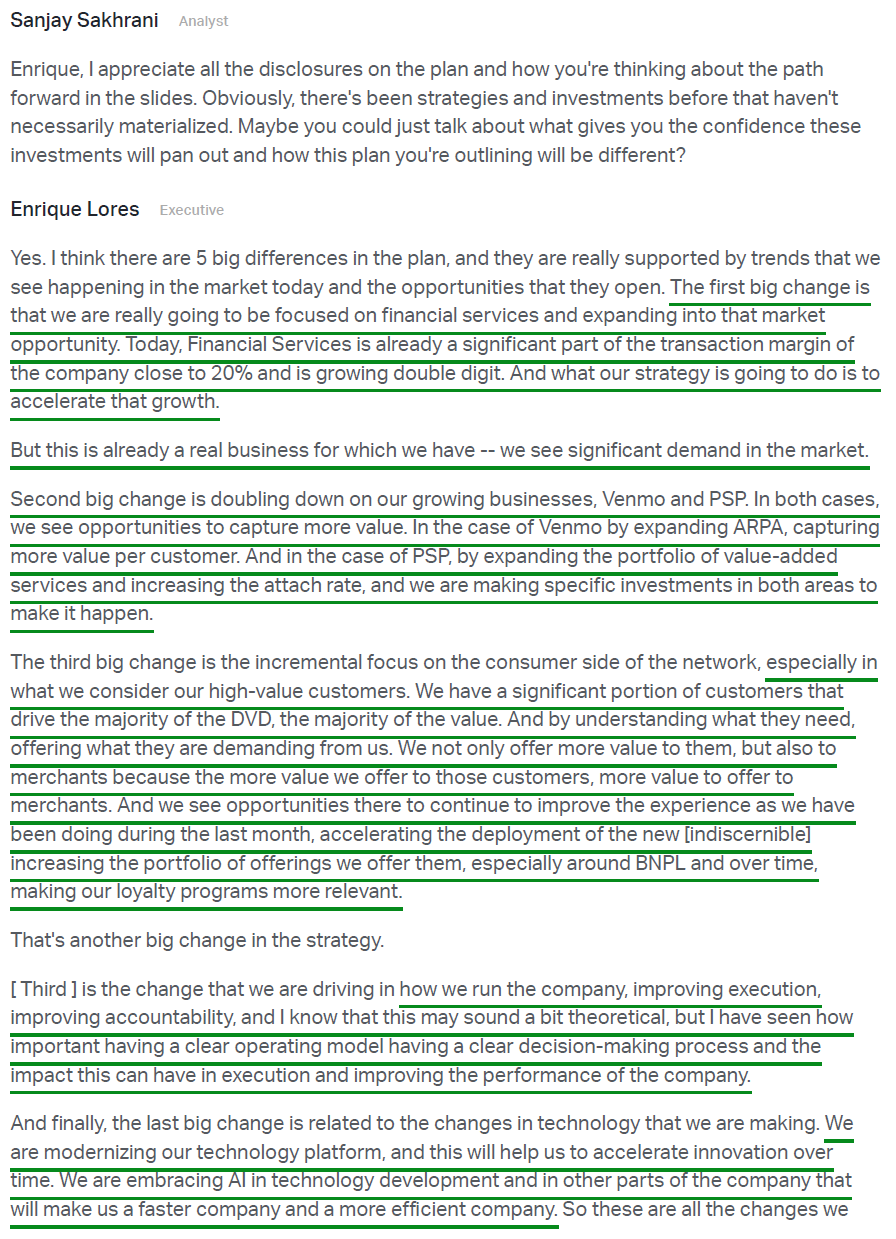
“What I can say is that our Board and management team are open and have a clear responsibility to objectively evaluate every opportunity that is presented to us, compared with our own plan and choose the option that creates more value. Today, because of all the work that we have done over the last 3 months and because of the status of the business, we have a very clear view of the value that we can create in the coming years. And at this point, while we remain open, our focus is on executing our own strategic plan, given the confidence that we have in creating value for shareholders.”
That is music to our ears. This is not a board willing to accept the first lowball offer that comes along, but a board that knows what it owns and understands where the business is heading, while still leaving the door open at the right price and putting the ball squarely back in the bidder’s court. More importantly, they are now negotiating from a position of strength after delivering a double beat-and-raise quarter with accelerating fundamentals (many of which remain at record highs), a far different position than a company backed into a corner by weak results.
It’s also no accident that Lores has shown little interest at these levels. The first threshold in his long-term incentive package is tied to an $83.20 share price and ~$25M of potential payout, ~38% above the offer on the table. His own compensation structure makes clear what shareholders already know: there is far more value to be created by executing the turnaround than by selling the company in the very first inning of its recovery. Unless Stripe and Advent are willing to sharpen their pencils with a bid that begins with an eight handle, we see little reason for Lores to rush into a transaction that would cut short the turnaround he was brought in to execute.

Even with an eight handle, we would still view the offer as highway robbery of long-term upside for existing shareholders. That’s because the market continues to focus on what PayPal has BEEN while giving little credit to what the business can BECOME.
At less than 10x earnings, the market is assigning PayPal a multiple typically reserved for businesses in terminal decline. That valuation may have been appropriate for the legacy checkout button, but it gives no credit to the growth drivers increasingly becoming the core of PayPal’s future. The entire theme of the earnings call was management doubling down on these drivers and outlining the path to the next phase of growth.
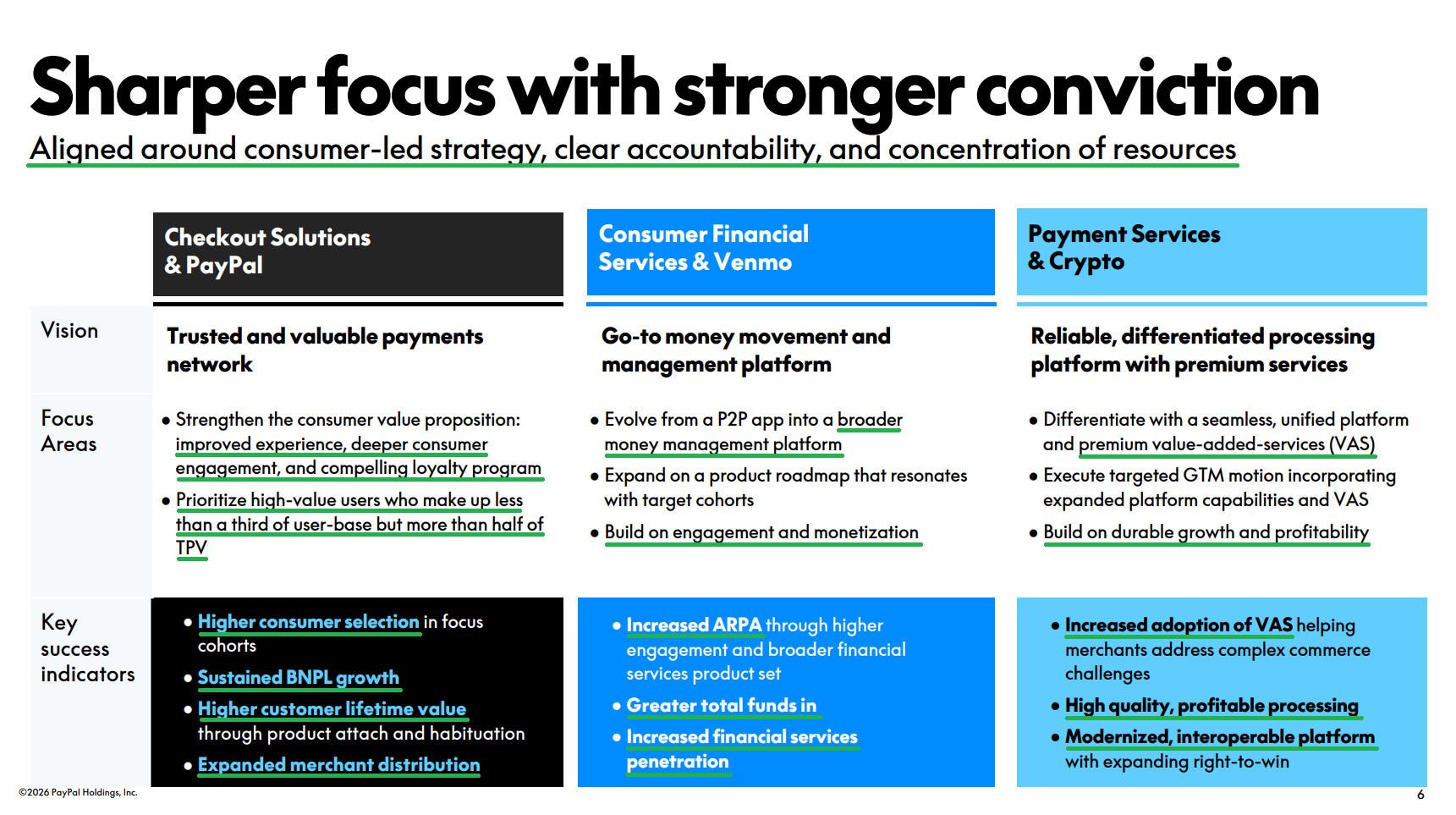
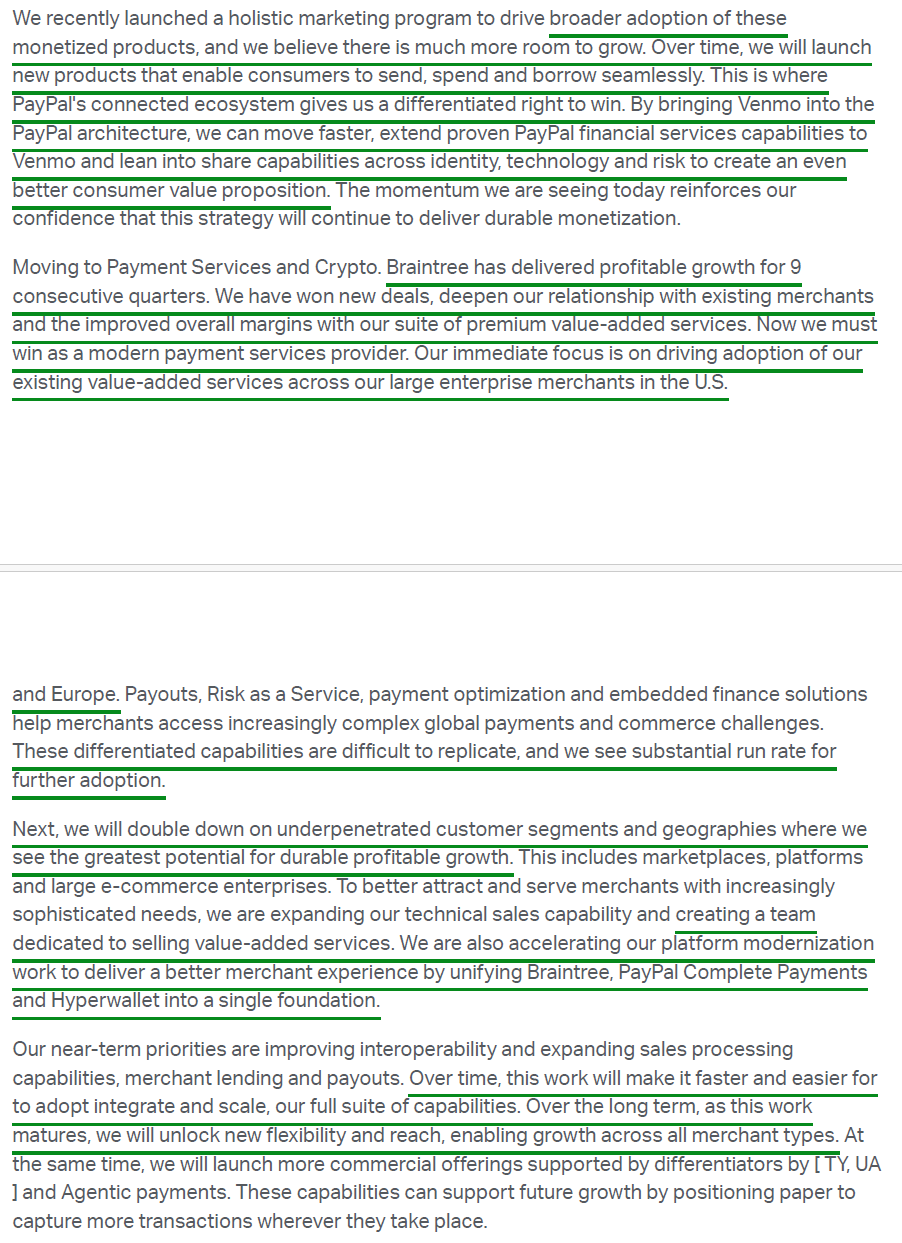
The first of those growth drivers is Venmo. What was once viewed as simply a peer-to-peer payments app is being rebuilt into a broader money management platform. Revenue reached $1.7B in 2025, up 20% Y/Y, already tracking well ahead of the company’s original $2B 2027 target. Quarterly TPV hit another record at $93.81B, yet monetization remains in the very early innings, with ARPA of just over $25, only a fraction of what the platform can ultimately earn. And importantly, Venmo remains exclusively a U.S. product today, leaving a long runway for future international growth.
BNPL is another growth lever that management is leaning into. Annual volume reached more than $40B in 2025 and accelerated again this quarter, growing 26%. After steadily taking share in the category for years, PayPal is doubling down through new geographies, expanded merchant partnerships, and broader distribution. The result is a highly attractive customer base that transacts ~5x more frequently, generates average order values ~80% higher, and delivers unit economics on par with or better than pure-play competitors.
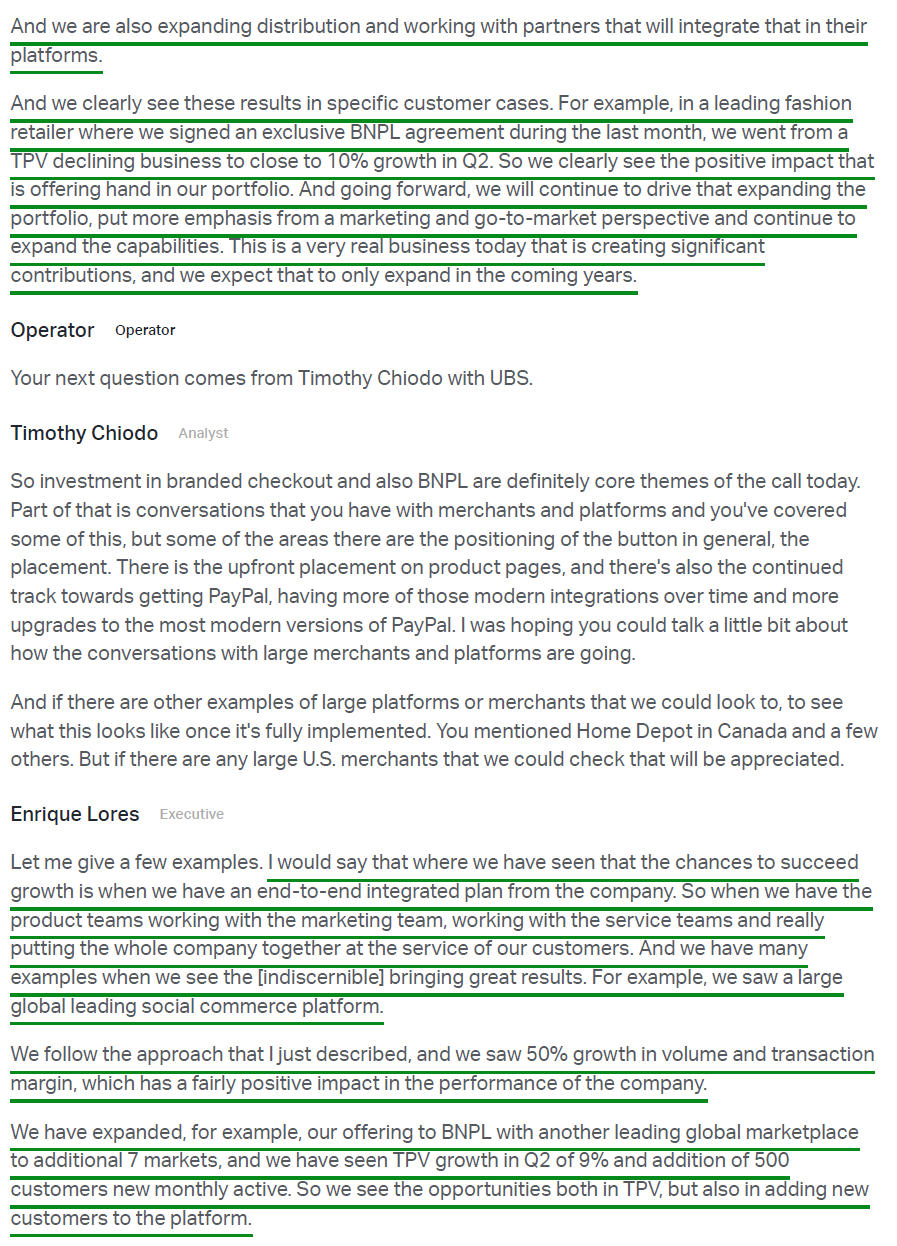
Then there is advertising, arguably the most overlooked piece in the entire story. PayPal brought in Mark Grether, who helped build Amazon (AMZN)’s advertising business into a $68B juggernaut. Today, Amazon Ads generates ~70% operating margins, nearly double AWS, and contributes more than half of Amazon’s total operating income. Grether then took that same playbook to Uber (UBER), where he built its advertising business from the ground up, scaling it from ~$141M in 2021 to a more than $1.5B run rate in 2025. Now, PayPal is his next project, this time armed with a massive consumer data asset. With 430M+ active accounts and 20T+ trackable customer interactions, PayPal has a gold mine of consumer data, knowing everything from a customer’s shoe size to their favorite color. That purchase data is what we believe can become the foundation for a multi-billion dollar, high-margin advertising business, giving investors a free flier on another potentially massive growth engine that is currently assigned little to no value.
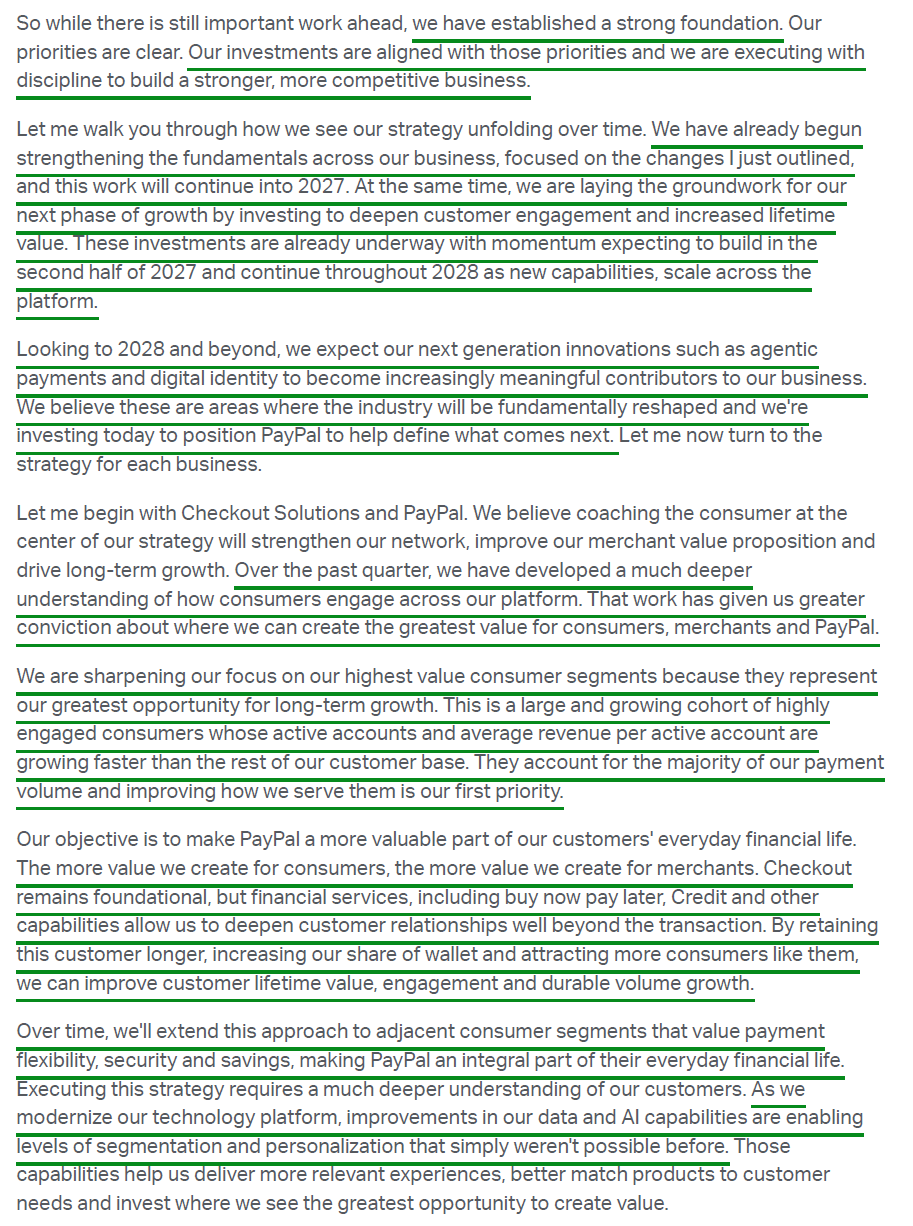
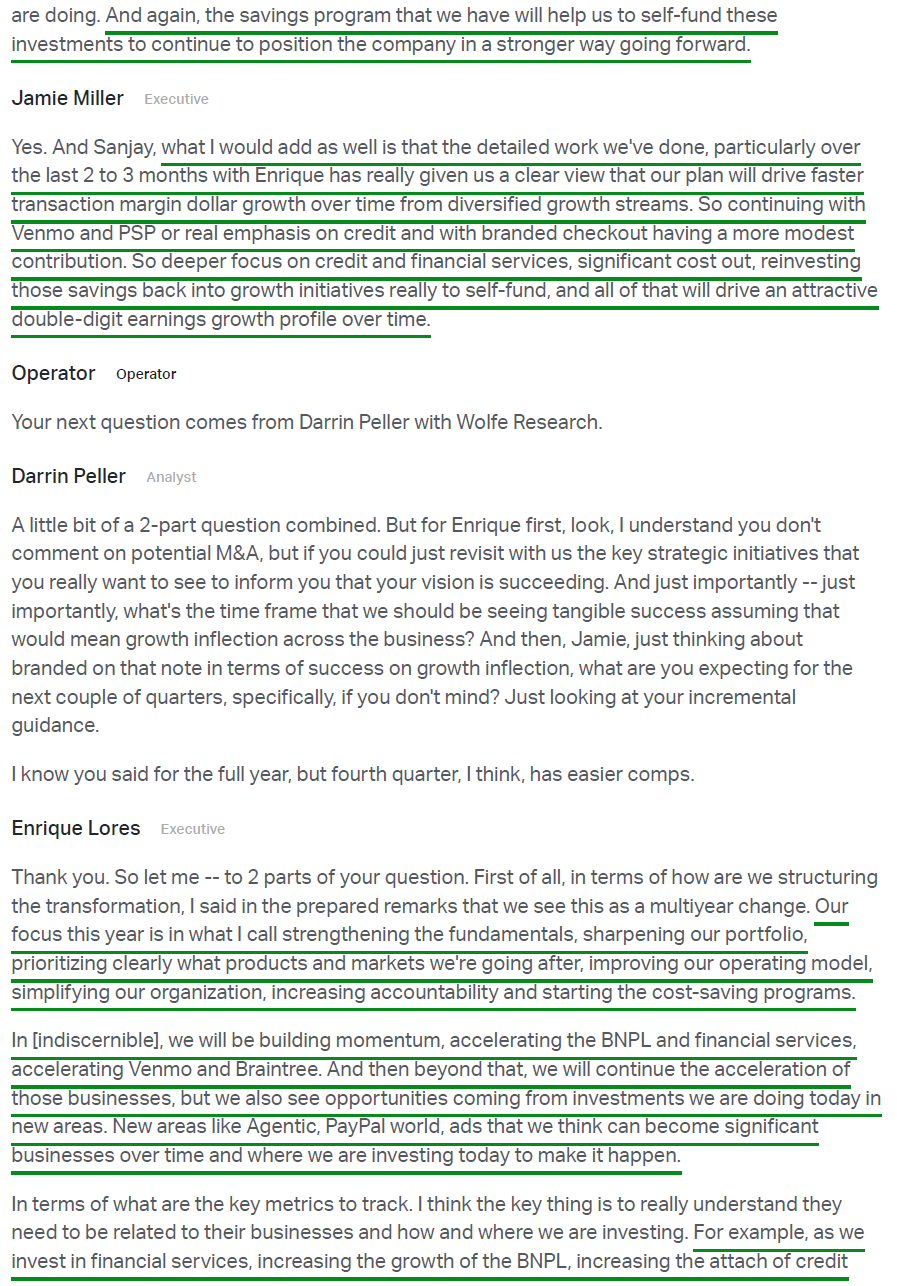
Taken together, these growth drivers, along with the broader financial services business, are what management believes will drive PayPal’s next phase of growth. Financial services already represents ~20% of transaction margin dollars and is on pace to grow revenue at least twice as fast as the overall company this year. Management has been clear that this, not branded checkout, will become the largest driver of future transaction margin dollar growth.
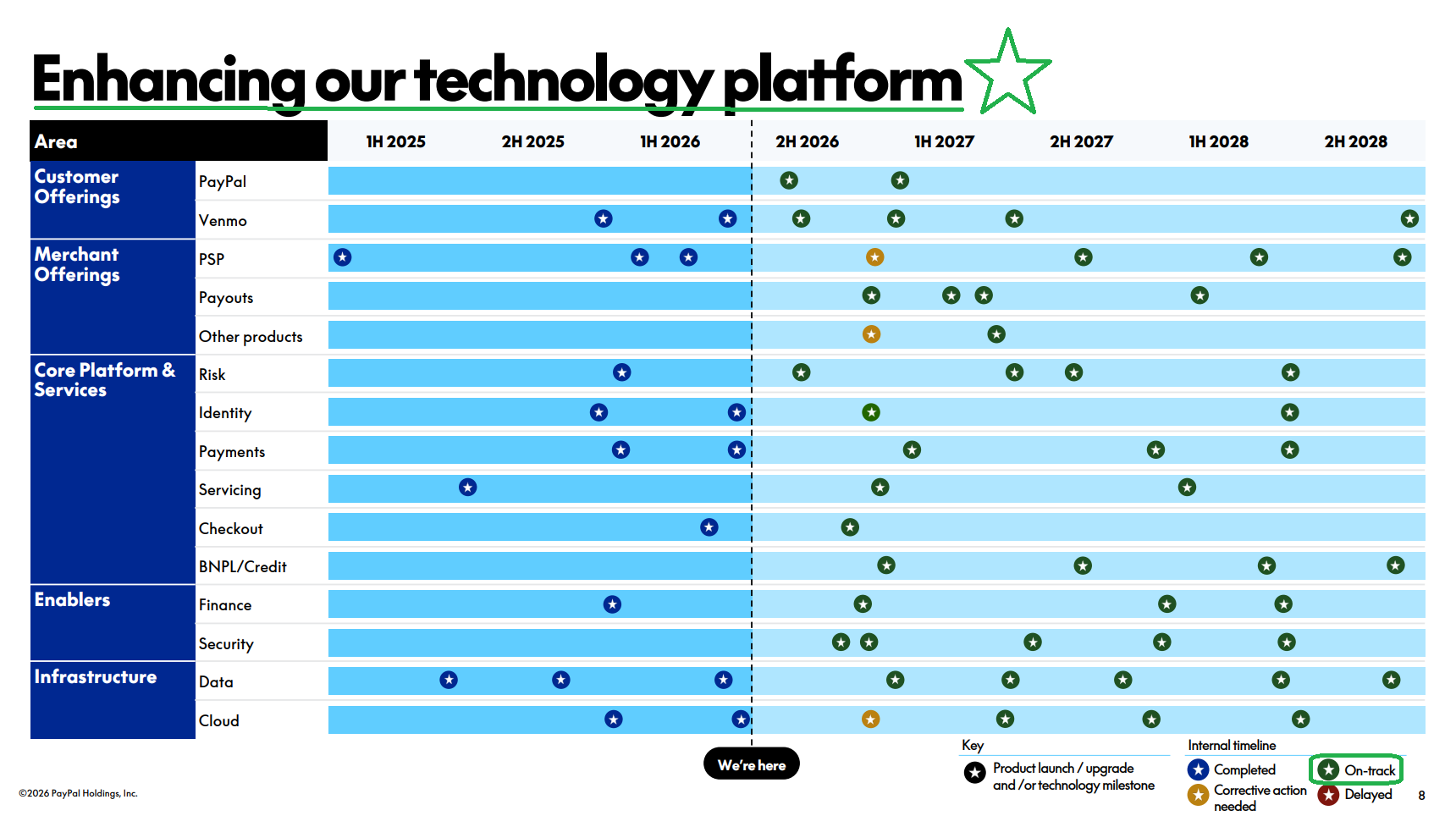
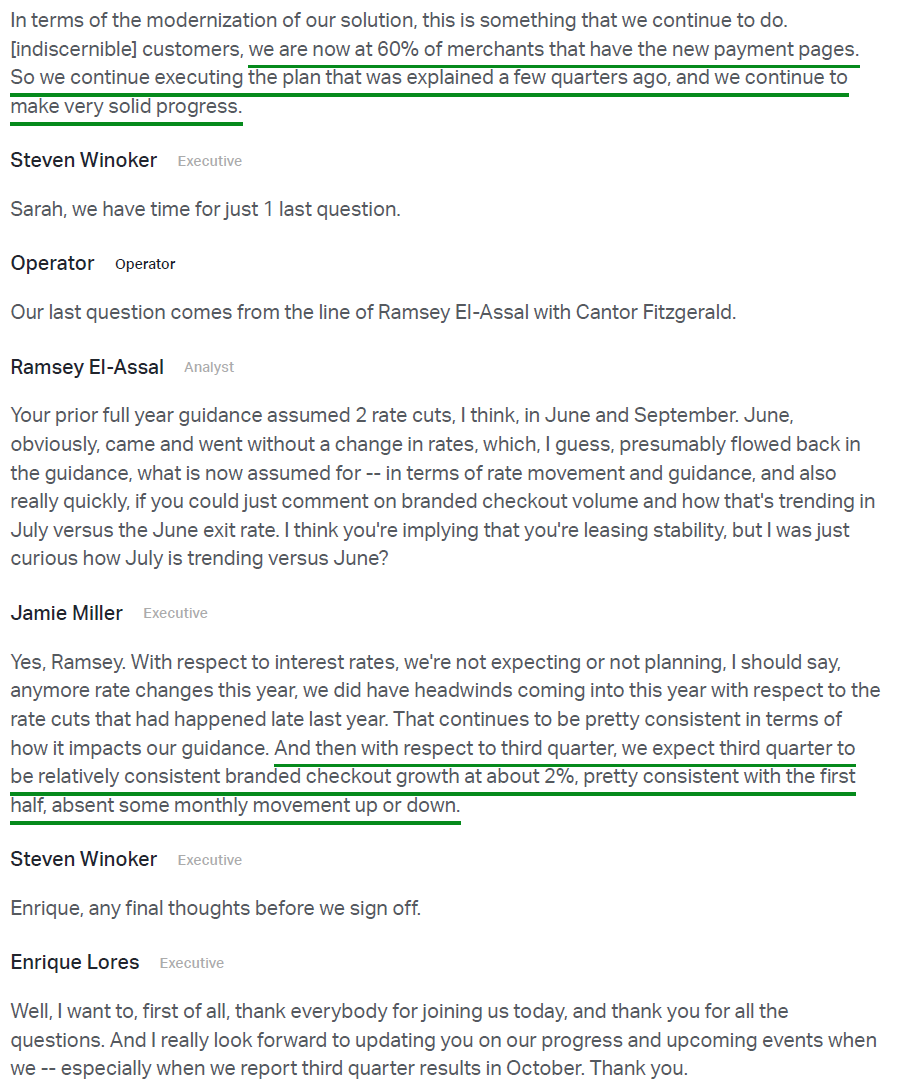
Meanwhile, here’s how we think about the supposedly “terminally ill” branded checkout business. At worst, it gradually erodes over time but continues generating the bulk of PayPal’s profits and ~$6B of annual free cash flow in the meantime, funding investment in the growth drivers above while allowing management to take advantage of cheap buybacks. At best, management delivers on its plan to re-accelerate growth as the redesigned checkout experience continues to roll out (now live on ~60% of merchant payment pages, with a goal of >80% of global transactions by 2027). The most likely outcome falls somewhere in between. Either way, this is a far cry from the melting ice cube the market continues to price.
That is exactly what Stripe and Advent are attempting to buy. They are trying to take PayPal off the market before investors recognize that the story has fundamentally changed and before the growth drivers above receive the credit they deserve. This is an attempt to buy the future at the price of the past.
If Stripe and Advent want to own this business, they should be prepared to pay a price that reflects where PayPal is headed, not where the market still believes it stands today.
Q2 Earnings Breakdown
10 Key Points
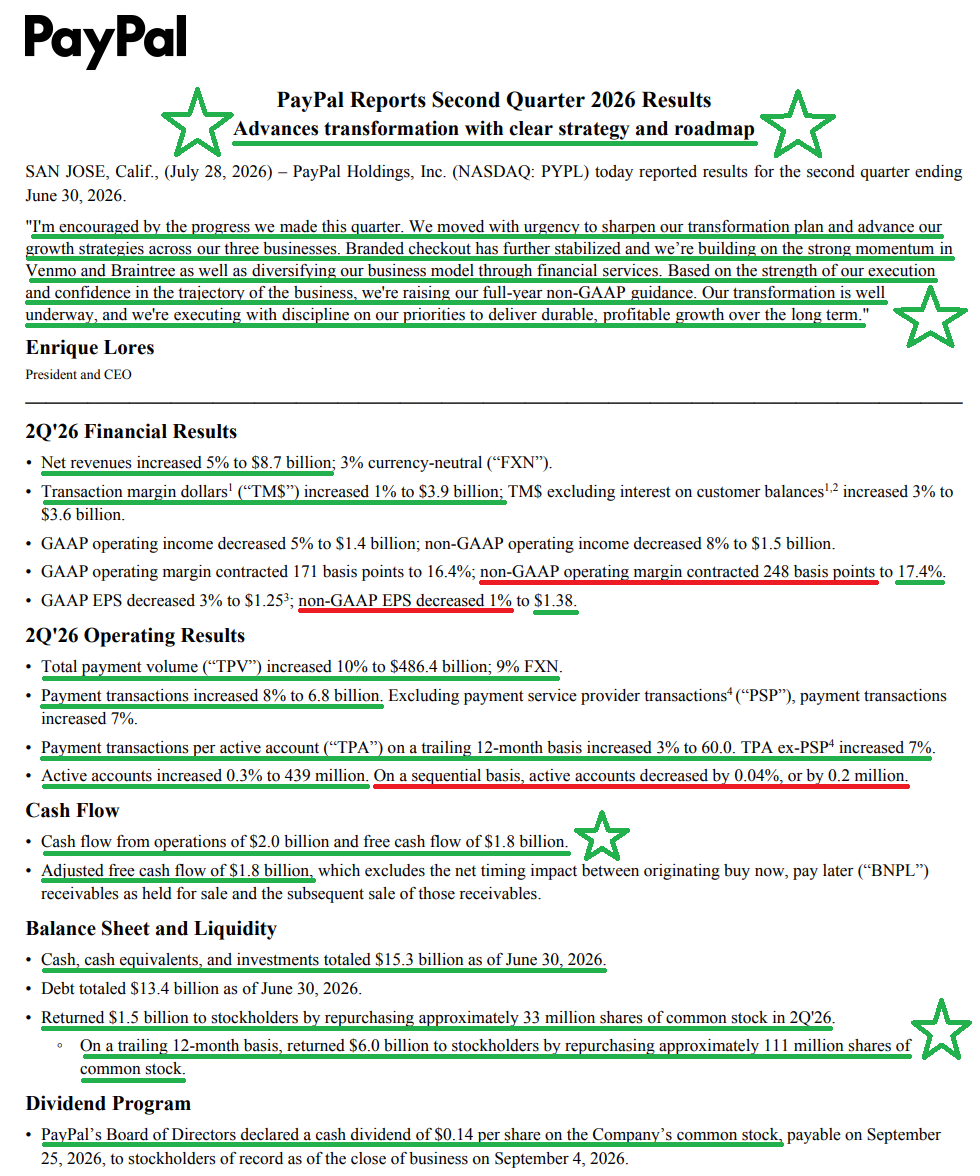
1) PayPal reported Q2 revenue of $8.68B (+5% Y/Y, +3% FXN), beating consensus of ~$8.47B by ~$213M. Transaction revenue grew 5% to $7.83B, topping consensus of ~$7.61B, while other value-added services revenue was roughly flat at $850M, as higher consumer and merchant credit revenue was offset by lower interest earned on customer balances. By geography, U.S. revenue grew 7% to $5.05B, while international revenue increased 2% on a reported basis but declined 3% on an FXN basis to $3.63B. Non-GAAP EPS of $1.38 declined 1% Y/Y but came in $0.10 ahead of the ~$1.28 consensus and well above management’s own guidance, which had called for a high-single-digit decline against a tough comp.
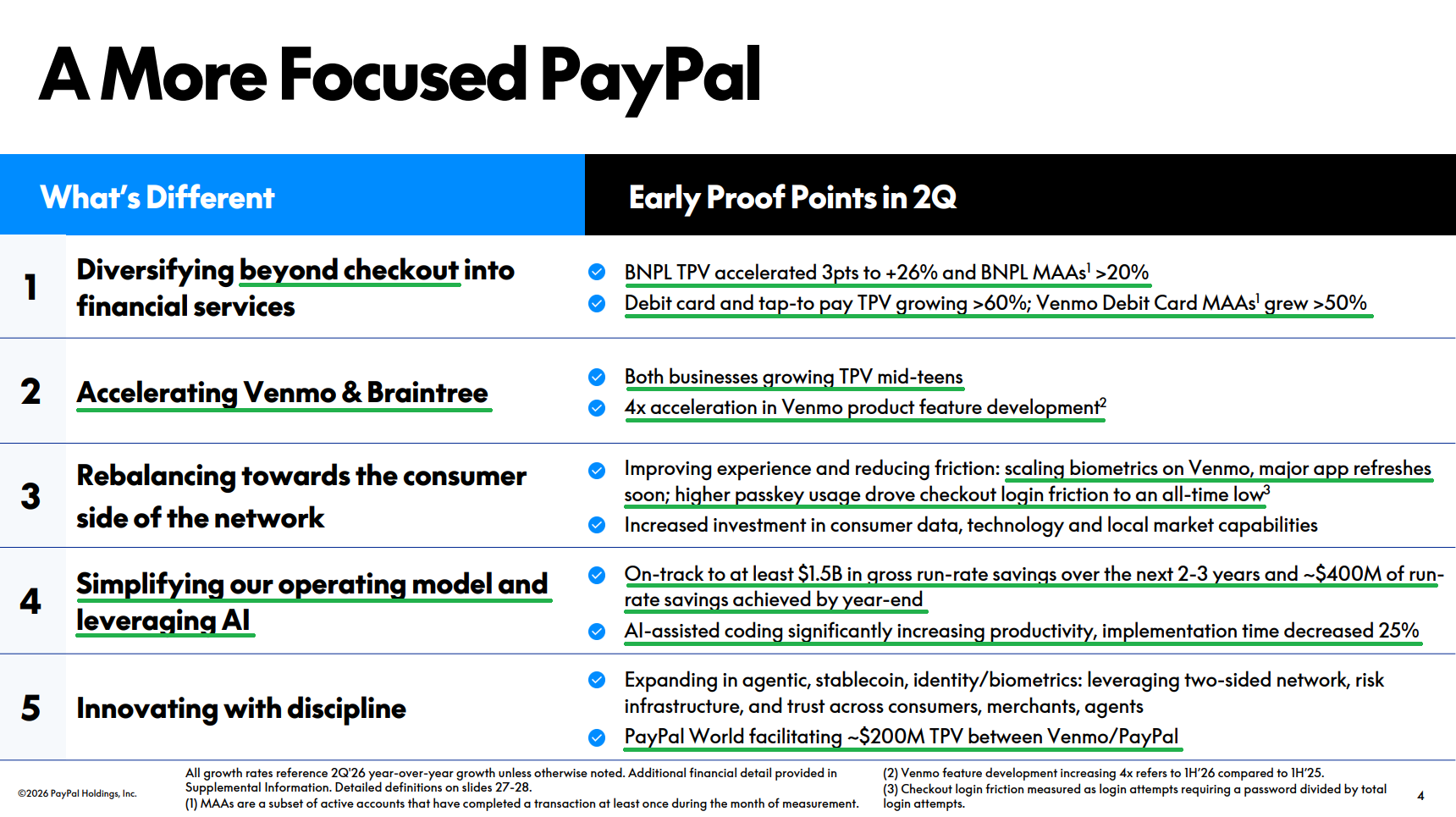
2) Venmo delivered its seventh consecutive quarter of double-digit growth, with TPV up 14% Y/Y to a record $93.81B. Adoption of its higher-value products continued to build, as Venmo debit card monthly active accounts grew more than 50% and Pay with Venmo MAAs increased ~30%, with Pay with Venmo TPV up 44%. Customers using both Venmo debit and Pay with Venmo generated more than 9x the ARPA of P2P-only users, and that higher-value cohort roughly doubled in size over the past year. Management also rebuilt the Venmo app during the quarter to improve personalization and product discovery and cited a 4x acceleration in Venmo product feature development (1H’26 vs. 1H’25), all part of the company’s pivot from a P2P app into a broader money management platform.
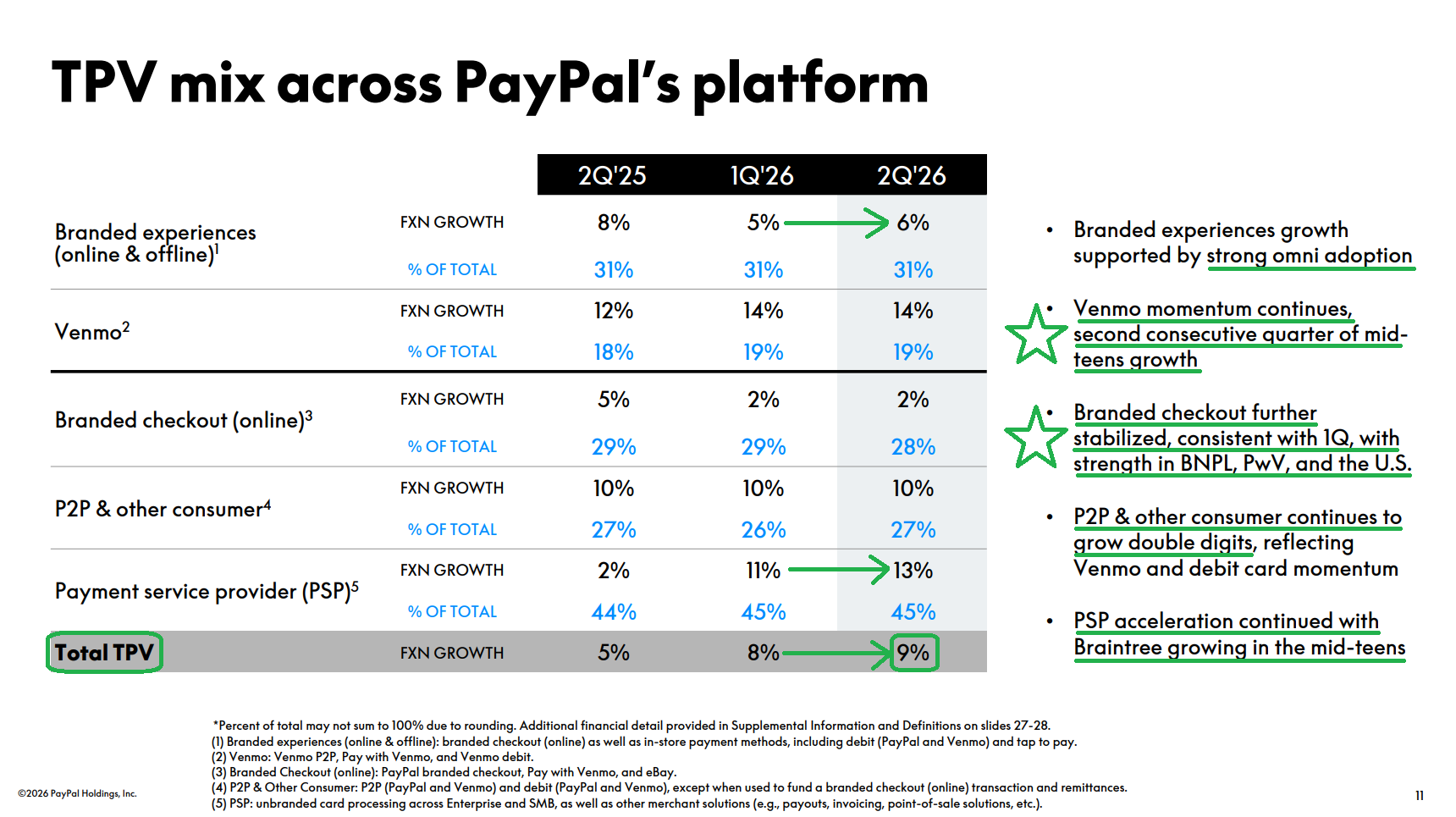
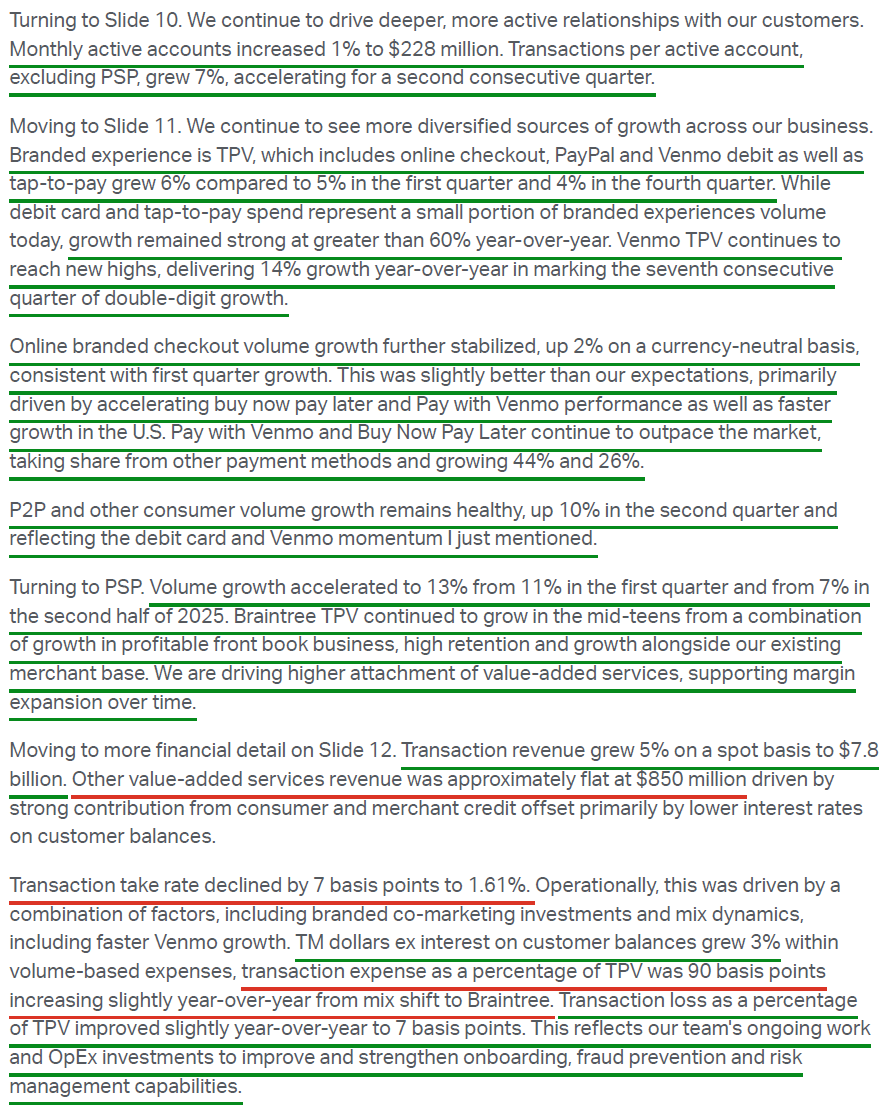
3) PSP posted another quarter of accelerating growth, with TPV jumping 13% versus 11% in Q1 and 7% in the second half of 2025, bringing the segment to ~45% of total TPV. Braintree grew in the mid-teens on a combination of profitable front-book growth, strong retention, and expansion within the existing merchant base, marking its ninth consecutive quarter of profitable growth following the price-to-value reset. Management is now focused on driving higher attachment of value-added services, including payouts, risk as a service, payment optimization, and embedded finance, to lift yield and expand margins over time while unifying Braintree, PayPal Complete Payments, and Hyperwallet onto a single modernized platform.
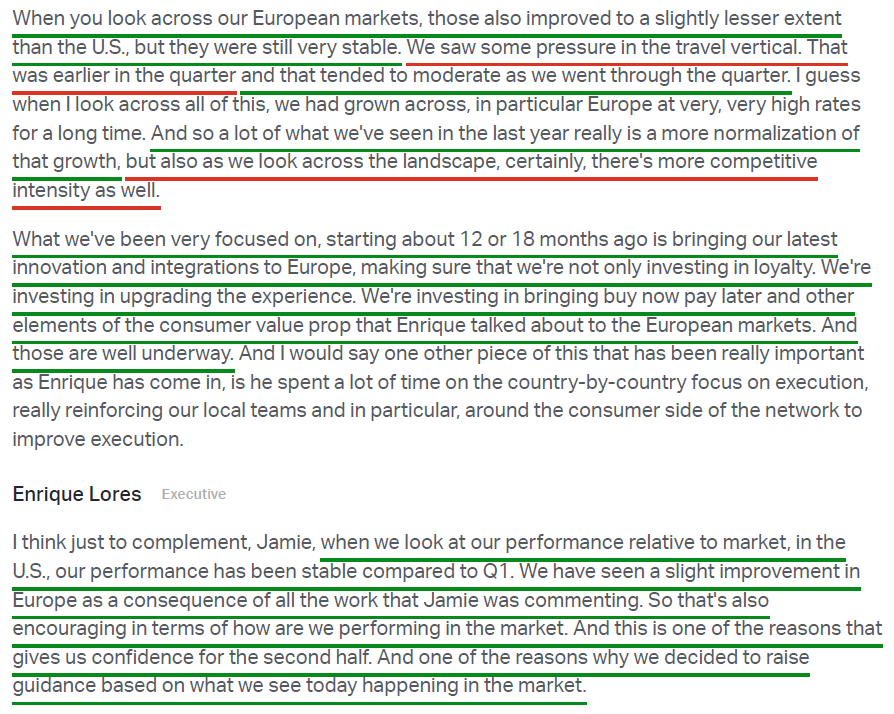
4) Branded checkout stabilized for a second straight quarter, with online branded checkout TPV up 2% FXN, consistent with Q1 and slightly better than management’s own expectations amid fears of further deterioration. The stabilization was driven by BNPL TPV accelerating 3 pts to +26% (BNPL MAAs >20%), Pay with Venmo up 44%, and faster U.S. growth, while Europe improved modestly. Branded experiences TPV, which includes online checkout plus PayPal and Venmo debit and tap-to-pay, accelerated to +6% FXN from +5% in Q1 and +4% in Q4, with debit and tap-to-pay spend growing more than 60% Y/Y. With 60% of merchants now on the new payment pages, management raised its full-year branded checkout outlook to low-single-digit growth.
5) Total payment volume reached a record $486.45B (+10% reported, +9% FXN), topping consensus of ~$473.02B by ~$13.43B and accelerating on an FXN basis for a second straight quarter. Growth was led by Venmo (+14%) and PSP (+13%), followed by P2P and other consumer (+10%), branded experiences (+6%), and branded checkout (+2%), all on an FXN basis. By region, U.S. TPV grew 14% to $315.58B, while international TPV increased 2% on a reported basis and was flat on an FXN basis at $170.87B.
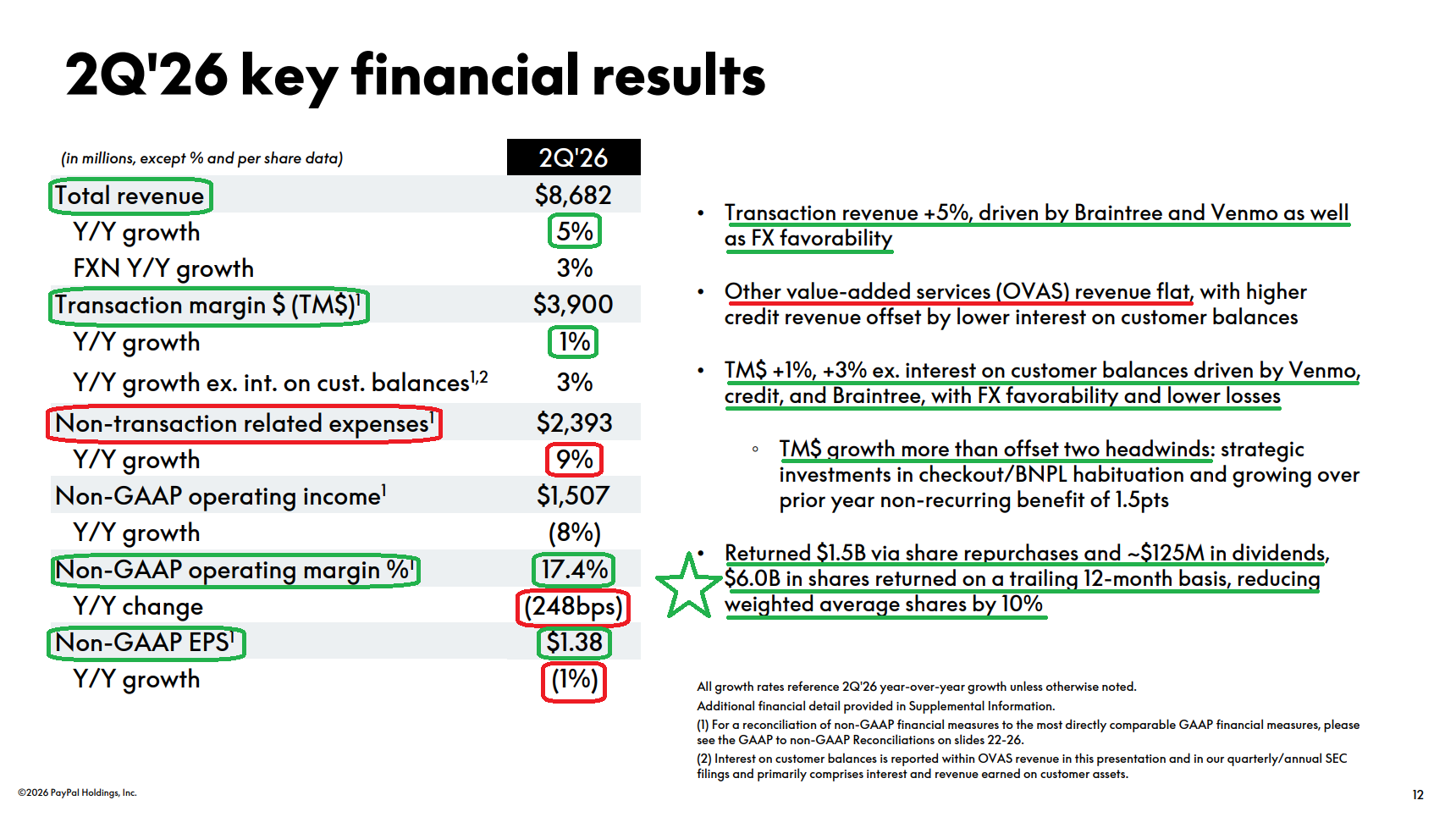
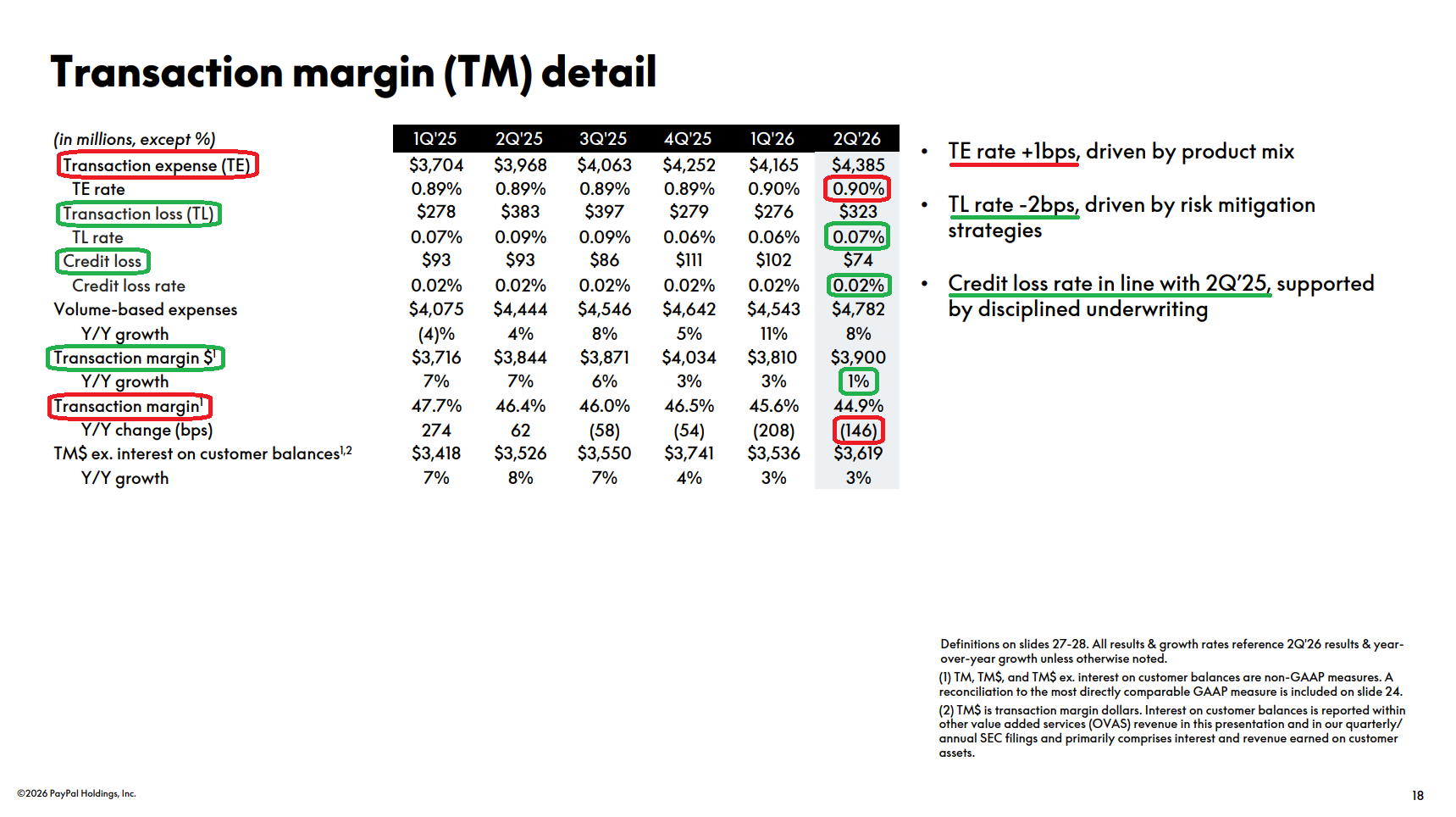
6) Transaction margin dollars grew 1% Y/Y to $3.90B, beating consensus of ~$3.74B by ~$159M and coming in well ahead of the ~3% decline management had guided to. Excluding interest on customer balances, TM grew 3% to $3.62B. Growth was broad-based, led by Venmo monetization, continued strong credit performance, Braintree improvement, FX favorability, and lower losses, which together more than offset strategic investments in branded checkout and BNPL habituation, along with the lapping of a 1.5 pt prior-year non-recurring benefit. Transaction margin of 44.9% contracted 146 bps Y/Y, reflecting the investment ramp and business mix, while the transaction expense rate rose 1 bp to 0.90% and the transaction and credit loss rate improved to 0.08% from 0.11% on risk mitigation efforts and disciplined underwriting.
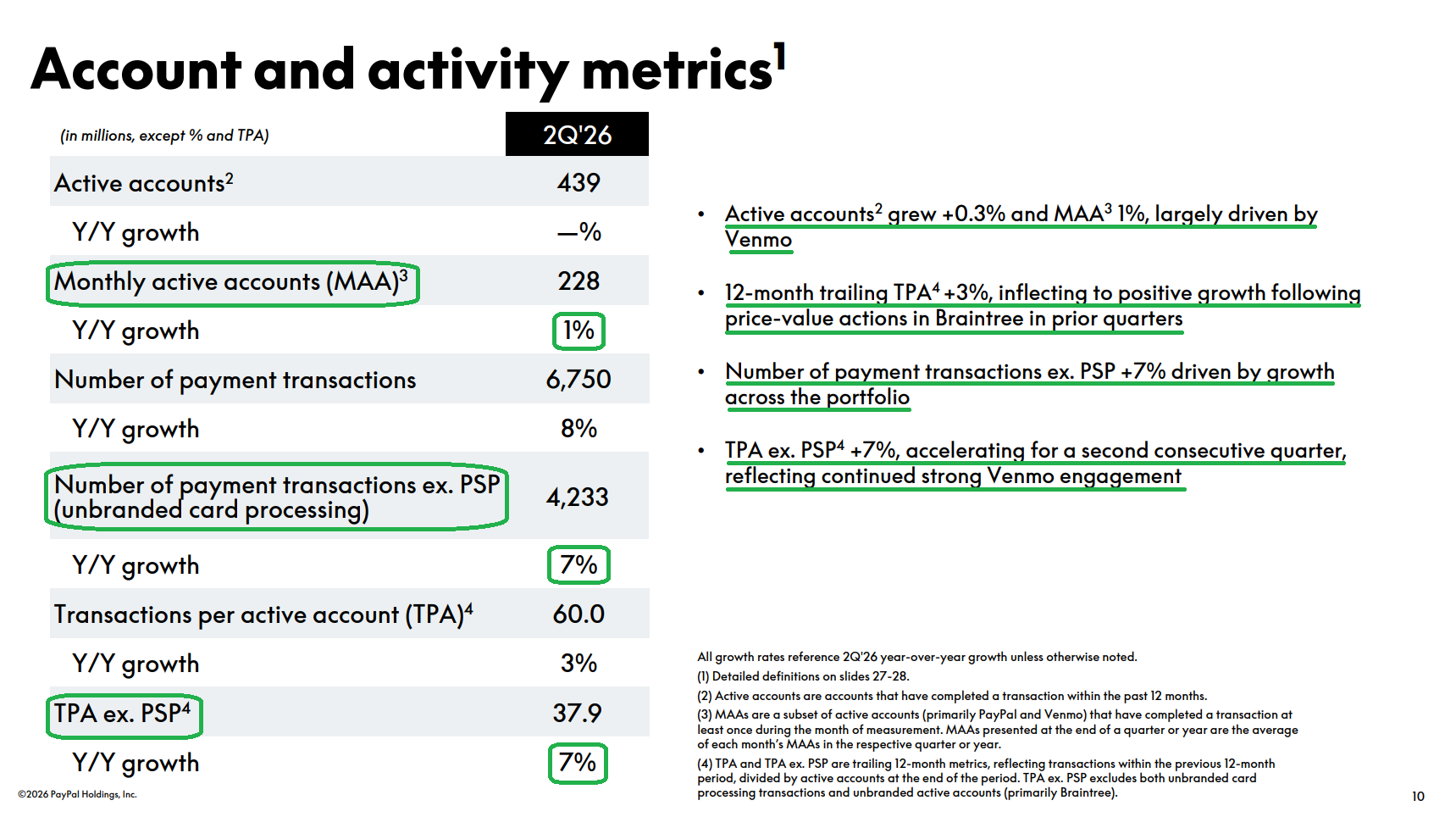
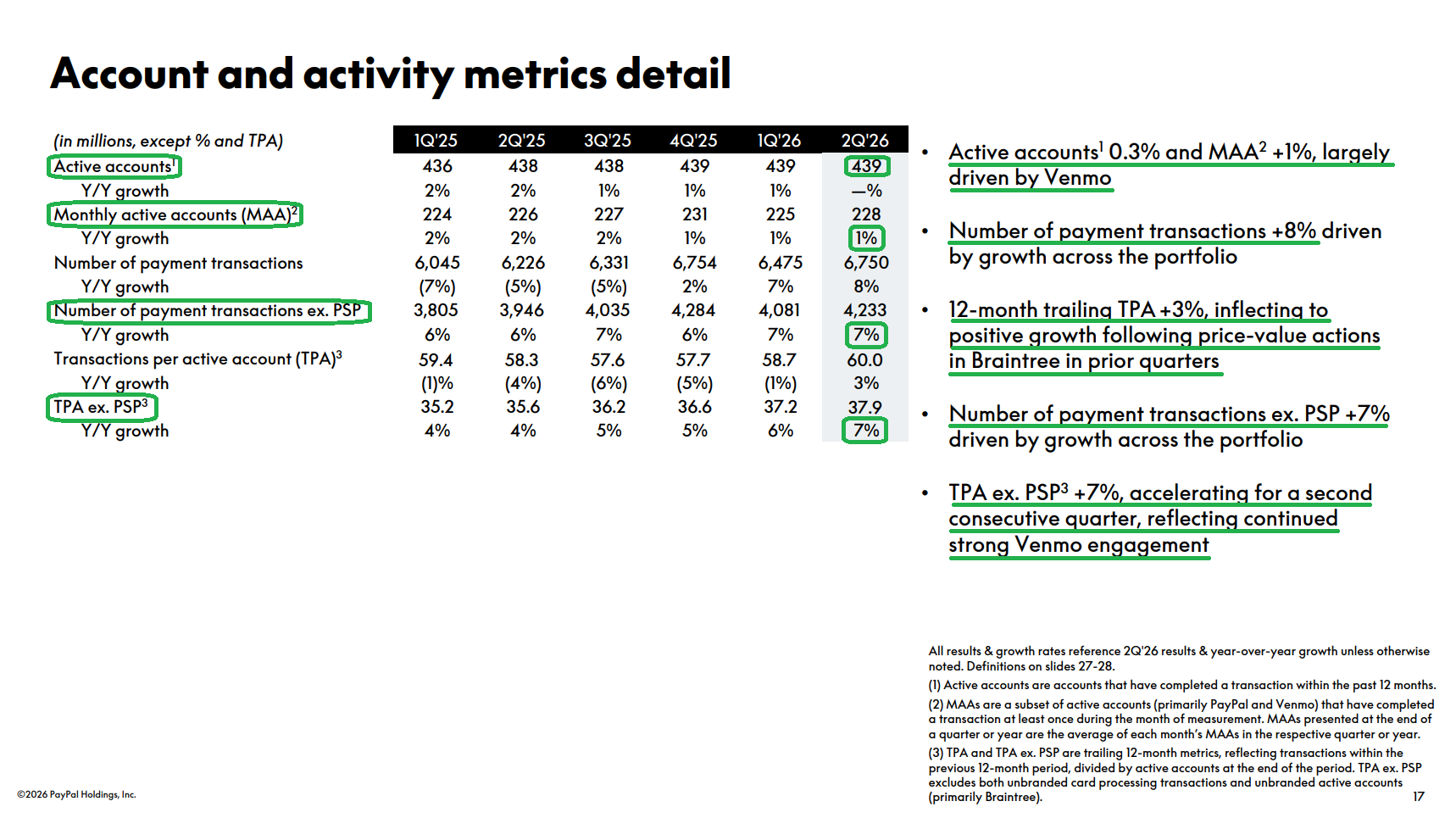
7) Total active accounts came in at 439M, up 0.3% Y/Y and down 0.04% (~0.2M) sequentially, while monthly active accounts grew 1% to 228M, once again led by Venmo. Transactions per active account on a TTM basis rose 3% to 60.0, returning to positive growth as the prior-year Braintree price-to-value actions annualized. Excluding PSP, TPA climbed 7% to 37.9, accelerating for a second straight quarter on continued Venmo engagement. Total payment transactions grew 8% to 6.75B and 7% to 4.23B excluding PSP.
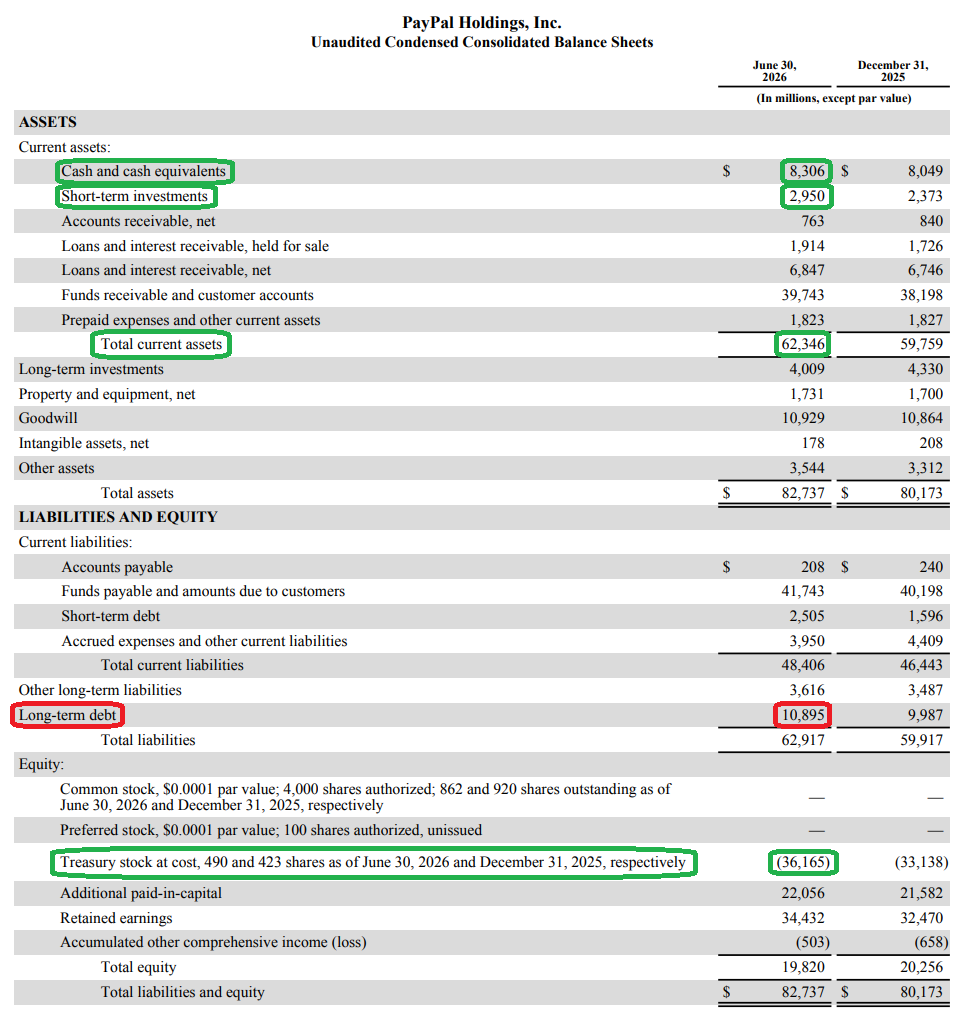
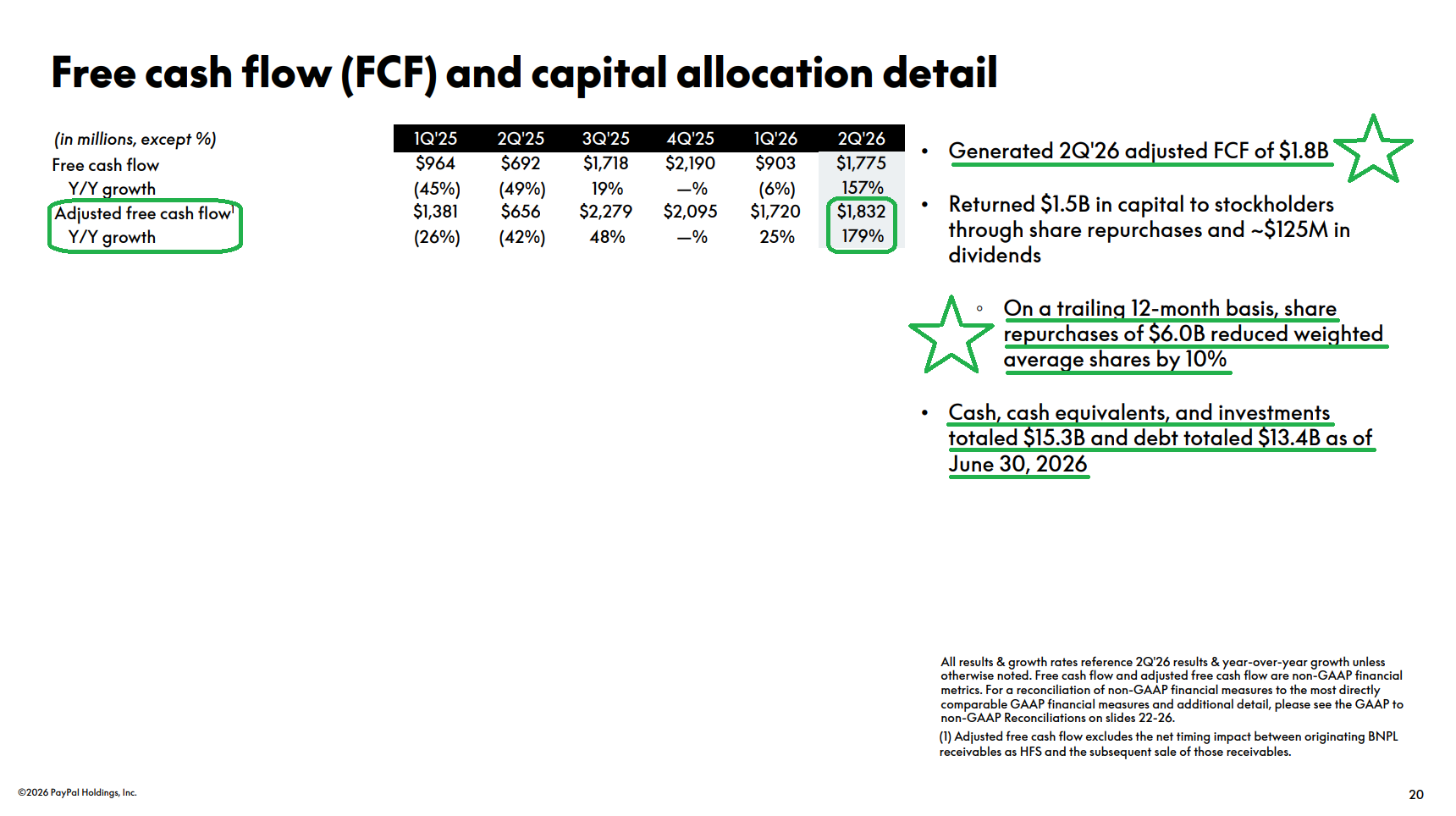
8) PayPal generated adjusted free cash flow of $1.83B, up 179% Y/Y against a working capital-depressed 2Q’25 that management had previously flagged as a timing distortion. The company repurchased $1.5B (~33M shares) during the quarter, bringing TTM buybacks to $6B (~111M shares) and reducing the weighted average share count by 10% Y/Y. PayPal also paid ~$125M in dividends and declared another $0.14 per share (~1% yield). The balance sheet remains rock solid, with $15.3B in cash, equivalents, and investments against $13.4B of debt, and management reiterated its plans for ~$6B of buybacks (~11.6% of the current market cap) and $6B+ of adjusted FCF for the full year.
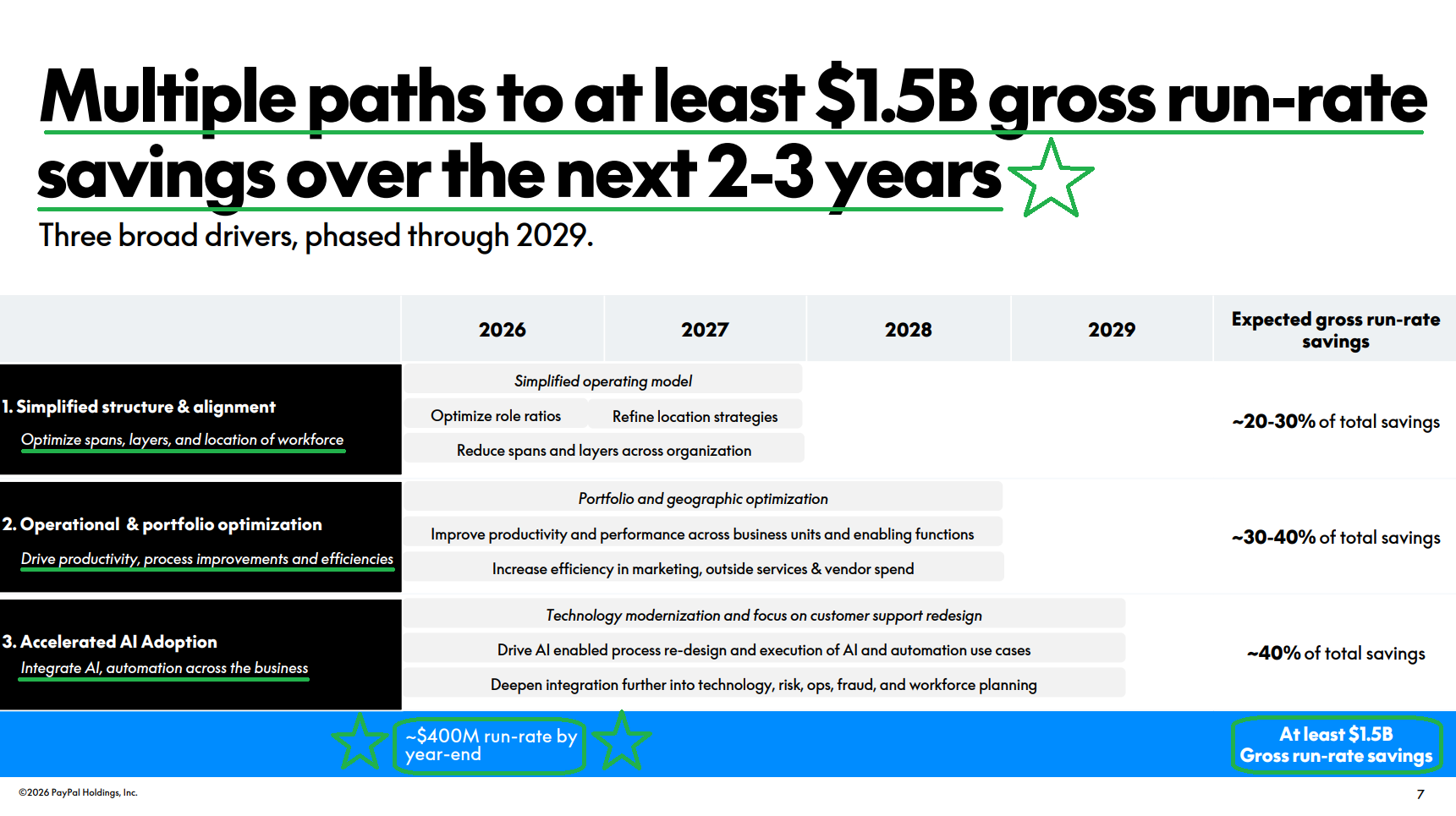
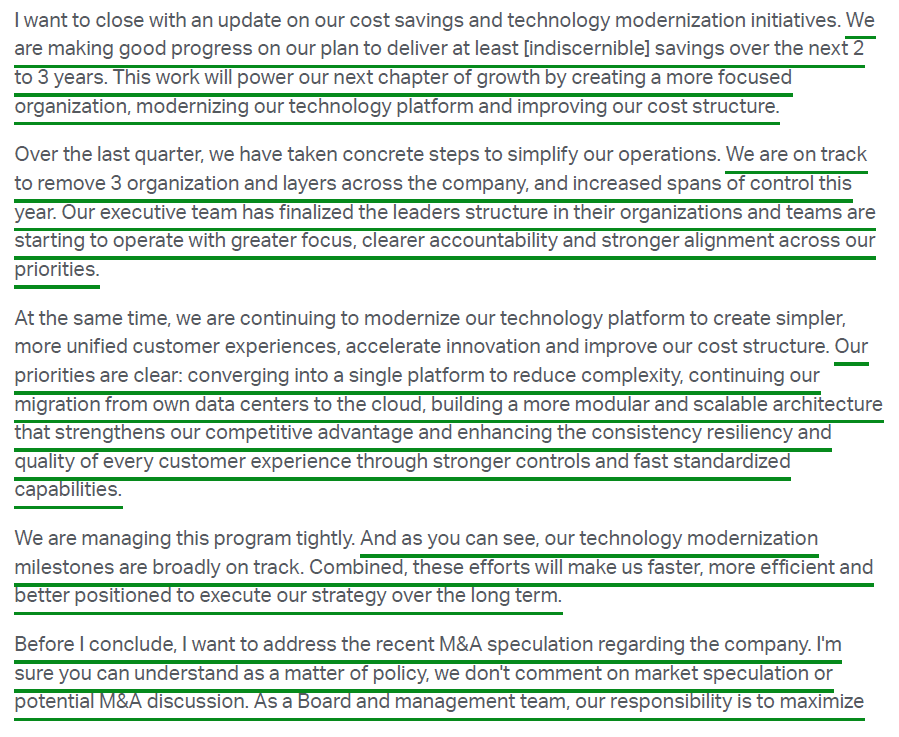
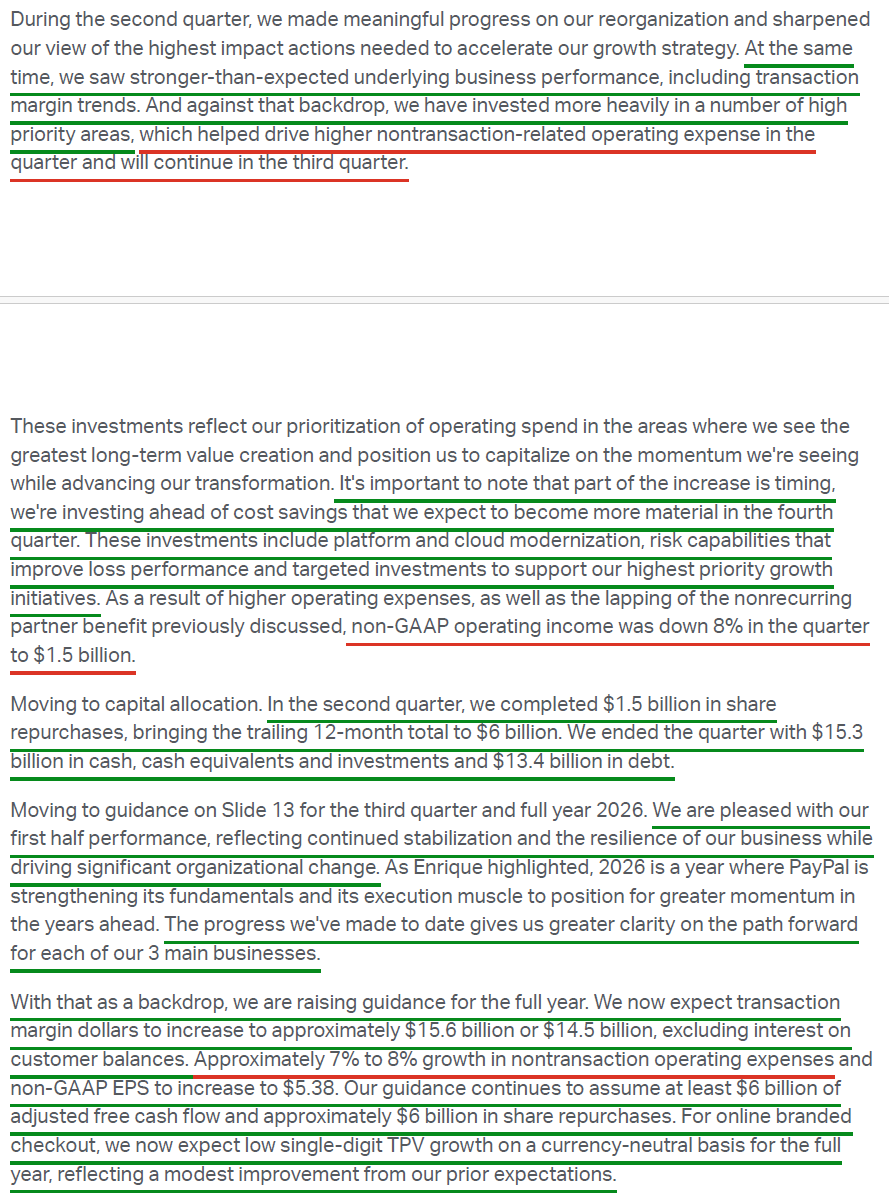
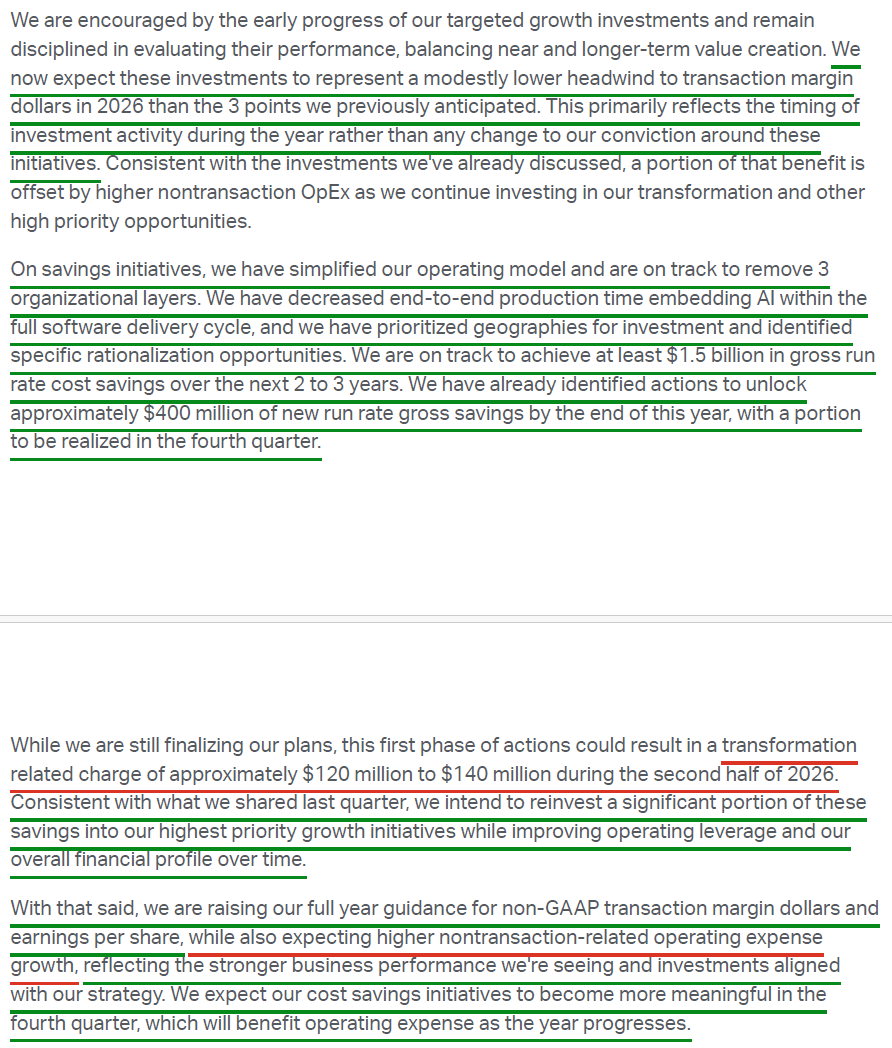
9) PayPal made early progress on its 1.5B+ gross run-rate cost savings program targeted over the next two to three years, already identifying actions expected to unlock ~$400M of run-rate savings by year-end. The program focuses on structural simplification (including removing three organizational layers and widening spans of control), operational and portfolio optimization, and accelerated AI adoption, with AI-assisted coding already reducing implementation time by 25%. These savings are intended to self-fund PayPal’s growth investments, but the spending is occurring now while the offsetting savings are not expected to become meaningful until Q4. As a result, non-transaction operating expense rose 9% to $2.39B on investments in technology, risk, and inflation, driving non-GAAP operating income down 8% to $1.51B and non-GAAP operating margin down 248 bps to 17.4%. Encouragingly, management now expects the full-year TM headwind from growth investments to come in below the previously anticipated 3 pts.
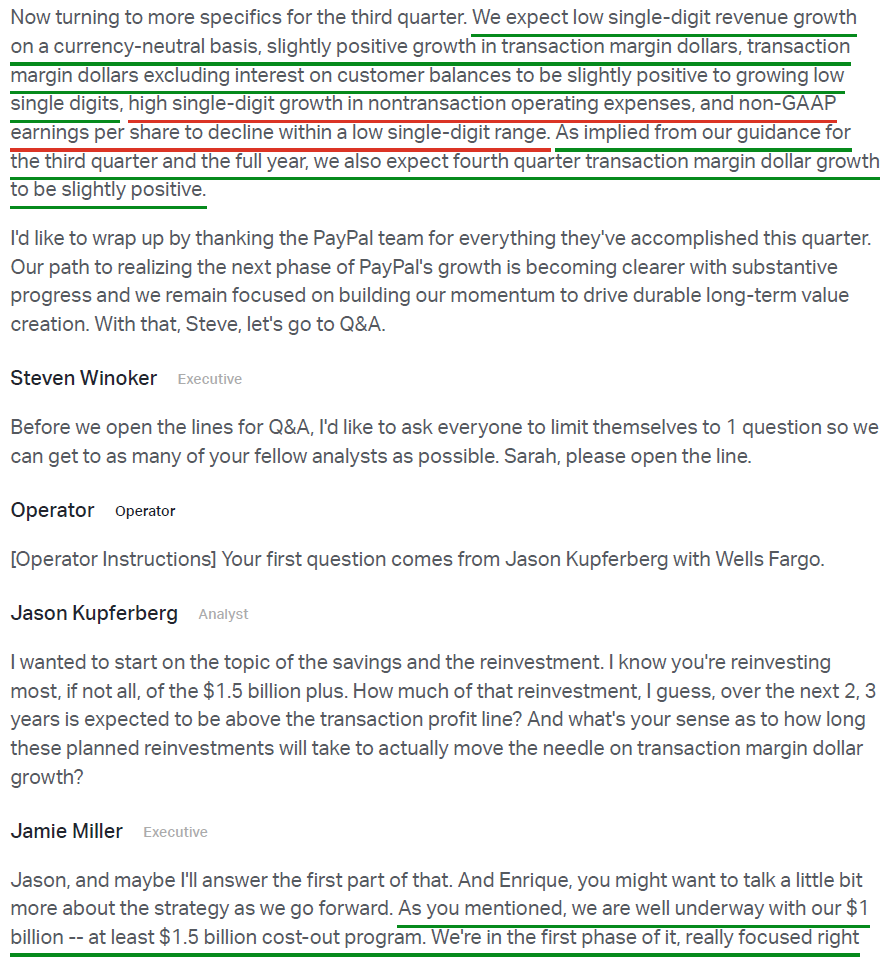
10) Management raised full-year 2026 guidance, lifting transaction margin dollars to ~$15.6B (~1% growth versus a prior outlook for a slight decline) and non-GAAP EPS to ~$5.38, up from prior guidance of a low-single-digit decline to slightly positive and above the ~$5.31 consensus (FY25 EPS was $5.31). The revised outlook assumes ~7% to 8% growth in non-transaction operating expense, alongside reiterated guidance for adjusted FCF of $6B+, buybacks of ~$6B, and capex of ~$1B, with no additional rate cuts assumed this year. For Q3, management guided to low-single-digit FXN revenue growth, slightly positive transaction margin dollars, and a low-single-digit decline in non-GAAP EPS (3Q’25 was $1.34).
Earnings Call Highlights
Morningstar Analyst Note
Boeing (BA) Update
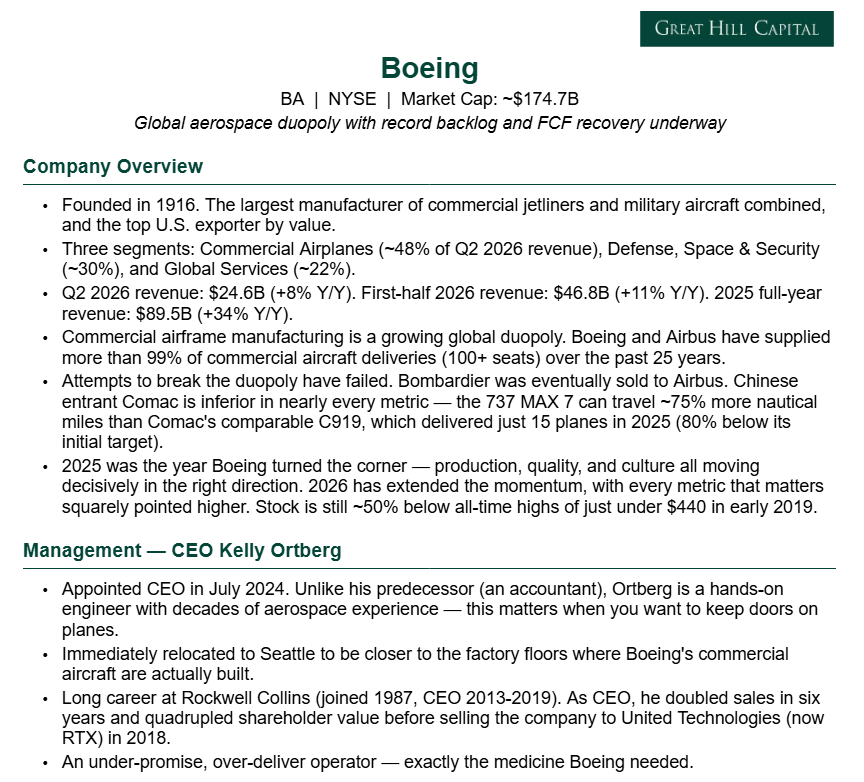
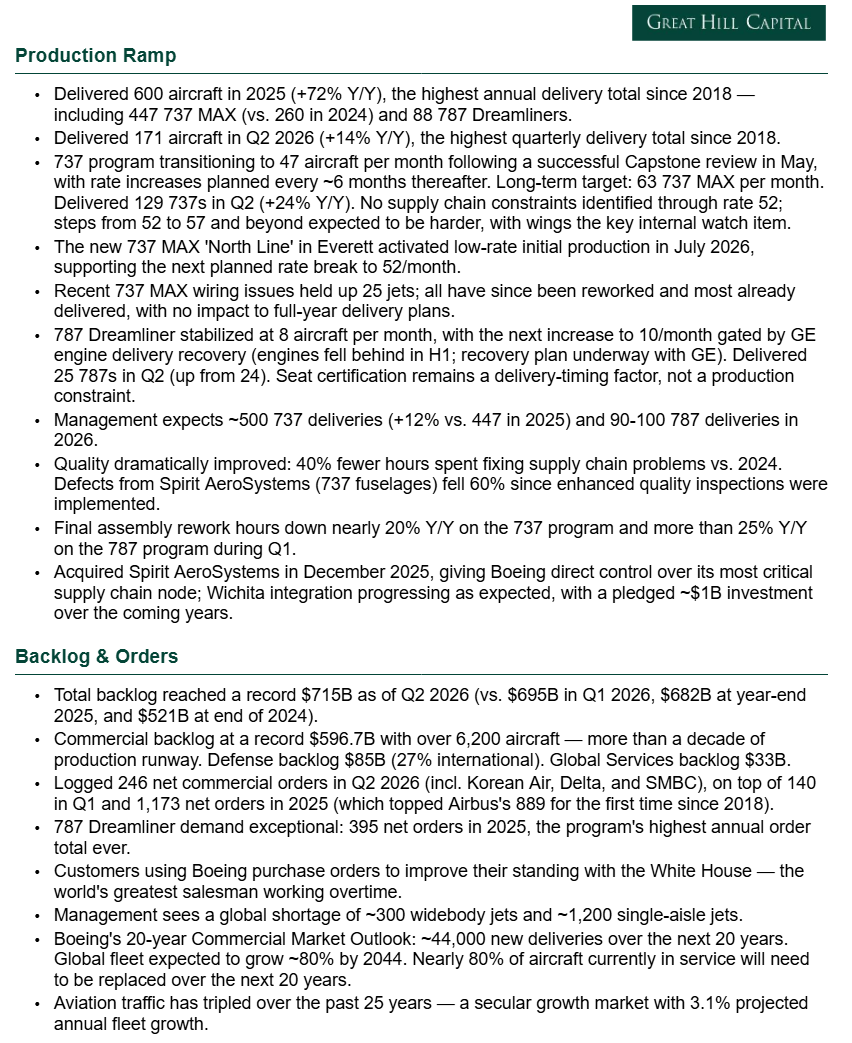
For newer readers, here’s a brief overview of the key drivers behind our Boeing thesis, as one half of the global commercial aerospace duopoly where demand has never been the issue and supply, under CEO Kelly Ortberg, is finally starting to catch up:
Q2 Earnings Breakdown
10 Key Points
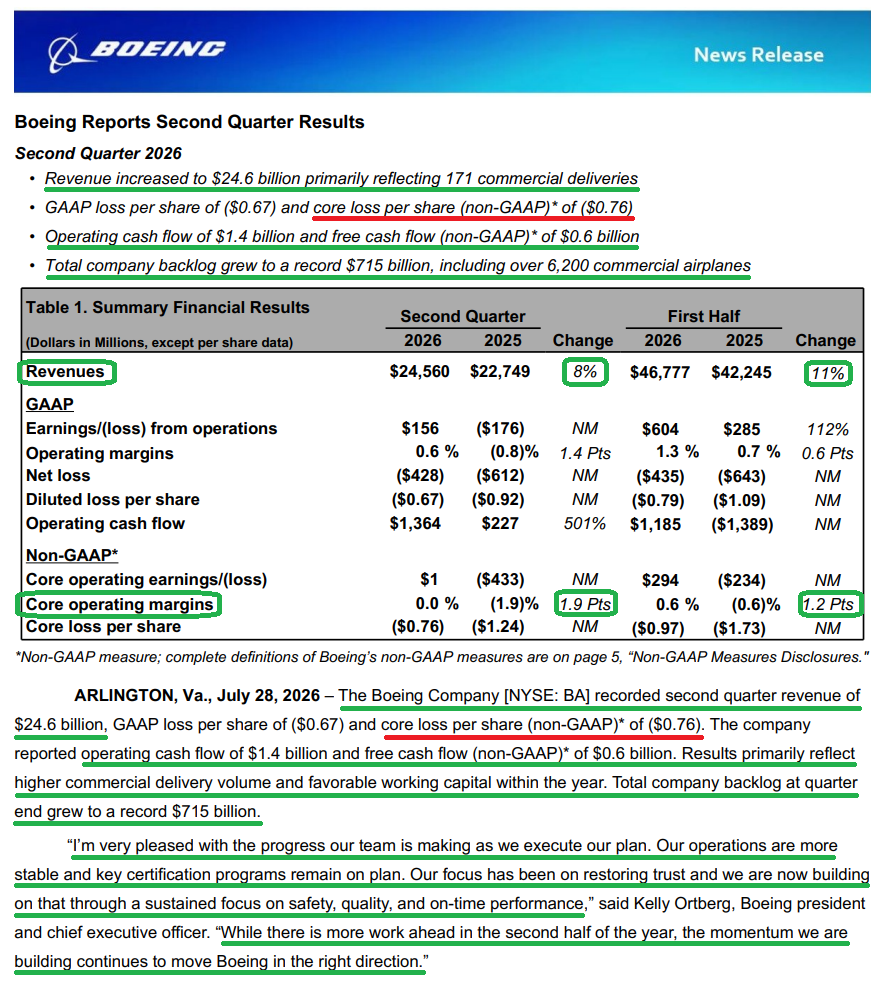
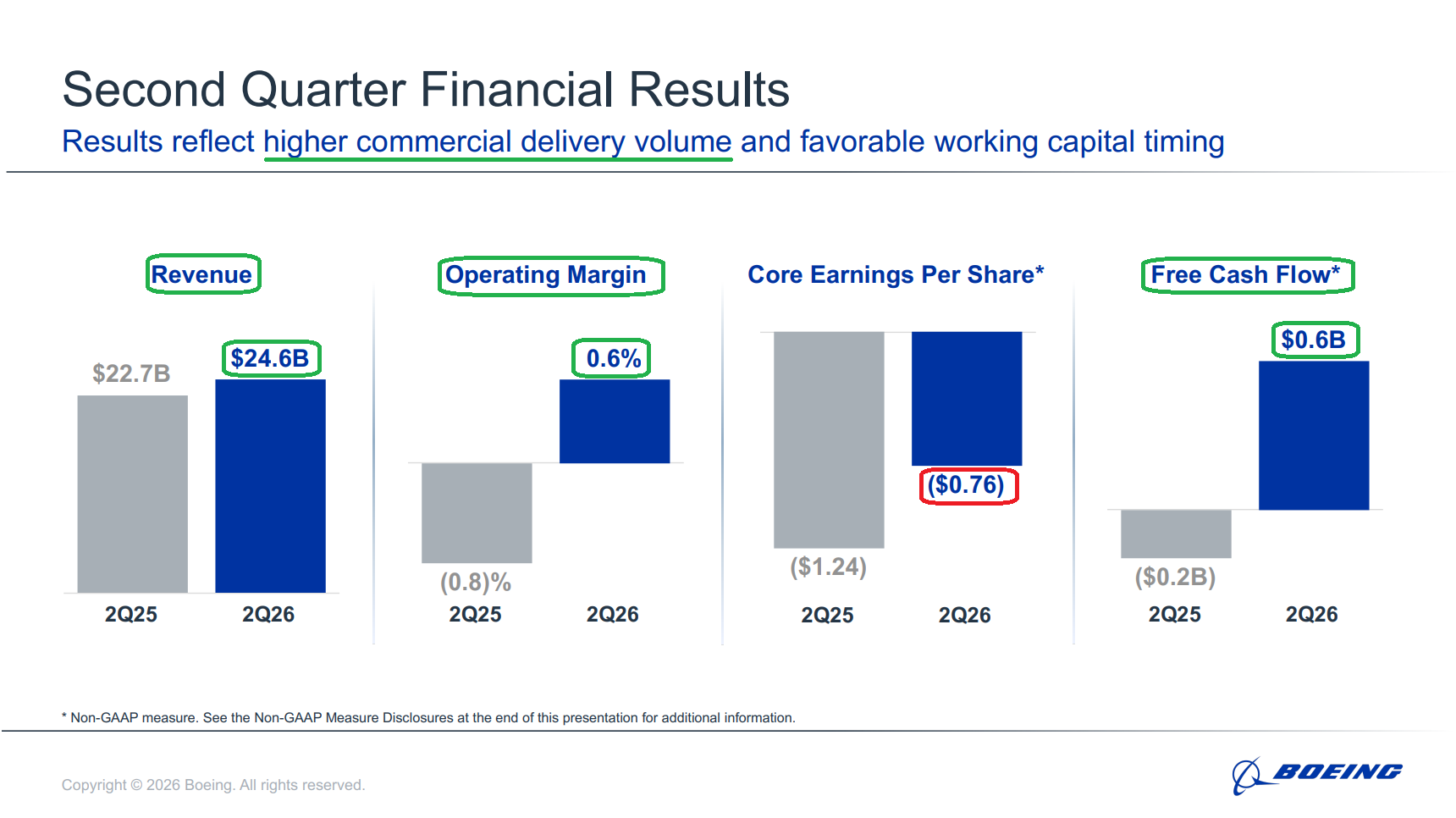
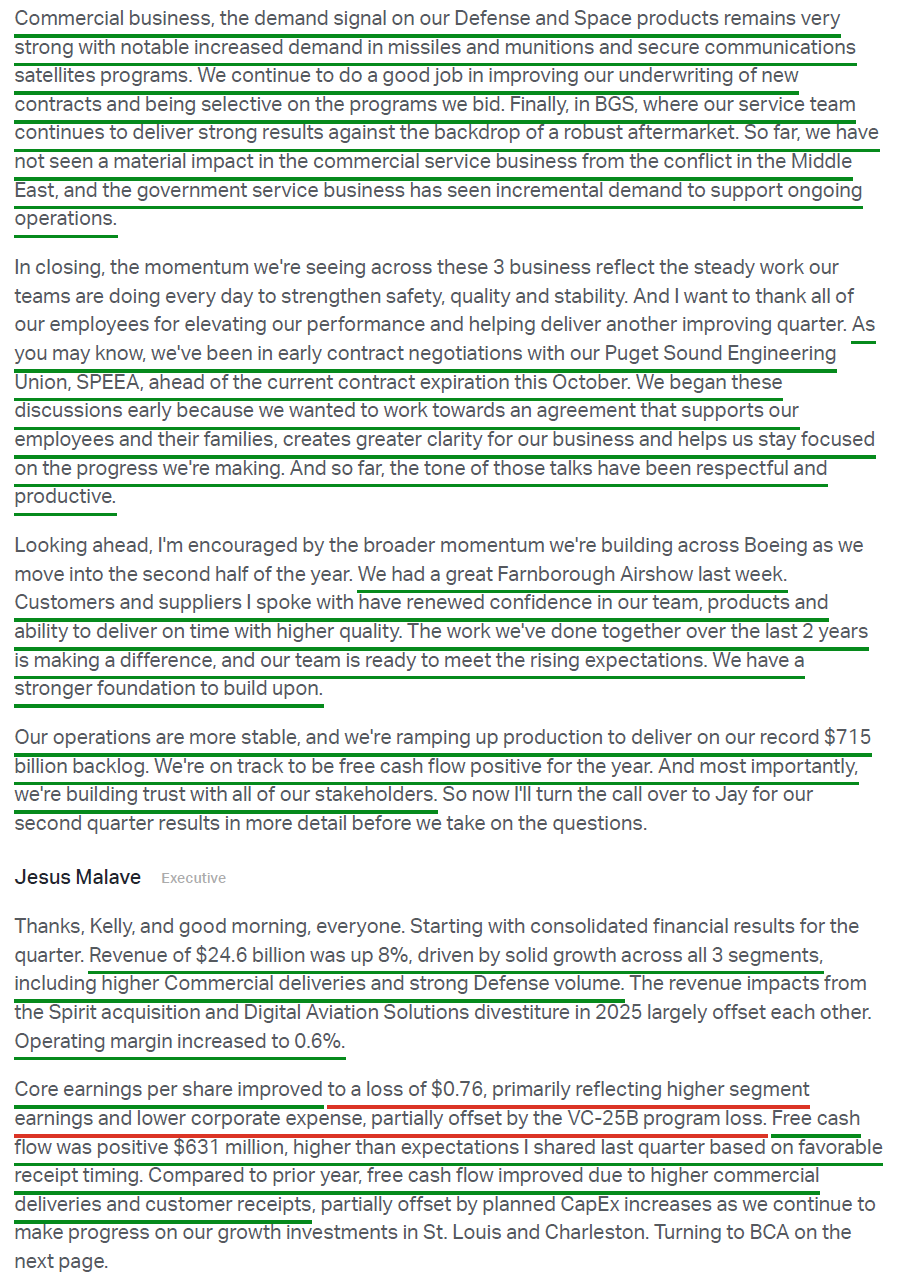
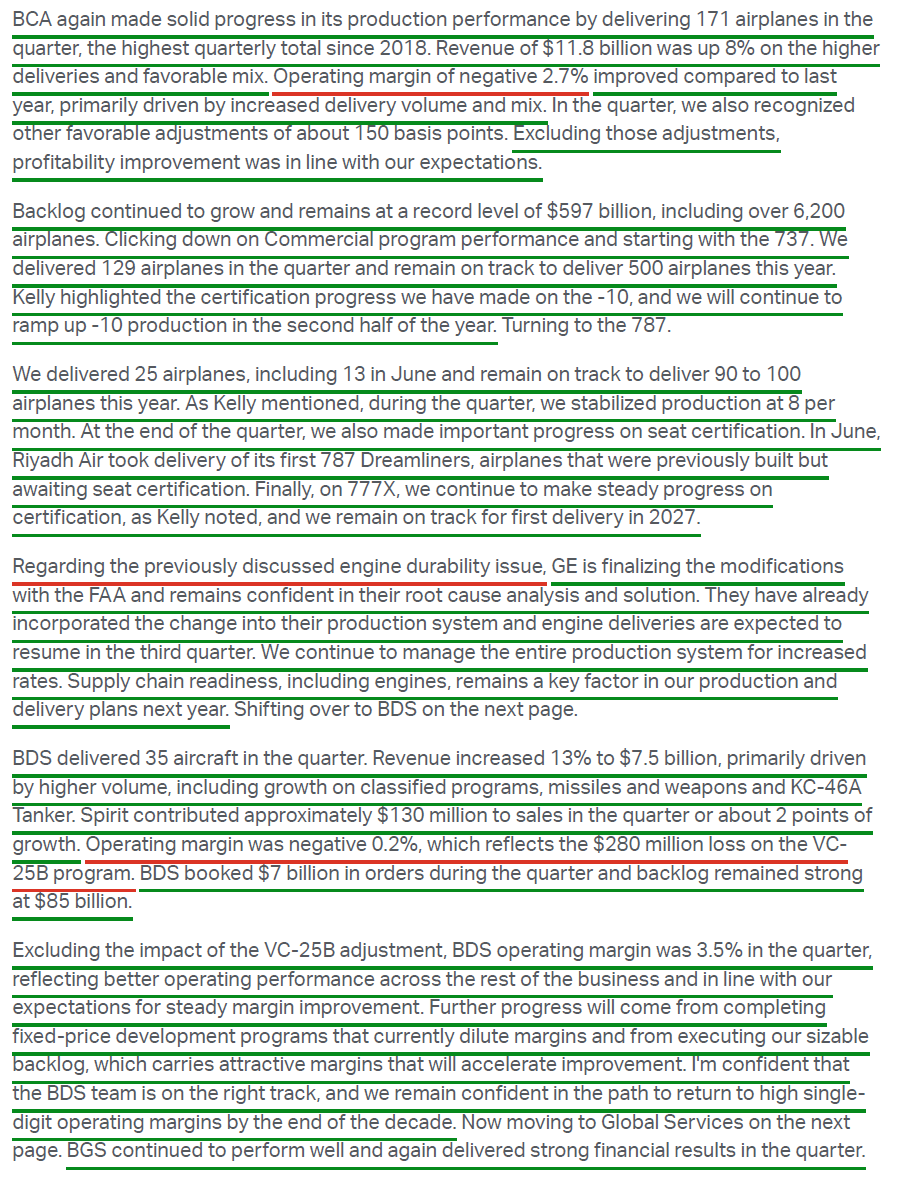
1) Boeing posted Q2 revenue of $24.56B (+8% Y/Y), topping consensus of ~$24.27B, driven by solid growth across all three segments on higher commercial deliveries and strong defense volume. Adjusted operating profit improved to $1M (0.0% margin) from a ($433M) loss (-1.9% margin) last year on higher segment earnings and lower corporate expense. Adjusted loss per share of ($0.76) came in worse than the ~$0.31 loss consensus, with the miss driven largely by the $280M VC-25B (Air Force One) charge.
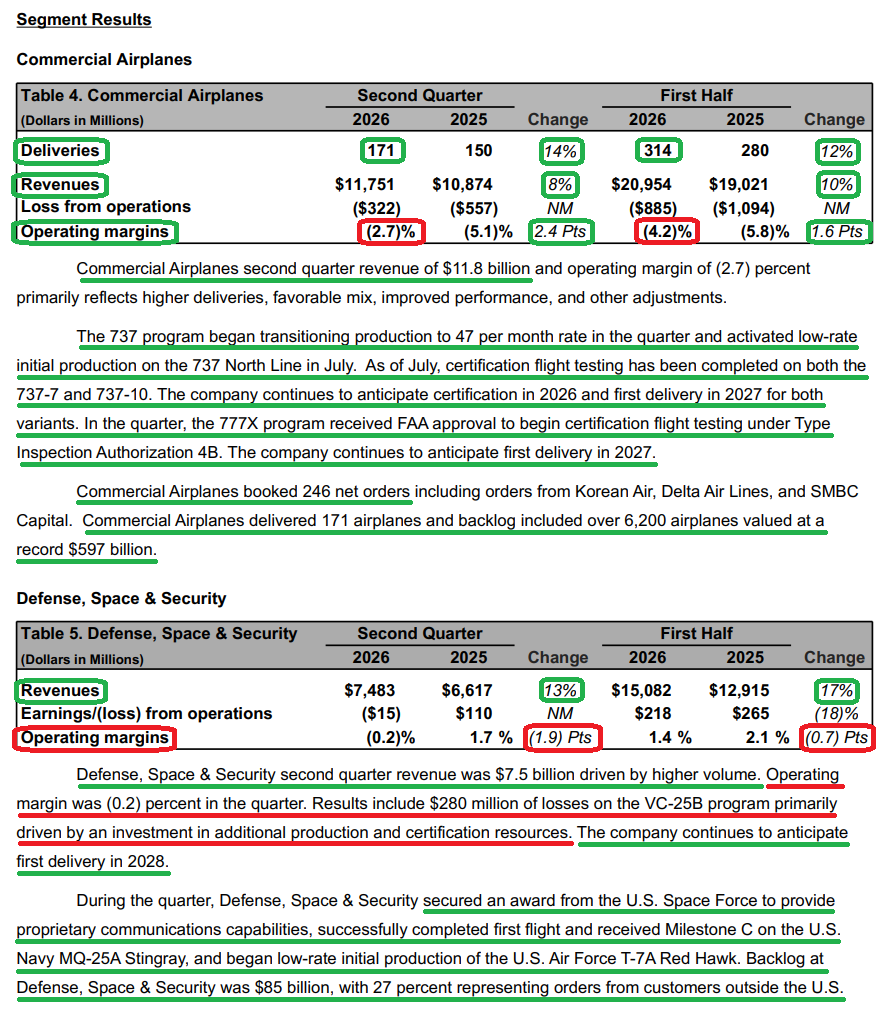
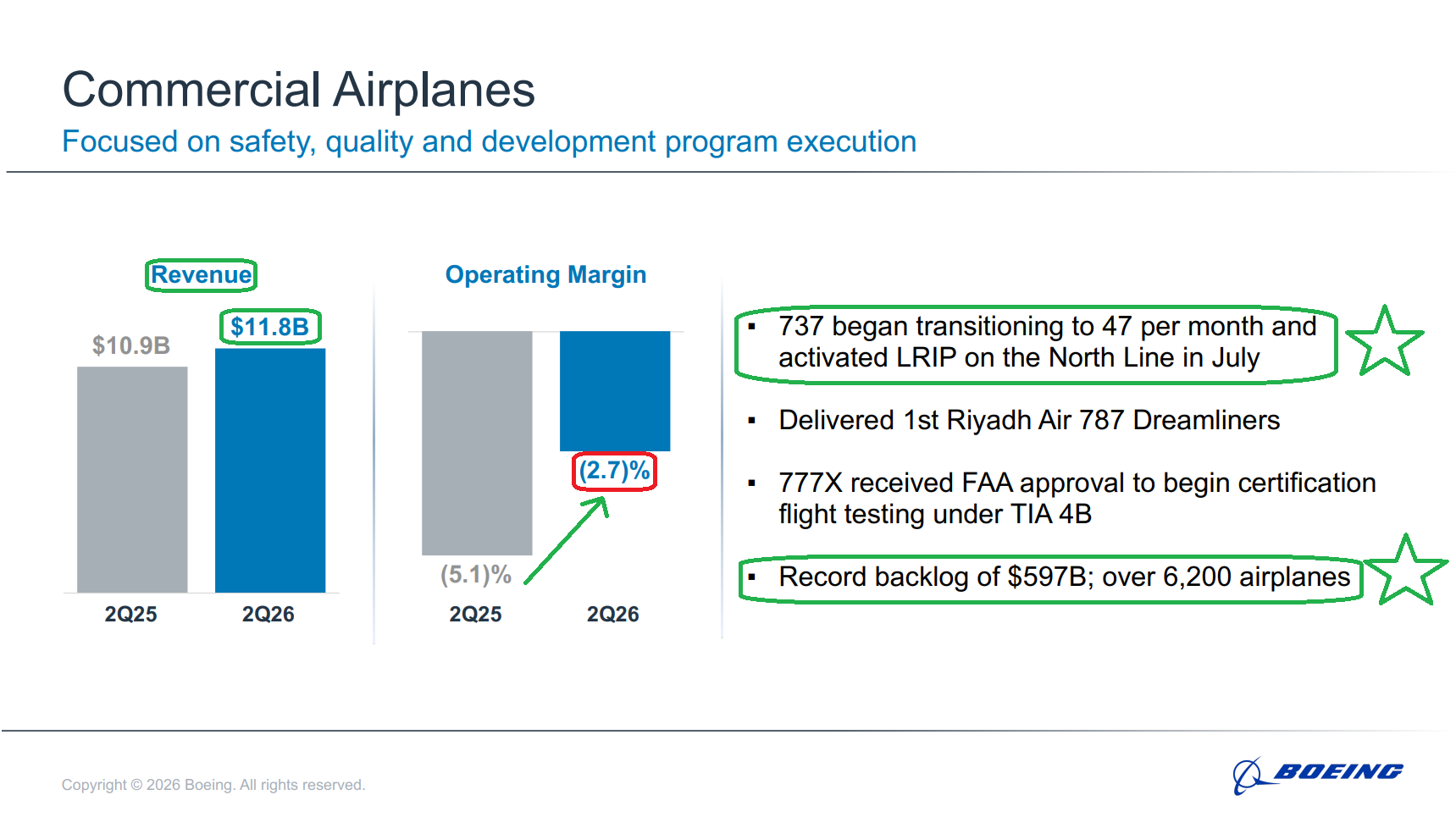
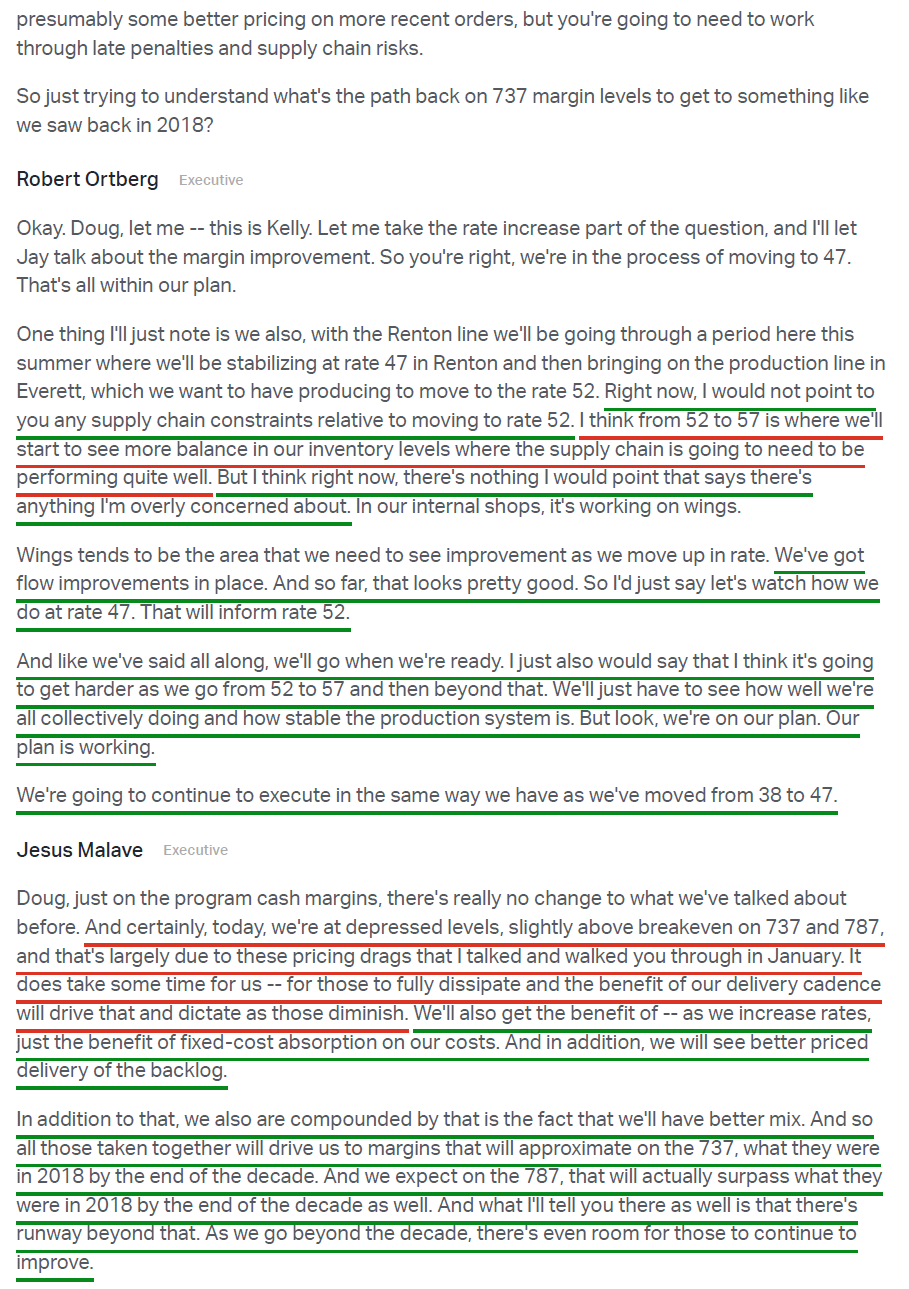
2) The Commercial Airplanes segment posted revenue of $11.75B (+8% Y/Y), driven by 171 deliveries, up 14% Y/Y and the highest quarterly total since 2018. Operating margin improved to (2.7%) from (5.1%) on higher volume, favorable mix, and improved performance, though the quarter included ~150 bps of favorable adjustments (excluding those, improvement was in line with expectations). BCA booked 246 net orders, including from Korean Air, Delta (DAL), and SMBC (SMFG), ending with a record backlog of $596.7B and more than 6,200 airplanes. Longer term, management expects 737 margins to approximate their 2018 levels by the end of the decade and 787 margins to surpass 2018 levels, driven by rising delivery rates, better-priced backlog, fixed-cost absorption, and favorable mix, with room for further improvement into the next decade.
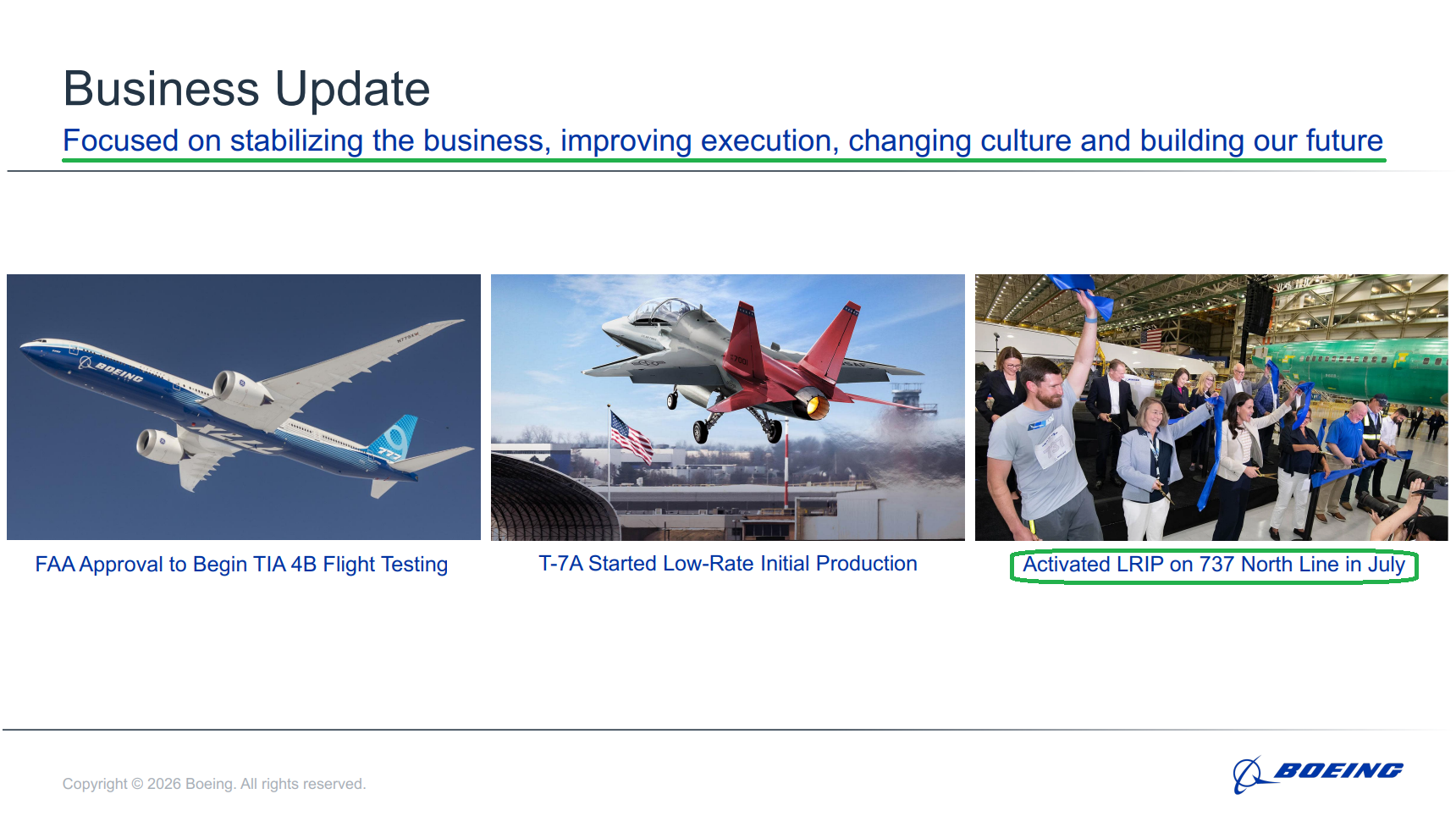
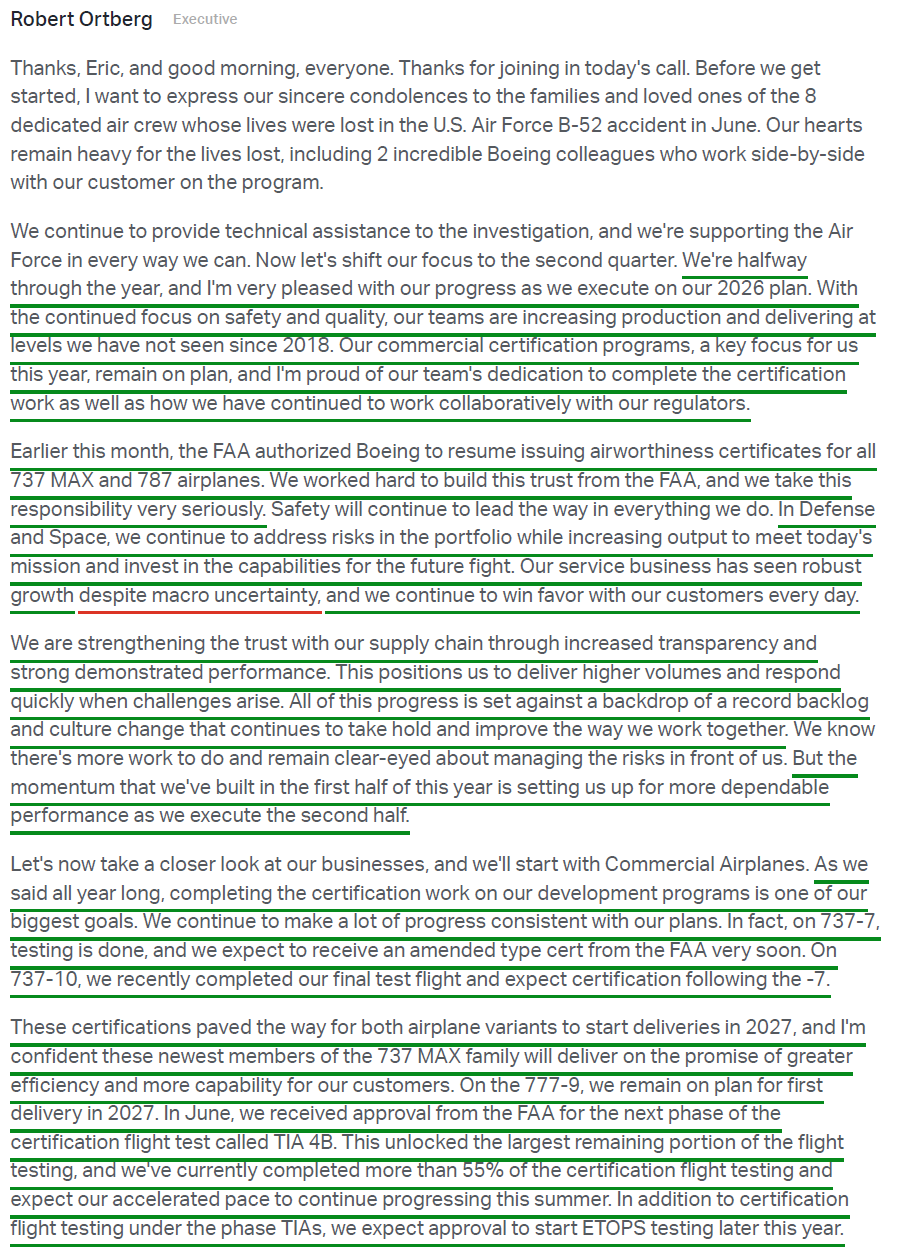
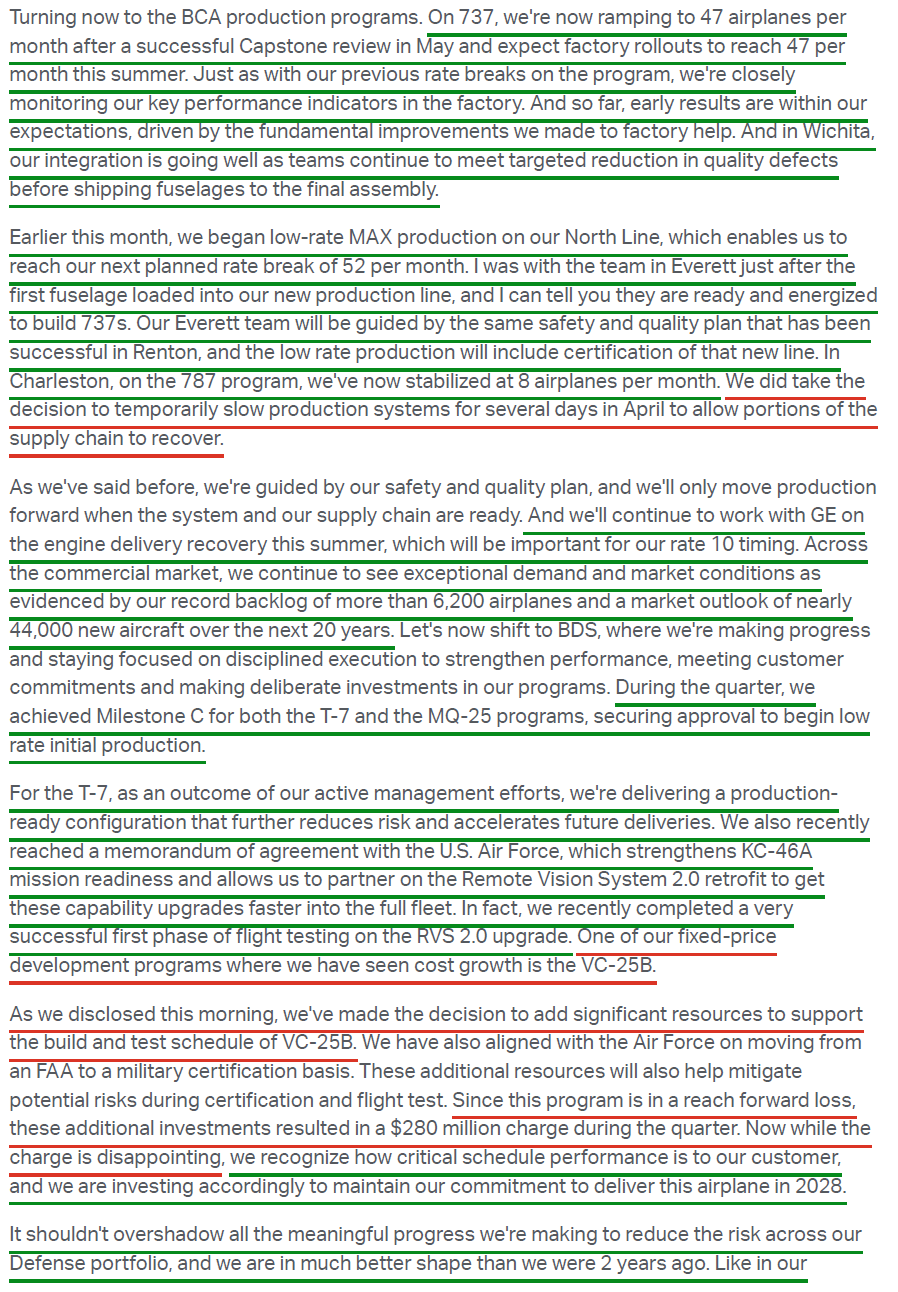
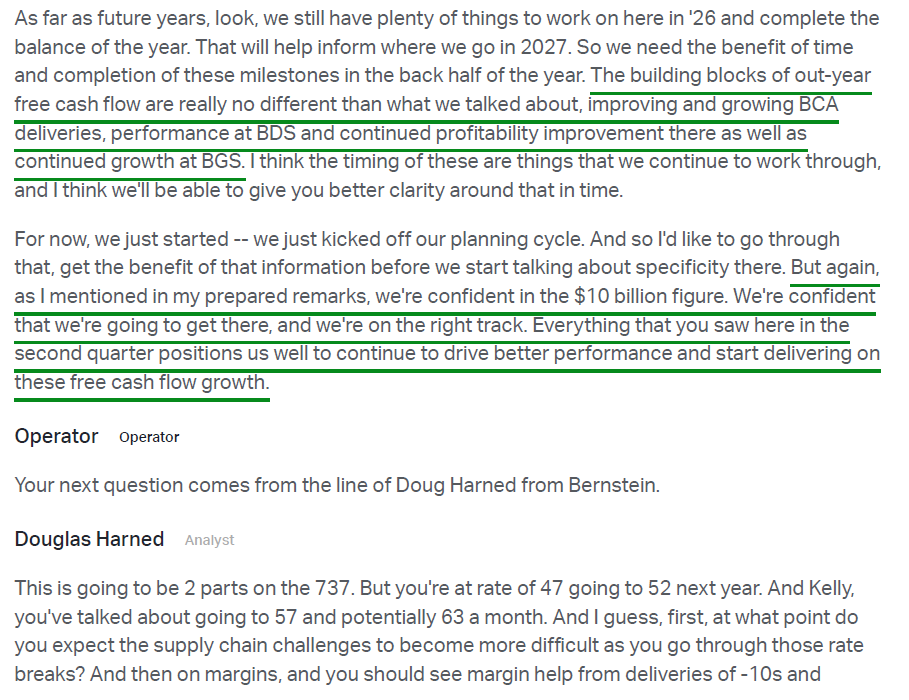
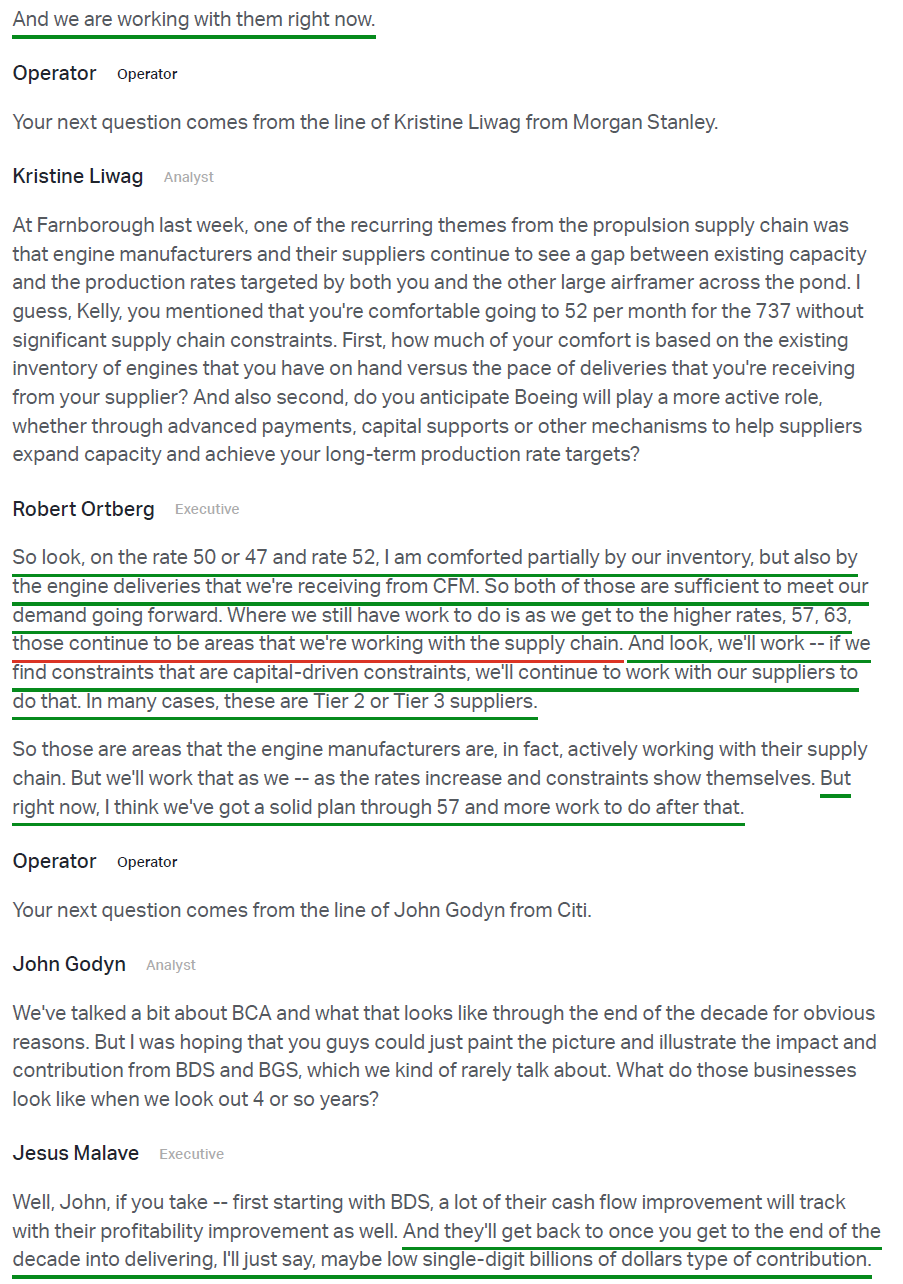
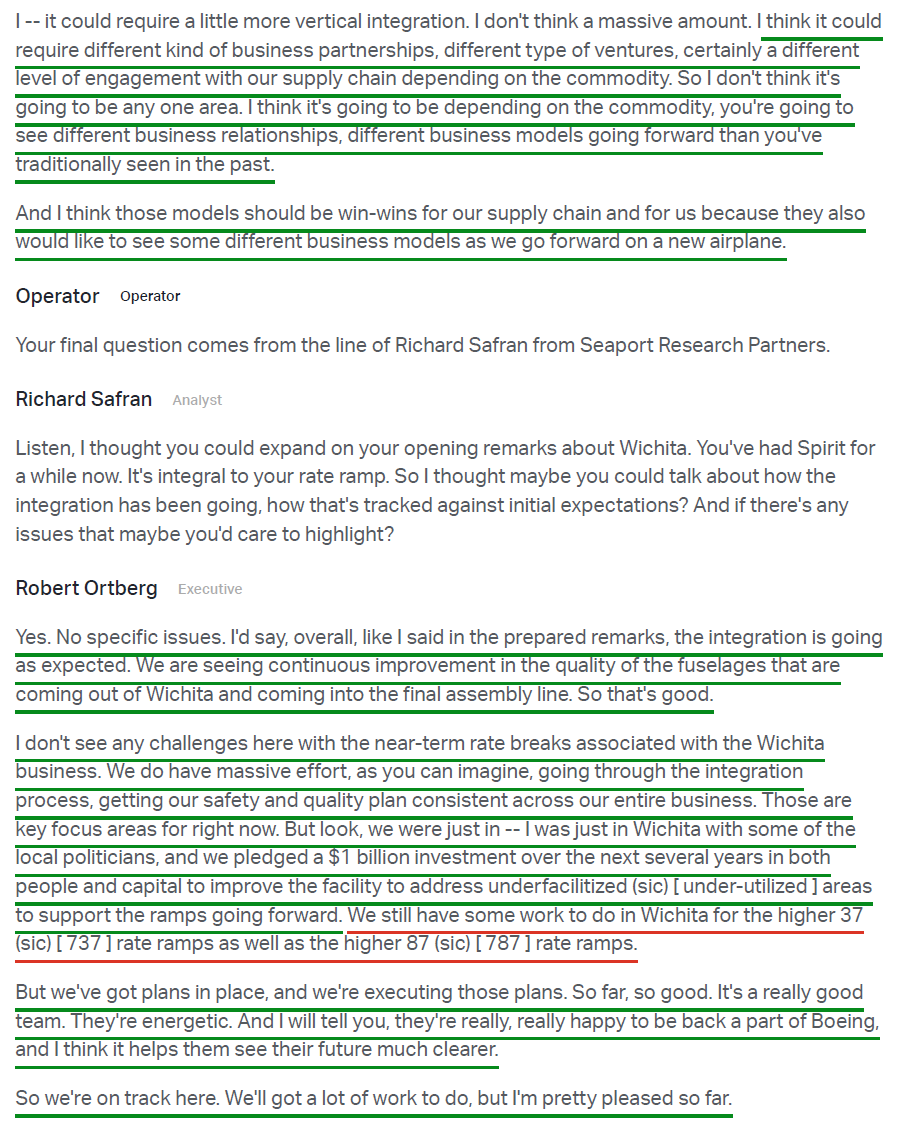
3) Boeing delivered 129 737s in Q2, up 24% Y/Y from 104, and remains on track for ~500 full-year deliveries, which would represent an increase of ~12% from the 447 delivered in 2025. The program began transitioning to 47 aircraft per month following a successful Capstone review in May, with factory rollouts expected to reach that rate this summer. In July, the company activated low-rate initial production on the new Everett North Line, which supports the next planned rate break to 52 per month. Management noted no supply chain constraints through rate 52, with the step-ups from 52 to 57 and beyond expected to be more challenging, flagging wings as the key internal watch item.
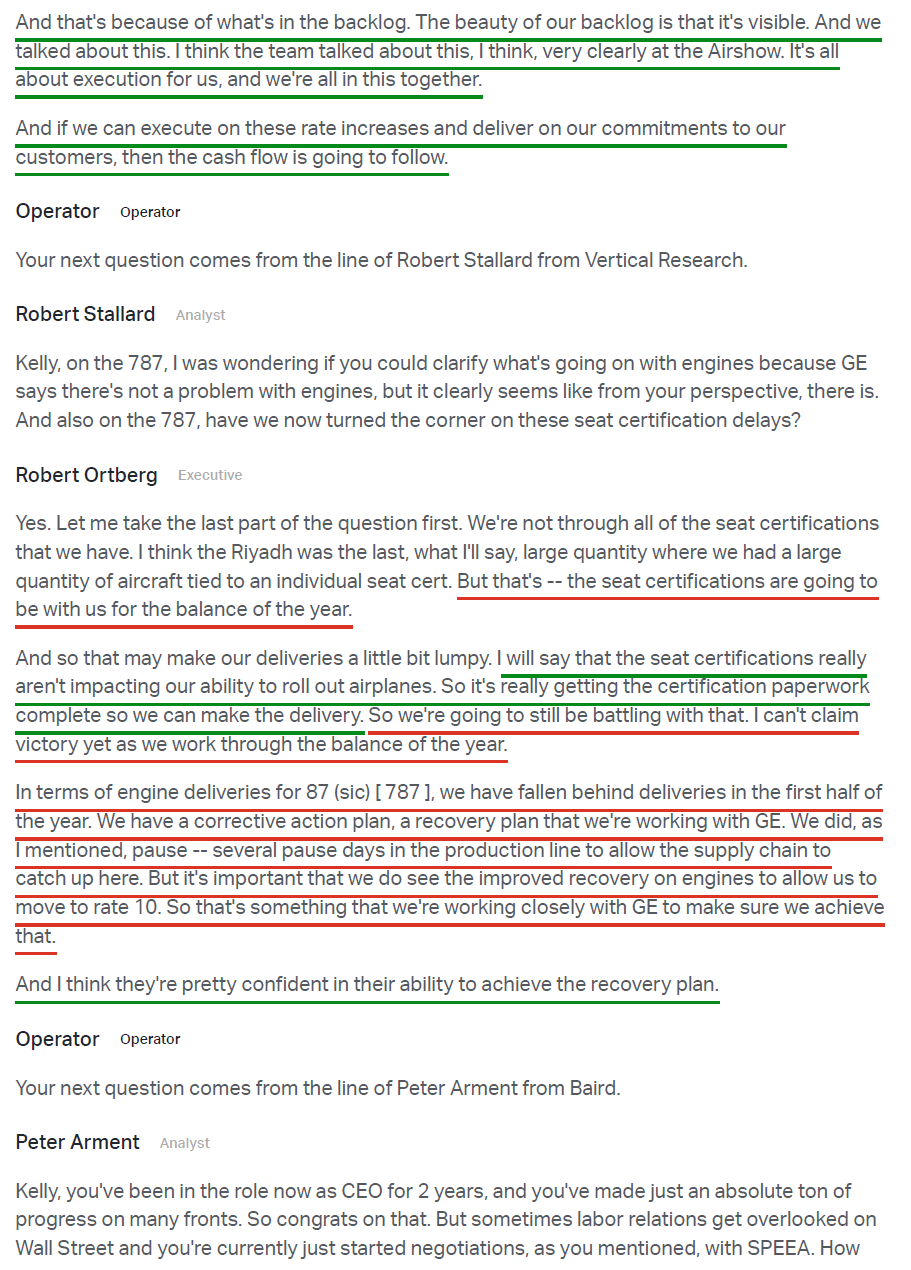
4) The 787 program stabilized at 8 aircraft per month during the quarter, with Boeing delivering 25 787s (up 4% Y/Y from 24, including 13 in June) and remaining on track for 90-100 full-year deliveries. Management temporarily slowed production for several days in April to allow portions of the supply chain to recover. Engine deliveries from GE (GE) fell behind in the first half, and Boeing is working on a recovery plan with GE that management views as important to the timing of the next rate increase to 10 per month. On seat certification, management expects delays to persist through the balance of the year, which may make deliveries lumpy but are characterized as a delivery-timing issue rather than a production issue.
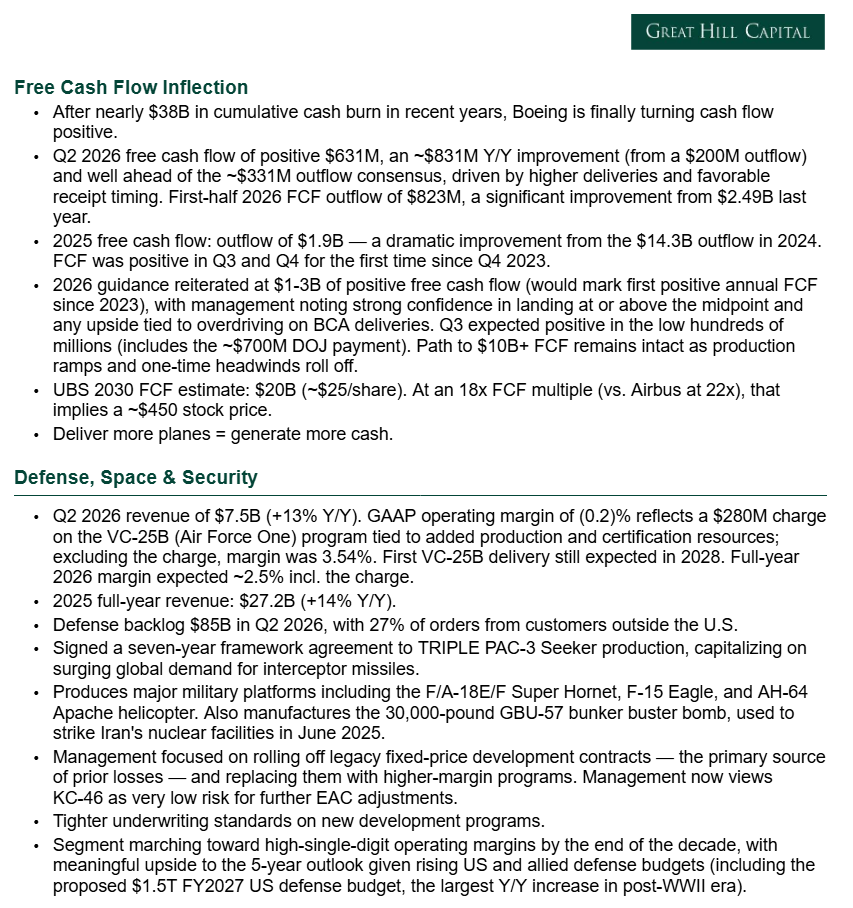
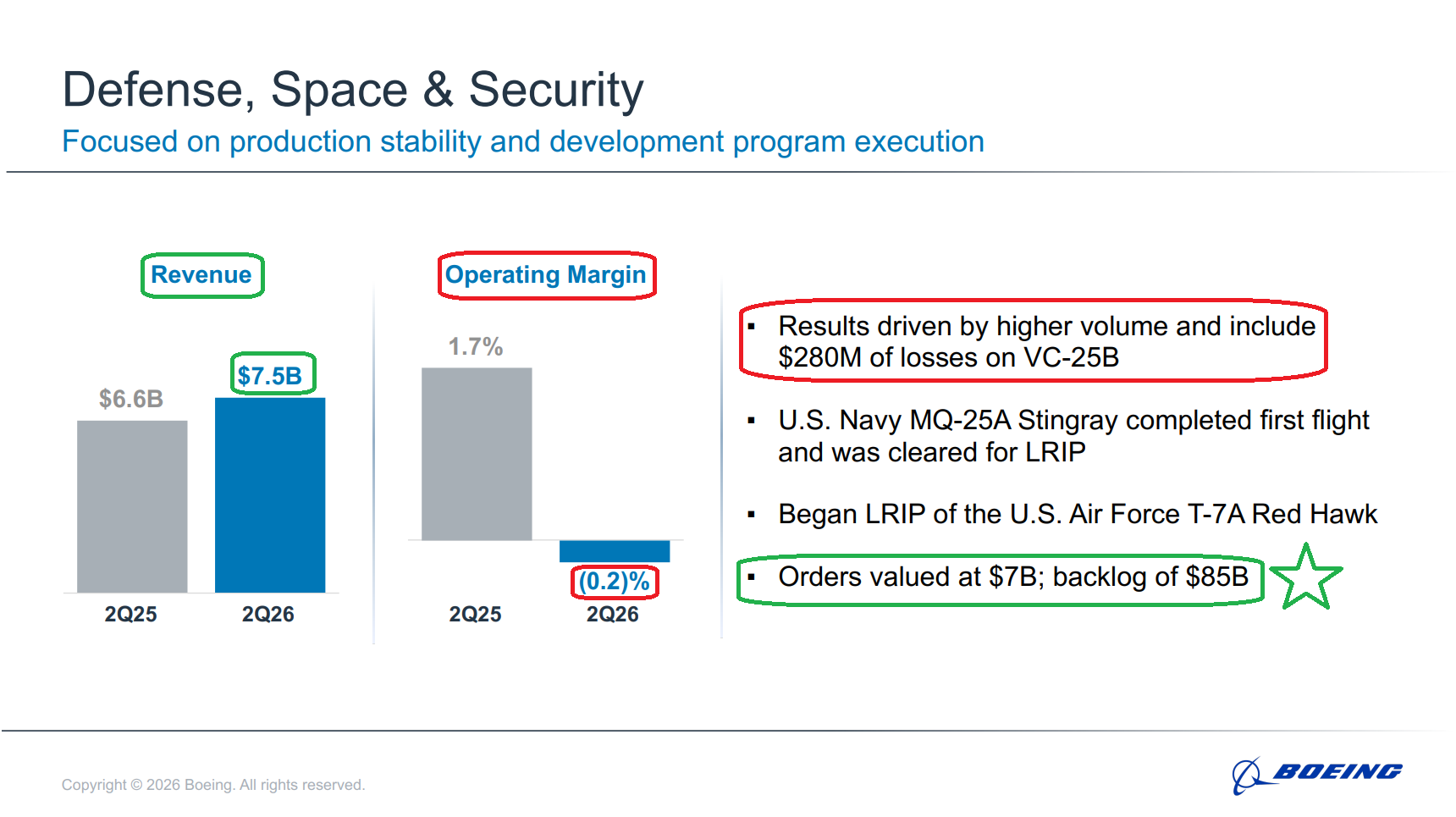
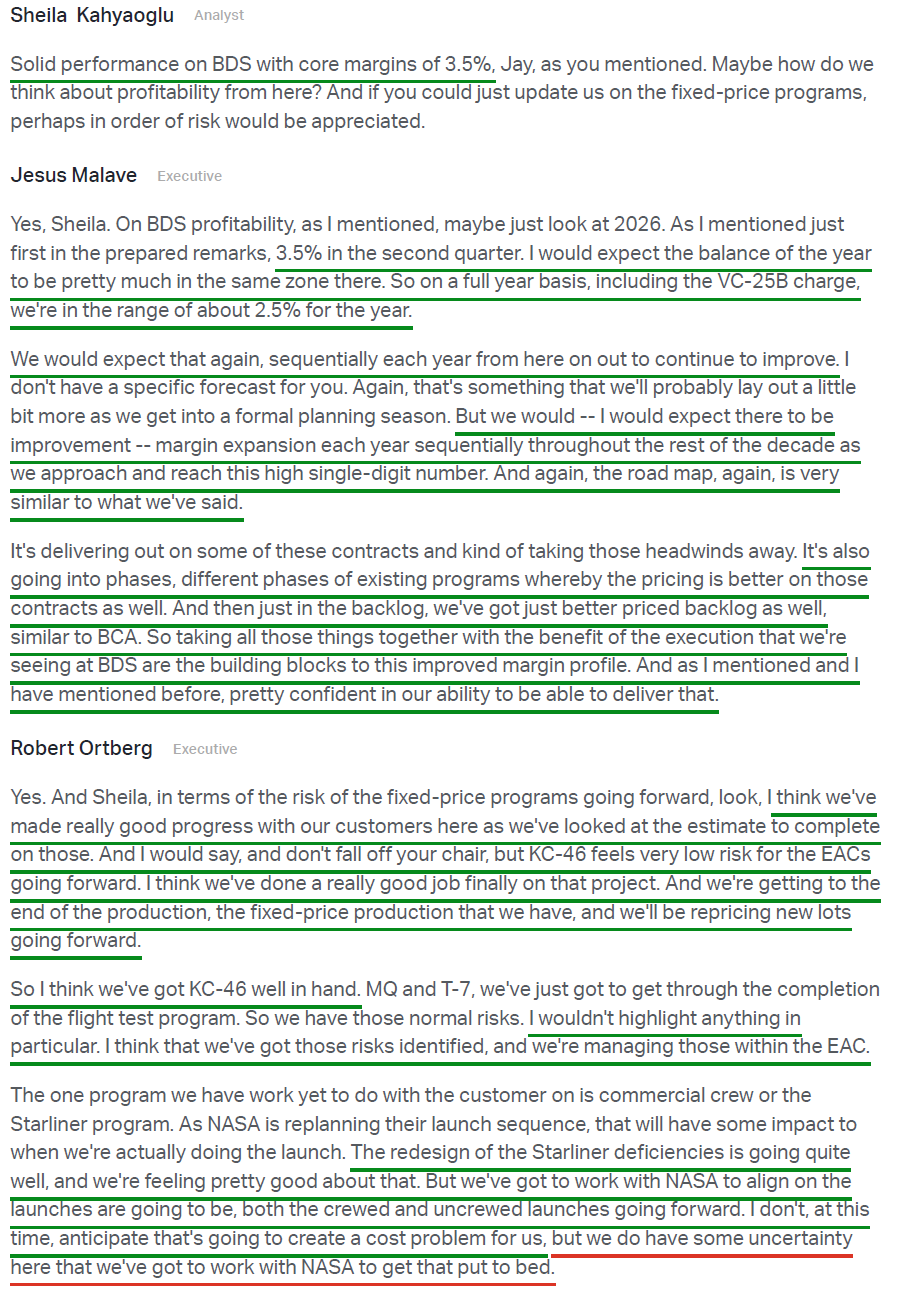
5) The Defense, Space & Security segment posted revenue of $7.5B (+13% Y/Y), driven by higher volume on classified programs, missiles and weapons, and the KC-46 Tanker program (Spirit (SPR) contributed ~$130M, or about 2 points of growth). Operating margin was (0.2%), reflecting a $280M loss on the VC-25B (Air Force One) program tied to additional production and certification resources, with first delivery still expected in 2028. Excluding that charge, BDS operating margin was 3.54%. BDS booked $7B of orders, ending with an $85B backlog (27% international). Management reiterated confidence in the path to high-single-digit operating margins by the end of the decade, with full-year 2026 BDS margin expected around 2.5%, including the VC-25B charge.
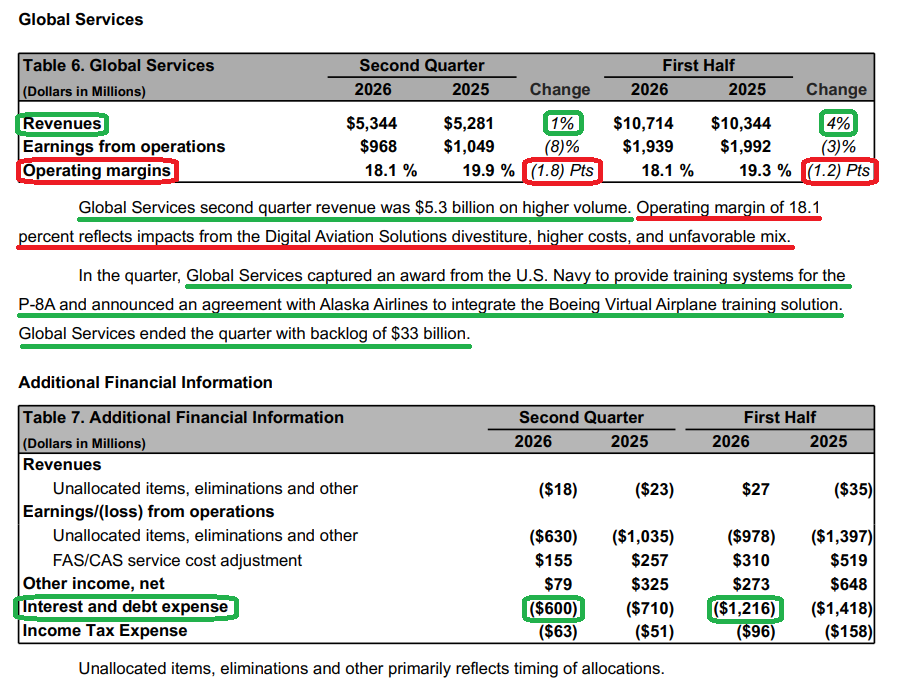
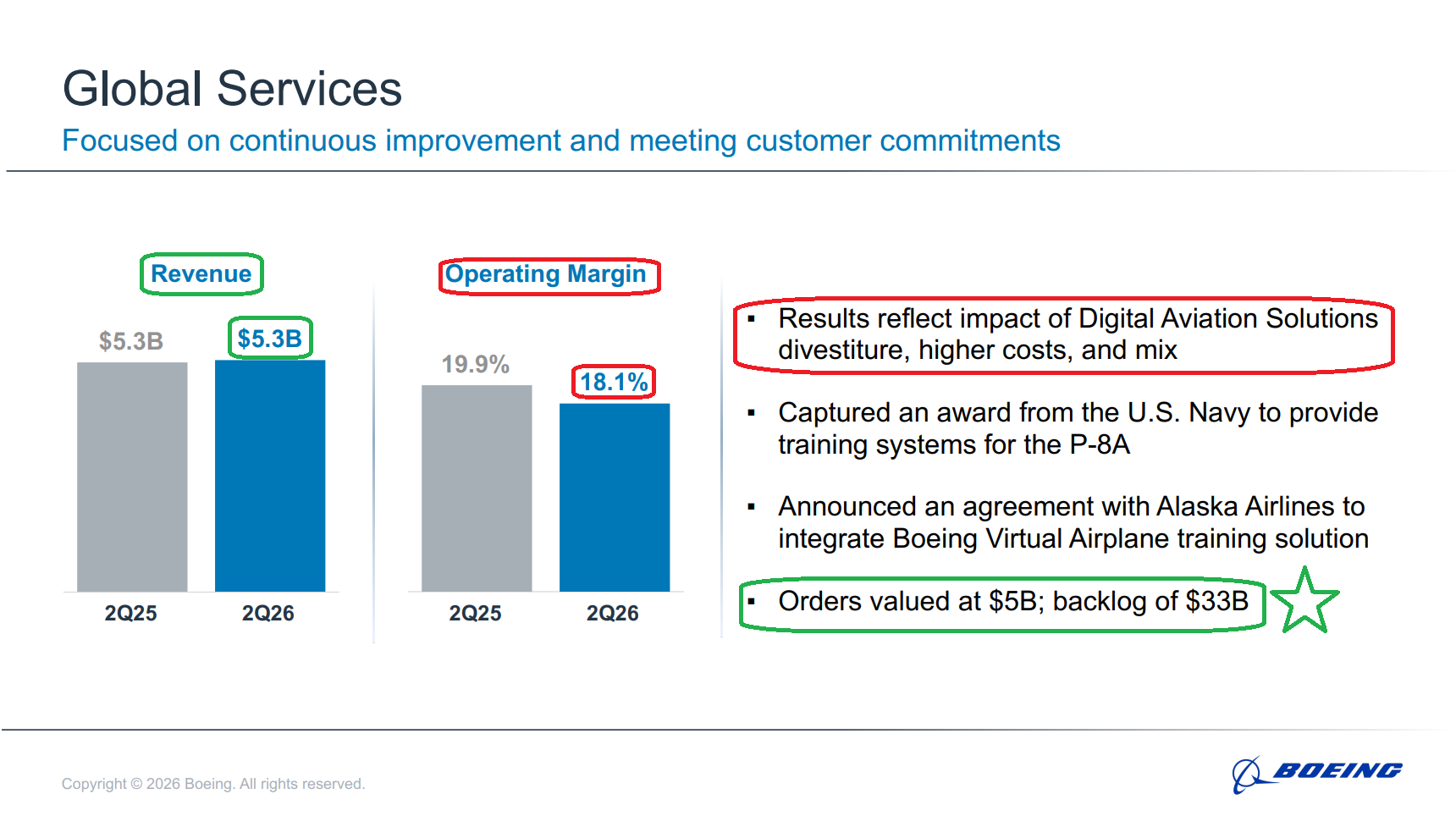
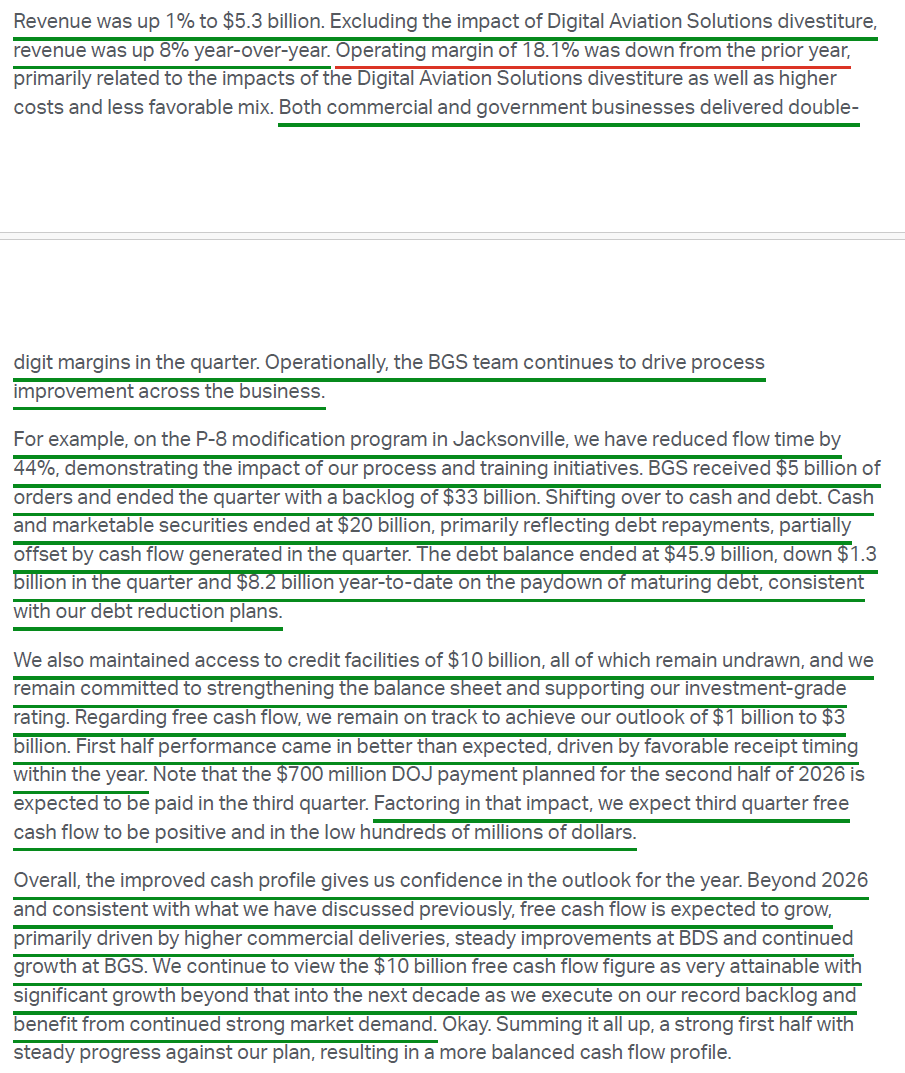
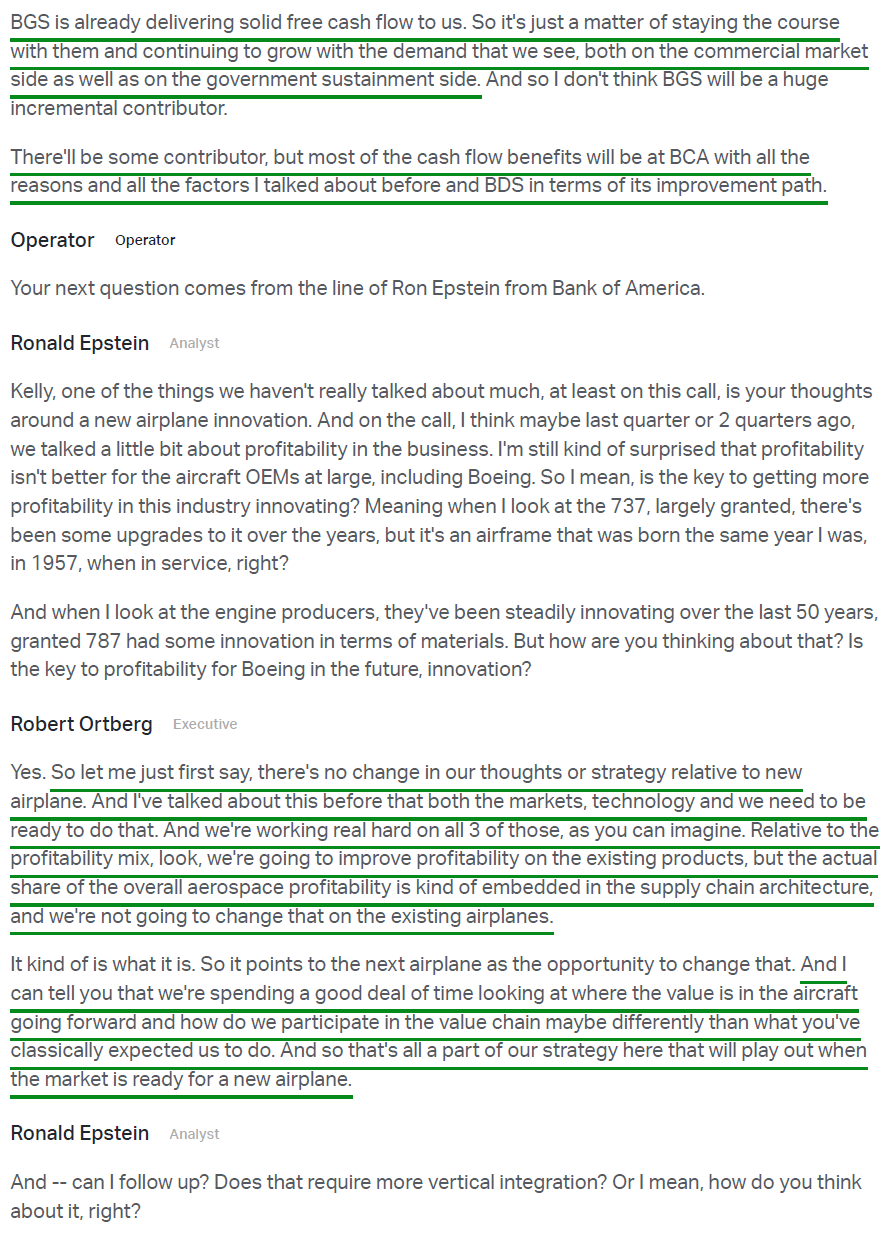
6) The Global Services segment posted revenue of $5.3B (+1% Y/Y), which rises to +8% Y/Y excluding the Digital Aviation Solutions divestiture, with operating margin of 18.1%, down from 19.9% on the DAS divestiture, higher costs, and less favorable mix. Both commercial and government businesses again delivered double-digit margins, and BGS booked $5B of orders to end with a $33B backlog. Management noted it has not yet seen a material impact on the commercial services business from the Middle East conflict, while the government services business has seen incremental demand supporting ongoing operations.
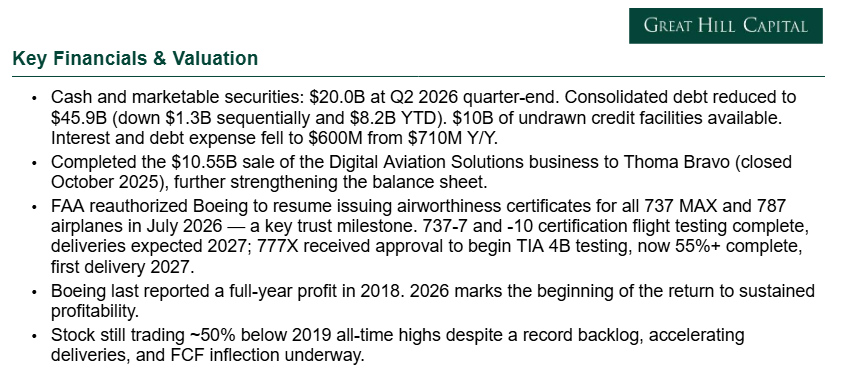
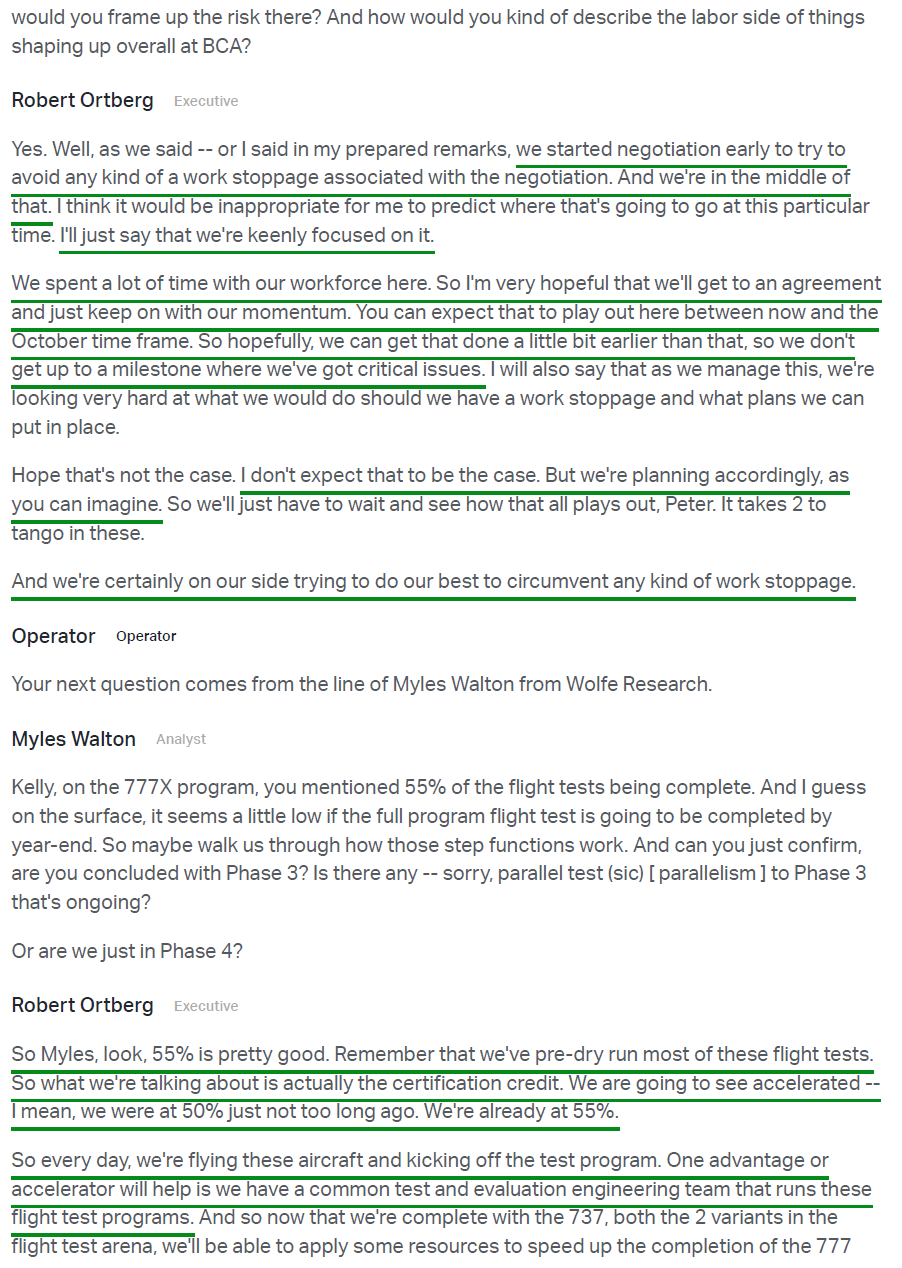
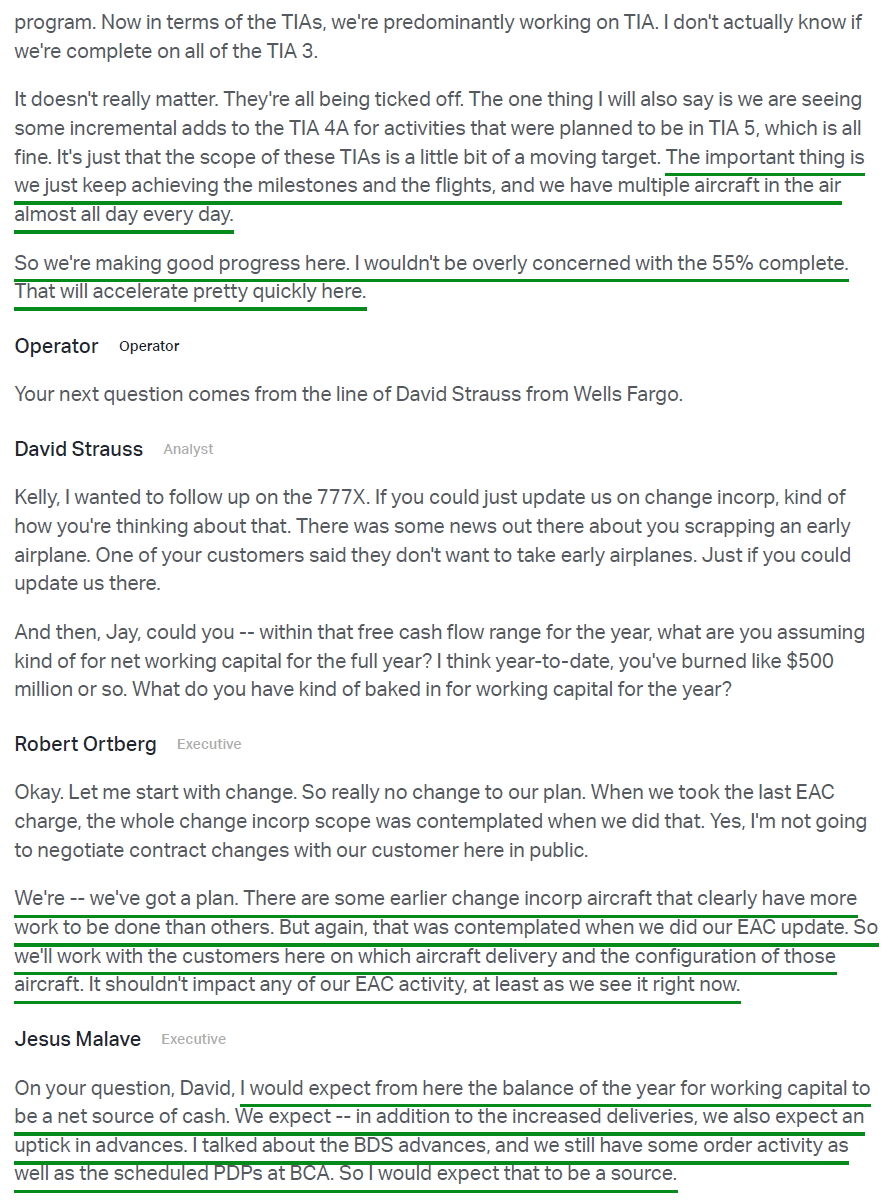
7) On certifications, the FAA earlier this month reauthorized Boeing to resume issuing airworthiness certificates for all 737 MAX and 787 airplanes, a key trust milestone. Testing is complete on the 737-7, with an amended type certificate expected from the FAA very soon and the 737-10 to follow, keeping both variants on track to begin deliveries in 2027. On the 777X, Boeing received FAA approval in June to begin certification flight testing under TIA 4B, unlocking the largest remaining portion of flight testing, and has now completed more than 55% of testing, with ETOPS testing expected later this year and first delivery still targeted for 2027.
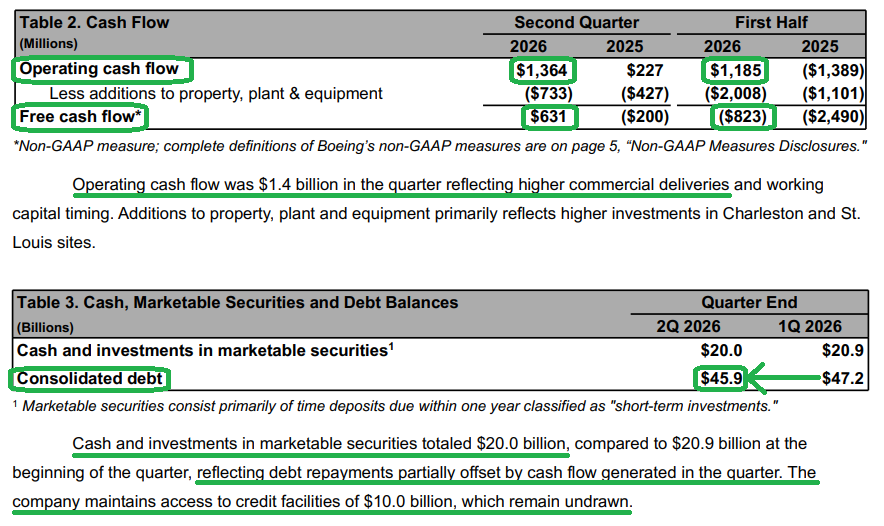
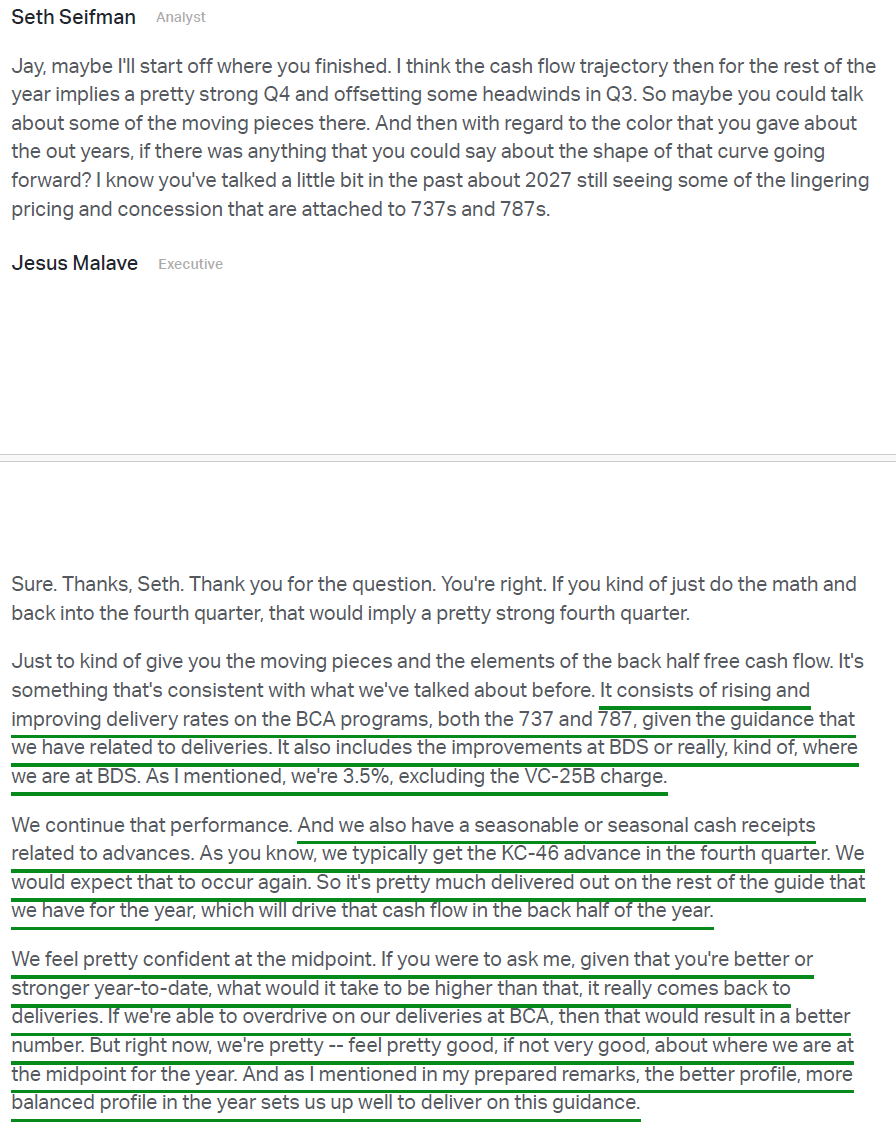
8) Free cash flow was positive $631M, an improvement of ~$831M Y/Y (from a ($200M) outflow) and well ahead of the ~$331M outflow consensus, driven by higher commercial deliveries and favorable receipt timing within the year. First-half FCF was an outflow of ($823M), a significant improvement from ($2.49B) last year. Management reaffirmed its 2026 FCF target of $1-3B and noted strong confidence in landing at or above the midpoint, with any upside tied to overdriving on BCA deliveries. Q3 is expected to be positive in the low hundreds of millions (including the ~$700M DOJ payment now assumed in Q3), with an implied strong Q4 supported by the seasonal KC-46 advance. Management continues to view the $10B annual free cash flow figure as very attainable, with significant growth beyond that into the next decade.
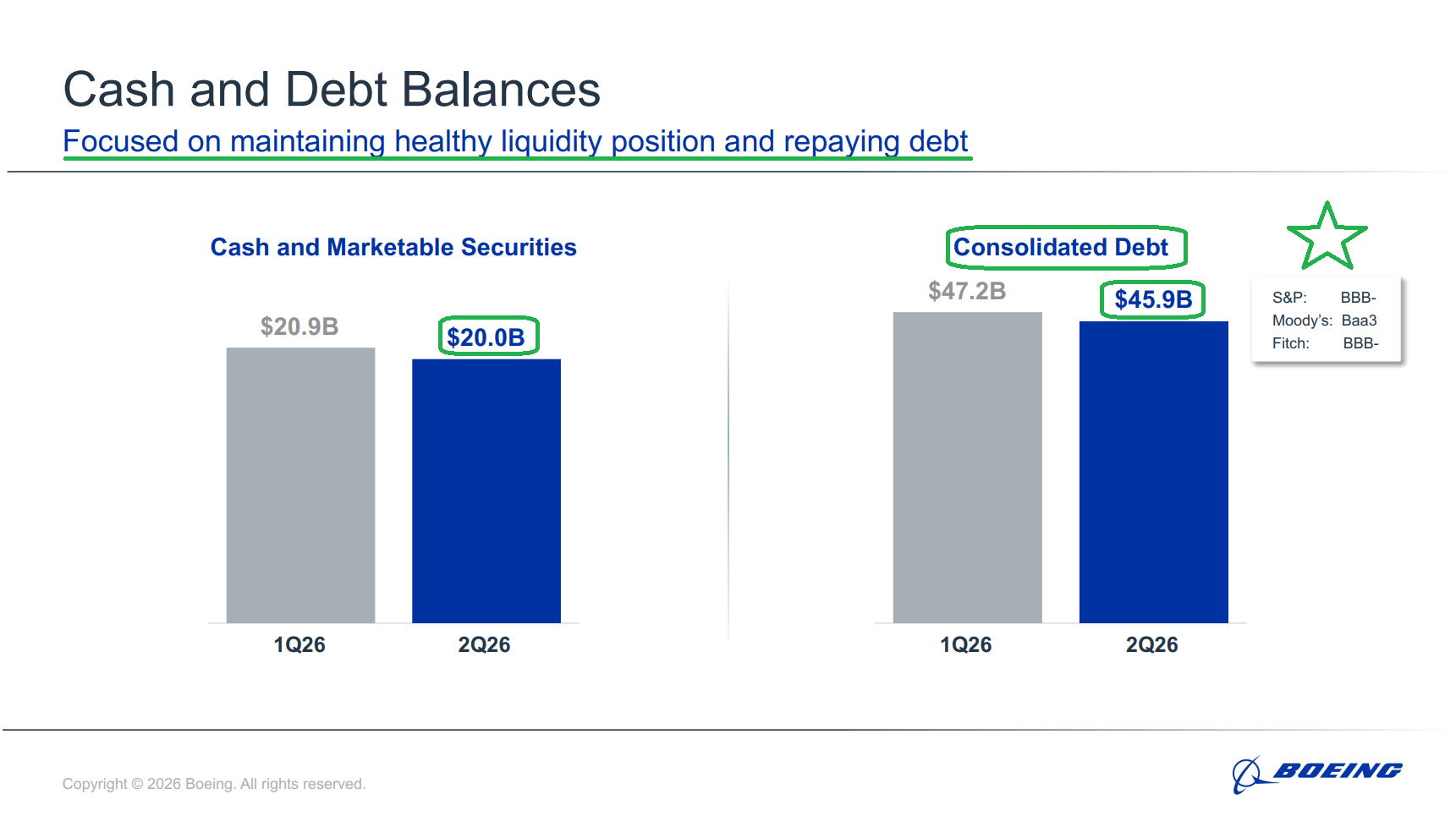
9) Cash and marketable securities ended the quarter at $20.0B, down modestly from $20.9B at the end of Q1, reflecting debt repayments partially offset by cash generated in the quarter. Consolidated debt declined to $45.9B, down $1.3B sequentially and $8.2B year-to-date on the paydown of maturing debt, while interest and debt expense fell to $600M from $710M a year ago. Boeing maintains $10B of undrawn credit facilities, with strengthening the balance sheet and preserving its investment-grade rating remaining a top priority.
10) Ahead of the current SPEEA contract’s expiration in October, Boeing has entered early negotiations with its Puget Sound engineering union, starting discussions ahead of time to work toward an agreement and avoid a work stoppage. Management described the tone so far as respectful and productive, and while Ortberg does not expect a stoppage and is hopeful of reaching a deal before the deadline, the company is actively contingency-planning should one occur.
Earnings Call Highlights
General Market
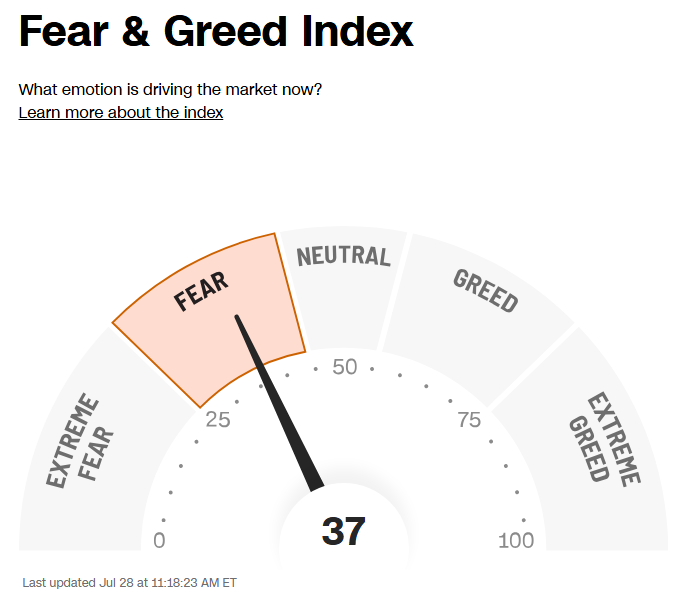
The CNN “Fear and Greed Index” ticked down to 37 this week from 43 last week. You can learn how this indicator is calculated and how it works here: (Video Explanation)
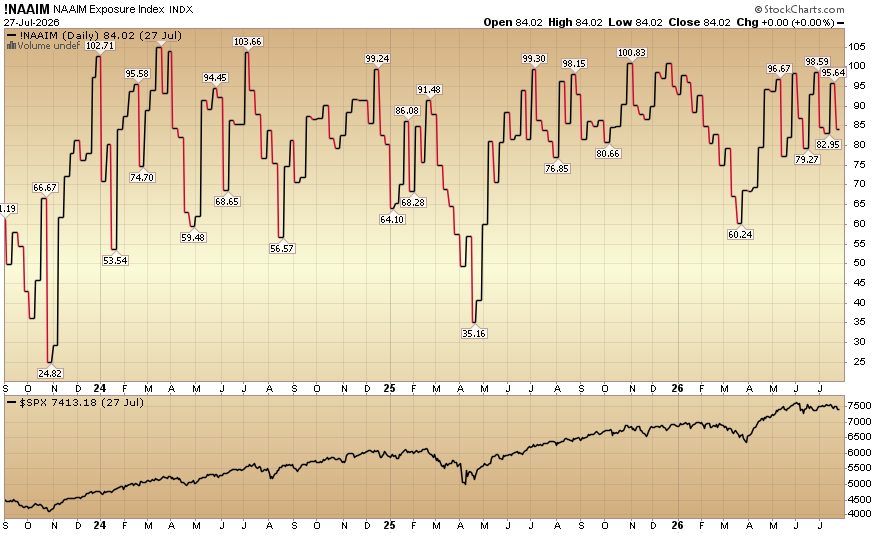
The NAAIM (National Association of Active Investment Managers Index) (Video Explanation) ticked down to 84.02% equity exposure this week from 95.64% last week.
Our podcast|videocast will be out sometime today. We have a lot of great data to cover this week. Each week, we have a segment called “Ask Me Anything (AMA)” where we answer questions sent in by our audience. If you have a question for this week’s episode, please send it in at the contact form here.


Comments
Log in or sign up to join the conversation.