

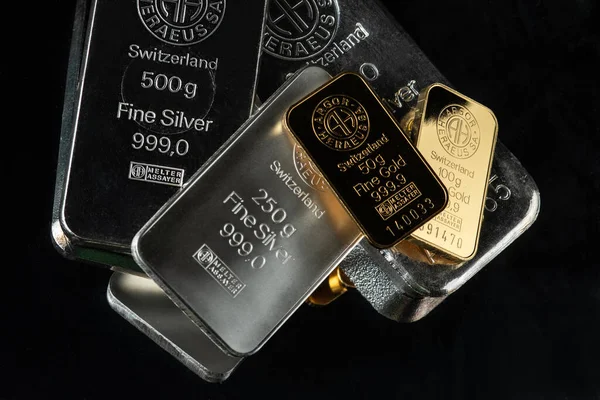
If you’re familiar with my work, you know that I have consistently argued that a new secular bull market in precious metals began in the spring of 2024, as I explained in detail in this report and this one. A secular bull market typically lasts around a decade and often emerges when the broader stock market peaks and enters a prolonged period of stagnation.
During such periods, capital flows out of stocks and into precious metals and natural resources, fueling powerful gains in those assets. The last two secular precious metals bull markets occurred in the 1970s and 2000s, and I believe we are now in the early stages of another one. Considerable evidence supports this view, including an extremely overvalued stock market that is beginning to run into trouble, along with an overvalued U.S. dollar, as I explained in this report.
However, despite their impressive overall gains, these secular precious metals bull markets have all shared one notable characteristic: a major correction along the way. This was true of the bull markets of the 1970s and 2000s, and it has proven true once again during the current bull market of the 2020s, as we witnessed this year.
In today’s report, I’ll compare the 2026 precious metals correction with those of the 1970s and 2000s, showing how precious metals went on to achieve impressive gains once those corrections ended. I expect a similar outcome once this year’s correction has run its course.
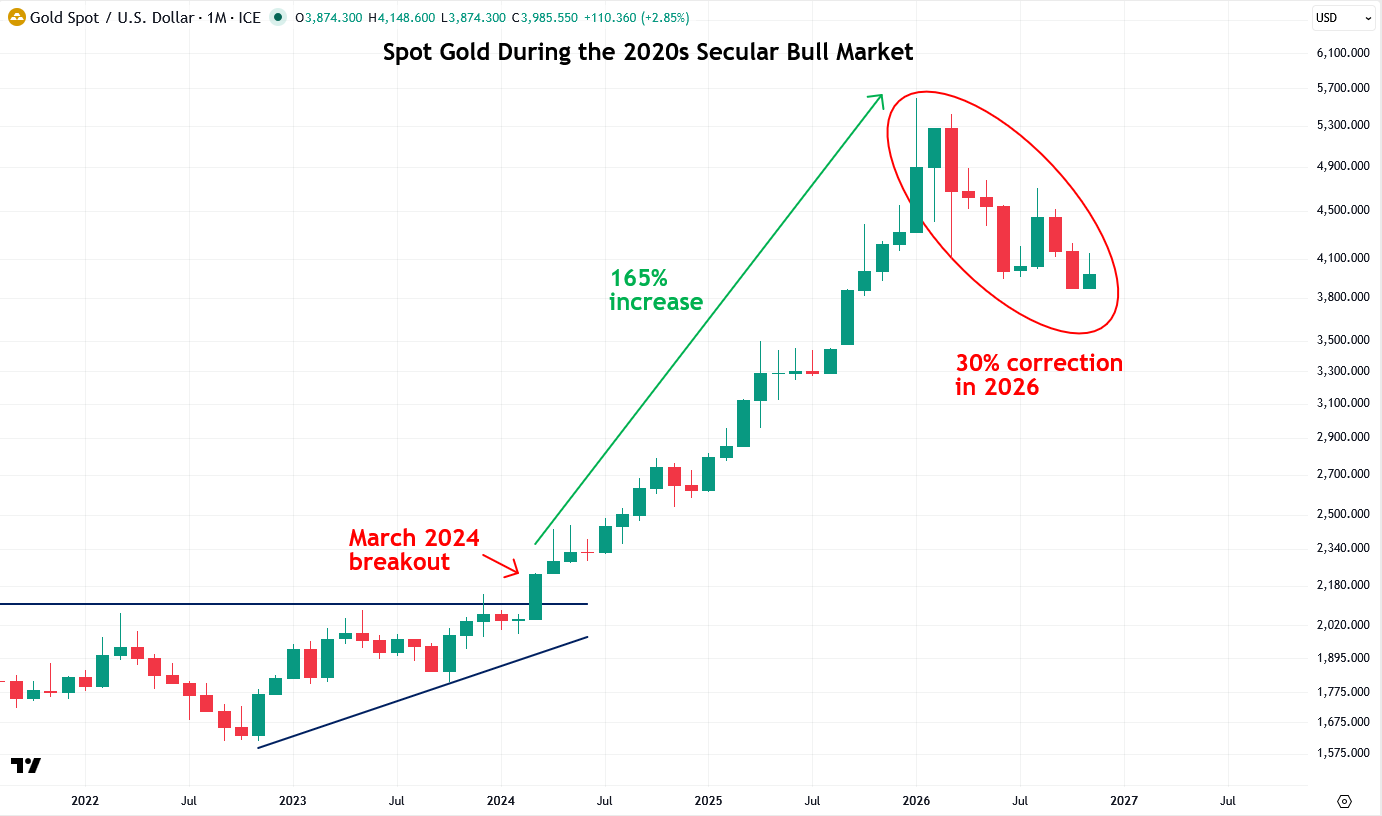
Starting with the chart of gold during the current secular bull market, we can see that it broke out in March 2024 following several years of consolidation dating back to 2020. I consider this breakout to mark the beginning of the latest secular precious metals bull market, although silver followed with its own breakout a couple of months later, in May 2024.
The Bubble Bubble Report is a reader-supported publication. To receive new posts and support my work, consider becoming a free or paid subscriber.
After surging from approximately $2,100 to $5,600 per ounce, a gain of $3,500 or 165%, gold entered a correction in January 2026 for several reasons. Among them was President Trump’s shocking and bizarre decision to appoint inflation hawk Kevin Warsh as the new Federal Reserve chair, despite having spent months making the case for a dove who would aggressively slash interest rates.
In addition, the correction was greatly exacerbated and prolonged by the U.S. war with Iran, which began in early March and sent energy prices soaring. This, in turn, fueled a surge in inflation and interest rate expectations, putting further downward pressure on precious metals through the dynamic I explained in this report. As a result, the Federal Reserve shifted from a rate-cutting cycle that had supported precious metals to a rate-hiking cycle that weighed heavily on them.
Turning to silver, we can see that it followed gold’s lead by breaking out of its multiyear consolidation in May 2024. It then surged from approximately $26 to $121 per ounce, an impressive gain of 364%, before peaking in January 2026.

Comments
Log in or sign up to join the conversation.