


Consumer spending is about 70% of the economy, and retail sales is our first wide measure of that spending. And since consumption leads employment, it is an important real-world measure. In May, after two months of being dominated by gas prices, it was even more decisively driven by a likely splurge tied to the wealth effect from booming stock prices.
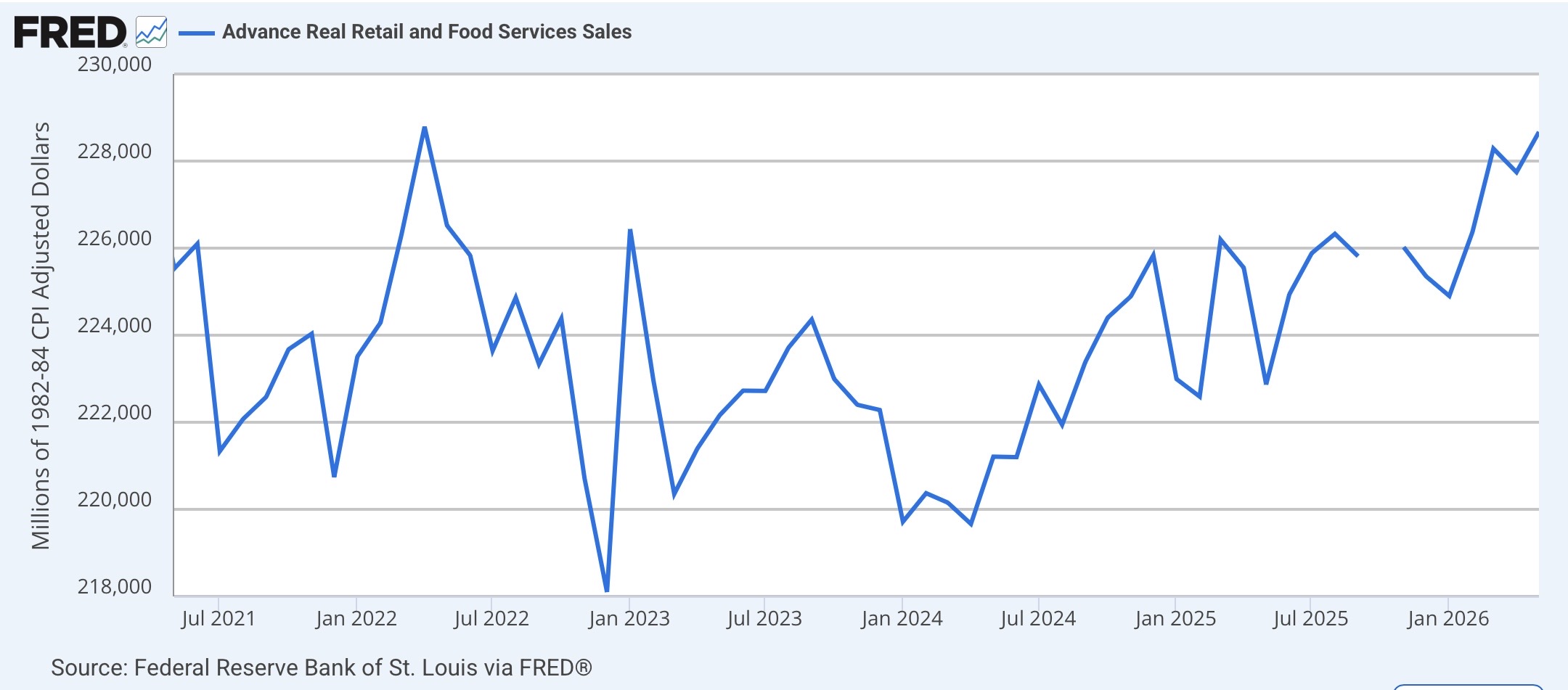
Nominally, total retail sales rose 0.9% in May, but after taking the monthly 0.5% increase in consumer prices into account, real sales rose 0.4% (blue):
Since gas prices have been a major driver of inflation in the past few months, here’s a look at the monthly % changes in nominal retail sales excluding gas stations (orange) vs. total retail sales (blue). Retail sales excluding gas increased 0.7%:
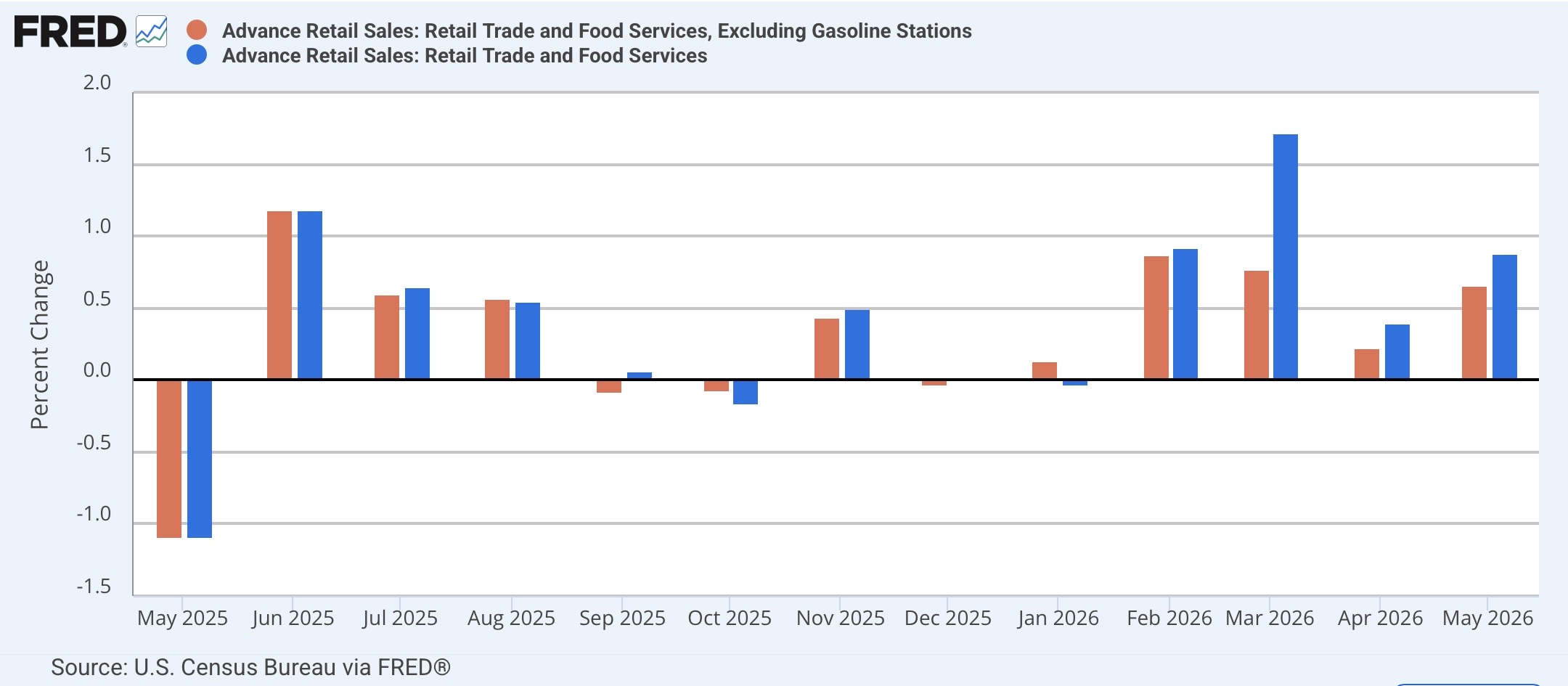
Since CPI increased 0.5%, and excluding energy rose only 0.2% in May, both of these are positive in “real” terms as well.
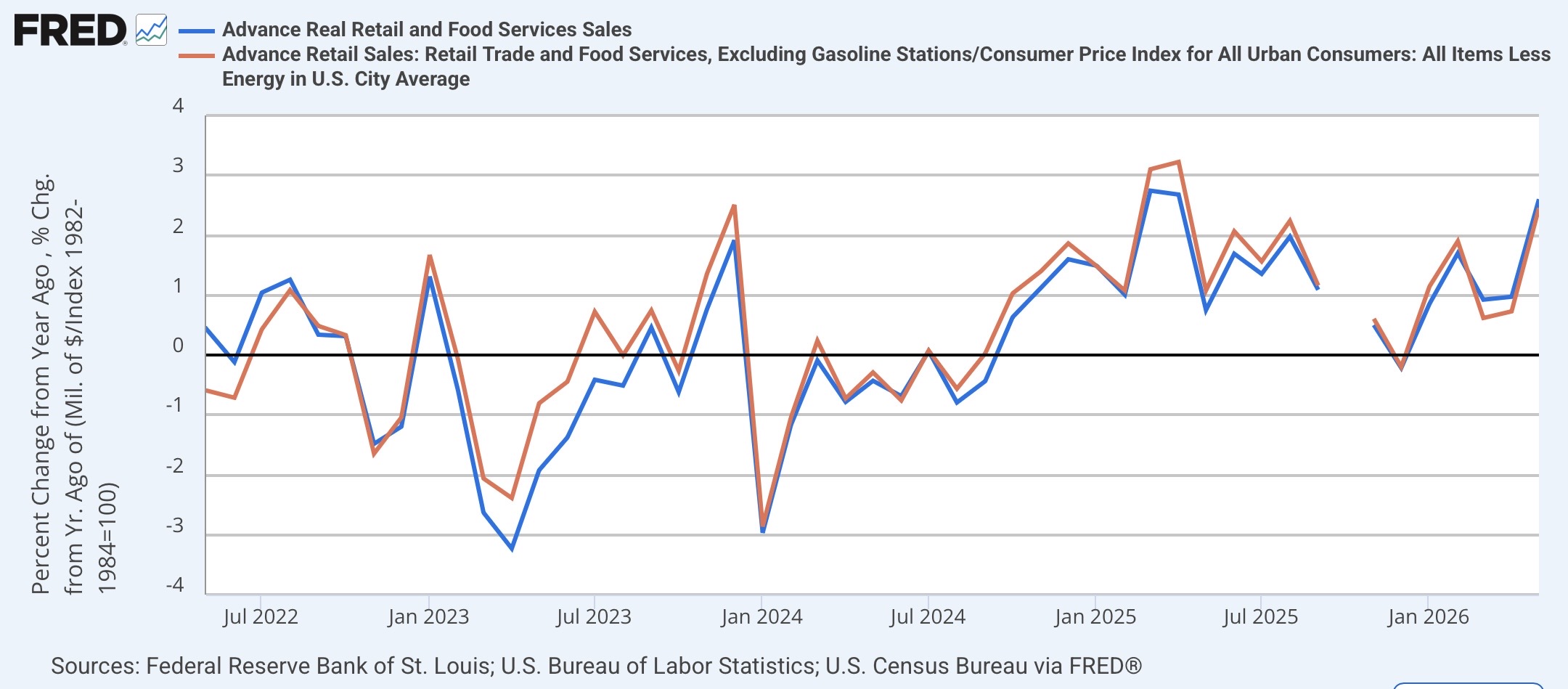
On a YoY basis, nominal total retail sales were up 6.9%, but in real terms were only up 2.6%. Excluding gasoline, nominal sales YoY were up 5.4%, and deflating by using CPI excluding energy were up 2.5%:
In both the March and April personal income and spending reports, we saw that consumers handled gas price increases by essentially just putting the extra spending on their credit cards. Last month I suggested that consumers might have switched to a “wait and see” mode, but this month’s report indicates that consumers have been spending with wild abandon - as has been indicated for weeks by the Redbook sales report, the four-week average of which as of this week is up 9.1% YoY nominally!:
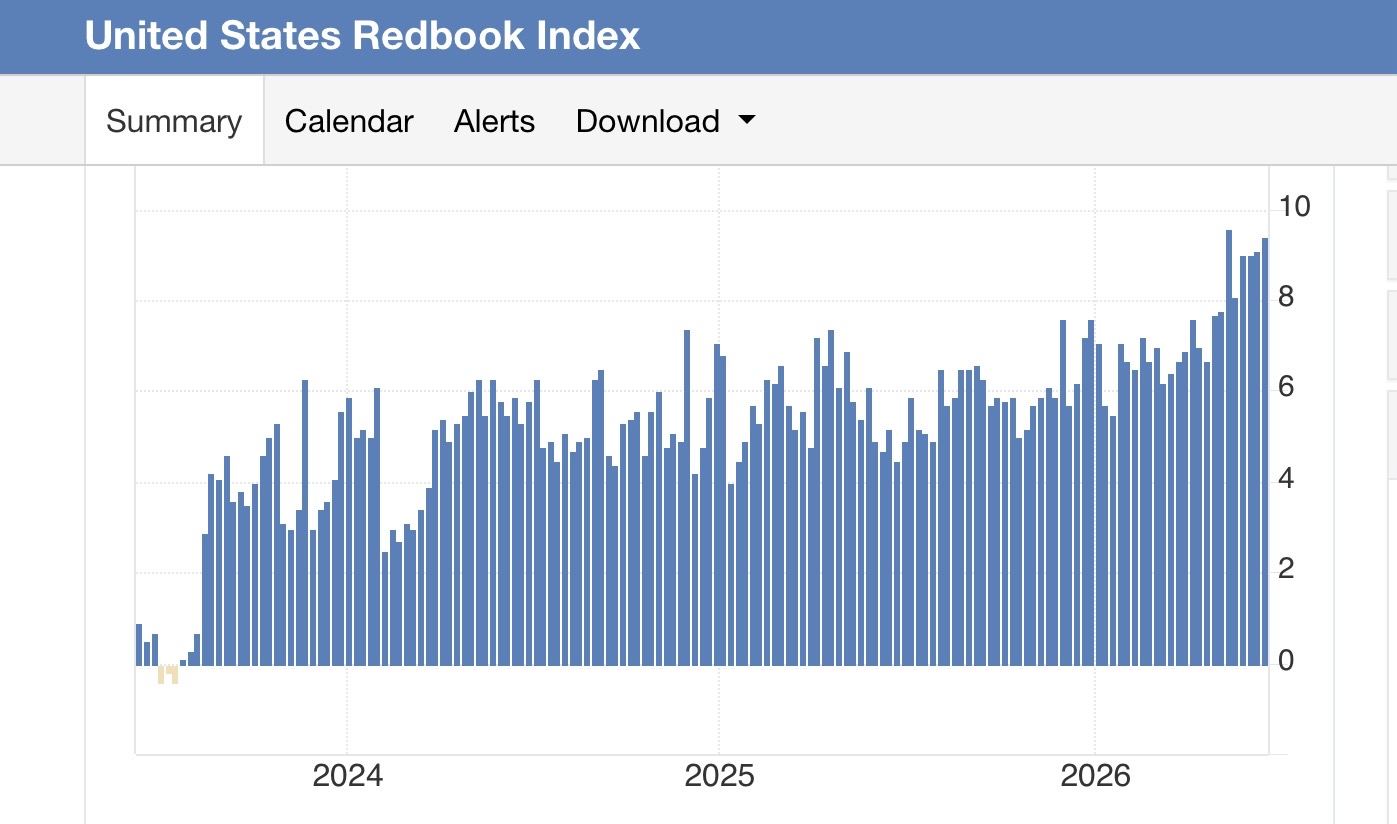
This isn’t because wages have been increasing sharply. Quite the contrary, as we saw with the employment report. Rather, it is very likely that this is “wealth effect” spending by upper-income consumers triggered by the near 20% rise in the stock market since the end of March.
Finally, since consumption leads employment, here is the update of YoY real retail sales (/2 for scale) together with employment (red):
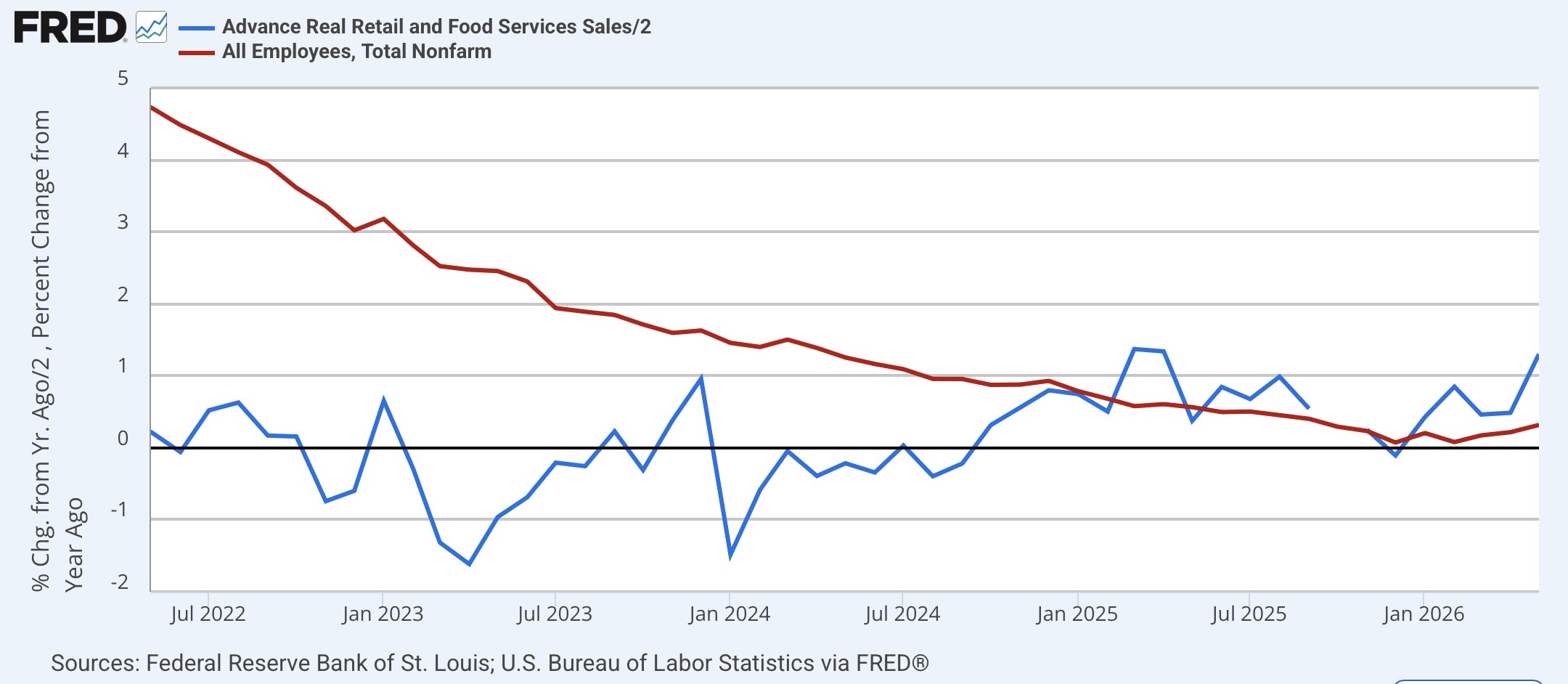
This suggests that on a YoY basis the rebound we have seen in the last three jobs reports is likely to continue in the next several months. Which is all good news, provided the stock market wealth that is likely driving consumption reflects a Boom rather than a bubble.

Comments
Log in or sign up to join the conversation.