


We got a bunch of data this morning. I’ll discuss the JOLTS employment data from last month and the ISM services report today. Since new home sales are a long leading indicator, I think I can safely wait to discuss that report tomorrow.
Let me start with the ISM services report in this post. I’ll put up a separate one to discuss the JOLTS report.
To begin with, recall that services make up roughly 75% of the US economy. As a result, downturns in manufacturing aren’t nearly as important as they used to be. So for forecasting purposes, I use a weighted average of the ISM manufacturing (25%) and services (75%) reports, especially the three-month average. For the last few months - including this month - that hasn’t been important, because the manufacturing index has rebounded above 50 into expansion territory. But what did happen is that several aspects of services became more negative.
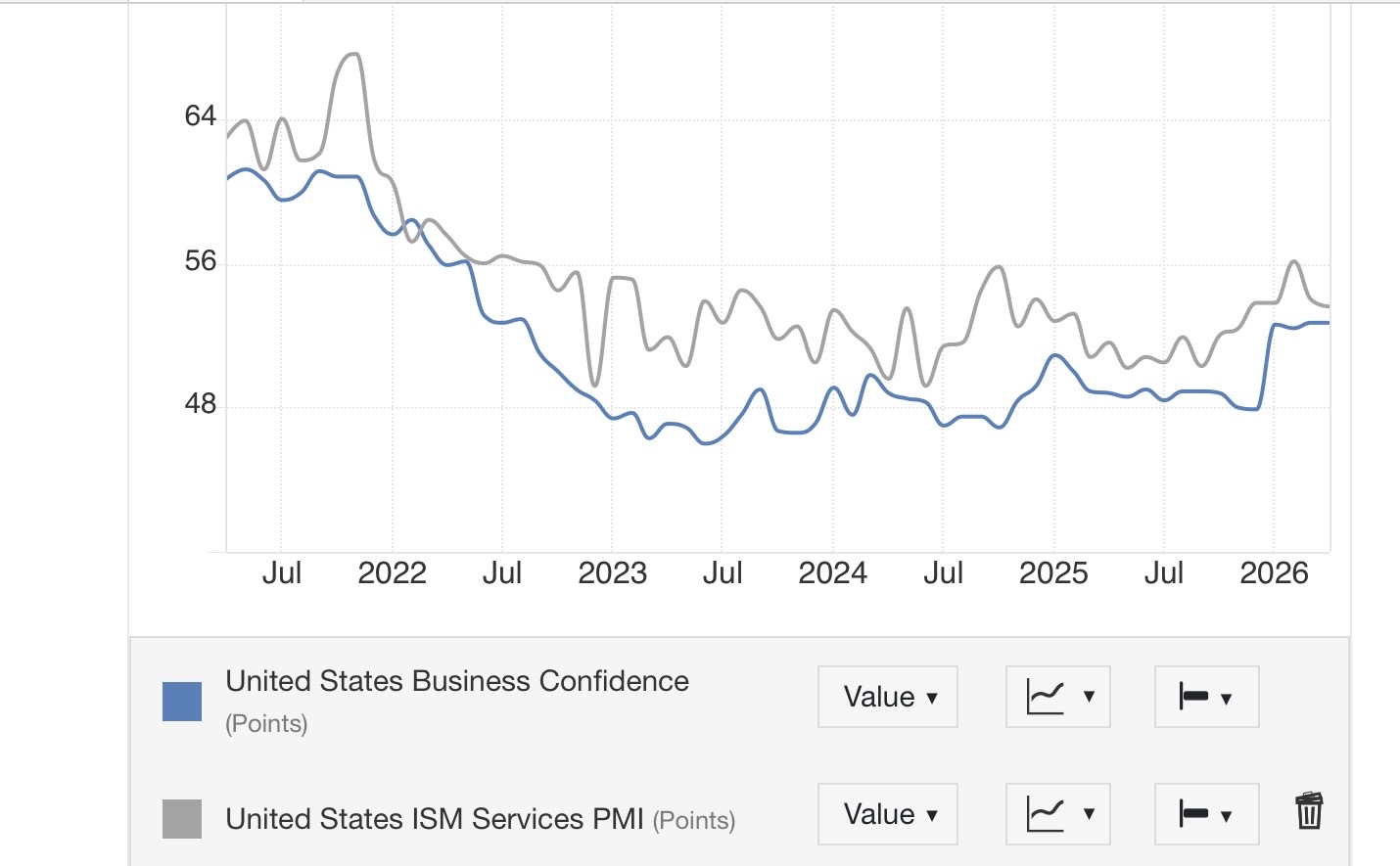
Let’s start with the headline number, which declined -0.4 to 53.6. The three-month average declined slightly, by -0.1, to 54.6 (gray). In the graphs below, I also show the equivalent number from the ISM manufacturing report in blue:
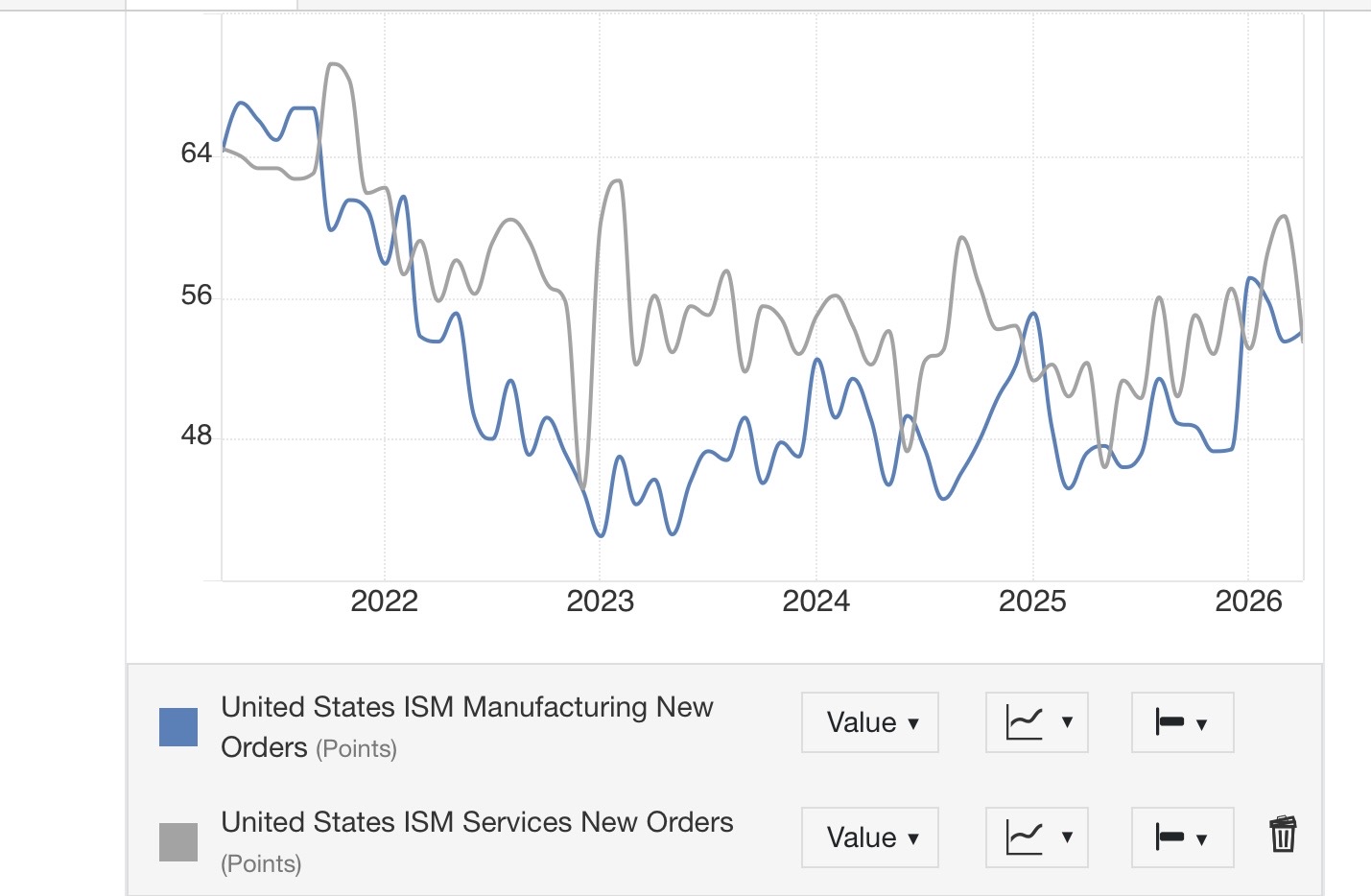
New orders declined -7.1 to a still expansionary 53.5, while the three-month average actually rose 0.2:
The first piece of bad news was that the prices paid component remained at 70.7, the highest level in three years, and the three-month average rose 3.4 to 68.1. This means that price increases in the services sector, just like the manufacturing sector, are widespread:
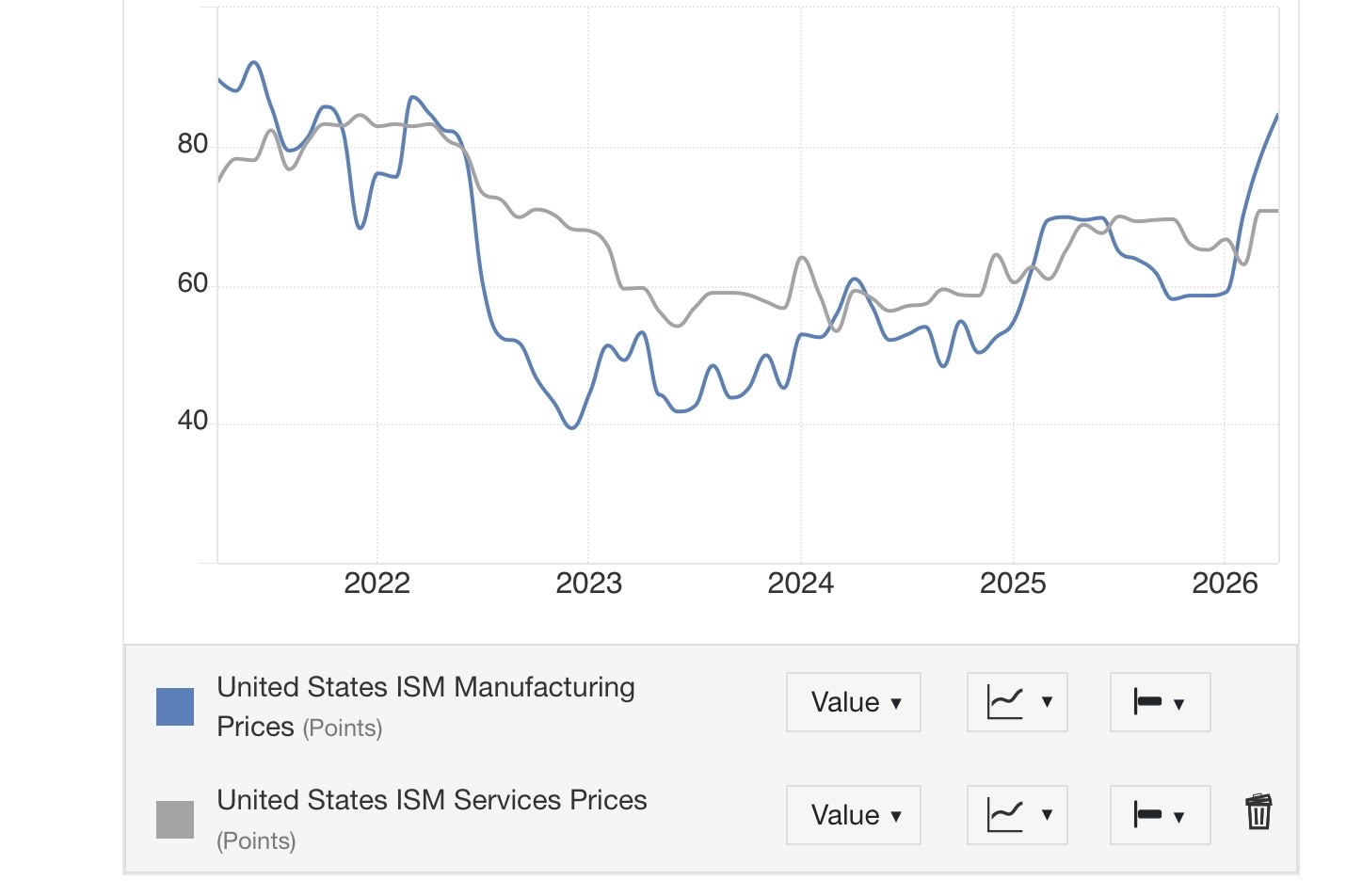
The combined average is the highest since the first half of 2022. For comparison, here is YoY CPI for the past five years:
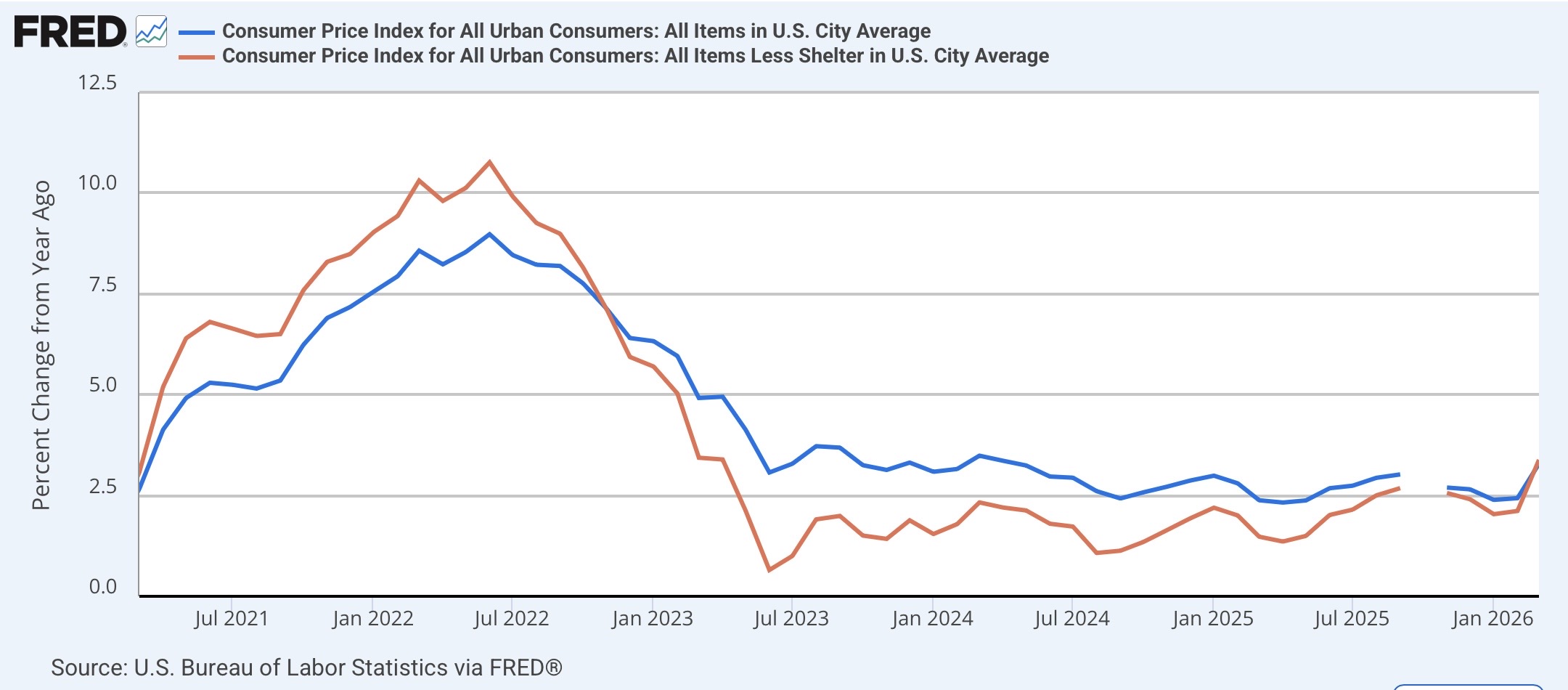
In mid-2022, CPI was running over 1% each month(!) and 8% YoY; and even ex-shelter was over 9%!
The second piece of bad news was that while employment rose 2.8, it remained in contraction at 48.0, while the three-month average declined -0.7 to 48.3:
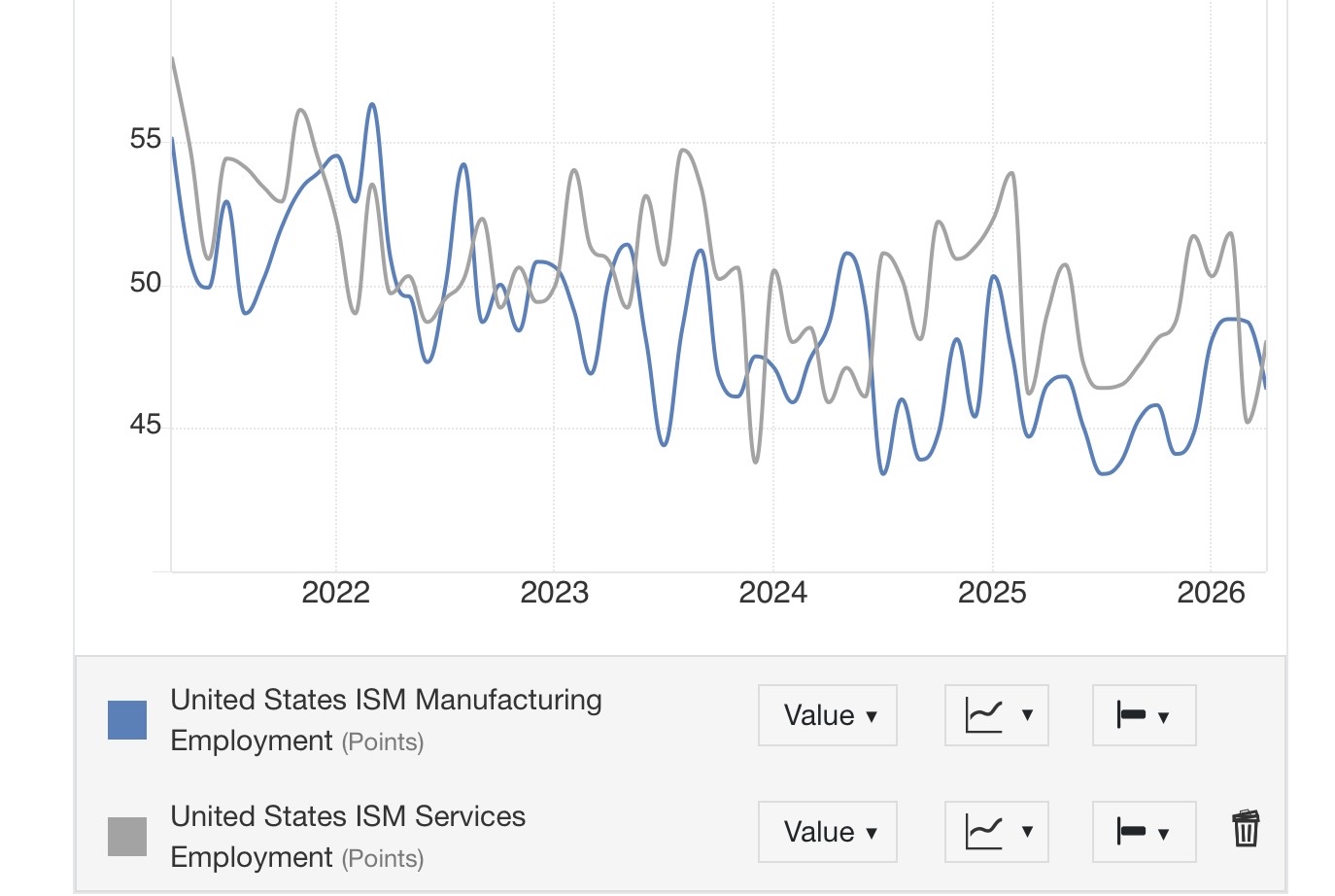
Since the three-month average for the manufacturing index was 49.0, this means that the economically weighted average is back in contraction for the first time since it briefly was last summer. For comparison, here are the nonfarm payrolls for the past five years:
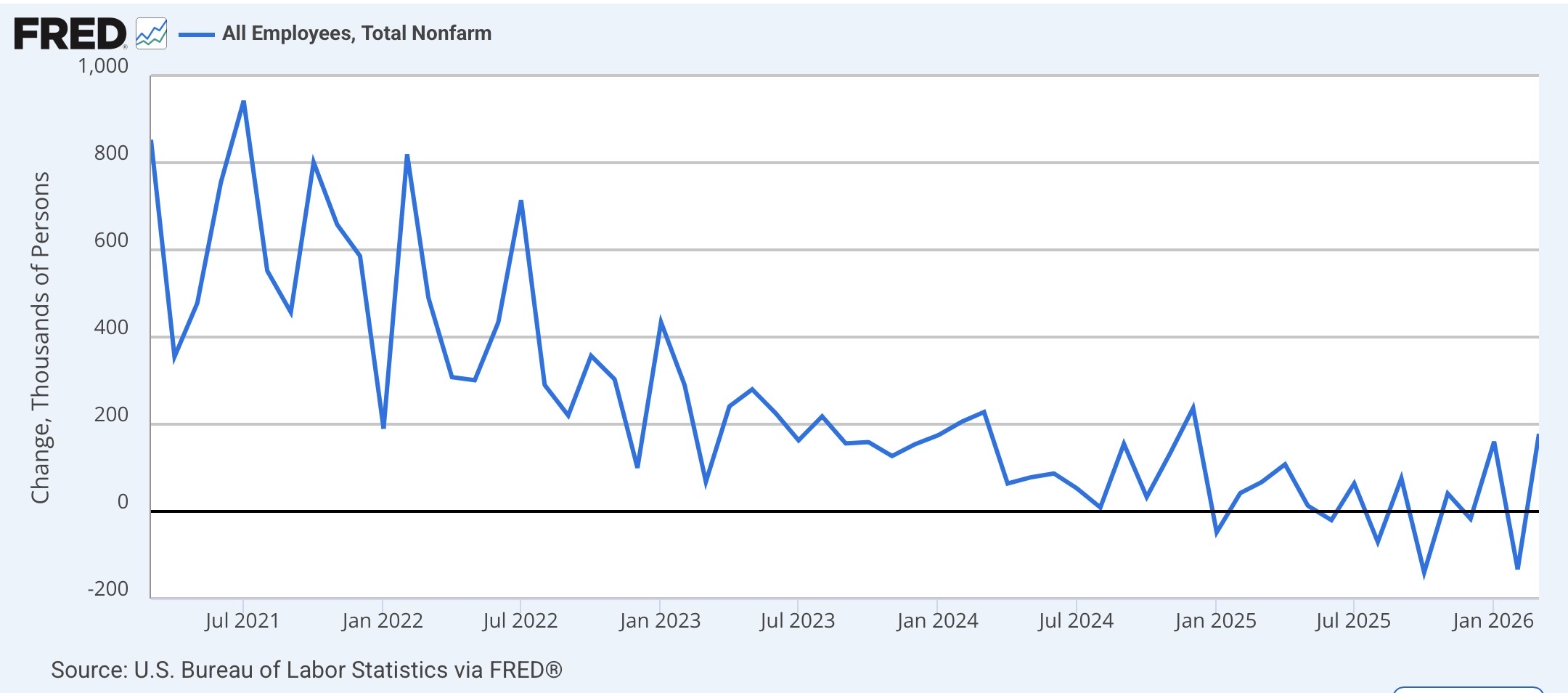
Last summer, the economy started shedding jobs for several months.
In summary, while the headline and leading new orders number in the ISM services index remained positive, stagflation was very much front and center, in both stagnation in employment and higher inflation in pricing.
This was not good.

Comments
Log in or sign up to join the conversation.