Did Target Actually Fix Its Traffic Problem

Target reported a massive Q2 earnings beat, though a one-time tariff refund masked underlying results.

Retail earnings can look like optical illusions. When a company posts a massive earnings beat, the initial instinct is to assume the core business is booming. Target just reported earnings of $4.11 per share for the second quarter. But $1.65 of that came from a $994 million pretax tariff refund. The puzzle for investors is figuring out if the underlying retail business is actually fixing itself or if the refund is masking deeper problems. The answer starts with customer transactions, but it does not end there.

Main Note

The One Time Windfall Masking a Real Retail Turnaround

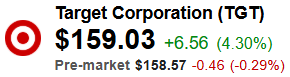
Target (TGT) Quote

Verdict: The massive earnings beat is mostly a mirage created by a tariff refund, but the core business is genuinely improving. Comparable traffic, which Target defines as the number of transactions, rose 3.6% as the company combined lower prices with fresher merchandise, better product availability and faster fulfillment. That is exactly the kind of progress Target needed to show, although the turnaround is not complete.

What happened

Target (TGT) reported second quarter net sales of $26.54 billion, up 5.3% from last year. The headline number that grabbed attention was earnings of $4.11 per share. However, that figure includes a $1.65 per share benefit from a $994 million pretax customs tariff refund. Without that windfall, underlying earnings were roughly $2.46 per share.

Even without the refund, the operating metrics showed life. Comparable sales grew 3.8%, with the number of transactions up 3.6% and the average transaction amount up 0.2%. Store originated comparable sales rose 2.7%, while digital originated comparable sales increased 8.7%, led by more than 25% growth in same day delivery. Target has lowered prices on more than 10,000 items over the past year, but management also pointed to fresher merchandise, better product availability and faster fulfillment.

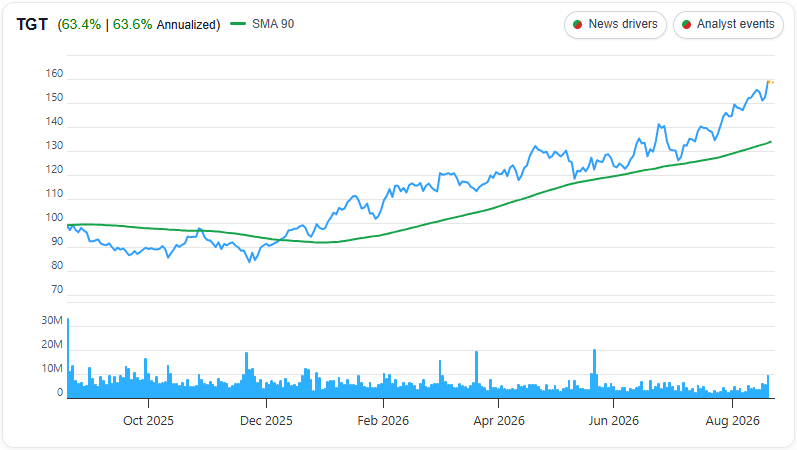
Target (TGT) 1 Year Chart

Target (TGT) 1 Year Chart

Why it matters

Retailers have more than one way to win back a cautious shopper. Price matters, but so do assortment, product availability, store execution and delivery speed. Target leaned harder into value while also refreshing merchandise and improving availability. The 3.6% increase in transactions suggests shoppers are responding to the overall package, not necessarily to price cuts alone.

What changed in the thesis

The old setup assumed Target was losing its core middle class shopper to cheaper alternatives. Now, investors have to believe the company can sustain this renewed traffic without permanently crushing its profit margins. Management raised their full year sales growth expectations to roughly 5%, up from prior guidance of roughly 4%, signaling confidence that the volume recovery is real.

What the market may be missing

It is easy to dismiss the quarter because of the tariff refund, but the operating margin still improved underneath it. Target reported a 9.6% operating margin, and the refund added 3.7 percentage points, leaving an underlying rate of roughly 5.9% versus 5.2% last year. That is encouraging, but part of the improvement came from lapping last year's elevated markdowns and purchase order cancellation costs, along with growth in higher margin advertising and other non merchandise revenue. One quarter is not enough to call the improvement structural.

Valuation and expectations

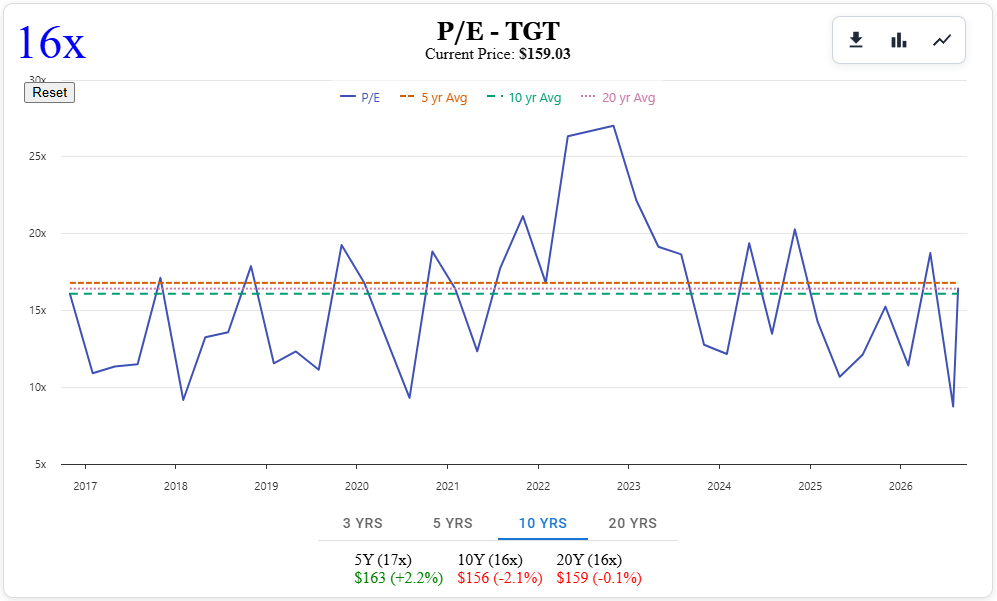
The stock can look artificially cheap if investors annualize the $4.11 quarter or use the new full year guidance without separating the refund. Target now expects GAAP and adjusted earnings of $9.90 to $10.90 per share, but that range includes the $1.65 second quarter tariff benefit. Subtracting the known refund produces a rough refund excluded range of $8.25 to $9.25 per share, which is a cleaner starting point for valuation. The official guidance excludes any potential future tariff refunds.

Target (TGT) PE Ratio

Target (TGT) PE Ratio

Bottom line

Target is getting more transactions, but the improvement is coming from more than price cuts. Lower prices, fresher merchandise, better product availability and faster same day delivery are all part of the story. The challenge now is bringing that momentum into higher margin categories like home and apparel, where management said performance is still not where it needs to be.

Pre Market Pulse

  • U.S. stock futures are mixed and close to flat as markets try to build on Wednesday's modest gains.

  • The 10 year Treasury yield is around 4.67% and edging higher this morning, so some of the earlier relief from lower yields is already fading.

  • Oil prices are up roughly 2.4%, extending their fifth straight gain as Middle East supply concerns keep inflation risks in focus.

Why it matters this morning

Lower yields gave stocks some breathing room earlier in the week, but part of that relief is already fading. The Fed's July meeting minutes also showed that several officials favored a quarter point rate hike, while many thought more tightening could be needed if inflation does not decline. Walmart's (WMT) results will provide the clearest immediate read on the consumer, while higher oil prices remain another pressure point for household budgets.

Peer Read Through

Walmart (WMT)

The ultimate benchmark for consumer value. Walmart earnings today will show whether Target took market share back, or if the broader discount sector is just seeing more traffic overall.

Dollar General (DG)

Often catches the trade down consumer. If Target is winning on price cuts, Dollar General might feel the pressure on its own foot traffic.

Amazon (AMZN)

Target saw an 8.7% jump in digital comparable sales. That suggests traditional retailers are finding ways to defend their digital turf against Amazon in everyday essentials.

Group takeaway

The discount retail sector is locked in a price war for the budget conscious shopper. If price cuts become the only way to drive volume, margins across the entire group could face pressure later this year.

What to Watch

  • Walmart earnings today, which will provide immediate context on competitive market share.

  • The performance of higher margin discretionary categories like apparel as Target rolls out new seasonal assortments.

  • Whether the aggressive price cuts on over 10,000 items begin to drag down gross margins if the initial volume lift fades.

Bottom line

The tariff refund gave Target a massive one quarter earnings boost. The real test is whether the company can keep transactions growing after that benefit rolls off, especially while home and apparel are still works in progress.

STOCKS IN THIS ARTICLE

Also Mentions:

Comments