


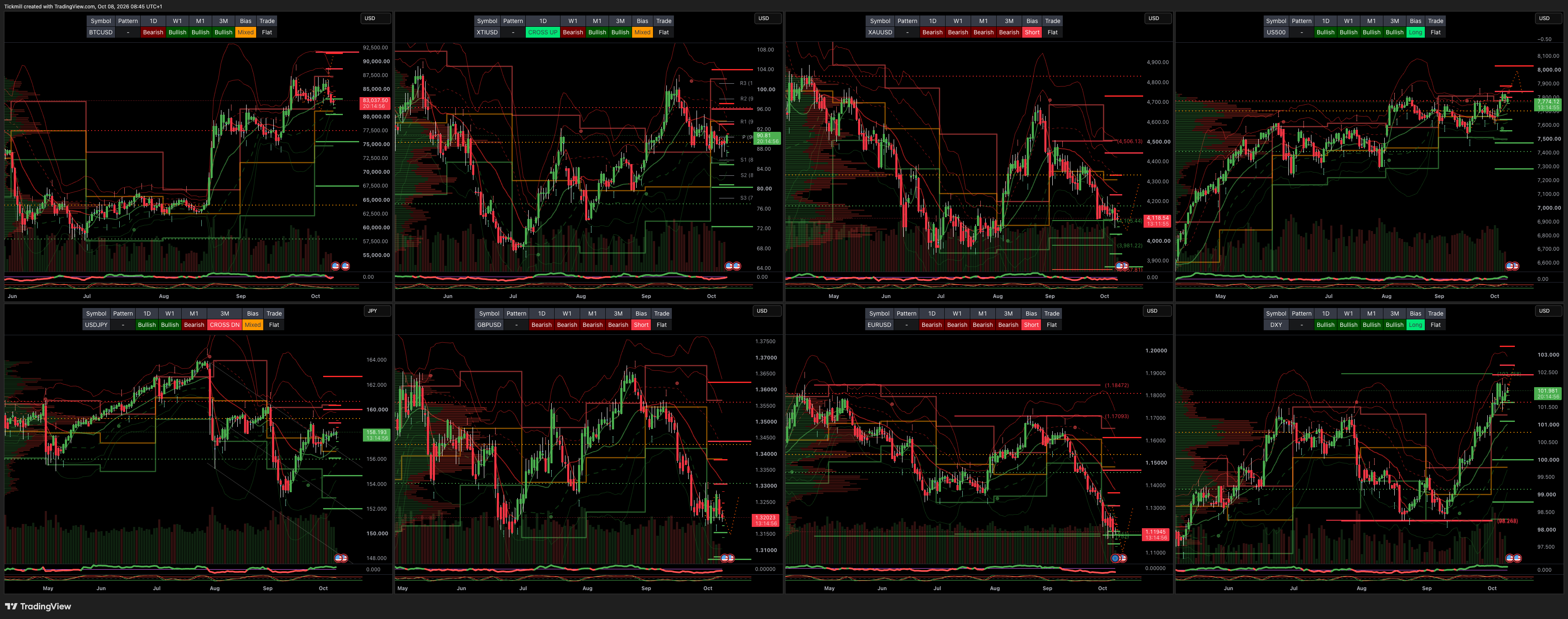
Global equity markets fell on Thursday as surging crude prices and escalating Middle East tensions reignited stagflation concerns, ending a rally that had brought major benchmarks back toward record highs. The MSCI All Country World Index slipped 0.2%, retreating from recent peaks, while Wall Street futures and Asian benchmarks followed suit as investors re-calibrated the balance between artificial intelligence optimism and energy-driven cost pressures.
Crude served as the primary macro catalyst. Brent surged over 2% past $102/bbl after reports surfaced that the White House had instructed the Pentagon to prepare contingency options regarding Iran ahead of the US midterms. Risk premia intensified further following Houthi attacks on Saudi airport infrastructure, raising concerns that Middle East disruptions are expanding beyond the Strait of Hormuz to threaten broader Gulf logistical networks. Soaring supertanker freight rates continue to compound the effective delivered cost of energy, leaving prediction markets pricing less than a 50% probability that shipping traffic through Hormuz normalizes by mid-2027.
Sovereign rate curves reflected this energy friction. The US 10-year Treasury yield rose 2 bps to 5.31%—holding near multi-decade highs last seen in 2002—while global duration remained under pressure. For Federal Reserve policy setters, persistent $100+ oil threatens to unmoor inflation expectations just as labor-market indicators show signs of cooling. Although recent softer payroll data reduced expectations for an immediate October rate increase, the persistence of supply-side energy shocks restricts the Fed's room to signal monetary easing.
In Europe, the Euro traded with a defensive bias as markets digested fiscal friction in France. Paris's decision to maintain its bond issuance strategy despite widening risk spreads has done little to calm fixed-income markets, where long-end OATs continue to price in fiscal deterioration. The European Central Bank remains in a delicate position, forced to weigh energy-driven price pressures against sovereign spread fragmentation and cooling regional growth.
Corporate earnings stand as the next critical test for multi-asset valuations. With long-end yields anchored above 5% and energy costs elevated, the equity market's tolerance for capital-intensive AI spending without clear short-term revenue delivery is narrowing. Upcoming Q3 earnings from megacap market anchors will determine whether corporate productivity gains can continue to offset rising input costs and tighter financial conditions.
Macro to Micro: The cross-asset environment is navigating a direct collision between megacap earnings strength and supply-side inflation shocks. While AI momentum provides underlying equity support, Brent above $102/bbl and 10-year Treasuries at 5.31% narrow the runway for further valuation expansion. For traders, the key focus centers on crude price dynamics, supertanker freight rates, 10-year yield stability, and the upcoming slate of Q3 corporate earnings reports.
Overnight Headlines
US Military Ordered To Prep For Possible Iran Strikes, Trump Mulls Timing
UKMTO: Tanker Hit By Several Projectiles In Gulf North Of Qatar
Attacks On Saudi Airports Kill 3 As Fighting Escalates In Yemen
Syria Considers Sending Troops To Yemen To Fight Houthis
Suspected Iranian Drone Plot Raises Security Questions At UK Bases
Oil Rises As MidEast Supply Concerns Persist Amid Shipping Attacks
Fed Minutes Show Hawkish Unity Behind September Rate Hike
US Bonds Rise As Yields At 2002 High Attract Buyers At Auction
US 30-Year Mortgage Rate Hits Highest In Nearly Three Years
Fed Used Treasury Funds To Support Yen In Joint Intervention
Japan 30Y Bond Sale Sees Firmer Demand Than 12-Month Average
Australia Inflation Expectations Rise To 5.3%, Highest In Four Months
EU Takes Harder Line On China’s Trade Gap As Talks Begin
US Enlists Trading Partners In Pledge To Address Excess Capacity
UK Labour Market Shows More Signs Of Recovery In Sep, Reports Show
Samsung Flags $80B Profit On AI Boom, Highest QoQ For Any Tech Firm
Oracle, Broadcom And SpaceX Seek Debt Financing For AI Chips
Australia Regulator Puts Stop Order On More Private Credit Funds
FX Options Expiries For 10am New York Cut
(1BLN+ represents larger expiries and is more magnetic when trading within the daily ATR.)
EUR/USD: 1.1100 (EU800m), 1.1125 (EU570m), 1.1200 (EU850m), 1.1240 (EU542m), 1.1245 (EU545m), 1.1250 (EU1.0b), 1.1255 (EU1.5b), 1.1260 (EU771m), 1.1270 (EU1.1b), 1.1300 (EU3.6b)
USD/JPY: 158.00 ($731m)
AUD/USD: 0.6935 (AUD609m), 0.6940 (AUD730m), 0.7050 (AUD705m)
NZD/USD: 0.5550 (NZD615m)
CFTC Positions as of 1/10/26
Bitcoin net long position is 2,465 contracts
Swiss franc posts net short position of -24,617 contracts
British pound net short position is -91,075 contracts
Euro net short position is -63,256 contracts
Japanese yen net long position is 55,440 contracts
Speculators increase CBOT US 5-year Treasury futures net short position by 114,848 contracts to 995,701
Speculators increase CBOT US 10-year Treasury futures net short position by 88,863 contracts to 900,615
Speculators trim CBOT US 2-year Treasury futures net short position by 115,041 contracts to 792,024
Speculators trim CBOT US UltraBond Treasury futures net short position by 10,289 contracts to 326,436
Speculators increase CBOT US Treasury bonds futures net short position by 31,070 contracts to 186,875
Equity fund managers cut S&P 500 CME net long position by 33,658 contracts to 901,255
Equity fund speculators increase S&P 500 CME net short position by 575 contracts to 355,697
Technical & Trade Views



Comments
Log in or sign up to join the conversation.