


“Vendor financing, debt securitisation, policy incentives, and Anthropic IPO timing are not incidental details — they are the machinery of reflexive capital formation. The danger is that the market treats AI compute like durable infrastructure, while the
underlying asset behaves more like fast-depreciating technology hardware. If end-demand and cash flows scale fast enough, the structure works. If they do not, the financing stack becomes vulnerable, especially if it has been accelerated by policy incentives
and political timing ahead of the US midterms.”
Markets are heading into US CPI with inflation anxiety back in the driving seat, as Brent’s four-day surge forces investors to rethink last week’s post-payrolls relief. Government bonds are selling off across Asia-Pacific, the dollar remains firm, gold has broken higher, and the yen is again under pressure. The central issue is straightforward: softer US jobs data reduced the odds of an immediate Fed hike, but oil near $88/bbl makes it much harder for policymakers to sound comfortable.
The bond market is still digesting Monday’s Treasury selloff, with US 10-year yields rising 6bps to 4.71% before the Asian session. There was no cash Treasury trading during Asian hours due to Japan’s public holiday, but Treasury futures weakened and regional bonds followed the US lead. Government bonds in Australia and New Zealand declined, reflecting the global inflation channel from higher energy prices. The message from rates markets is that Friday’s weak labour data is no longer enough on its own to anchor yields.
Oil is the driver. Brent crude is holding around $87.75/bbl, after jumping roughly 5% on Monday and rising for four consecutive sessions. It is now more than 12% above last week’s low, a sharp reversal from the earlier optimism around a possible reopening of the Strait of Hormuz. President Trump’s new demand for US compensation from Iran as part of any negotiation has further reduced expectations of near-term progress. That makes a return to normal shipping traffic through Hormuz look increasingly unlikely. For energy markets, this is no longer a clean reopening story; it is a stalemate with a rising risk premium.
The market’s focus is now firmly on Wednesday’s US CPI report. Last Friday’s weaker employment data had lowered fears of an imminent Fed hike, but the oil rally has quickly revived inflation concerns. The Fed problem is becoming more awkward. Labour-market cooling can justify patience, but energy-driven inflation can undermine that patience if it lifts headline CPI, gasoline prices and household inflation expectations.
Fed commentary also remains hawkish. Cleveland Fed President Beth Hammack suggested she sees the need for “some number” of hikes, rather than just one. That phrasing matters because it keeps alive the possibility that the hawkish bloc is not merely arguing for an insurance hike, but for a broader tightening response if inflation does not keep falling. CPI now carries more weight than payrolls. A soft inflation print could restore the post-jobs rally in bonds. A firm print, especially with higher gasoline prices feeding expectations, would validate the hawks.
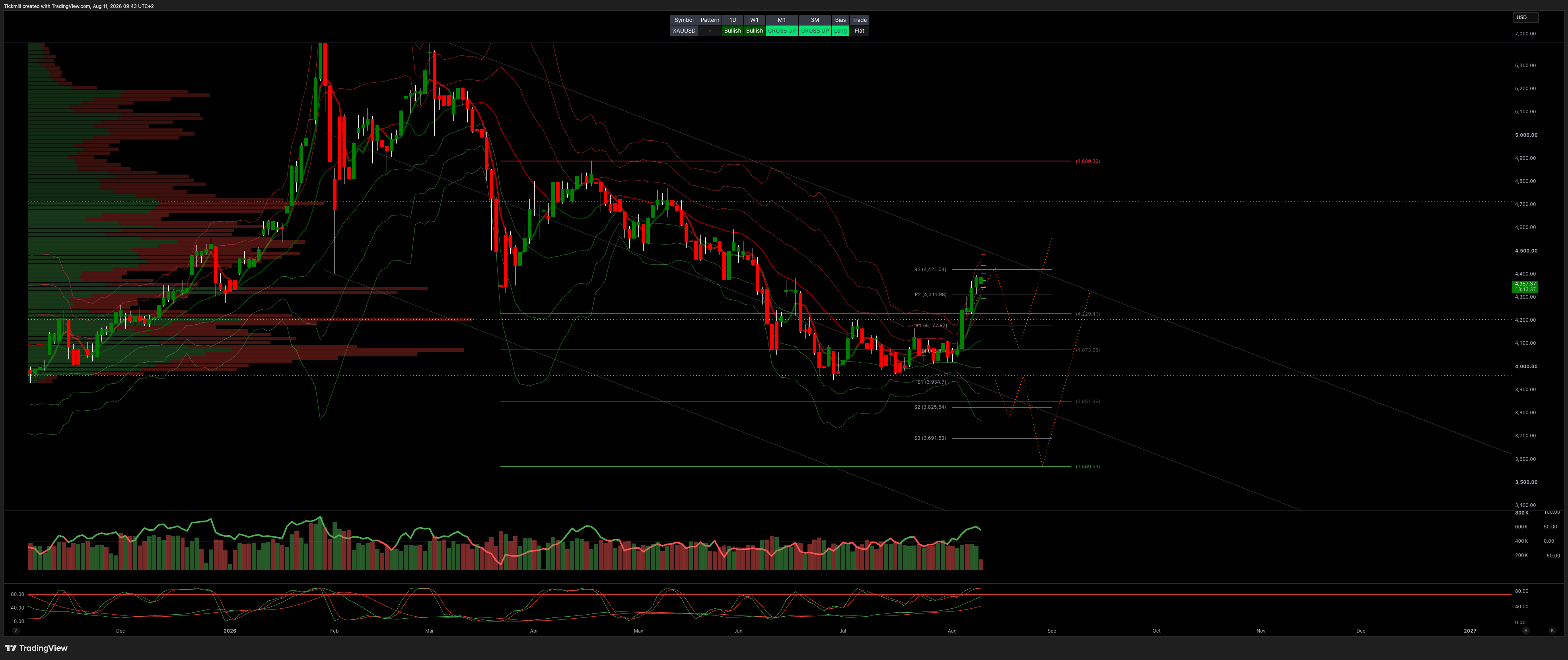
Gold continues to attract buyers. The metal rose for a third consecutive day, trading above $4,400/oz after breaking through its 100-day moving average on Monday. Technical buying helped accelerate the move, while the macro backdrop remains supportive: geopolitical risk, energy inflation, and uncertainty around central-bank policy. Silver and platinum also gained, suggesting the move is broader than gold alone. Precious metals are being supported by both defensive demand and inflation-hedge flows.
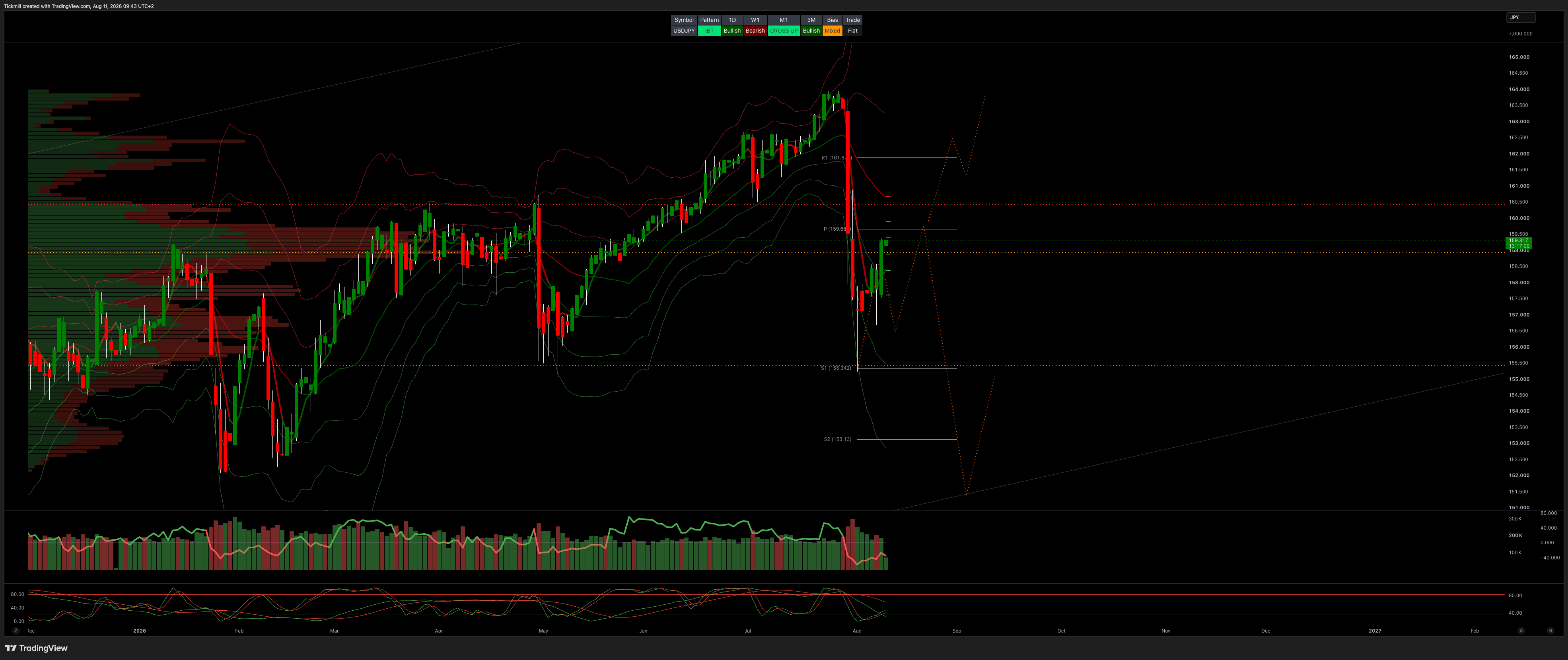
The dollar held firm against most major peers, helped by higher yields and renewed geopolitical risk. The yen remains the weakest link. USD/JPY is around 159.25, after the yen fell about 1% on Monday, reversing roughly half of its recent intervention-driven gains. Press reports suggest the recent US-Japan intervention was prompted by BoJ signals of a possible September rate hike. But the yen’s renewed weakness shows the difficulty of sustaining intervention-led moves when yield differentials and energy-import pressures remain unfavourable.
The Australian dollar weakened after the RBA left rates unchanged at 4.35%, as expected, in a unanimous decision. The central bank still sees upside inflation risks and does not expect inflation to return to target until late 2027, but it also expects rising unemployment and a softer property market to weigh on activity. Governor Bullock described policy as “somewhat restrictive” but did not rule out further tightening. That leaves the RBA in a familiar position: not ready to hike today, but unwilling to close the door while inflation remains above target.
Equity sentiment is more resilient than the bond market. In Asia, tech enthusiasm remained positive, with South Korea’s Kospi rising 1.2%. Samsung gained around 5%, helping support the regional tech tape. That resilience shows investors are still willing to buy the AI and semiconductor story, even as macro risks rise. But the broader equity setup is less straightforward. Higher oil and higher yields usually make it harder for risk assets to extend gains, especially after global indices have already been trading near record highs.
In the UK, the BRC retail sales monitor showed total retail sales rising 1.3% y/y in July, or 1.0% y/y on a like-for-like basis. The detail was mixed. World Cup-related demand appears to have boosted food sales, which rose 3.8% y/y, while non-food sales values fell 0.7% y/y. The smoothed BRC series still looks notably weaker than the recent official ONS retail sales prints through June, suggesting the official data may be overstating the strength of the consumer backdrop.
Macro to Micro - the market’s post-payrolls relief has run into an oil shock. Brent near $88/bbl is enough to keep inflation risk alive, pressure bonds, support the dollar and complicate the Fed’s path into Wednesday’s CPI. Equities, especially tech, are still holding up, but the macro cushion has thinned. The next clean signal has to come from inflation data, because softer jobs alone are no longer enough.
Overnight Headlines
Trump Lashes Out After Iranian Demands As Deal Hopes Dim
Trump Shifts To Economic Pressure, Again, As Iran Won’t Meet His Demands
Fed’s Hammack Says ‘Some Number’ Of Rate Hikes May Be Needed
Trump Downplays Talks With Warsh Amid Fed Independence Doubts
Bessent’s Whatever-It-Takes Yen Pledge Masks Limited Firepower
RBA Holds Cash Rate At 4.35% As House Prices Continue To Fall
Australian Business Confidence Drops On Middle East Uncertainty
Singapore Records 5.9% Q2 GDP Growth, Raises Full-Year Forecast
Gold Touches $4,400 As Traders Turn Focus To US Inflation Data
Nvidia To Team With Wall Street On $500B Package For AI Projects
Apple’s Glass-Centric Anniversary iPhone Remains On Track For 2027
Intel Is Said To Near Share Sale Upsize To Raise $20B
Anthropic Strikes $9B Deal With Cloud Computing Firm Riot
FX Options Expiries For 10am New York Cut
(1BLN+ represents larger expiries and is more magnetic when trading within the daily ATR.)
EUR/USD: 1.1600 (EU968m), 1.1585 (EU769m), 1.1500 (EU671m), 1.1450 (EU1.2bn), 1.1440 (EU1.0bn), 1.1425 (EU592m)
USD/JPY: 157.00 ($545m)
CFTC Positions as of 7/7/26
Equity fund speculators raised their net short position in the S&P 500 CME by 32,299 contracts to a total of 319,577. Meanwhile, equity fund managers reduced their net long position by 2,008 contracts to 937,107.
Speculators also increased their net short positions in CBOT US 5-year Treasury futures by 179,319 contracts (totaling 1,325,719) and in CBOT US 10-year Treasury futures by 103,124 contracts (totaling 979,243). Conversely, they decreased their net short positions in CBOT US 2-year Treasury futures by 120,346 contracts (to 1,004,228), in CBOT US UltraBond Treasury futures by 5,723 contracts (to 314,985), and in CBOT US Treasury bonds futures by 41,225 contracts (to 176,272).
Bitcoin's net long position stands at 3,752 contracts.
The Swiss franc has a net short position of -32,822 contracts, the British pound -57,814 contracts, the euro -58,091 contracts, and the Japanese yen -45,473 contracts.
Technical & Trade Views
SP500 - 7620 weekly bull/bear level
Daily VWAP Bullish
Weekly VWAP Bullish
Above 7620 Target 7870
Below 7600 Target 7485
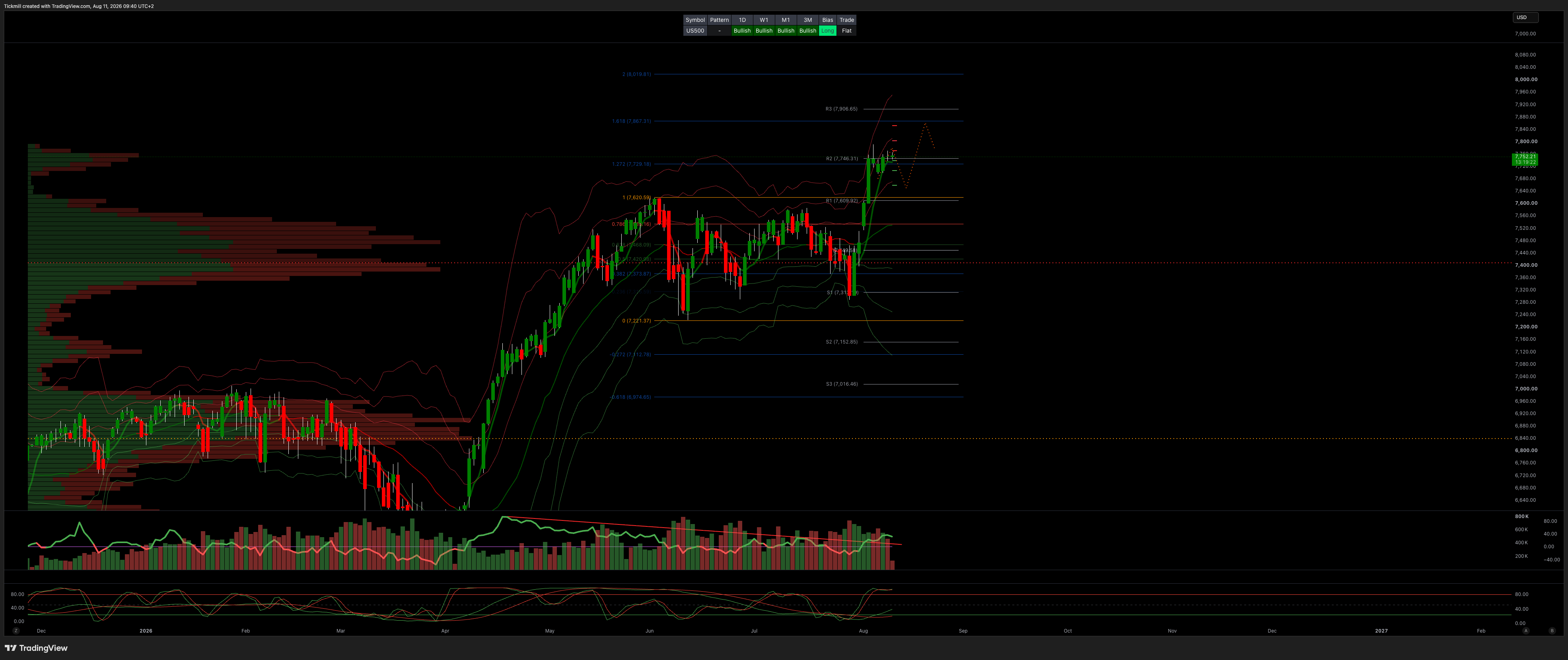
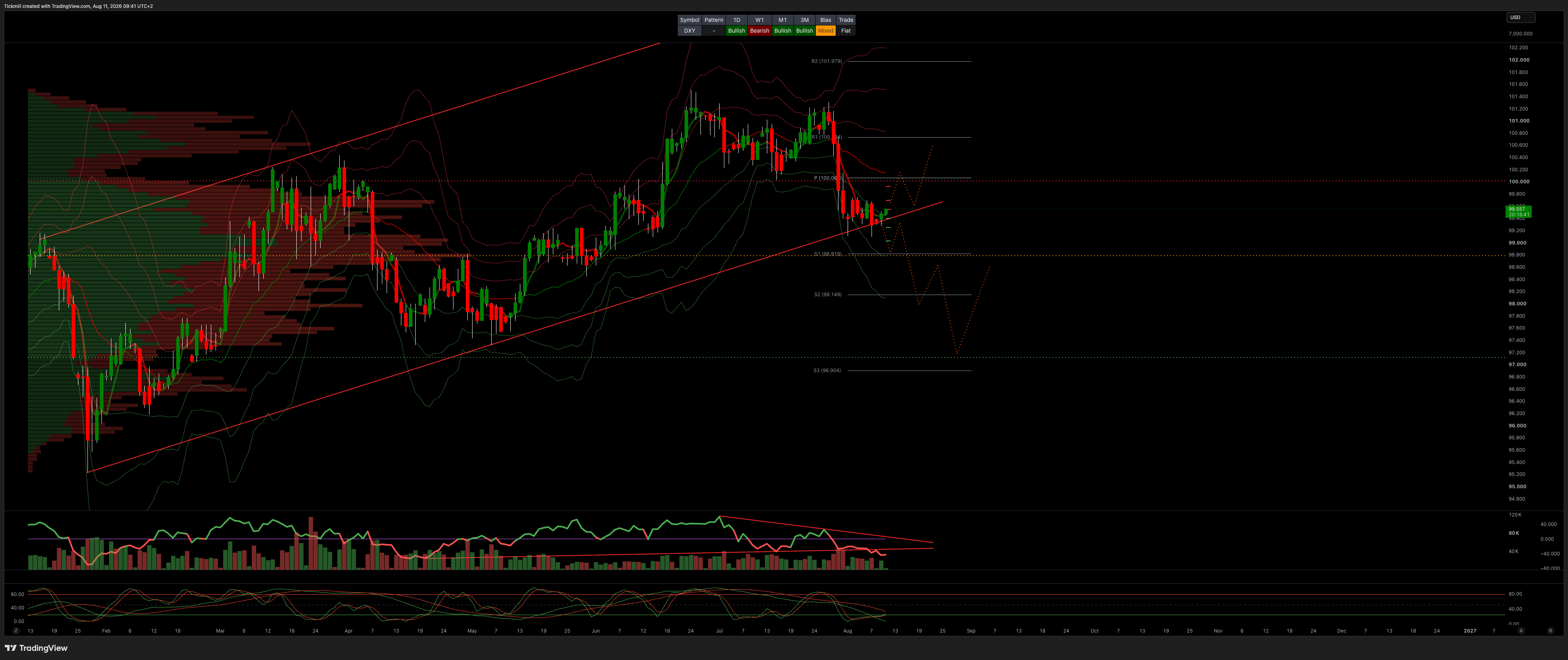
DXY - 99 weekly bull/bear level
Daily VWAP Bullish
Weekly VWAP Bearish
Above 99 Target 98
Below 99 Target 100
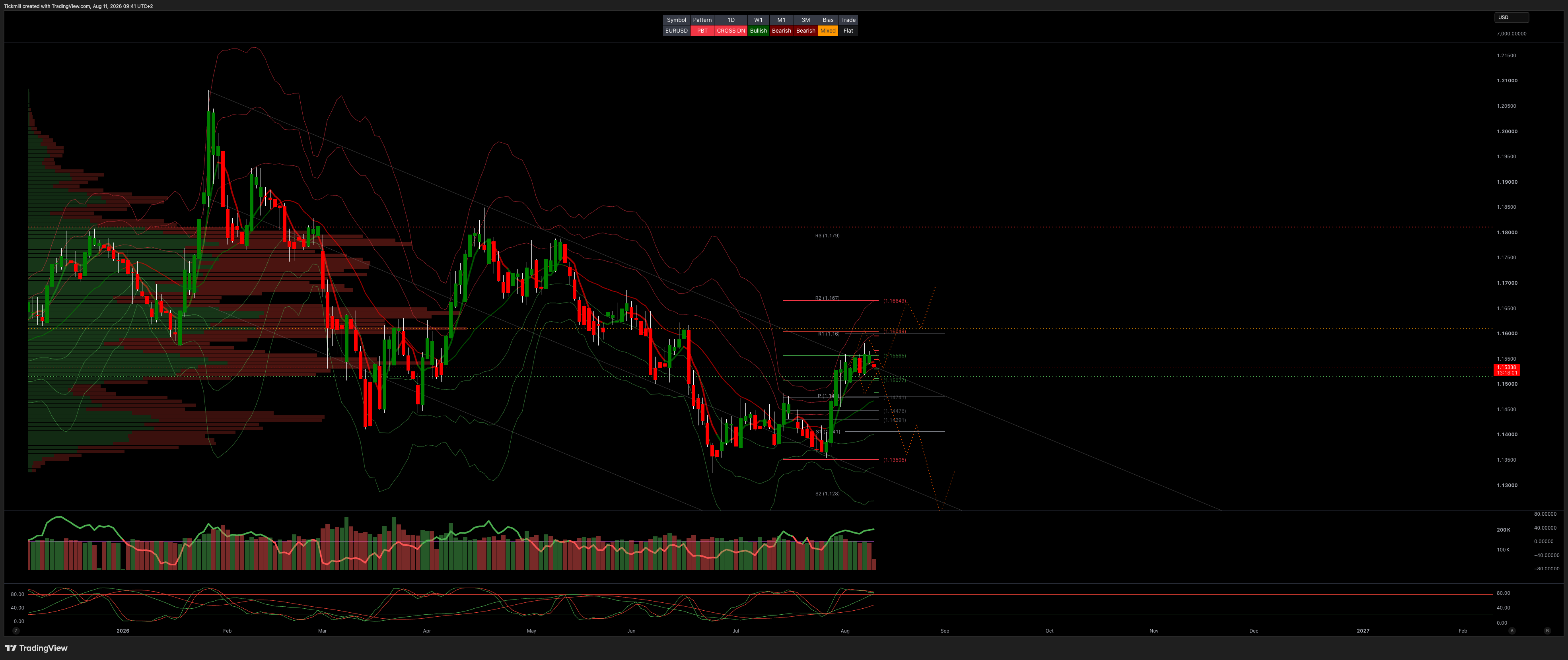
EURUSD - 1.1550 weekly bull/bear level
Daily VWAP Bullish>Bearish
Weekly VWAP Bullish
Above 1.1550 Target 1.17
Below 1.1480 Target 1.1420
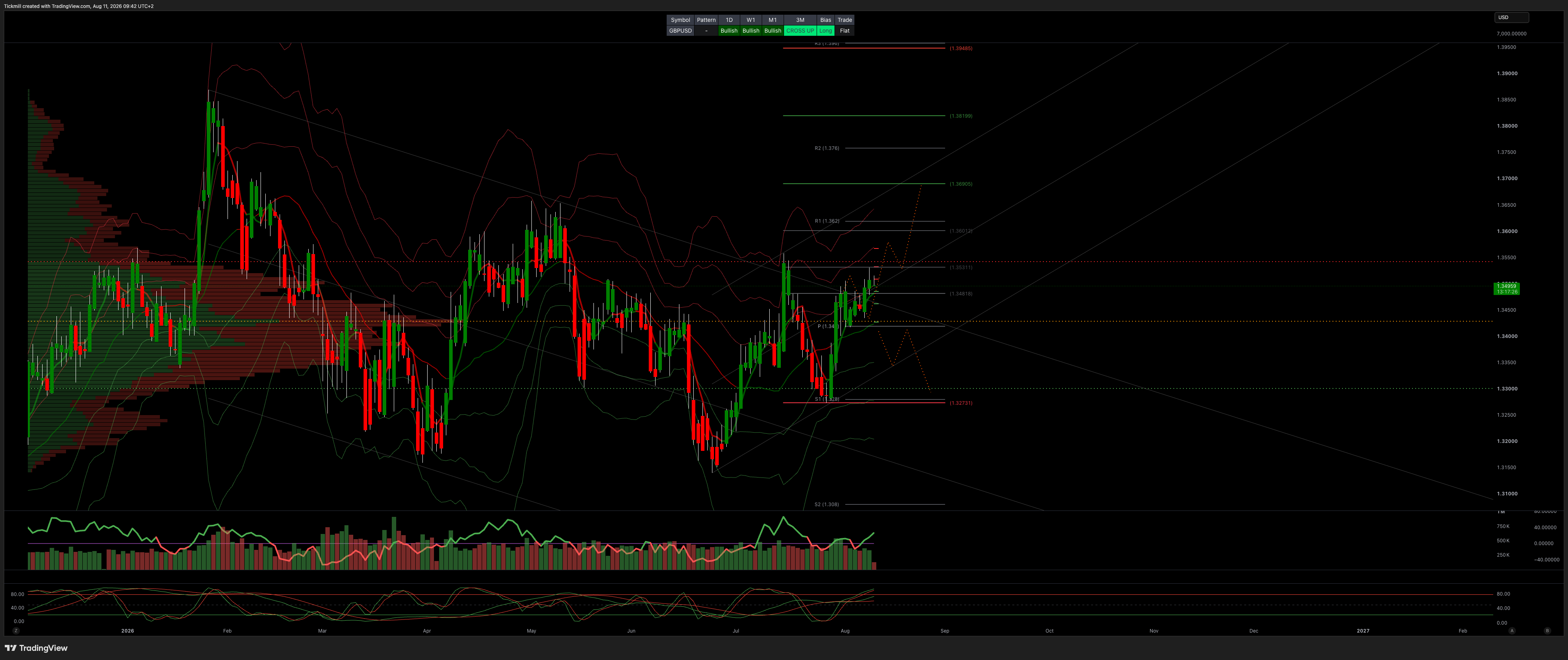
GBPUSD - 1.3450 weekly bull/bear level
Daily VWAP Bullish
Weekly VWAP Bullish
Above 1.3450 Target 1.3690
Below 1.34 Target 1.33
USDJPY - 160 weekly bull bear level
Daily VWAP Bullish
Weekly VWAP Bearish
Above 155 Target 160
Below 155 Target 152
XAUUSD - 4170 weekly bull bear level
Daily VWAP Bullish
Weekly VWAP Bullish
Above 4170 Target 4400
Below 3940 Target 3570
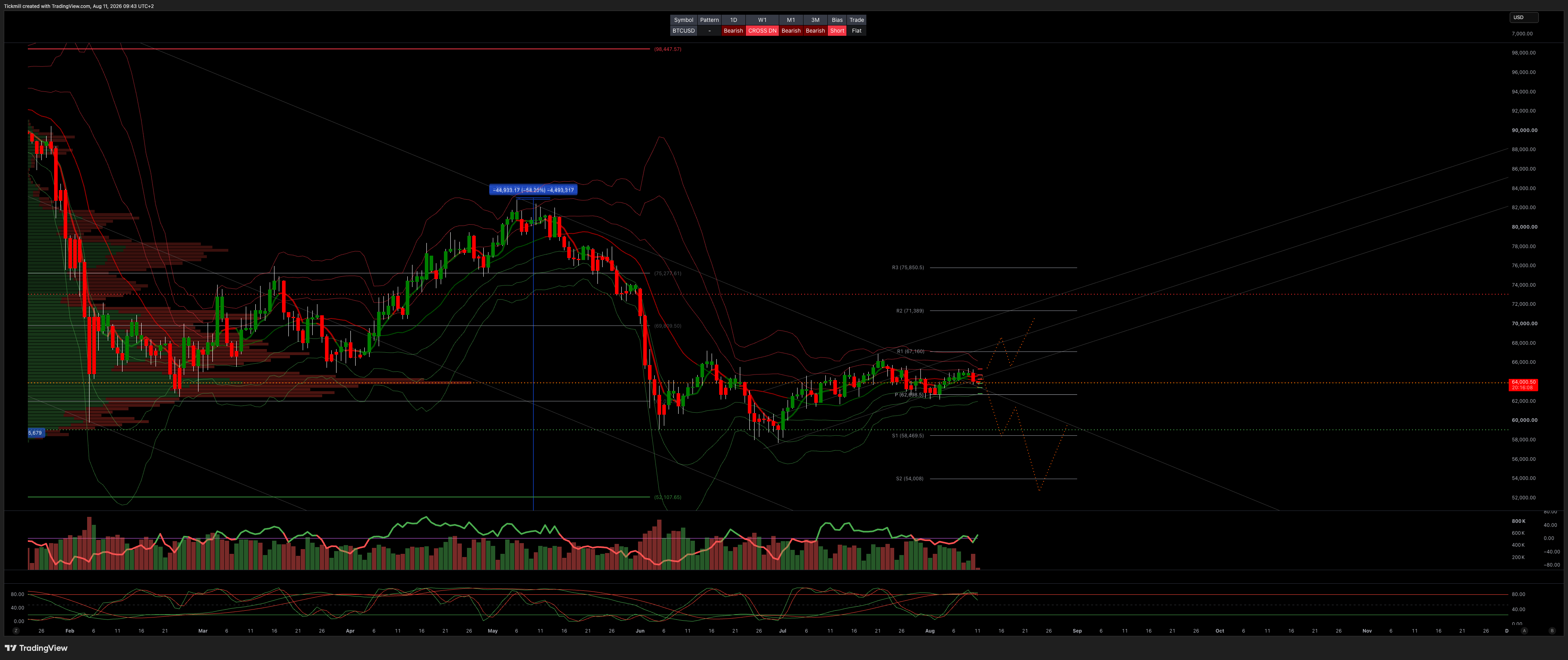
BTCUSD - 64k weekly bull bear level
Daily VWAP Bearish
Weekly VWAP Bullish
Above 64k Target 71k
Below 61k Target 52.2k



Comments
Log in or sign up to join the conversation.