

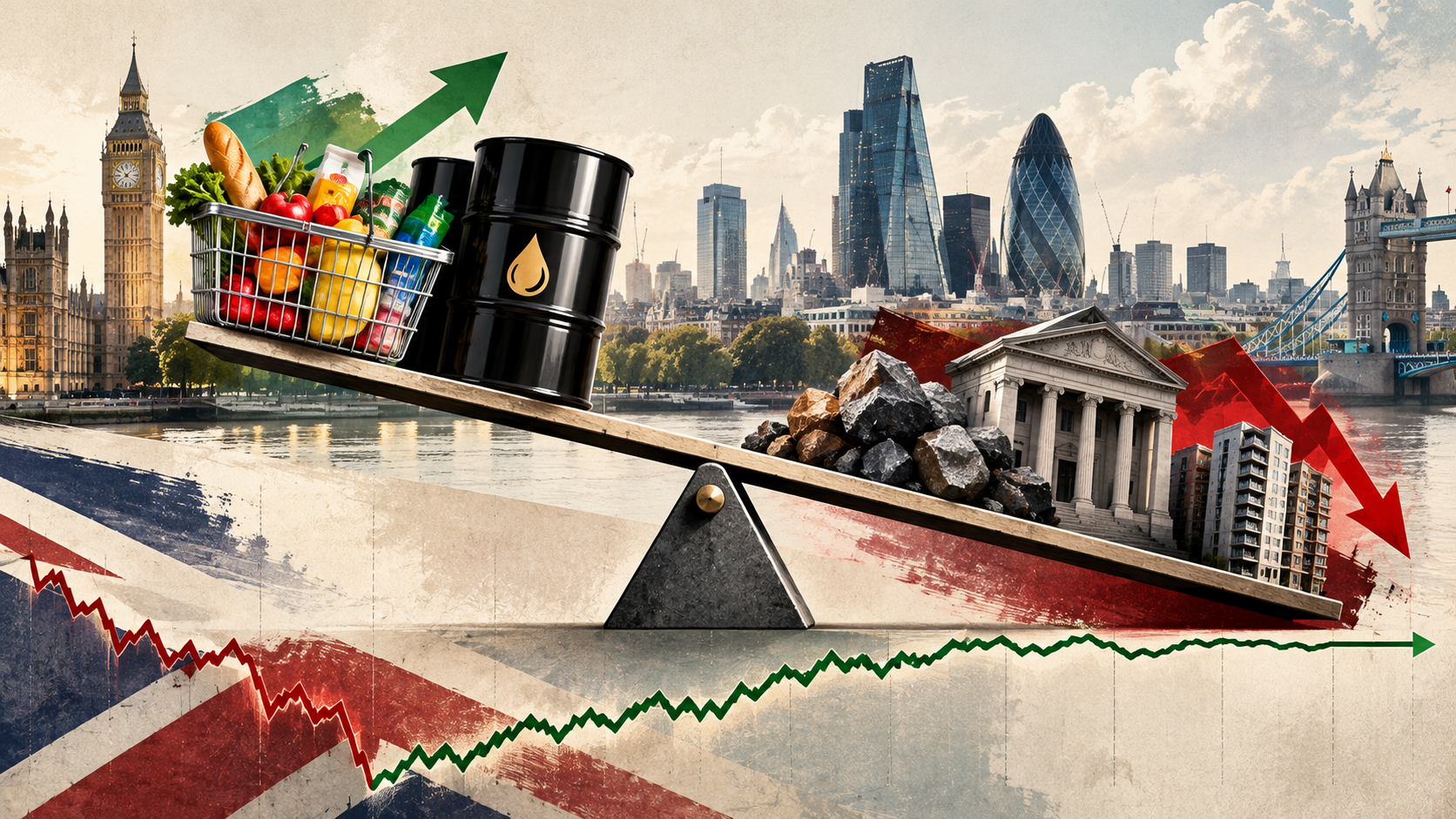
London's benchmark FTSE 100 recovered from an early morning slump to close near the flat line on Thursday, trading down 17.10 points or 0.16% at 10,462.10 GBP after earlier touching a near 4-month low of 10,364.50. Widespread losses across banking, mining, and real estate were offset past midday as strong earnings updates from retail giant Tesco, plans for a £1.5 billion share buyback at Imperial Brands, and surging crude oil prices provided a strong lift to index heavyweights.
Stock-specific catalysts drove the afternoon rebound. Tesco climbed 5.8% after raising its full-year profit guidance and expanding its ongoing share buyback program. Tobacco manufacturer Imperial Brands surged 4.1% after reaffirming FY26 performance targets and committing to a £1.5 billion share repurchase program for fiscal 2027. Energy majors gained strongly as crude oil rallied, with BP (BP) up 3.7%, Shell (SHEL) gaining 2.5%, and Ithaca Energy rising 1.5%. Additional gains were posted across Pearson, J Sainsbury, IG Group Holdings, RELX, Bunzl, Computacenter, Informa, British American Tobacco, The Sage Group, AutoTrader Group, and Centrica. Outside the FTSE 100, asset manager Aberdeen Group rose about 1% after announcing a reduction in its stake in insurer Standard Life to 5.2% from 10.3%, causing Standard Life shares to drop 4.5%.
Conversely, resource counters and rate-sensitive financials remained under persistent selling pressure. Melrose Industries fell 3.5%, leading broad-based declines between 2% and 3.1% across IAG, Metlen Energy & Metals, Lion Finance, Rolls-Royce Holdings, Standard Chartered, Endeavour Mining, Barratt Redrow, Kingfisher, HSBC Holdings, Antofagasta, Barclays, Balfour Beatty, Vodafone Group (VOD), and Lloyds Banking Group. Additional notable pullbacks hit Land Securities, Smith & Nephew, GSK, Fresnillo, Weir Group, British Land, NatWest Group (NWG), Investec, Howden Joinery, 3i Group, Smiths Group, Tritax Big Box REIT, M&G, Croda International, InterContinental Hotels Group (IHG), Anglo American Plc, Rio Tinto (RIO), and AstraZeneca (AZN).
Macro concerns were centered on energy supply volatility, geopolitics, and central bank communications. Front-month Brent crude futures surged 4.5% to $104.70 a barrel following reports that the U.S. Administration asked the Pentagon to evaluate military strike options regarding Iran ahead of midterm elections, compounded by offshore Gulf of Mexico production shutdowns and personnel evacuations. Meanwhile, in prepared remarks to the Istanbul Economic Forum, Bank of England Governor Andrew Bailey reiterated a cautious monetary stance, stating he is "skeptical of unconditional promises about future interest rates" and emphasizing that the UK "must pursue sustainable growth". While acknowledging AI as a growth opportunity, Bailey cautioned that greater financial exposure to AI creates market risk.
On the domestic economic front, the KPMG/REC Report on Jobs compiled by S&P Global (SPGI) showed U.K. permanent job placements expanded for a second consecutive month in September, reaching the fastest pace of growth in four years as business confidence stabilized. Permanent salary growth slowed for the first time in four months, while temp billings saw their least pronounced gain in five months.
Finish Line: U.K. equities staged a resilient intraday recovery from multi-month lows as beat-and-raise updates from Tesco and Imperial Brands paired with surging crude prices to steady the top flight. While ongoing Middle East tensions, fixed-income volatility, and central bank caution over interest rate paths continue to weigh on banks and miners, strong domestic corporate cash returns helped hold the benchmark steady
TECHNICAL & TRADE VIEW

Comments
Log in or sign up to join the conversation.