

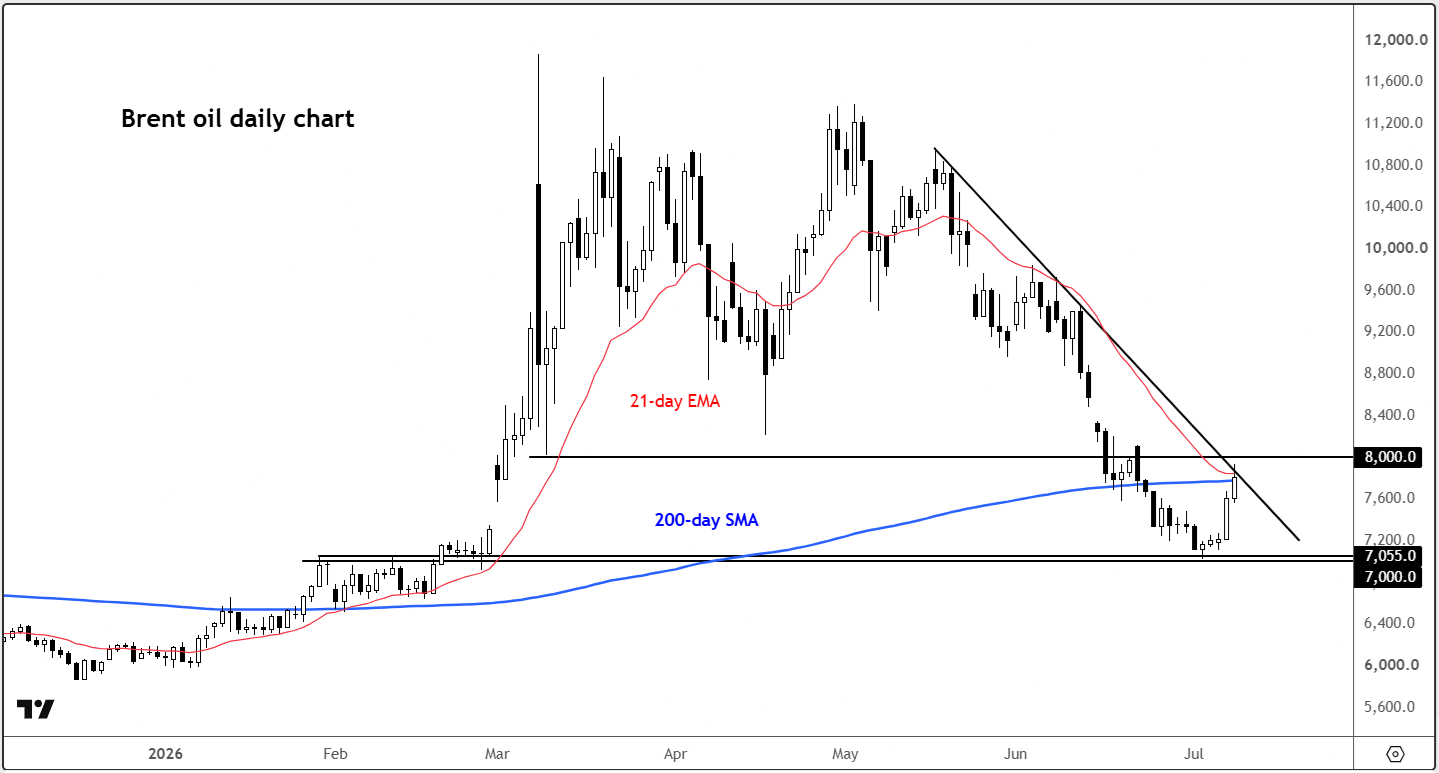
After a long and eventful first half of the year dominated by the US-Israel war on Iran and Trump’s constant flip-flopping, the last thing investors, and frankly anyone else, needed with the summer holidays approaching was a return of the same geopolitical environment. Unfortunately, it looks like we could be heading back to that. Crude oil has spiked over the last couple of sessions having just returned to pre-war levels just a few days ago. Whether he later tries to calm nerves by walking back on his comments remains to be seen.
I suspect Trump will want to avoid a full-scale escalation and if so, we might not see the same sort of price action in oil prices that we did during the height of the conflict a few months ago. But his comments certainly increase the risk of further supply disruptions from Iran or the wider Middle East if Tehran now chooses to close the Strait of Hormuz again. Let’s see how things will evolve over the next few days, but I hope that we don’t get to the same situation as before.
FOMC minutes to be overshadowed by geological tensions
Markets weren’t initially taking the re-escalation in US-Iran tensions too seriously earlier this week. But today, that seems to have changed. Therefore, it is likely that less attention will be paid to any macro data. The minutes of the Fed’s meeting in June will be released tonight, and markets expect them to reinforce the hawkish message and keep the US dollar index largely supported. But it is all about oil again, and what it means for inflation and interest rates.
Trump’s comments at the NATO summit rattled markets this a.m., triggering a risk-off move that saw European stocks and US futures take a tumble. Speaking to reporters, the US president declared that the memorandum of understanding with Iran was “over” and described Iranian leaders as “sick people”, adding that he no longer wanted to engage with them.
That shift in tone has effectively killed hopes of renewed diplomacy. Just days ago, this week was expected to provide a breather, with both Washington and Tehran stepping back ahead of another round of talks. Instead, we’re back to square one, with fears of further escalation once again dominating market sentiment.
Euro struggles to find fresh drivers
The euro’s outlook is becoming increasingly mixed. Yesterday’s publication of German industrial production figures offered an encouraging surprise, with output rising 0.9% in May, helped by stronger automotive manufacturing and construction activity. The resilience suggests Europe’s industrial sector has so far weathered recent geopolitical disruptions better than many had feared. But the renewed re-escalation could send energy prices sharply higher again and undermine growth. Markets continue to debate whether the European Central Bank will need to tighten policy further later this year, with a September rate increase no longer viewed as the most likely outcome.
That said, ECB officials are unlikely to declare victory over inflation just yet, not when the Middle East situation is unresolved. Core price pressures remain elevated enough to warrant a cautious tone, and speeches from senior policymakers this week could reinforce the message that the inflation battle is not yet complete. While that may offer occasional support to the single currency, it is unlikely to outweigh the broader strength currently underpinning the dollar.
EUR/USD technical analysis
From a technical analysis perspective, the EUR/USD is pointing towards continued consolidation with a bias tilted slightly lower. The pair was holding around the 1.1400 support area at the time of writing, but should this region give way then that would expose the 1.1300 area for a potential test.
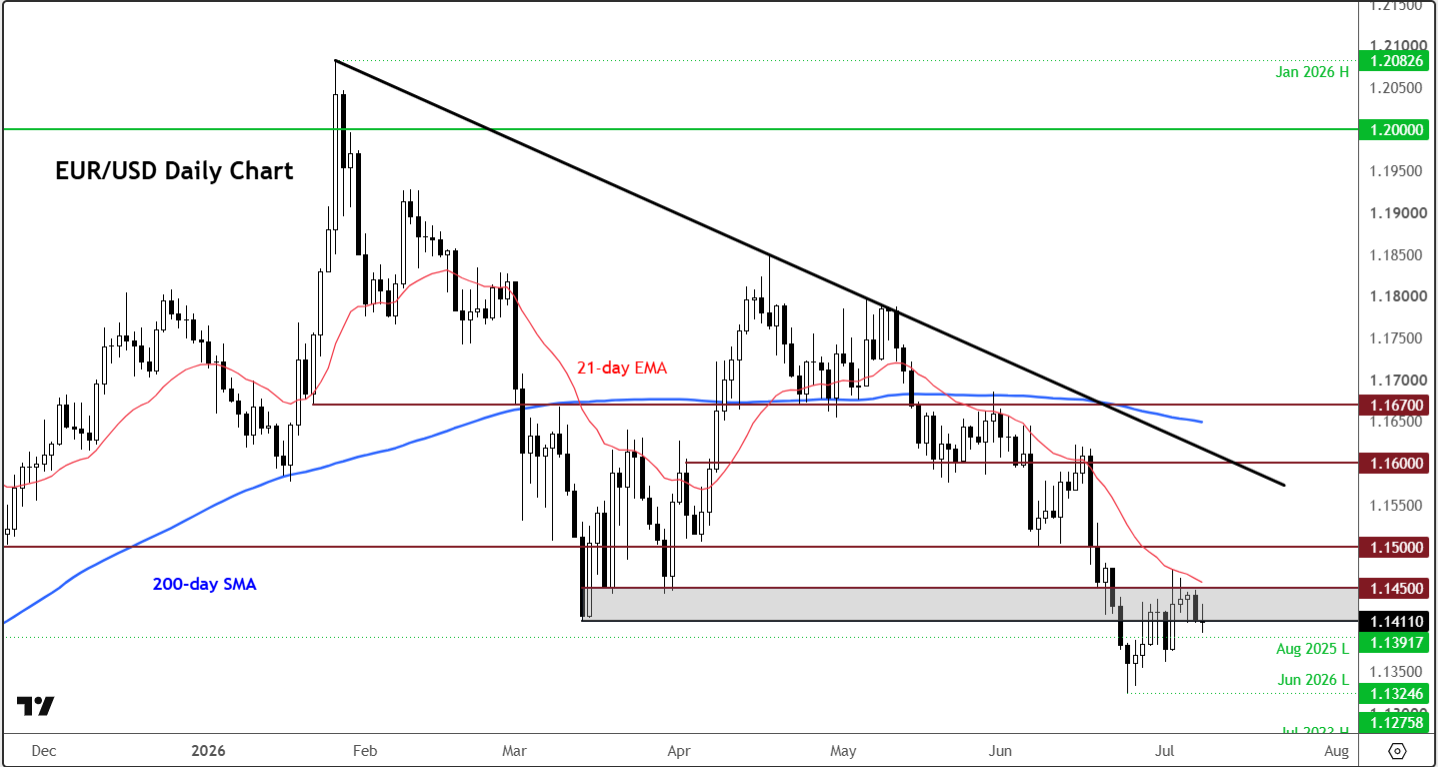
On the upside, 1.1450 remains an important resistance area. Above that 1.1500 handle is the next level to watch ahead of 1.1575 thereafter.
For now, any meaningful upside in the EUR/USD exchange rate would likely require a clear shift in Fed expectations or a significant deterioration in US economic data, neither of which appears imminent. Thus, markets seem comfortable rewarding the higher US yield advantage while US-Iran escalation underpins oil.

Comments
Log in or sign up to join the conversation.