

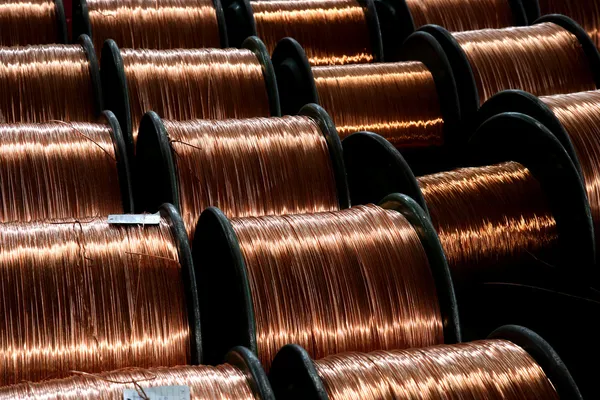
There are two competing copper narratives right now that are at odds – and it could matter to investors looking to navigate the current landscape. While one says surplus and recession risk push prices lower, the other says any surplus is temporary and structural demand remains intact. At Prinsights, we are in the second camp. Below, we detail the four reasons why and what you need to know.
The International Copper Study Group (ICSG) is an intergovernmental body that has been the official forecaster of the global copper market since 1992. Governments, mining companies, traders and exchanges all reference its supply-and-demand projections. When the ICSG says the world will have too much copper, the market listens and investors take action.
On April 24, the ICSG flipped its 2026 forecast. The group had been calling for a 150,000 tonne shortage. It now expects a 96,000 tonne surplus, and pinned the change on slower demand growth and more copper coming back into the market through recycling.
Copper is trading around $6 per pound on COMEX, up roughly 24% from a year ago and within striking distance of an all-time high. This is important because copper’s price isn’t behaving like a market that expects supply to outpace demand.
The ICSG flip rests on two assumptions. They cut their 2026 global refined copper demand growth forecast from 2.1% down to 1.6%, citing subdued consumption in the European Union and Japan. They also assume a sharp jump in secondary production, meaning recycled copper from scrap fills the gap that constrained mine supply leaves behind.
Both assumptions deserve scrutiny. Even if you take the ICSG at face value, a 96,000 tonne surplus on a 28 million tonne global market is a rounding error.
Four Reasons Copper’s Official Forecaster is Wrong
1. Global Copper Supply Is Cracking
Smelters around the world are now paying miners to take their copper ore, the opposite of how the business has worked for decades. There is simply not enough mined copper to feed the world’s smelting capacity. The benchmark annual deal between Chinese smelters and Chile’s Antofagasta (one of the world’s largest copper miners) closed at zero dollars per tonne for 2026 – as Japanese, Korean, and European smelters have refused to accept the zero number and are still holding out.
What’s unfolding is that the biggest mines in the world are cutting their numbers at the same time. Some highlights include:
Ivanhoe Mines, the operator of one of the highest-grade copper mines in the world, cut Kamoa-Kakula’s 2026 guidance from 380-420k tonnes down to 290-330k tonnes after a seismic event last May.
Freeport-McMoRan’s Grasberg, the world’s second-largest copper mine, is still under force majeure on its block cave operations after a fatal mudslide last September and does not restart until later this quarter.
Anglo American (a top-five global miner) recently downgraded its 2026 production guidance because of operational issues in Chile.
Peru’s southern mining corridor keeps getting shut down by community blockades around Las Bambas and Constancia.
Capstone Copper’s Mantoverde mine in Chile dealt with a strike in January.
With all of these together, the landscape is not just volatile but at an inflection point.
2. China Is About to Choke Off the World’s Sulfuric Acid Supply
Roughly 20% of the world’s primary refined copper depends on sulfuric acid for processing, and the global sulfuric acid market is in trouble. The Strait of Hormuz is still blocked, which has trapped the Middle East sulfur that the world uses as the raw input for sulfuric acid. On top of that, China confirmed on April 10 that it will halt exports of sulfuric acid produced as a byproduct of copper and zinc smelting starting May 1.
Chile alone imports over 1 million tonnes of Chinese acid every year. Spot acid prices in Chile have already doubled since the war began. The Founder and Executive Chairman of Ivanhoe Mine’s Robert Friedland posted on April 12 that some copper producers are running with less than 30 days of foreseeable acid supply.
3. The June 30 Lutnick Report Can Only Make This More Bullish
President Trump signed a proclamation on April 2 that restructured the Section 232 copper tariffs and directed Commerce Secretary Howard Lutnick to report back on whether to pull the 2027 and 2028 tariff hikes forward. That report is due June 30.
The current tariff regime already taxes semi-finished copper imports at 50%. Refined copper itself was exempted from that round, but starting January 2027, it gets a new 15% tariff, rising to 30% in January 2028. If Lutnick recommends pulling that schedule forward, U.S. copper producers see their pricing advantage widen further. If he recommends holding the schedule, U.S. producers still benefit from the 50% already in place. There is no scenario where the June 30 report is bearish for U.S.-produced copper, and the ICSG forecast does not price in any of it.
4. The Smart Money Already Moved
COMEX copper inventories hit a record 603,745 short tons this week, which comes out to more than five times the level a year ago.
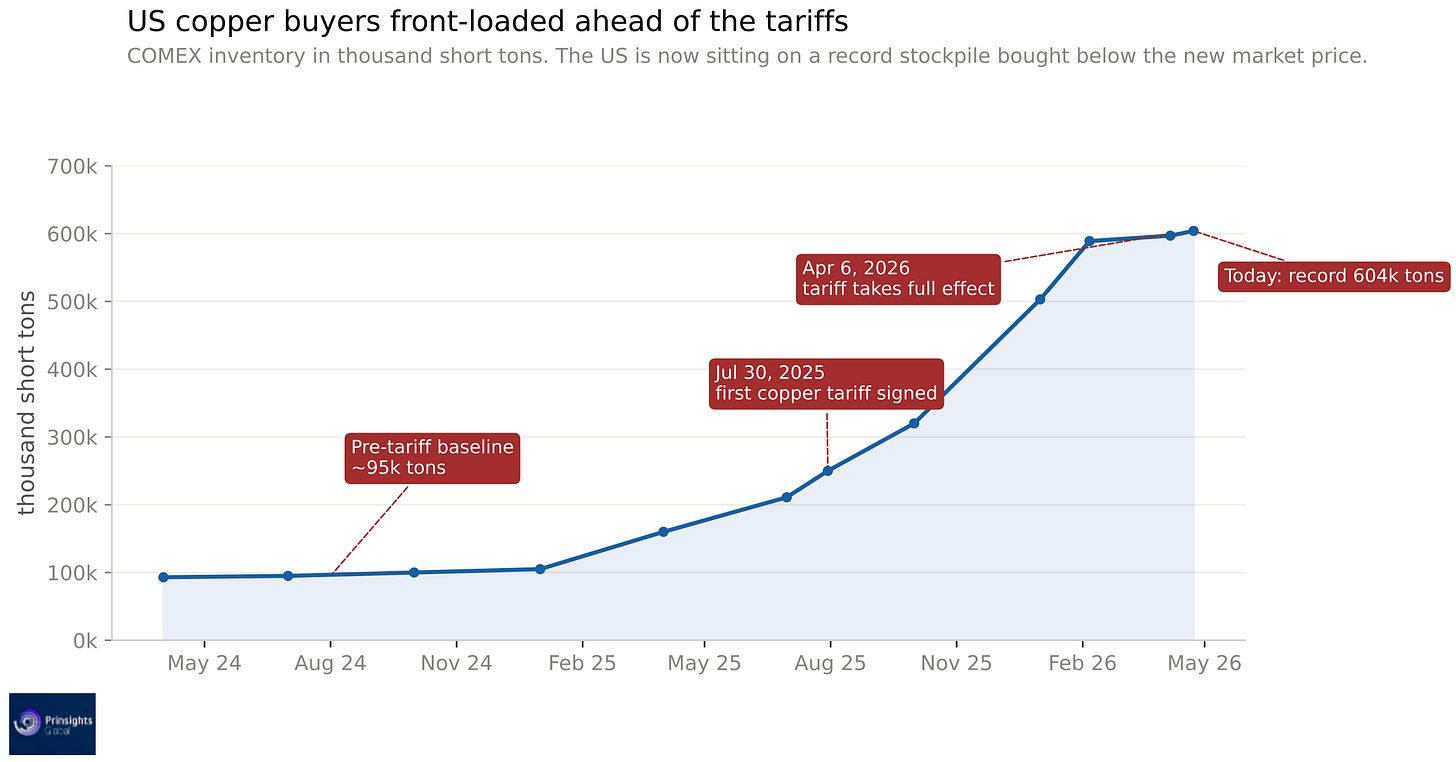
Normally, record inventories mean prices are about to fall. This time it is the opposite.
The copper inside American warehouses was pulled in at lower pre-tariff prices. Meanwhile, the rest of the world will have to pay the 50% tariff to get into the U.S., which means the rest of the world is short copper while the U.S. is sitting on a stockpile bought below the new market price. Once American buyers work through that inventory, every replacement tonne pays the tariff.
The people who move tonnes of copper for a living saw all of this coming and acted before retail investors knew anything was materially changing. The ICSG’s surplus call treats global inventories as one number, but the inventory inside the tariff wall is different in kind from the inventory outside it.
What This Means
What all of this signals is that the ICSG told the world copper has too much supply, yet the price disagrees – and so do we.

Comments
Log in or sign up to join the conversation.