


Copper is entering a new regime.
No longer just a cyclical industrial metal, it is becoming a strategic asset at the intersection of electrification, geopolitics, and capital flows. Structural demand growth is colliding with constrained supply, just as geopolitical tensions, including the evolving Iran conflict, begin to stress global energy and trade systems.
The result is a market increasingly driven not by cycles, but by system-level imbalances.
Structural Demand: Electrification is Non-Negotiable
Copper demand is being reshaped by structural and policy-driven forces.
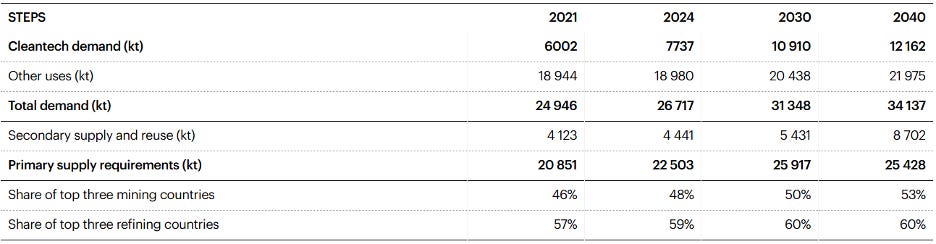
According to the International Energy Agency’s Global Critical Minerals Outlook 2025, copper demand is set to rise significantly as electrification accelerates across power grids, electric vehicles, renewable energy systems, and digital infrastructure.
Clean energy applications alone are expected to account for a growing share of total copper consumption in the coming decades.
This demand is not discretionary. Grid expansion, electrification, and AI-driven data center growth are long-term capital commitments that persist even through economic slowdowns.
Copper demand is effectively locked in. Supply is not.
Structural Supply Constraint: A System Under Pressure
While demand accelerates, supply is struggling to keep pace.
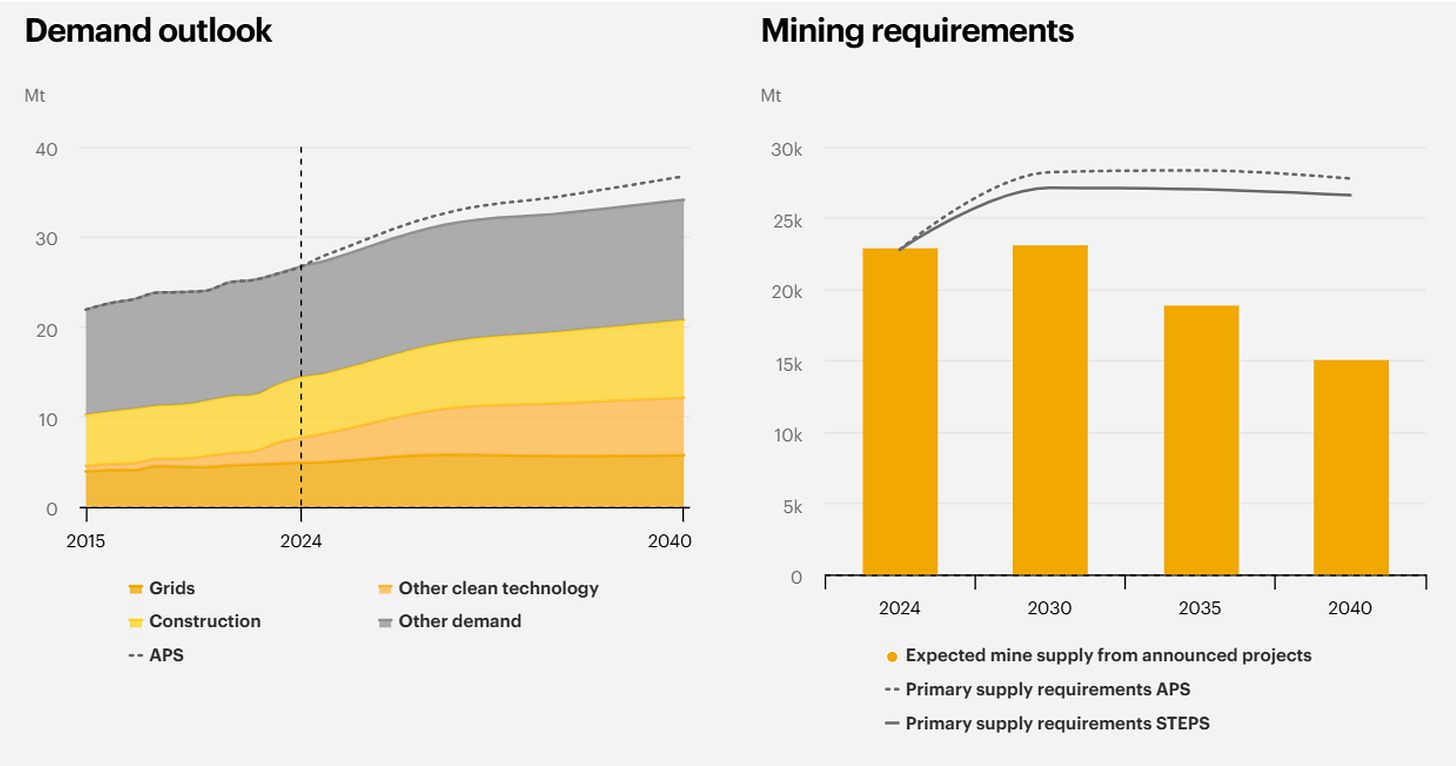
The IEA projects a material supply deficit emerging by the mid-2030s, driven by declining ore grades, limited discoveries, and long project development timelines.
From a market perspective, the constraint is already visible.
Global copper mine supply reached roughly 23 million tons in 2024
New projects can take 15–20 years to develop (IEA)
Existing operations are facing declining productivity
Even under optimistic assumptions, supply growth is unlikely to match projected demand.
This is not a typical commodity cycle. It is a structural timing mismatch.
Supply Concentration: A Fragile Global System
The current copper market is highly concentrated geographically, and the latest data reinforces just how narrow the supply base is.
As of 2024:
Chile: ~5.3 million tonnes (~23% of global supply)
DR Congo: ~3.3 million tonnes (~11 - ~14%)
Peru: ~2.6 million tonnes (~10–12%)
China: ~1.8 million tonnes
United States: ~1.1 million tonnes
In total, the top three producers alone account for well over 40% of global supply today, with Latin America dominating the system. By 2030, Chile is expected to be producing 24% of the world’s supply, DR Congo 16% and Peru 11%.
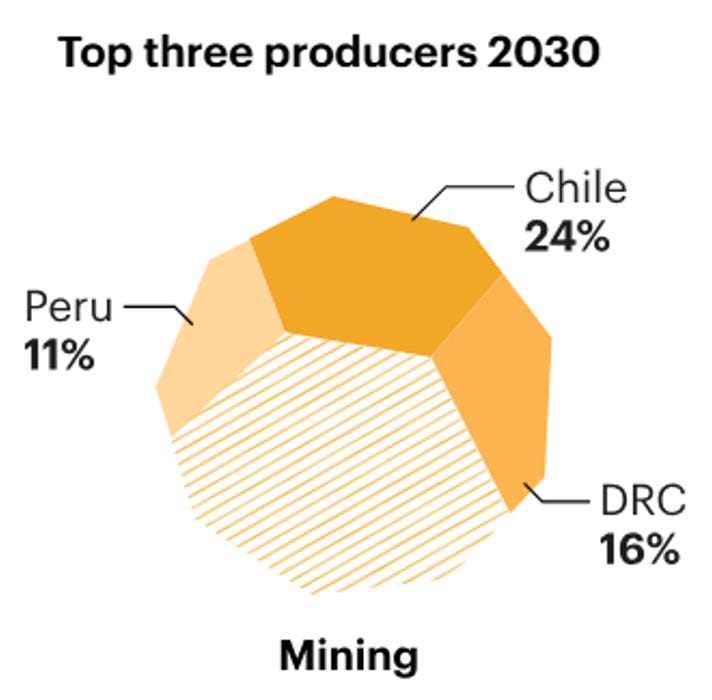
Disruptions in a small number of jurisdictions, whether political, environmental, or logistical, can have outsized global effects. Water stress, permitting delays, and social unrest in key mining regions further increase uncertainty around future supply.
Iran War Fallout: Stressing the System Further
The Iran conflict introduces a critical transmission mechanism into the copper market through energy.
Copper mining and refining are energy-intensive processes. A sustained rise in oil prices feeds directly into:
Diesel costs for mining fleets
Transportation and shipping expenses
Smelting and refining input costs
This creates a cost-push dynamic, where higher energy prices effectively raise the marginal cost of copper production.
At the same time, continued disruption risks around the Strait of Hormuz helps to increase volatility across commodity markets more broadly.
There is also a reinforcing feedback loop:
Periods of energy insecurity tend to accelerate investment in electrification, grid infrastructure, and renewables, all of which are copper-intensive.
Higher oil prices, therefore, act as both a supply constraint and a demand accelerant for copper.
Even before the Iran conflict, Copper prices had been on a surge, briefly exceeding $14,500 USD per ton (intraday) in January 2026. This after only passing $12,000 USD per ton for the first time in December 2025.
Refining Concentration: China’s Strategic Leverage
If mining is geographically concentrated, refining is even more so.
China will control approximately 47% of global copper refining capacity in 2030.
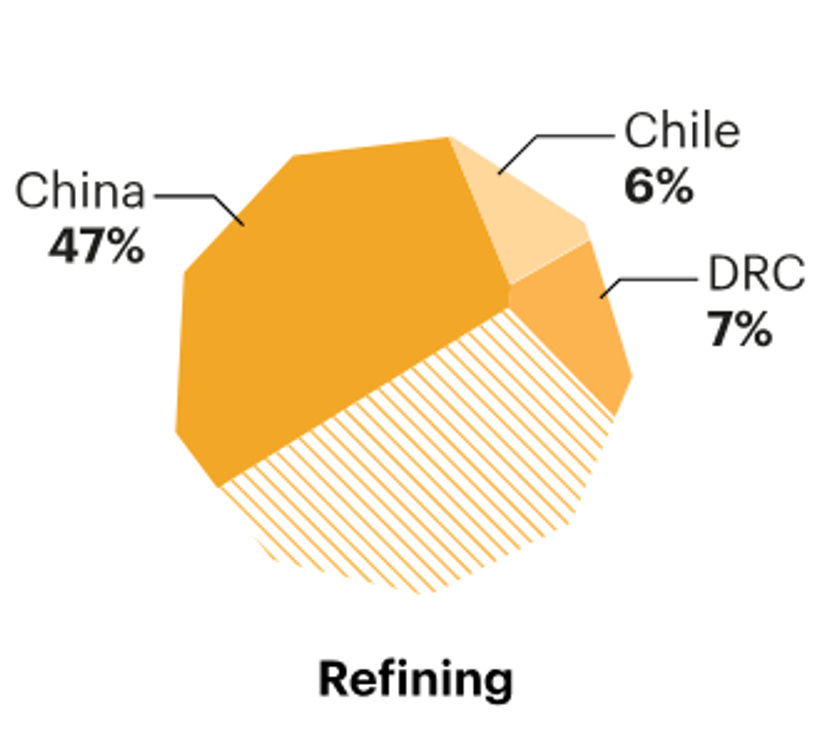
This creates a critical chokepoint in the supply chain.
Even when copper is mined elsewhere, it is often:
Shipped to China for processing
Dependent on Chinese smelters for refined output
This introduces several risks:
Trade restrictions or export controls
Strategic prioritization of domestic demand
Supply chain fragmentation in a multipolar world
Recent data shows that even countries like the United States rely heavily on imported refined copper, much of it indirectly tied to global refining networks dominated by China.
In effect: Control of refining capacity is control of usable supply.
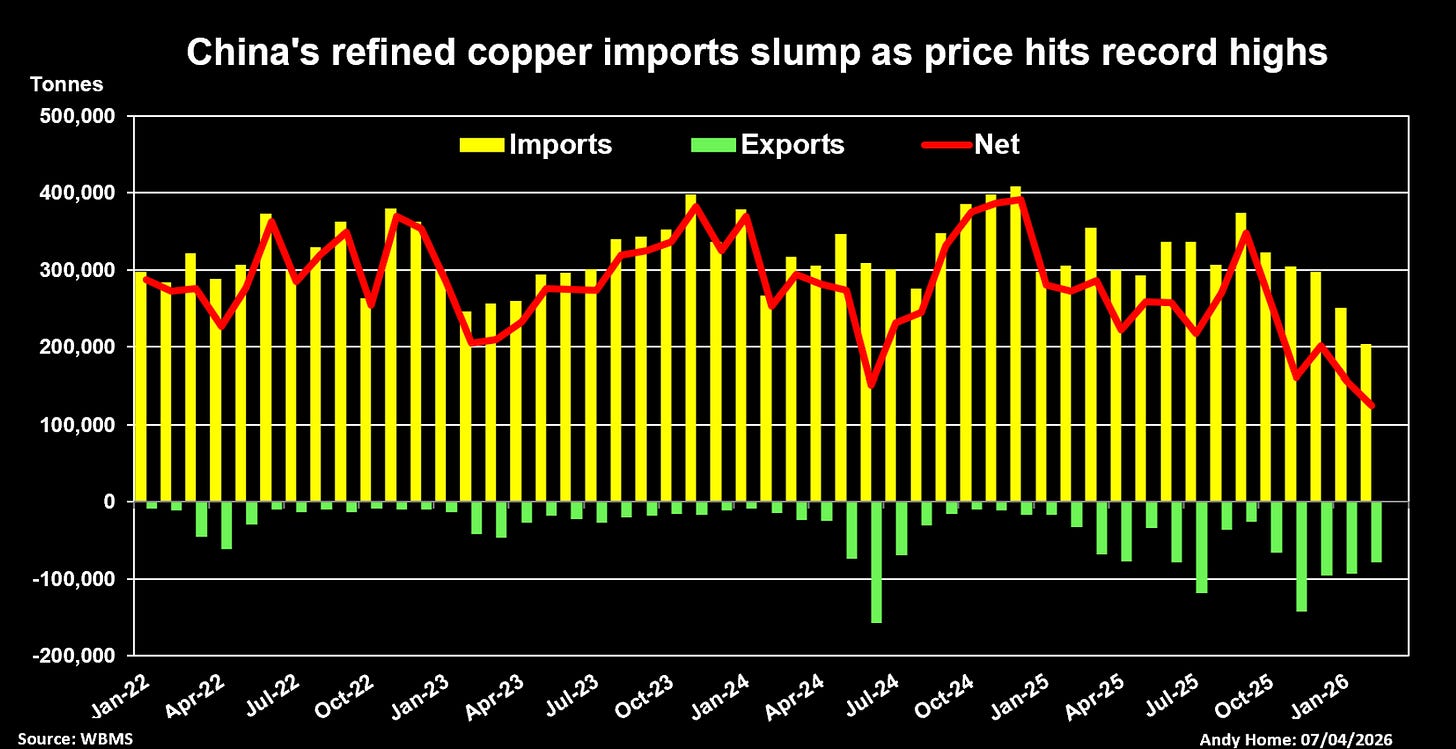
All of that being said, China has thrown the proverbial spanner into the works as they have also demonstrated that they are not prepared to pay elevated prices for copper.
Neutral Jurisdictions: Where Capital Repositions
Against this backdrop, capital is becoming increasingly sensitive to where copper exposure is held.
Argentina has recently OK’d Javier Milei’s glacier mining reform, thus furthering Argentina’s appeal to capital as a lot of copper (and lithium) can potentially be unlocked once the law takes effect.
On the other hand, Peru recently revoked Southern Copper (SCCO)’s (NYSE, LSE: SCCO) permit for the $1.8B USD Tia Maria mine.
And for those old enough to remember, Chile nationalized copper in 1971. The state formed Codelco in 1976, and the company still runs Chile’s biggest mines and anchors world copper supply to this day!
I highly recommend reading this PDF about Copper in Chile between 1970-1973, titled Expropriation Without Compensation, written by Sebastian Edwards.
In short, copper is no longer just a commodity trade. It is a jurisdictional trade.
Investment Positioning: Opportunity in the Dislocation
The current setup creates differentiated opportunities across the copper value chain.
Major producers benefit from higher prices but face cost inflation
Developers and juniors offer the greatest leverage to the structural deficit
Jurisdictionally secure assets are likely to command valuation premiums
Companies operating in stable jurisdictions may increasingly outperform those exposed to political or logistical risk.
Conclusion: Copper as a Strategic Asset
Copper is no longer just an industrial input.
It is becoming:
A strategic resource central to electrification
A geopolitical asset shaped by supply concentration
A capital allocation theme driven by jurisdictional risk
The convergence of structural deficits, rising energy costs, and geopolitical fragmentation suggests one outcome:
Copper is being repriced as a system-critical asset.
The question is no longer whether demand will grow.
It is whether the world can build enough supply, in the right places, under the right conditions, in time.

Comments
Log in or sign up to join the conversation.