

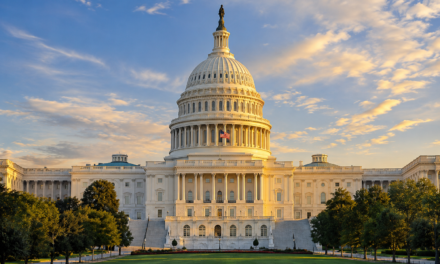
Last month, I told you that Washington was getting closer to giving the crypto industry something it has wanted for years.
Clear rules.
But recently that effort hit a wall when the Senate failed to advance the CLARITY Act, the landmark crypto bill that was supposed to finally establish who regulates digital assets in America and how.
And with the midterm elections rapidly approaching, the bill may now be dead for the year.
This might sound like terrible news for crypto. But I couldn’t be more optimistic.
Because less than 48 hours after the Senate vote, the Securities and Exchange Commission (SEC) announced that it was moving forward without Congress.
And what the SEC is doing could ultimately matter a lot more than one stalled piece of legislation.
Clarity Without CLARITY
The CLARITY Act was supposed to solve one of crypto’s biggest problems in the U.S.
Crypto companies haven’t always known whether a digital asset should be treated as a security, a commodity or something else entirely.
CLARITY was designed to draw clearer lines between the SEC and the Commodity Futures Trading Commission (CFTC), giving crypto companies a better idea of which rules they need to follow.
In August, it looked like Congress might actually get there.
As I told you at the time, Democrats and Republicans were negotiating over a compromise that could attract enough votes to pass the Senate.
But those negotiations eventually broke down.
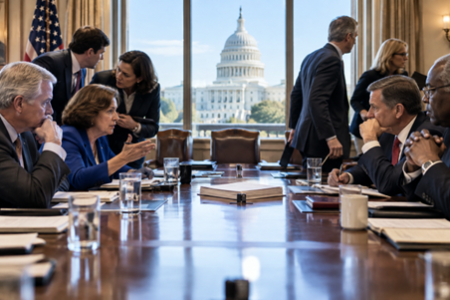
One major sticking point involved ethics rules surrounding elected officials and their families owning or promoting crypto assets.
Another involved stablecoins.
Banks have been fighting rules that would allow crypto companies to offer rewards on stablecoins because they worry customers could move billions of dollars out of traditional bank accounts in search of higher returns.
Banks rely on those deposits to fund loans and generate income. But if more money moves onto blockchain-based financial platforms, they could lose trading, custody and settlement fees too.
Congress tried to find compromises on both issues. But it couldn’t. And on September 15, the Senate failed to get the 60 votes needed to move CLARITY forward.
Normally, that might mean waiting months for Congress to try again.
But the SEC decided not to wait.
On September 17, SEC Chairman Paul Atkins announced something called the Innovation Exemption. And he made it clear why the agency was acting. He specifically acknowledged that Congress had failed to advance the CLARITY Act earlier that week.
So the SEC decided to use the authority it already has.

The Innovation Exemption creates a temporary regulatory pathway that allows qualifying crypto companies to test new products and services without first complying with every rule written for traditional financial markets.
Think of it as a regulatory sandbox.
Companies still have rules to follow. But instead of forcing new technology into old regulations, the SEC is giving them room to experiment while it develops more permanent rules.
And one of the first places this could have a major impact is tokenization.
Under the exemption, qualified trading venues could begin experimenting with tokenized versions of stocks that trade on major U.S. exchanges.
That means a stock could potentially trade on blockchain infrastructure while still representing ownership in the same underlying company.
As a Daily Disruptor reader, you know why I think that’s such a big deal.
Last year, I predicted that tokenization was inevitable. And just last week, I showed you how quickly it’s already taking off.
Putting stocks and other assets on the blockchain could eventually allow them to trade around the clock, settle almost instantly and move between investors with fewer middlemen.
That’s why Coinbase (COIN) and Robinhood (HOOD) are building this technology.
It’s also why JPMorgan (JPM), Citigroup (C), BNY Mellon (BK) and other traditional financial giants are developing tokenization platforms of their own. In August, I argued that CLARITY could help determine whether the financial system of the future would be controlled by today’s banks or a new generation of digital platforms.
What’s changed since then is that they don’t have to wait for CLARITY to move forward.

Of course, I don’t want to minimize what happened in the Senate.
Crypto companies would still prefer Congress to pass a law establishing permanent rules for the industry. An SEC exemption isn’t the same thing.
But what happened last week was encouraging to me because regulatory uncertainty has been one of the biggest things holding crypto back in America.
Now Washington is finally doing something about it. Even without Congress.
The SEC is opening the door to tokenized securities. The CFTC is working on rules for digital-asset markets. And some of the biggest financial companies in the world are already building the infrastructure to take advantage of them.
In other words, the CLARITY Act might have stalled.
But the transformation it was supposed to regulate didn’t.
Here’s My Take
I still hope Congress passes comprehensive crypto legislation. Permanent rules would give companies more certainty than regulations that can change from one administration to the next.
But the failure of the CLARITY Act isn’t the roadblock it might have been just a few years ago.
Wall Street is already building on blockchain technology. Regulators are beginning to make room for it. And tokenization is booming.
What’s more, BTC and Ethereum are both up over 10% since CLARITY stalled.
And crypto’s future no longer has to wait for Congress.



Comments
Log in or sign up to join the conversation.