

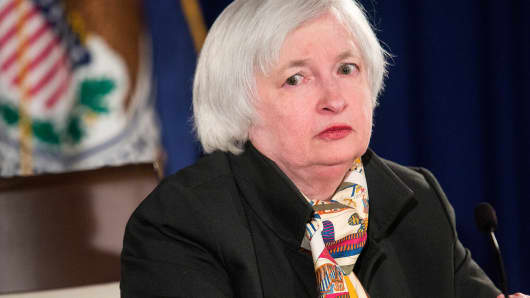
In a rather frank admission of befuddlement, Fed chairperson, Janet Yellen, stated that this year’s slowdown in inflation is a “mystery”. For more than five years, the Yellen & Co. have forecasted that inflation would reach the 2% target over the ‘medium” term. So, when that target actually slips further away, the Fed, initially, argued that the fall off in the rate was due to “transitory” factors, i.e. special one-off situations that result in costs actually falling. Now, that the transitory factors have come and gone, The Fed freely admit that low-inflation is a mystery.
Mystery readers will tell you that there are always clues to solving the mystery. And, in this instance, many clues abound. Some are a long time in the making, others are the result of more current conditions. Let’s look at some of these clues:
- A 30- year decline in the inflation rate and in long-term bond yields; the past is certainly prologued in this instance; this steady drumbeat of falling long-term rates signifies that inflationary expectations have been permanently lowered;
- The rise of China and other Asian countries have introduced lower labor costs for all manufactured products; in other words, the world’s labor supply curve has shifted to the right, meaning there is more labor available at existing wages, thus putting a damper on wage costs;
- Economic growth in all the mature economies has been moderate, certainly not at any pace that would generate inflation;
- The falloff in the U.S. unemployment rate is related, in large measure, to demographic shifts in the labor market, particularly the decline in the participation rate; with the growth in the workforce slowing, it is easy to understand why the unemployment rate has fallen to what many consider full employment;
- Finally, commodity prices, although they have recovered from their lows in the 2008 crisis, do not pose any threat to push up the inflation rates.
Of course, the Federal Reserve members are all aware of these clues--- each one has been well-documented by economists. Why does the Fed choose to ignore them? If these clues now describe what is the ‘new normal’, then why does the Fed signal more rate increases are expected later this year and in 2018? The same criticism applies to the Bank of England. Governor Carney, over the past three years, has repeatedly warned that rate increases are on their way. He frequently uses the phrase that a rise in the bank rate could come “sooner than markets currently expect”.
Alan Beattie of the Financial Times puts the issue bluntly when writes
“If the central banks have decided to focus on an outcome other than inflation, they should say so. If this means admitting that their macroprudential tools for control of credit and growth essentially do not work, so be it.”[1] He calls for the central banks to admit that inflation is no longer a justification for higher interest rates.
[1] Central banks have a duty to come clean about inflation, Financial Times, September 24, 2017



Comments
Log in or sign up to join the conversation.