

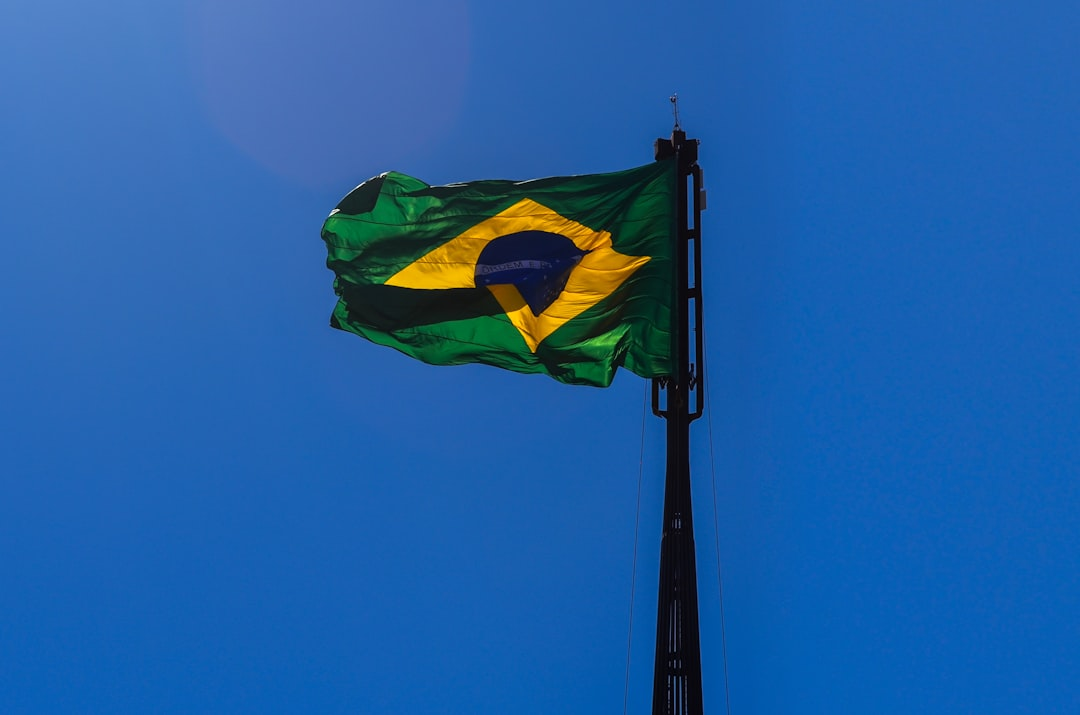
Brazil’s official presidential campaign began on August 16 and will run for seven weeks before the first round on October 4. Thirteen candidates have registered, but the latest polls show only six polling at 2% or more, including: President Luiz Inácio Lula da Silva, Senator Flávio Bolsonaro, Former Goiás Governor Ronaldo Caiado, businessman Renan Santos, former Minas Gerais Governor Romeu Zema and famed bestselling author and physician Augusto Cury.
That already makes 2026 different from Brazil’s last two presidential elections. The race is still led by Lula and Bolsonaro’s son, and a runoff between them remains the most plausible scenario today. But the field is less binary. Several candidates on the right are competing not only against Lula, but among themselves for the political inheritance of former President Jair Bolsonaro. Lula, meanwhile, is seeking a fourth presidential term in what is expected to be the final election of his political career, despite the criticism of his “Bidenization” in recent months.
All that said, amid disputes over security, food prices, fiscal policy and social programs, one subject deserves investor attention: rare earths and critical minerals.
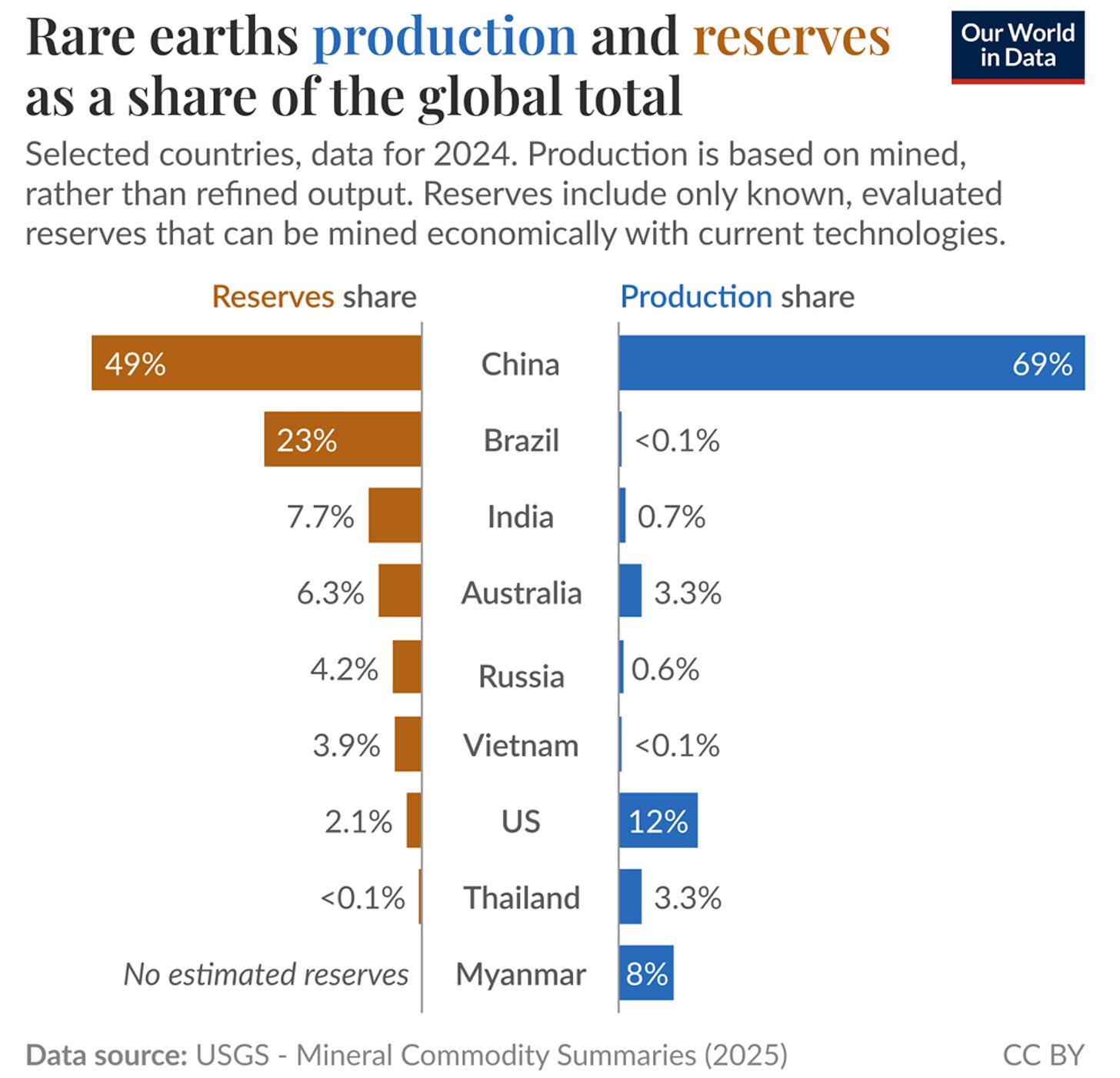
That’s because Brazil has the largest reserves of critical minerals in the Western world and the second-largest globally, behind only China. However, it is still not the world’s leading producer.
The Strategic Consensus
It is not surprising that critical minerals appear in the six leading government programs. What is surprising is just how much agreement there is on the diagnosis, something rare in Brazilian politics with a quite polarized nation.
All six candidates recognize, in various ways, the same structural problem. Brazil possesses exceptional geological resources but captures too little value from them. Exporting ore while importing batteries, magnets, semiconductors (known as chips in Brazil) and advanced materials is increasingly seen as an economic and geopolitical weakness.
Lula’s program places critical minerals inside a broader reindustrialization strategy. It proposes a specific policy for critical minerals and rare earths, regional mapping, domestic processing and value addition, with the explicit objective of avoiding the simple export of strategic raw materials. It also fits his administration’s emphasis on industrial policy, the energy transition and regional development.
Flávio Bolsonaro has arrived at a similar destination through a different route. His plan identifies lithium, niobium, graphite, copper, nickel, uranium and rare earths as inputs for semiconductors, batteries, artificial intelligence, defense and clean energy. The state, however, would act primarily as regulator and coordinator. The emphasis is on faster licensing, regulatory stability, private investment, foreign capital and technology transfer.
Romeu Zema pushes that market-oriented logic further. His program focuses on accelerating mining authorizations, expanding geological surveys, attracting private and foreign investment and reducing bureaucratic barriers. It also proposes stronger action against illegal mining and greater use of mining waste. The argument is straightforward: Brazil has the resources, but administrative delay prevents capital from turning them into productive assets.
Three Industrial Strategies
Caiado, Cury and Renan Santos offer more explicitly structured industrial strategies.
Ronaldo Caiado proposes a National Strategy for Critical Minerals and Advanced Materials, bringing together the mining, industry, science, defense, foreign affairs and development-finance arms of government. His plan moves beyond extraction and into separation, refining, metallurgy, alloys, magnets, cathodes, batteries and recycling. International partnerships would be diversified to avoid dependence on a single buyer or supplier.
Augusto Cury’s PETRA-BR follows a similarly vertical logic. It calls for national rare earth mapping, a permanent Brazilian Critical Minerals Atlas, strategic industrial zones and incentives for domestic processing. The objective is to build an integrated chain from mining and refining to advanced materials, technological components and exports. Foreign partnerships would be tied to technology transfer, local production and research capacity.
Renan Santos and the Missão party, which has increasing support among the younger generation of Brazilians and the middle class, have given the issue its strongest national-security framing. Their program treats Chinese dominance of rare earth refining and permanent magnets as a geopolitical vulnerability. It proposes special economic zones, a pilot separation and refining plant, BNDES-led financing and deeper integration with U.S. and European semiconductor and defense supply chains. It also proposes a constitutional amendment defining rare earths as a national security issue.
The Campaign Fault Lines
Critical minerals are therefore unlikely to become a simple left-versus-right issue. The more interesting argument will be about the state-market balance, foreign partnerships and who captures the value between the mine and the finished technology.
This is where foreign investors should be paying the most attention.
Lula can frame the issue around sovereignty, industrial policy and continuity. Flávio Bolsonaro and Zema can argue for capital, faster licensing and fewer barriers. Caiado can emphasize institutional coordination and diversification. Cury can present industrial verticalization as a development project. Renan Santos can connect minerals directly to defense, China and Brazil’s strategic relationship with the West.
These distinctions matter because Brazil enters this election as Washington, Beijing, Moscow and Brussels are all spending heavily to secure or fortify their own critical mineral supply chains. What might once have been a technical discussion inside the Ministry of Mines and Energy is now connected to artificial intelligence, electric vehicles, defense procurement, industrial policy and foreign relations.
That is why rare earths could become one of the campaign’s most consequential economic themes even if they never become one of its loudest.
For investors, the key question after October will not be whether Brazil wants to develop its critical minerals. For six key candidates, the answer is yes. The real questions are who will finance the next stages, where processing will occur, which foreign partners will gain access, and how much value Brazil will require for them to remain inside the country.
The election may decide who occupies the Planalto Palace starting January 2027. But for critical minerals, it may also decide what direction Brazil wants to take in the next global economic order: a mining power, an industrial power, or both. And that has wider implications for the ongoing global battles over critical minerals and investment opportunities in the space.
Dr. Roberto Rodolfo Georg Uebel is an economist and geographer and a Professor of International Relations at ESPM University in São Paulo, Brazil.

Comments
Log in or sign up to join the conversation.