

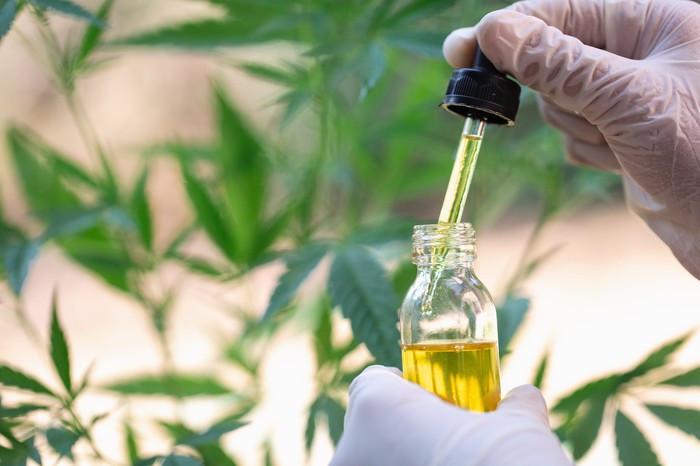
There’s no greater talking point in the medical industry right now than CBD.
Seemingly coming out of nowhere, CBD (or Cannabidiol) was actually discovered in 1940 as one of the 113 identified cannabinoids in cannabis plants, making up as much as 40% of the plant’s extract. So why all of the coverage all of a sudden, what took so long?
Although research continued with sizeable steps in both the 1960s and 1980s, it wasn’t until recent years that the capabilities of CBD were truly recognized. The biggest milestone of CBD usage came in 2018 with the Food and Drug Administration (FDA) approval of the first CBD-based drug, Epidilox.
The drug is used as a treatment for those suffering from Lennox–Gastaut syndrome or Dravet syndrome in patients aged two years and older and has opened the floodgates for research in the arms-race for further FDA approval in CBD-based medicine.
So that moves us nicely on to the title of our post - are CBD stocks worth investing in and what are the current concerns and sticking points from investors around the world?
The stability of the market
Market stability is one of the biggest concerns that investors have when considering moving into the CBD market and it’s for good reason too.
The CBD market is seemingly on a mission, firing explosively upwards in its trajectory, but as of current is being untested. Alan Brochstein, TalkMarkets contributor and founder of New Cannabis Ventures and 420 Investor is very clear on the reasoning for the jump in interest surrounding the stocks:
“The number of places at which CBD is available has soared, ranging from gas stations to the finest retail stores. The large chains of grocery stores and drug stores are selling topical products, though this segment has traditionally been just a small part of the overall market.”
Put simply, the market is a little bit chaotic as of current, but that doesn’t mean that warning signs aren’t lingering in plain sight. One potential warning sign comes from the largest CBD sellers and their growth as it slowly begins to decrease.
But regardless of the stability, if there’s one area that stands the safest when looking into the cannabis market, it’s the CBD industry over the THC alternative.
What about the legality?
The legality of CBD and cannabis/hemp products has always been a little bit of a grey area, so it’ll come as no surprise that there’s a little concern for the future of CBD.
Although the farm bill, passed in 2018, legalized industrial hemp as cannabis with a low THC level (less than 0.3%) is seen as widely positive across the industry, it’s the products containing cannabidiol that still land themselves into a bit of trouble.
When quizzed on the federal side of things, Brochstein noted that the FDA is looking into the regulation of the sale of CBD, continuing to state;
“This could be positive or negative, depending exactly upon how the process evolves. Extremely strict regulations that limit sales to companies that have approved products would be detrimental. Guidelines with certain standards would be beneficial to the leading players in the market today.”
As of current, the FDA has remained pitched up perfectly balanced on the fence, only moving in and cracking down on those companies offering false claims surrounding CBD. Time is the only thing that will tell at this point, especially as the future is heavily research dependent.
Local regulation
Although the farm bill made some great progress for the CBD market, the industry isn’t quite out of the woods just yet and there’s still a major hurdle that companies have to face.
Local laws govern how CBD can both be produced and sold to consumers and for companies looking for activity in all 50 states, it’s very complicated. There’s a common misconception surrounding the legality of CBD in the US with many believing that the compound is legal in all areas - but this simply is not true.
For example, as of current, Colorado has legalized the utilization of all parts of the hemp plant for use in food items whereas Texas has made any products with the slightest trace of THC illegal. But none of these laws are set in stone and there are constant updates and caveats that need addressing each time we see a change.
For those waiting for investments and that final push for revenue, this is painstakingly confusing and frustrating in equal parts.
Future industry prospects
The future of the CBD industry and the stocks that build it are up for debate and predictions will differ depending on who’s asked.
One optimistic view from Grand View Research states that legal marijuana size should be expected to reach USD 66.3 billion by 2025 with an expansion at a CAGR of 23.9% during the forecast period. However, for some experts that prediction seems somewhat “overhyped” and that the cannabis bubble is about to burst.
Jeff Solomon, CEO of Cowen, was recently quoted expressing his concern for the industry, stating that investors are avoiding the cannabis industry simply due to the distrust and the uncertainties that surround the products and legality.
Combined with the recent FDA warning surrounding liver injury and other damages to the human body, it’s the latter that currently stands as the most likely.
The takeaway
Currently, we all know that the cannabis industry, and subsequently the CBD industry, is an exciting place to be operating in.
With expert predictions contradicting and potential investors holding out to see the governance practices on the industry, it seems that it’s the risk-takers that will either win big or crash and burn with CBD stocks. But that should be expected when moving into an industry with such a taboo history as marijuana.
Only time will tell with the decisions made by the government but with research surrounding the compounds coming in thick and thin, it shouldn’t be too long before we know the outcomes and have a solid set of rules and regulations in place.


Comments
Log in or sign up to join the conversation.