


Before we dive into this week's market setup, I want to share a chart that stopped me in my tracks when I saw it on Friday.
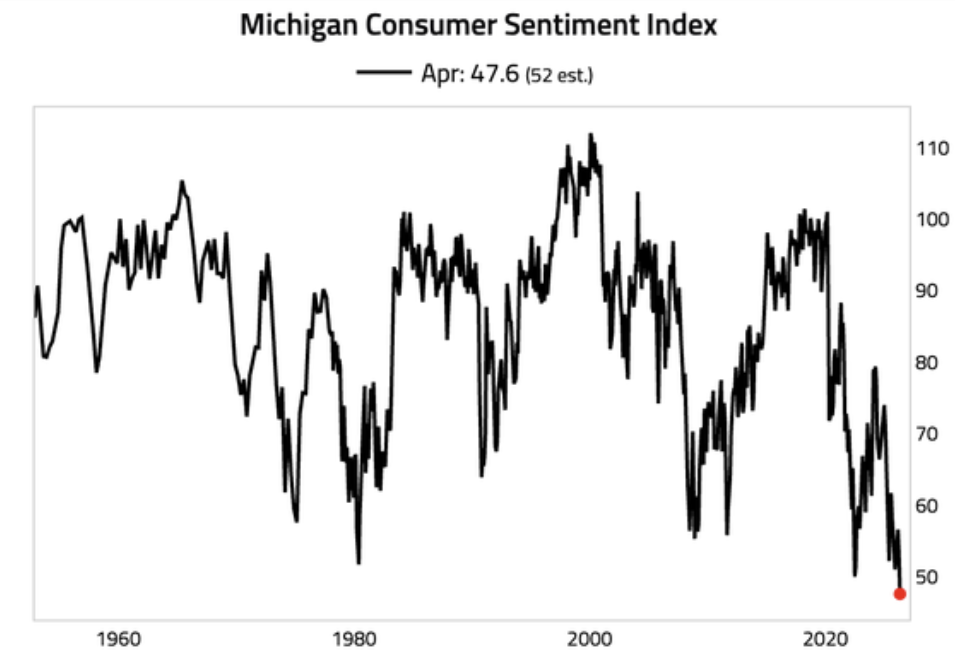
The University of Michigan's Consumer Sentiment Index just printed at 47.6 for April -- an all-time low.
Lower than the depths of the 2008 financial crisis. Lower than the pandemic panic of 2020. Lower than any reading in the survey's 70-year history.
Take a moment to let that sink in.
And here's the part that makes it even more alarming: that reading came in BEFORE the Iran peace talks broke down this weekend.
Why Consumer Sentiment Matters... A Lot
Consumer spending drives roughly 70% of the U.S. economy.
When American families feel confident about their jobs, their savings, and their financial future, they spend money. They buy cars, take vacations, renovate kitchens, and upgrade their phones. That spending ripples through every corner of the economy.
When they get nervous? They stop.
It's not just wealthy investors who are rattled right now. The sentiment collapse is most pronounced among middle-class and lower-income households -- the families who actually drive consumer spending. When they pull back, the economic effect is real and it's fast.
Lower spending means lower corporate revenues. Lower revenues mean lower earnings. Lower earnings mean lower stock prices. You can see where this chain leads.
The Market Was Already on Shaky Ground
This consumer confidence data doesn't exist in a vacuum. It confirms what the charts were already telling us.
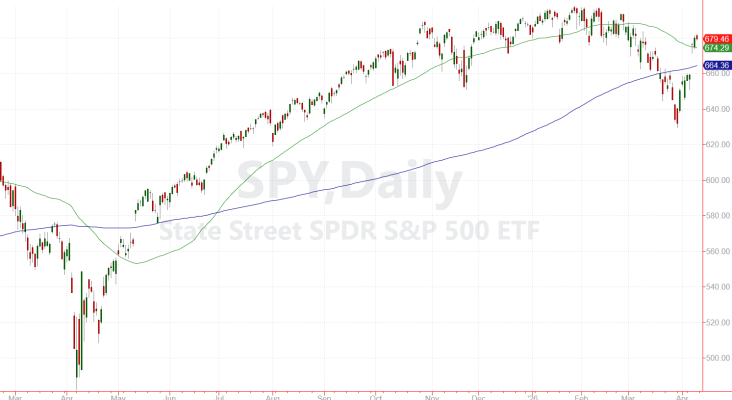
In late March, the broad market broke down through two critical technical levels -- the 50-day and 200-day moving averages -- both at the same time.
If you missed my article on that breakdown, you can read it here. I walked through exactly what that signal has meant historically and why it deserved serious attention.
Looking at SPY right now, we had a sharp bounce last week when it appeared the Iran situation might resolve peacefully. Markets got excited, buyers stepped in, and we saw a strong several-day rally back toward resistance.
But markets don't typically crash through major support lines and then simply rebound straight back to new highs. That's not how this works. At a minimum, we should expect the market to retest the recent lows: A back-and-forth, choppy trading range while investors try to figure out which way the wind is blowing.
More likely, given the deteriorating consumer backdrop and the renewed geopolitical uncertainty, we'll see additional selling pressure as investor sentiment follows the path of consumer sentiment lower.
The bounce last week may have been a classic "relief rally". (The kind that traps late buyers right before the next leg down.)
The Good News: Falling Markets Create Opportunities
I know the tone of this note sounds cautious, and it is. But cautious doesn't mean paralyzed. In fact, some of the fastest profits I've ever captured came during sharp market declines.
Here's something most investors don't fully appreciate: stocks fall faster than they rise.
When fear takes over, investors panic and sell... often all at once. That speed and urgency is actually an advantage for traders who are positioned correctly. Bearish trades can hit their profit targets in days rather than weeks.
And for those of you following my Speculative Trading Program, you know we've been positioning for exactly this environment -- with targeted, in-the-money options plays designed to capture outsized gains as specific stocks come under pressure.
One Strategy That Actually Improves in Volatile Markets
There's something else I want to make sure you don't overlook: our income strategy doesn't just survive turbulence, it thrives in it.
When the VIX spikes (as it has been doing), option premiums expand dramatically.
That means when we're selling put options to collect income, we're collecting more premium for the same risk. I wrote about this dynamic a few weeks ago (check out the full explanation here) because it's one of the most powerful (and counterintuitive) edges we have.
Most investors see a volatile market and freeze. Our Accelerated Income Model members see volatility and recognize it as an opportunity to collect bigger premiums, with more cushion built in.
What I'm Watching This Week
Here's my short list of things to track carefully in the days ahead:
Consumer data -- Additional spending and confidence readings will be critical. The April sentiment number was already alarming; watch for confirmation in retail sales and credit card data.
Iran developments -- With talks having broken down over the weekend, this situation remains fluid. Any escalation will send oil prices even higher, adding another headwind for consumers and businesses alike.
SPY and the moving averages -- I'll be watching closely to see whether last week's bounce has legs, or whether we roll back over and retest the lows. The 200-day moving average is a major risk, rather than support: a meaningful shift.
Earnings season -- We're moving toward peak Q1 earnings reporting. Guidance will matter more than results right now. If CEOs start walking back their forward outlooks citing tariff uncertainty or consumer weakness, that's another weight on stocks.
Coming Up Later This Week
I'll be continuing our ongoing series on successful options trading, including a closer look at how to size positions correctly when volatility is elevated.
That's one of the most common questions I get, and it's especially relevant right now.
I'll also be highlighting one of the specific trades I have on in my own account right now, a bearish play that I think has serious potential in this environment. Stay tuned for that later in the week.
We'll be keeping a close eye on risk across all our positions, adjusting as the picture becomes clearer.
If you want to see the specific trades I'm placing (in real time, in my own account) the Speculative Trading Program is the place to be.
Until then, Here's to growing and protecting your wealth!



Comments
Log in or sign up to join the conversation.