


The artificial intelligence (AI) revolution is profoundly reshaping industries and the world around us, from automating complex tasks in healthcare and finance to revolutionizing manufacturing, transportation, and creative fields with unprecedented efficiency and innovation. AI-driven tools are boosting productivity, enabling breakthroughs in drug discovery, and personalizing experiences across consumer sectors, fueling economic growth and positioning the technology as a cornerstone of future progress.
But AI bubble concerns are growing. Prominent investors like Michael Burry have placed substantial bets against the AI boom, highlighting risks of overinvestment and unsustainable hype. Concerns also swirl around the circular nature of relationships between key players in the ecosystem, potentially amplifying vulnerabilities.
If AI follows the path of past technological innovations that ultimately burst, here are three stocks that have been among the biggest beneficiaries that are most likely to crash the hardest.
(Click on image to enlarge)
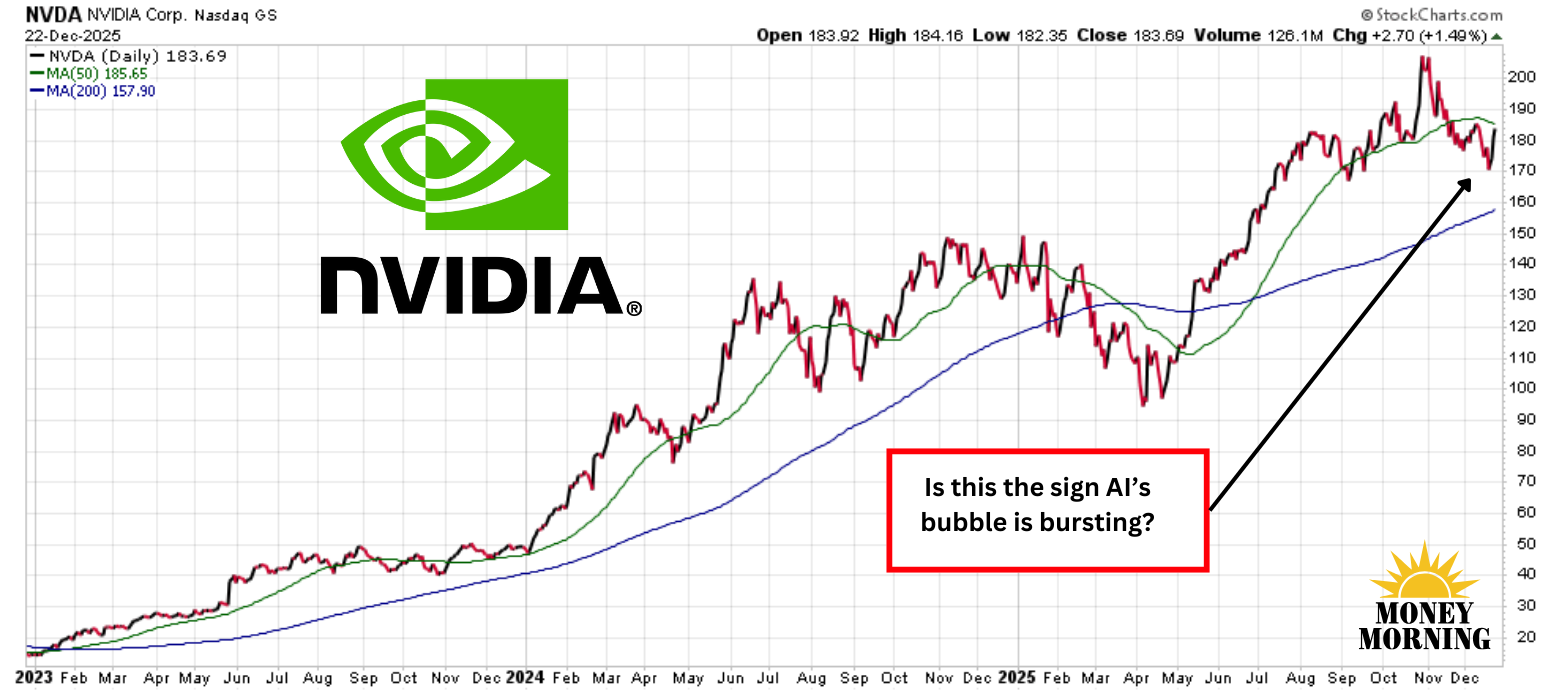
Nvidia (NVDA)
Nvidia (NVDA) has been the poster child of the AI boom, with its GPUs powering most data centers and training models. Shares soared over 1,100% in the past three years, briefly pushing its market cap beyond $5 trillion in 2025. However, contrarians like Burry bet big against it amid fears of unsustainable spending. He bought put options on 1 million shares of Nvidia stock, effectively a bet the stock’s price will go down – a strategy similar to shorting the stock.
Early signs of slowing demand growth, combined with circular investments in the AI ecosystem and comparisons to dot-com era overvaluations, could trigger a crash in Nvidia stock if capex peaks or returns disappoint.
(Click on image to enlarge)
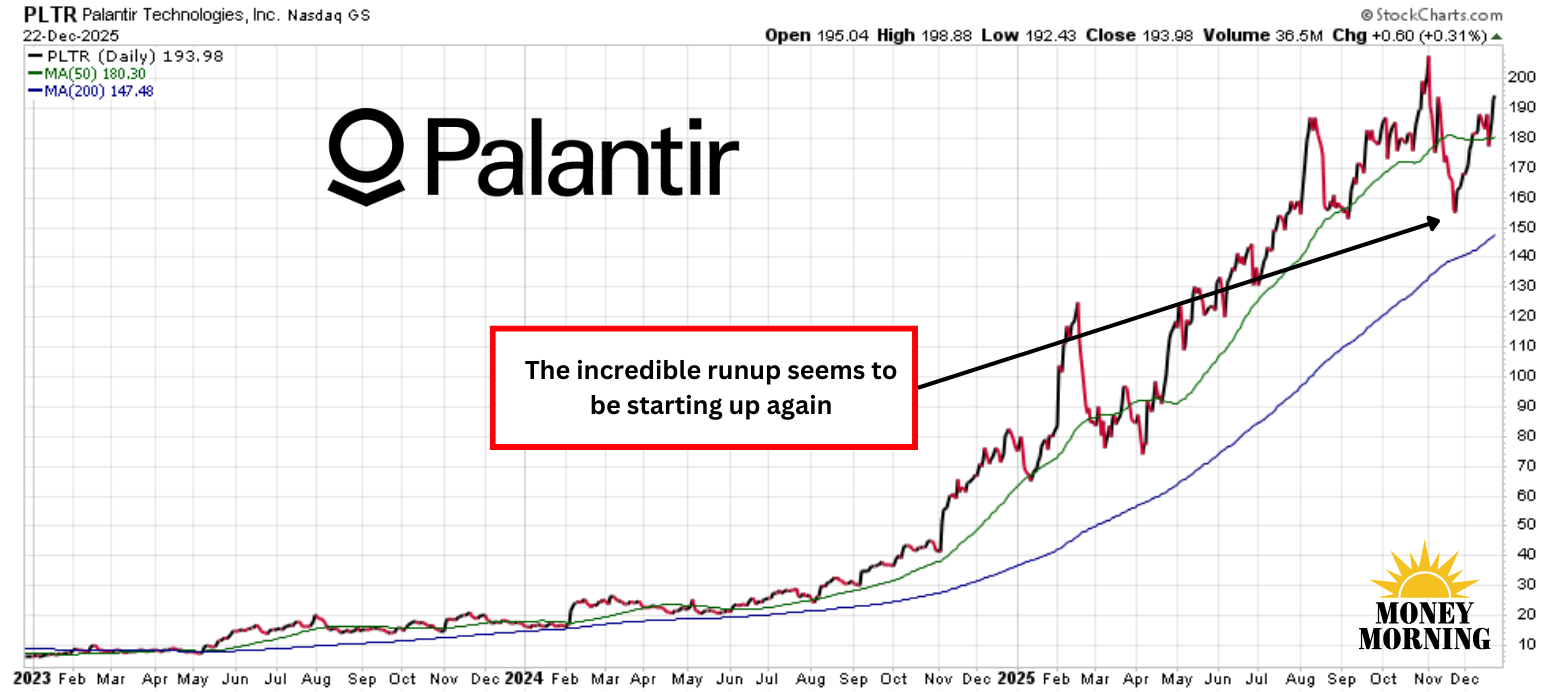
Palantir Technologies (PLTR)
Palantir Technologies' (PLTR) is arguably the second stock most closely associated with AI. Its AI platform has driven explosive growth in government and enterprise contracts, with shares up almost 3,000% in three years. It trades at even more extreme multiples than Nvidia – around 200 times forward earnings – far detached from its revenue growth rate.
Critics highlight intense competition in AI software and modest ROI for many adopters as reported in studies. In a bubble scenario where hype fades, Palantir's valuation leaves little room for error, making it vulnerable to a severe pullback. CEO Alex Karp, though, says if you're betting against his company, you're "crazy."
(Click on image to enlarge)
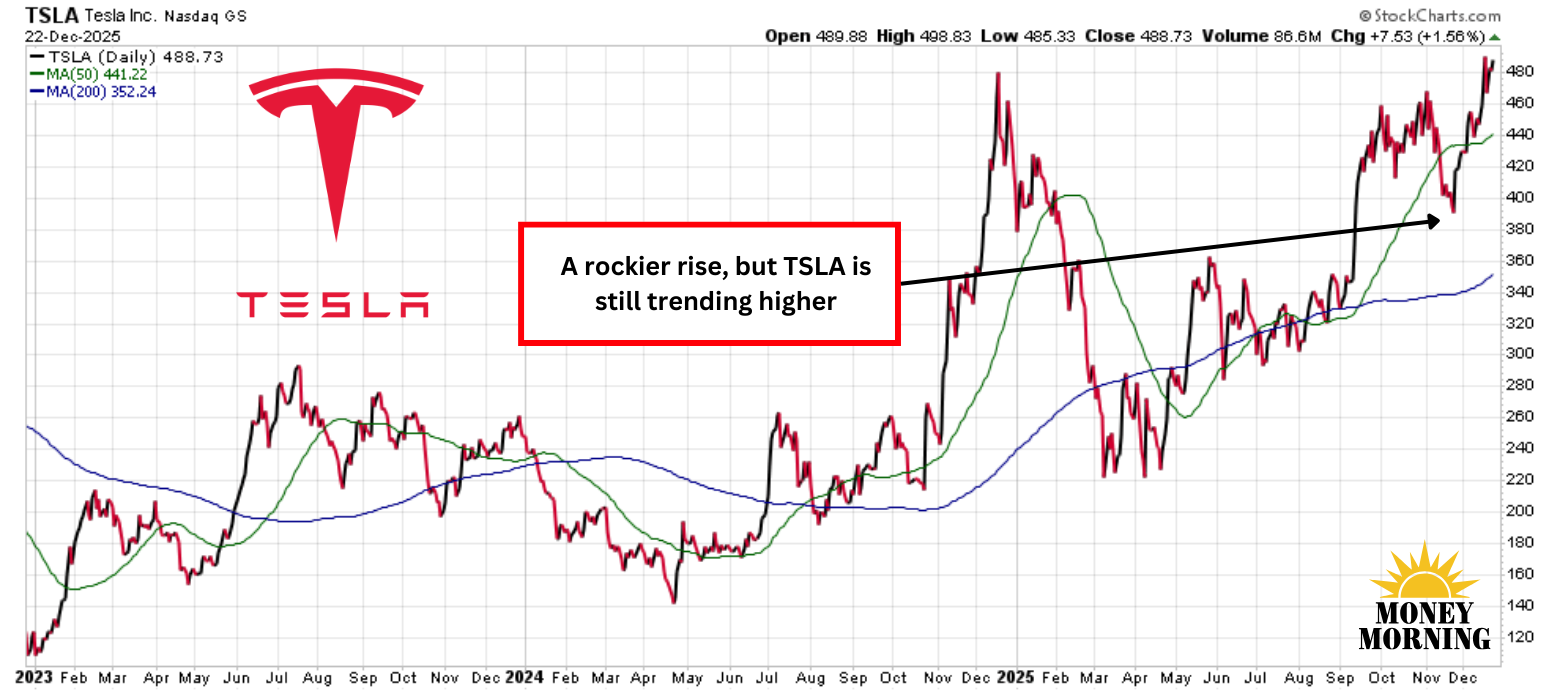
Tesla (TSLA)
Because of its primary EV focus, Tesla (TSLA) is not often automatically considered an "AI stock," but it has positioned itself as an AI leader through autonomous driving and robotics, contributing to dramatic stock gains. Up a more modest 300% in three years – still more than triple the returns of the S&P 500 – its forward P/E is Palantir-esque as it prices in aggressive AI-driven growth amid slower EV sales.
With uncertainty around full self-driving timelines, regulatory hurdles, and competition in AI mobility, Burry has also zeroed in on Tesla and called it "ridiculously overvalued." If broader AI enthusiasm wanes, Tesla's premium valuation risks a sharp decline as investors reassess its transition beyond traditional autos.
Bottom Line
There are many good arguments for why this is not a bubble and critics and short-sellers are reading too much into many of the relationships, which actually have a strong business foundation rooted in genuine demand for infrastructure and long-term strategic alliances. But with these three high-fliers trading at elevated valuations, investors might be wise to begin protecting their downside risks nonetheless.
More By This Author:
3 Fantastic Dividend Growth Stocks To Buy And Hold Forever
If the Crypto Winter Has Arrived, Should You Be Buying Bitcoin Now?
Here's Why Nebius Is Suddenly A Growth Stock Again



Comments
Log in or sign up to join the conversation.