

Image Source: Unsplash
The cryptocurrency market thrives on volatility, but the arrival of a "crypto winter" – a prolonged period of declining prices, reduced trading volumes, and waning enthusiasm – strikes fear into investors and traders alike. These bear markets have historically wiped out 70% to 80% of Bitcoin's (BTC) value, as seen in 2018 and 2022, leading to widespread capitulation, liquidations, and skepticism about the asset's future.
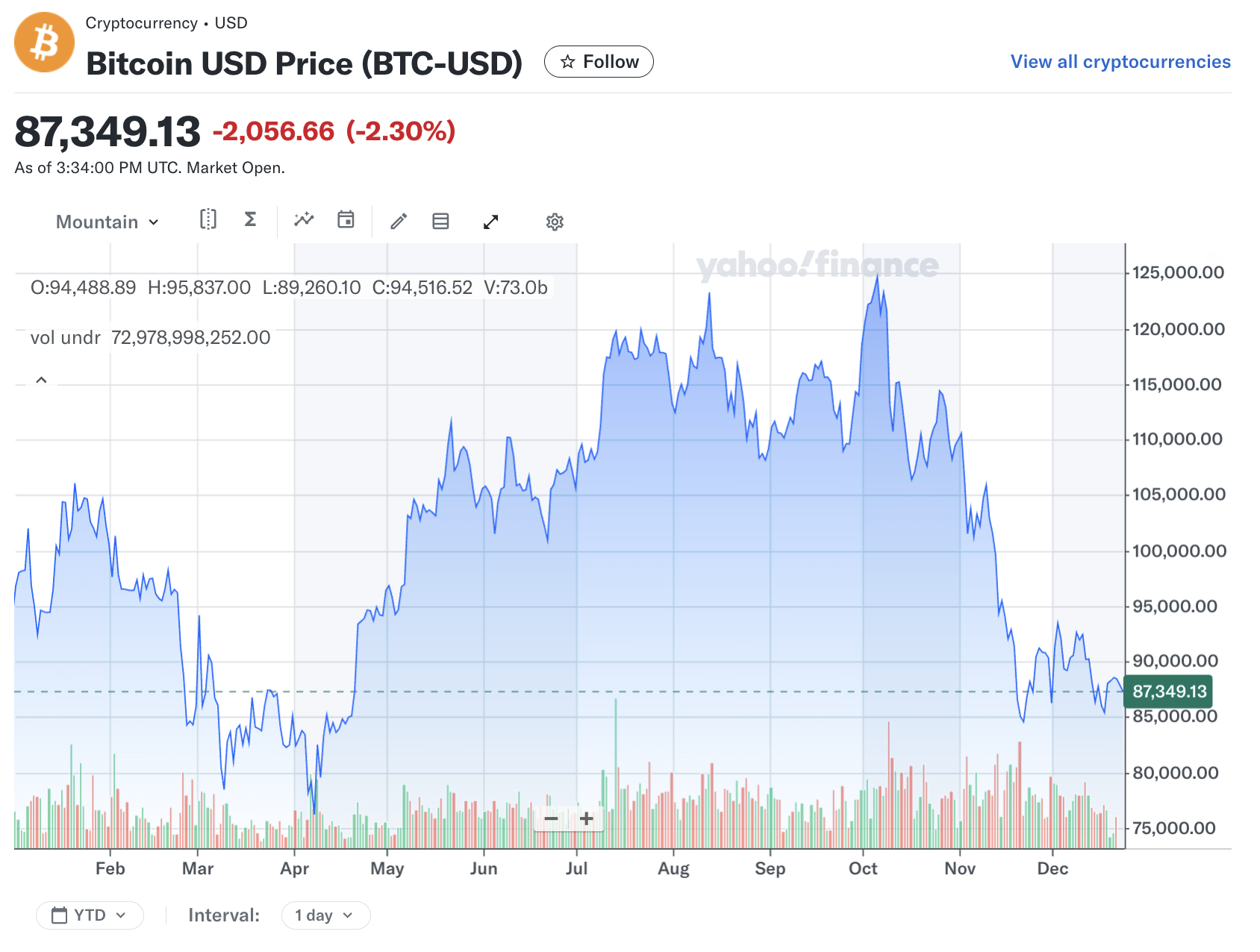
The current downturn heightens these concerns: After briefly surpassing $126,000 in October, Bitcoin has shed about 31% of its peak value and now trades just above $86,700. Some analysts warn of further resets to lower valuations, potentially signaling the onset of a multi-month or even year-long winter. In such an environment, is now the time to be putting money into Bitcoin?
Why Bitcoin Remains a Strong Long-Term Pick
Despite short-term turbulence, Bitcoin's fundamentals position it as a compelling addition to a diversified portfolio. Institutional adoption has accelerated dramatically in 2025, with spot Bitcoin ETFs drawing billions in inflows – BlackRock's iShares Bitcoin Trust (IBIT) alone surpassing $68 billion in assets under management. Major players like pension funds, universities such as Harvard, and corporations continue to accumulate BTC, viewing it as a hedge against inflation and a store of value in an era of fiat uncertainty.
(Click on image to enlarge)
Favorable policy actions further make the case. The U.S. administration's pro-crypto stance, including executive orders for regulatory clarity and rescinding restrictive rules like SAB 121, has unlocked trillions in potential institutional capital. Globally, countries such as El Salvador have made Bitcoin legal tender, while others are exploring BTC reserves, reinforcing its status as a legitimate asset class.
On-chain metrics also support long-term optimism: Bitcoin's hash rate remains near all-time highs, signaling robust network security and miner confidence. The upcoming halving cycle – next scheduled for 2028 – will again cut new supply issuance in half, historically acting as a powerful catalyst for price appreciation. Meanwhile, Bitcoin's Lightning Network and layer-2 solutions continue to improve scalability and transaction efficiency, expanding real-world use cases.
Moreover, growing integration into traditional finance – through tokenized securities, custody solutions by major banks, and Bitcoin-backed lending products – further cements its role in the evolving global financial system. Historical data shows that every major correction has been followed by new all-time highs, rewarding patient holders who weather the storm.
Bitcoin's role as "digital gold" shines in the long term, with historical cycles showing recovery and new highs after corrections. As part of a well-diversified portfolio – alongside stocks, bonds, real estate, and other assets – it offers uncorrelated returns and protection against traditional market risks.
Bottom Line
Bitcoin could indeed face a prolonged decline, with the broader crypto market likely shrinking alongside it due to Bitcoin's dominance and influence. As goes Bitcoin, so goes the crypto market – its breadth and depth of adoption make it the anchor. Yet this underscores why Bitcoin should never be one's sole investment; spreading risk across a wide selection of assets is essential.
Because no one can predict the exact turnaround, regularly adding to Bitcoin positions through dollar-cost averaging – similar to strategies used with stocks – offers a disciplined approach. It ensures buying more when prices are low and less when they're high, potentially improving overall returns over time.
More By This Author:
Here's Why Nebius Is Suddenly A Growth Stock AgainIntuitive Machines Stock Heads To The Moon. Time To Hop Aboard?
Can SoFi Technologies Really Become A $1 Trillion Stock?



Comments
Log in or sign up to join the conversation.