


Image Source: Pixabay
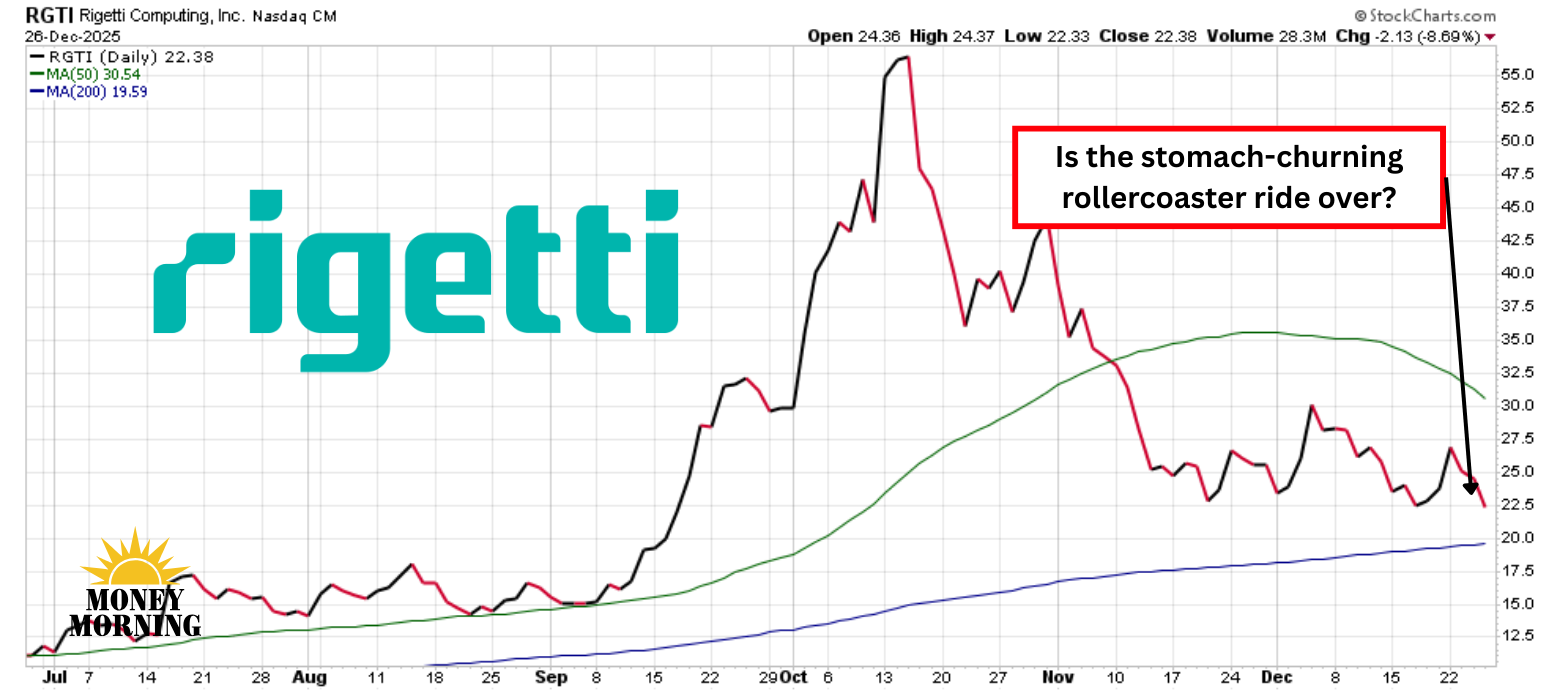
Quantum computing exploded onto the investment scene in late 2024, igniting a frenzy that propelled pure-play stocks to astronomical heights. Rigetti Computing (RGTI) emerged as one of the biggest beneficiaries, with shares rocketing over 800% in a single month amid breakthrough announcements and surging optimism. Over the past three years, RGTI has delivered staggering gains of more than 3,200%, and at its peak, the stock was up over 8,200% from historic lows. Early investors have undeniably struck a rich motherlode, turning modest bets into life-changing wealth.
Yet for those new to the quantum sector, the ride has been brutal. On Friday, RGTI tumbled almost 9% to close 61% below its October high of $58, erasing much of the year's explosive gains. This pullback mirrors broader pain across quantum stocks like IonQ (IONQ) and D-Wave (QBTS), which have also plunged sharply after similar booms and busts.
With the entire sector reeling, investors need to ask: Is the hype surrounding quantum computing finally over – and is RGTI still a buy?
(Click on image to enlarge)
Why Does Quantum Computing Even Matter?
Quantum computing harnesses principles of quantum mechanics, using qubits that can exist in multiple states simultaneously (superposition) and become entangled. Unlike classical bits limited to 0 or 1, this enables quantum systems to explore vast solutions exponentially faster for certain problems.
The potential is transformative: faster drug discovery by simulating molecules, optimized financial models, unbreakable encryption breakthroughs, and efficient logistics routing. Quantum could reshape industries from pharmaceuticals to materials science, unlocking solutions classical computers can't touch in reasonable time.
Recent advances underscore the progress. Rigetti launched its 84-qubit Ankaa-3 system in late 2025, achieving 99.5% median two-qubit gate fidelity – a key accuracy milestone. The company secured multimillion-dollar contracts, including Air Force Research Laboratory funding for quantum networking and sales of Novera quantum processors. Roadmap targets include a 100+ qubit system by the end of the year (time is running out, though) and over 1,000 qubits by 2027.
The Daunting Challenges Ahead
Despite hitting milestones, quantum computing remains in its infancy and fraught with hurdles. Qubits are fragile, prone to errors from noise, requiring extreme cooling and sophisticated error correction. Scaling to useful, fault-tolerant systems demands thousands or millions of logical qubits – far beyond today's noisy intermediate-scale quantum (NISQ) era.
Pure-plays like Rigetti report minimal revenue of $1.9 million in the third quarter and just $5.2 million year-to-date against heavy losses of $201 million and a significant cash burn. That forces it to rely on dilutive fundraising.
As giants like IBM (IBM), Google, and Amazon (AMZN) pour billions into quantum – with profitable core businesses providing financial backing – smaller firms face intensifying competition. These established players boast superior resources, talent, and ecosystems, making it harder for speculative entrants to capture market share.
Bottom Line
Quantum computing hype isn't finished as the technology's long-term potential remains immense, and Rigetti's technical strides suggest it may survive. However, investors shouldn't chase these stocks expecting early-investor windfalls. These are money-losing ventures in a brutally challenging field that will encounter more obstacles as commercialization nears.
RGTI stock suits only the most risk-tolerant, and even then, as a tiny sliver of a diversified portfolio's speculative allocation.
More By This Author:
Everyone Is Talking About Silver, But Don't Forget Gold
These 3 High-Flying Stocks Could Crash Hardest If The AI Bubble Pops
3 Fantastic Dividend Growth Stocks To Buy And Hold Forever


Comments
Log in or sign up to join the conversation.