


Image Source: Pixabay
Welcome to this week’s Market Wrap Podcast, I’m Mike Gleason.
Coming up don’t miss another incredible interview with Greg Weldon of Weldon Financial, a renowned commodities trader with over 40 years of experience. Greg shares his valuable insights on the recent move in silver over the last month or so that has seen the white metal bust through the key $54 level right after Thanksgiving and move all the way up to $80 today. Greg talks about the possibility of seeing silver climb further up $100 or if it could possibly fall back down to $50.
He weighs in on that, the situation with the shortages that have been developing in all the white metals – silver and the PGMs, de-dollarization, the potential weaponization of commodities and energy and a whole lot more during this explosive interview.
So, be sure to stick around for Mike Maharrey’s conversation with one of our very favorite guests, Greg Weldon, coming up after this week’s market update. And if you enjoy this material, please do us a favor and like and subscribe to this podcast wherever you consume this content.
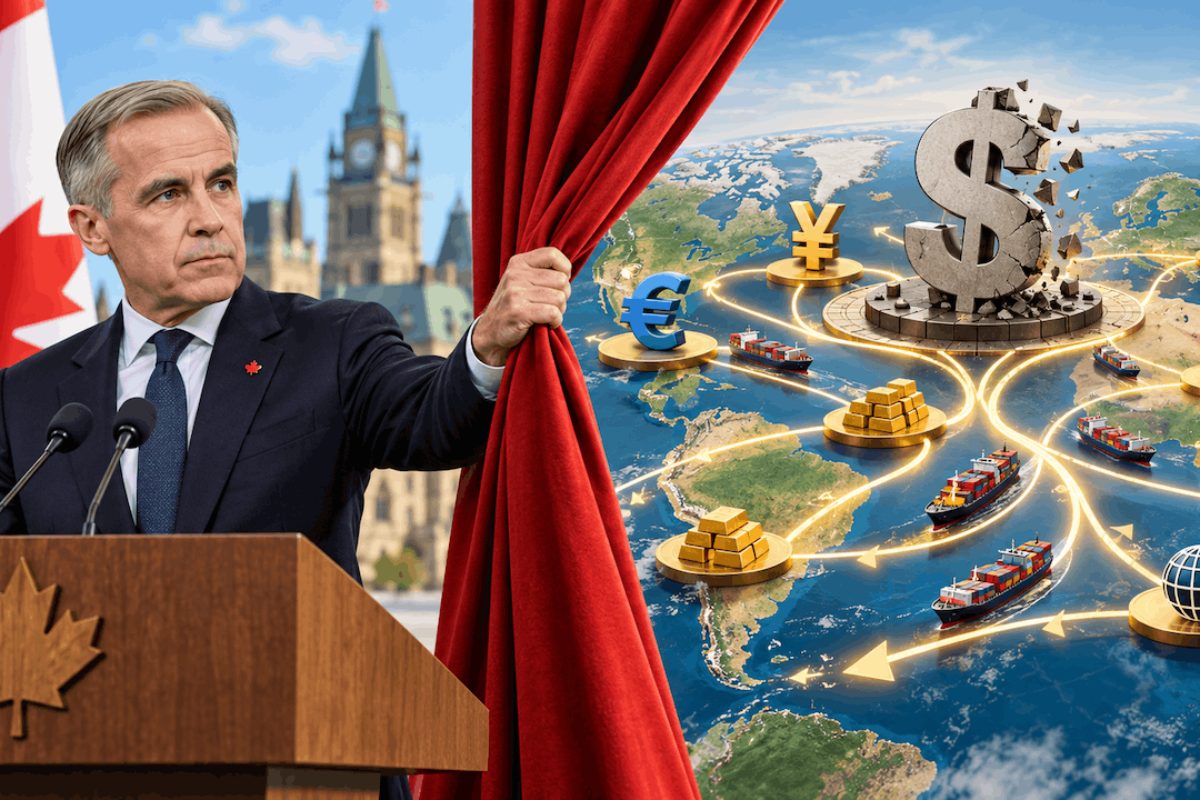
Silver now finds itself at the center of a geopolitical wrestling match over critical elements.
In what is clearly an effort to control the market, China recently announced export controls on silver. This could exacerbate global supply shortages already creating a significant silver squeeze.
Under the policy that took effect on January 1st, only large, licensed, state-approved companies with an annual silver production capacity of 80 tonnes and a credit line exceeding $30 million can export silver from the country. According to analysts, the rules will lock hundreds of small and mid-sized exporters out of the system. These smaller firms are key suppliers to industrial users and silver refiners around the world.
The government recently released a list of 44 companies approved to export silver under the new rules. According to CNBC, a Chinese state news source quoted an unnamed industry insider who said the policy elevates silver from an ordinary commodity to a strategic material, placing its export controls on the same regulatory footing as rare earth metals.
The U.S. also recognizes the growing importance of silver. The U.S. Geological Survey recently designated silver a “critical mineral.” The USGS critical mineral list was established in 2017, and it guides federal strategy, investment, and mine permitting decisions.
Along with silver, the Chinese government slapped export restrictions on tungsten and antimony, elements critical in defense technologies.
Export controls are a standard move in China’s geopolitical playbook. The Chinese government has used similar rules to control the market for other rare earth metals. Analyst Faysal Amin said China uses export controls “to secure domestic industrial advantage and global pricing power.”
China ranks second in global silver mine production, but the Chinese dominate the silver market through their massive refining capacity. The country controls 60 to 70 percent of the world’s refined silver supply.
According to the London Bullion Market Association, China is home to 27 accredited silver refineries. The second largest number of refineries is in Japan, with only 13.
China’s huge refining capacity effectively makes the country the gatekeeper of the refined silver supply -- much like the communist nation previously did with rare earths.
The West had escaped the rare earth noose by ramping up mining of these metals. But that’s easier said than done when it comes to silver. Even with higher prices, analysts say it will take years for silver production to rise to the level of demand.
Globally, mine output has sagged since peaking in 2016.
Metals Focus forecasts that while we will see record silver prices over the next five years, mine supply growth is likely to remain modest, with only minimal increases globally.
Why won’t silver production ramp up to meet the demand and take advantage of these higher prices? Well, silver is price inelastic because more than half of silver is mined as a byproduct of base metal operations.
About 28 percent of the silver supply is derived from primary silver mines, where production is more tightly tied to price. But silver mines face their own challenges, including declining ore grades and rapidly rising mining costs.
U.S. silver mine output was up about 6 percent in 2024 at around 1,100 tonnes. However, U.S. mine output has also been flat in recent years. And flat mine production is exacerbating tight supplies.
Silver demand has outstripped supply for four straight years, and the Silver Institute projects a fifth straight supply deficit this year.
It takes 10 to 20 years before an ounce of metal is mined from a newly discovered silver deposit.
Meanwhile, it's doubtful that copper can replace silver in critical tech applications, such as solar energy. While engineers have proven copper can replace silver in solar panels, that doesn’t mean you’re going to see copper-infused solar farms tomorrow.
In an editorial published by MarketWatch, R360 founder Charlie Garcia wrote that silver would need to be well over $134 an ounce before we see significant demand destruction in the solar sector.
So why is China seeking to corner the silver market? It’s a matter of economic dominance.
And don’t forget that the defense industry is also heavily dependent on silver. There are no hard figures on how much silver is used in defense applications due to the secretive nature of the industry.
Garcia pointed out that China's new import restrictions send a very important message to the West.
“If you want to build the future of energy, you will need to negotiate with Beijing. Maybe your silver shipment will be approved. Maybe there will be delays. Maybe you’ll find yourself suddenly interested in Chinese joint ventures and technology transfers. Funny how that works. … China just told us something important, and it wasn’t complicated. Silver is no longer a commodity. It’s a strategic asset in a resource war that most Americans don’t know is being fought.”
Given all that's unfolding here right now, it's not a bad idea to hold on to some physical silver -- that's for sure.
Well, before we get to this week’s fantastic interview let’s take a look at the once again highly volatile trading action for the week.
Gold is up about $150 or 3.5% to check in at $4,498. Silver is up more than $6 an ounce or an even 9.0% to trade at $80.15 an ounce as of this Friday midday recording. We’ll see if it can hold onto the $80 level in terms of a weekly closing price – something we nearly saw two weeks ago but just missed.
As for the PGMs, platinum checks in at $2,297 an ounce, up 6.6% since last Friday’s close. And finally, palladium is biggest winner among the metals for the week so far, gaining 11.2% to trade at $1,843.
Well now, for more on the recent action in metals prices and a whole lot more, let’s get right to our exclusive interview.
Mike Maharrey: Greetings, I'm Mike Mering, and I'm thrilled to be joined once again by Greg Weldon. Greg brings over 40 years of experience starting back in the 1980s on the trading floor of the comics in the gold and silver pits. He's worked as an institutional features broker to being a hedge fund manager, a CTA. And for the last 25 years, he's been producing fantastic independent global macro market research. He's also created a really cool gold trading bootcamp to help you better become or to become a better commodities trader. So, I'll let him tell you a little bit about that as we go through our chat. How are you doing today, Greg?
Greg Weldon: I'm doing beautiful, Michael. How about yourself?
Mike Maharrey: I'm doing fantastic and it's great to have you on the show. Always enjoy chatting with you.
Greg Weldon: My pleasure.
Mike Maharrey: I was looking, the last time that you were on was in mid-October. And at that point, gold had just pushed above $4,300 and silver was breaking 54 bucks. And today gold's about $150 higher and silver has soared close to $80. So, the first question I want to ask you is, were you surprised that we had such a fast runup of silver in the time since we've last spoken?
Greg Weldon: No, not at all. In fact, if you recall what I said was back when we talked the previous time before that, that silver was trading, really had trouble getting through $36.50. It was trading down to $33.60 was going to break out and fail… break out and fail. And I said, "I'll tell you, Mike, if it gets above $36.50, you get a daily close above that. It's not a question of whether you go to 50 bucks or not. It's a question of how fast does it happen?" And if you also recall, I did my February 14th Valentine's Day special in 2025 for my clients was the Silver Squeeze. And it's like, well, now of course there's a lot of talk about Silver Squeeze. And it's kind of funny because what I said is, "Look, I've been waiting 42 years for the silver squeeze." The silver squeeze was a real thing back in the 80s.
We had just come off the Hunt Brothers cornering the market, right? So, this was not new. And certainly the Boyan Banks over the years had built up these paper short positions. This is a well-known, well disseminated thing that is a long time. And you get kind of immune to it when you hear it because it's not happening. But you also then saw, and I always kind of say this, it's like, look, a lot of times these secular changes take place over time. And it takes, to me, stuff's underground. And when you dig for data, you're getting that stuff that is below ground that another one's seeing. It takes this information to rise above the ground to where everyone can see it. And it's like an epiphany to people, even though it's been growing and developing for some time. So what I like to do is dig down and find it before other people are seeing it.
Now, in that context, this really gets back to even kind of the BRICS currency, frankly, and when they were made gold, a tier one asset and so on and so forth. And all of a sudden you had this situation where global central banks not only were selling treasuries, taking dollars, buying gold, and then taking delivery of the gold because in this context, they would need to have it on hand in possession of them in their country if you're going to do a fractally backed some kind of trade currency, which will ultimately come for sure. We can talk about that at length too. But back to your question is that in that context, you know silver was in the wings waiting to follow that same path. We talked about the ratios. We talked about once the technical levels got violated, you could go much higher. And so when this kind of all played out, no, it was not a surprise at all.
And while you might say, "Well, a lot of people out there have been pounding the table, silver squeeze, silver squeezing. How does this keep happening?" No, for literally 30 years. It's like you waited in the weeds and when you saw the movement, that's when you pounce. And that's what we did. And that's resulted in a really good performance year for us in 2025.
Mike Maharrey: Yeah, absolutely. And it's interesting because when the mainstream talks about the silver squeeze, and of course they can't ignore it now, but it tends to be framed as kind of this, we have this movement of metal and it's not in the right place. So they talk about, "Well, there's not enough metal in London and we need to move it from New York to London." That's kind of what we're hearing. But my question for you is, is there a real shortage of actual metal, not just a matter of it's in the wrong place, but is there a shortage of metal that is kind of driving this?
Greg Weldon: Absolutely. And you mentioned the bootcamp. Thank you for that earlier. I mean, I have a whole chapter devoted to this and we give the numbers. What is the warehouse inventories here, there, everywhere? You saw a movement out of London into the US when you were worried about tariffs, you had the big premiums and now it's kind of flip-flopped. You've had big shipments into India. Why? Because the Indian rupee makes a new all- time low almost every single day. And when you look at ... If you were to price out, and I did this, if you had to move in the dollar from here that we've just had in the Indian rupee over the last five years, silver would be at $229.50 in US dollars. These are the kind of ways you kind of get projections to where silver might go. And one thing I've always do in this business is never ... I don't make predictions.
We have projected levels, but it's not predictions because you will always sell yourself short in your predictions in the biggest moves where you need to have the entire bid paid to you to cover up all the losses. And that's how we do what we do. But yeah, I would say when you put all the numbers together in terms of supply and demand, in terms of warehouse inventories, in terms of China's control of many commodities, Michael, not just silver, not just rare earth elements, rare earth oxides, this is the thing that 54% of global wheat inventories, you see some of the corn inventories going down, cotton inventory. You see some of the things they need to buy, which is why I think they're allowing their currency to strengthen a little bit because it knocks down the price of the things they need to buy in renminbi.
But yes, overall, there is not enough inventory to cover demand, and you could look at it in various ways. The ETFs. And again, this is not going to happen. So you're not going to get to the point where you are literally don't have enough, but frankly, you don't have enough when you just look at the math. ETFs would eat up the inventory and then some. All right. So if everyone took delivery and ETFs, if you took delivery on the Comex, you would eat up the eligible inventories in a snap, let alone ultimately all the inventories. So it depends on what demand does from here. And the way we see this and the way I see the dollar and the currency markets playing out, we talk about this also, and I think we had some discussion offline at some point with the Gleasons even too. And they've been way ahead of this too, Stefan and Michael Gleason.
It's like, look, when you're talking about where this thing could go, it seems to me, having seen this, all right, in 1971, I was following the markets. My next door neighbor's father was younger, but I always had a fascination with the markets. And I remember when they closed the gold window and what happened, gold went from $35 had been a fixed price. You could even legally own it for a while. And it went immediately to $110, $140, and then ultimately to $300. I have no problem seeing silver do the same exact thing. So, you got to really open to the upside. There is not enough supply to meet demand if demand wanted delivery of the silver, you could be a lot higher in silver. And then you start talking, well, is this the LME nickel thing where you had a big Chinese producer sold you forward like 20 years of his production, couldn't deliver when people wanted that nickel.
And that's when the market ran up to $100,000 a ton on the LME. From $20,000 to $100,000, they closed the market for 10 days and reset the price at $27,000 and wiped out all the trades. So you have to be careful too into what might happen. If you get silver skyrocket, you get strategic metal, China shuts down the exports of silver. This could get really crazy.
Mike Maharrey: Yeah. I'm going to ask you this. You've really kind of answered it, but I want to put it in the starkest terms so people can hear because every time silver corrects, and it's very volatile and it always has been volatile and it's certainly extremely volatile right now. We saw in the last correction, it fell from just above $80 back down to close to $70. But every time that happens, we hear, "Oh, silver is in a bubble, the bubble's popped, we're going back to $50, we're going back to $30." You've heard the punditry. So, in your view, are we more likely to see $50 silver or $100 silver this year?
Greg Weldon: How about both.
Mike Maharrey: Yeah, I could see it.
Greg Weldon: I really could see both. Fifty first and then $100, or if it gets to $100, it's not going back to $50. But I would answer the question from a bigger picture perspective when we say, is it a bubble on silver? Hey, I've been around the silver market and I'm not a gold bug and we do everything here. Currency is going to be great opportunities. Food commodity is going to be huge in the future, all these kinds of things. But what I can say is this is not a bubble because in 2008, they printed enough money to where US public debt was higher than GDP. Okay? That's what's changed everything. This is such a much bigger picture than silver, bubble, even supply demand. This is a thing about the global move away from the dollar, about Donald Trump pushing people away from the dollar about the global world war.
I call it World War X. And it discussed this also in the bootcamp. And it's like, what are the risks going forward in 2026? Well, the risk is you already have a world war going on and people don't really even realize it because it's a world war for resources, commodities, energy, food, right, natural resources, REEs, REOs, all these things, strategic metals. It's been going on since 2018 when China opened up the Shanghai crude off Futures Exchange, took the Dubai OPEC grade crude, priced it in remnant beat, got Russia to back it with the Earl's great crude, and that changed everything as well. So, you have the debt side of the US and our indebtedness, and not only that, but you throw in household debt, you're talking 56 trillion in debt. Now, what's even worse about that, and again, saying, is this a bubble and it's just about silver?
No, it is not. It's about the bigger picture – the dollar, the credibility of the US, which is kind of eroding even though militarily obviously reflects our muscle and maybe for good cause, it's just kind of the way we've gone about doing this has really pushed a lot of people away. And maybe that's not a bad thing, it probably would've happened anyway. But when you come back down to it, I mean, this is a dynamic where you have 36 trillion in public debt. Well, that's the people's debt. It's not government debt, it's our debt. And you have 30 trillion of it, they sold to the public. It's owned by the public and they are bidding to pay us back in a dollar that's depreciated 97% since 1985 and could depreciate 97% and 97% again and 97% again because that's what they'll have to do. So that's what's changed and that's what makes all of these things potentially much more expensive in dollar terms.
And you have this moving gold that has taken place without a major breakdown to dollar. It is down 9% against certain currencies, 10, 11 percent against certain currencies over the last 52 weeks. But the long term uptrend that goes back to the 2008, 2011 double bottom at 70 and the dollar index has not yet been violated and it's about to be violated, the five year average about to be violated. This is after a perfect correction to the 2022 high and the entire EUA pattern of bear market dollar that goes all the way back to 1976. So when you talk about the big picture technical melding with the fundamental monetary macro dynamic of debt here in the US, that's why it's not a bubble and it's not going to ever really go back to $35, I don't think, unless you have a complete collapse. But even then, that's a collapse in the dollar where if you want to buy food and you want to start talking real gloom and doom stuff, which I'm very optimistic on life and spirituality and everything, but it comes to the dollar and kind of this Ponzi scheme of US debt, it's a very sour picture looking forward.
Mike Maharrey: Yeah. You're talking about the debt black hole, which is a term that you coined that I've been hammering on and I'm trying to get it to ... I want it to be viral because it's such a great image. When you understand the physics of a black hole and how it impacts everything around it in the solar system, and what you're saying is absolutely true. So I've actually started using it as a hashtag every now and then when I post stuff on X. So I love that analogy. And I do give you credit, by the way. So let's talk a little bit about the world war scenario because I think you're onto something really important here that I think people are keenly aware of the hot warfare, right? Everybody knows that the US went in and deposed Maduro and things like that. But one of the things that I think is really interesting, and it got some play in the media, but maybe not as much as it should be. And that's the recent move by China to levy import restrictions or export restrictions on silver. And I'm interested in what your take on this is. What do you think the Chinese are trying to do with this?
Greg Weldon: That's one weapon in a much bigger war. And what I would say is the thing to pay attention to most is the next evolution of this that you're probably going to see this year. And that is to look at what we're doing with Maduro and to understand, of course, this is the same thing. It's about the oil, it's about the resources, but that's only a small part of the bigger picture already happening when you start to talk about Greenland, when you start to talk about REEs, rare earth elements and REOs, rare earth oxides, when you start to talk about we have one mine in the US that does this, we have no ... The upstream downstream dynamic is so convoluted as to we don't have any separation, any concentration, any refinement, any products being made with these things. So when you put all of those things together, we are 97% reliant on China for that.
When you look at the dynamic around, okay, we're going to take Greenland and this whole thing around energy, oil in Venezuela, Greenland, rare earth elements in particular, but also there's energy there too. And it's, well, you look at, they have 1.5 million tons in rare earths under the ice and Greenland, allegedly, from what I read. I mean, from what I understand, it's pretty generally accepted. We currently have 2.3 million tons. China and Russia between them have 63.5 million tons. So 63 versus even if we get Greenland, less than four. All right. So the divergence is so wide, it's not even funny. Here's the issue, the Arctic. And the Arctic as a whole is much bigger in this. Already Russia has built military bases. Already the US has installations up there. When you talk about going over the North Bowl between Russia, Canada, the US, you start to really get sticky.
China has laid claims that they are an Arctic nation, that part of their nation extends to the Arctic and they have certain rights there. And allegedly, and I still can't get anyone to confirm or deny whether this is actually true, but I have read on multiple decent sources that they have the Arctic, it's called the Arctic Institute is a great source of information for this. I did a lot of reading of some of the white papers just in the last few weeks when this came to my attention that one of the treaties in place between the Arctic seven, China, US, Denmark, Finland, Sweden, so on and so forth, UK. The agreement on cooperation in the Arctic ends in 2026 and already what the prediction is from the Arctic Institute is the UN of all this, whatever you want to call it, is saying that they are their fearful cooperation is going to turn into competition and that it already has.
So, this is so much bigger than all the little pieces. And this is why I love doing what I do, which is connect the dots to create the total top down picture. And then you have the themes of what you think's going to happen in the markets. When you see it happen, you trade it kind of technically and from a risk management standpoint. And thank God I love my job because I spend a hell of a lot of time at my desk, as you could probably tell.
Mike Maharrey: Yeah. Well, it takes a lot of time because there's so much information to parse out, but you do a fantastic job of that. And that's one of the things I appreciate about talking to you is that broad macro perspective, because I think it's really important, especially in the world we live in today where everything seems to be driven by the, I call it the 32nd news cycle of X. So let's talk real quick about platinum as well, because that's another metal that's made a huge platinum as well. And in fact, all of the metals have done well in 2025, but what do you make of the huge move in platinum? And is it kind of basically the same situation that macro set up as we're seeing with silver? And what's your outlook for the platinum group metals as we move forward into the next year?
Greg Weldon: Yeah, I would say yes and no to the same situation. And what I would say is we made more money for our clients in platinum and palladium than we did in gold and silver, frankly, because it had a much bigger move much more quickly and you were able to lever it up because the price was still so low. So the risk reward was phenomenal. So we made a killing. I put a whole bunch of pieces out on platinum back, I don't remember when it was, April, May, June, maybe. Talking about the supply demand fundamentals, which turned positive for platinum for sure, less so for palladium. Platinum will follow. It did. It really took a while for platinum to get going. But yes, and I thought that when you were talking about a gold platinum, platinum is a $2,000 discount, it got deeper. It went to $2,400 something.
That started perking my interest. And then you're talking about having a fourth year of annual supply deficit, meaning you're not producing as much as you're consuming. So, now the balance is shrinking, the overall inventories are shrinking, and now you have an issue with platinum. And when you start to see the South African platinum stocks start to perk up, that was a real key tell. So we jumped all over that. Having said that, from here, it isn't the same story as gold and silver. It is not the monetary metal that they are.
Does have more linkage to the industrial side. And frankly, the industrial side, you look at forward science has a lot to do with gold and silver. So, gold and silver are both, but that's not true. It's gold and silver are monetary. They're supply demand fundamental and they're technological demand down the road, especially copper, as you're aware. But when you look at platinum and play, it's just not true, especially that's why palladium's lagged when you have EVs and stuff that some of the new technologies put palladium kind of out of business almost wouldn't go that far, but it was a good trade. I'm not one that's going to be buying a lot of platinum and palladium physically, if that's the game. It's more of a trading metal. I think the bulk of the easy money has been made there. We actually got back in on the long side, this is funny because we're kind of waiting.
We got out really well. And that's why I think 40 years of instincts versus these markets, which are so volatile, which if you're using trailing stops, you're leaving so much money on the table. So it's become more of an instinctual thing. I've seen these liquidation patterns so many times now, I kind of feel like I start to recognize them. We got it out really well. On the other side of the coin, the double A's Machete is we're waiting for another opportunity to get in, which we did yesterday, two days ago, and we got slammed right away. But that's the game, and that's why you have to really use strict risk reward mathematics in doing it the way we do it. But some of the platinum stocks, especially in South Africa, perform very well and their holds for sure.
Mike Maharrey: Yeah. So little bit of a pivot here, but I did want to touch on the mechanizations of the Federal Reserve. And I don't think this got nearly as much play as it should have, but I mean, in effect at the December meeting, they relaunched quantitative easing. Now, of course, they're not going to call it quantitative easing, but they're buying treasuries and they're creating money out of thin air to do it. And you can call it whatever you want to, that's quantitative easing. And so the effect is the same. And actually, I don't often brag about making predictions because I don't make a lot of predictions, but I did predict when they said that they were going to end quantitative tightening, that we were going to see a quick pivot back to quantitative easing, and that's exactly what happened. I'm curious of what you make of that. And would you agree with me that this is really just a symptom of the debt black hole? They simply can't hold monetary policy tight given the amount of debt.
Greg Weldon: Yeah. And the amount of liquidity even. So, it's one of those weirdo kind of oxymorons where you have a lot of liquidity, but you have all this debt, which requires the liquidity to service the debt and so on and so on and so on. It's really convoluted. Yeah. No, one of the things that I said at the beginning of 2025 was that the Fed would be forced to acquiesce to higher rates of inflation. We've had that conversation three or four times throughout the year. And we also said that you would have QE ultimately, and it would take, I thought 18 to 24 months and it came sooner. Of course, they lay it off as reserves and they need to have better balance.
Mike Maharrey: Right. Yeah.
Greg Weldon: To me, I'd say that's ... And that's a bunch of bull. You know why? Because the effective Fed funds rate has not moved out of bounds either way. So this is not an issue with that. You could talk about free reserves and you can talk about what they pay on reserves and maybe they stop paying all these different things, but it is still about, to me, the consumer, and I think that there's credibility to doing this in a stealth way too. So, I think the Fed has been too transparent under Fowl, and that goes back to 2018, again, another second way back to 2018, where the Fed published 11 white papers, defined R Star, which was the neutral rate, the new policy paradigm from Jerome Powell. Everything he said in 2008, he has done 100%. So I give him credit for that. As you and I have also discussed, he missed every single turning point.
He was late to the party every time. So that's his problem. But at the same time, I think going forward, the Fed is kind of screwed because you need growth to service the debt. Without the growth, you have a pancake, which leads to an immediate kind of collapse and almost a depression. They won't let that happen. And that means another 97% decline the dollar, not a 97% decline of the dollar. Oh, and so on and so forth, their perpetuity because that's what they can do. And really the time that the decision could have been made to go the other way, like organically to pay down debt, to have an organic growth in the economy was in 1990, ‘91. And since then, now in 2000, and then 2008 blew it out with the pandemic now, we're across the event horizon, which means you can't escape the gravitational pull of the debt black hole, how much propulsion you try and generate.
The propulsion is printing money. They will be doing this regularly going forward. And that's really the base case in my mind for gold because it means dollar depreciation. And when you talk about the level of, if you take the dollar index and you adjust it by the price of gold, pretty simple ratio, I call it the gold adjusted value because it's the purchasing power of the dollar index.
It is right now down by 40. It was down just recently on a rolling 12 month basis by 49%. The only other time it was there was back in 1981 when you had the huge inflation and everything. But every other time it's been below 40, it's led to a crisis. It's led to a recession. And we're there now and it really hasn't even started to have that kind of an impact yet, which is what makes it really scary for the stock market. On the other hand, the stock market, the best thing for stocks is the lower dollar. And right now the dollar is leading the stock market higher, lower dollar stock market higher as it did after the 2009 crisis, as it did throughout the period of QE, as it did right up until the last rally in stocks, which was AI related. That's the only time in the past 20 years that a lower dollar has not led the stock market higher.
So, that's happening, but as we say, how many times you and I even talked about this, the peso in Argentina makes a new high every day. It doesn't mean the value of the money is going up and keeping pace with the inflation. That's gold's job.
Mike Maharrey: Yeah, absolutely. I just had a great idea for a kind of editorial cartoon with the big debt black hole and the Starship enterprise representing the economy being sucked into it. I'm going to make that. So, before we go, I did want you to tell folks about the bootcamp that you've created. I looked through the chapters and stuff and it looks absolutely amazing. So, let folks know what you did and how it will benefit them.
Greg Weldon: Yeah. I kind of ask myself, what did I do? What have I done? It got out of control, man. Yeah. I started as my year ahead outlook, which I do every year for my clients. And it just turned out to be the 20 year anniversary of me writing my book, Trading Bootcamp. And I said, why not do a reboot, see where we're at and everything and see some of the things I said. And I did that as a special for my customers about three, four weeks ago. And I said, "Look, this is actually more pertinent now than it was 20 years ago because this is about ... " I mean, the very first introduction that 50 years of macro monetary history is lesson one. What is lesson two? The debt black whole, the global debt bubble. So I mean, I give you all of that, all of the top down macro and it's 12 videos, 12 lessons.
It's like a masterclass I did myself and it didn't start out that way. I really didn't. And then I said, "Look, I got to include everything. I think this to be as good as it can be because the goal is we're selling it really cheaply, 29.95, which is ridiculously cheap, frankly, given my business and our business." But at this point, it's really about helping people help themselves to deal with what's coming next. So lay out what we think is coming next, lay at the situation macro. Then we talk about how the different ways you can invest in the precious metals, the mining shares, the ETFs, physical metals, bars, coins, the whole nine yards. If it's futures, then we give a whole tutorial or portfolio stocks on trading, the psychology of trading, how I manage my own risk. I use my own spreadsheets that I use for my own clients in showing you how you manage the risk and futures because futures is a hugely underutilized tool, but it's a very dangerous tool for most people that are not capitalized enough.
And if you don't know the math, you get slaughtered. And that's why it kind of has a bad rap, but it is the best way to trade these markets if you have enough capital. It really is because you can be diversified to the max. And again, coming down, you also have Lenina starting. It's one of the 2026 risk on the rise. That's the lesson 12. So you have two and a half hours of lessons and over 300 pages of charts. And it's really just even worth having the reference book from the charts that you can look at to see history. And then down the road, it's always fun to see what we said and where you are. So it's actually just my regular website, which is weldononline.com/bootcamp. And you can see the outline there. There's an introduction video and so on and so forth. But to me, I was pretty happy with how this came out.
And it's funny because my two or three day normal process of the year ahead outlook turned it to nine days. And luckily I just took the holiday and I recently had some, I was in the hospital and so on and so forth and so I was recuperating and it was a perfect time to get this out there. So, we welcome anyone to check that out on the website.
Mike Maharrey: And what did you say the price was again?
Greg Weldon: That's $29.95.
Mike Maharrey: Yeah, that's insane. I mean, when you really think about it, it's what, four trips to Starbucks and you're getting ... I mean, just having the access to the charts alone, I think would be worth that price.
Greg Weldon: We've sold stuff like this in the past for like $2,999.
Mike Maharrey: Yeah, absolutely.
Greg Weldon: But really, at this point in my career, it's not so much about making money off of this kind of thing. I'd rather make money off the trading we do and we're doing really well. This is about just trying to help people to the most part and having a little something left over for my family too.
Mike Maharrey: Well, you're doing fantastic work and I'm glad you're out there. And I have a guest that I interview you pretty much every week and don't tell anybody, but you're one of my favorites. Always enjoy your insights and just appreciate your general demeanor as well. So, thank you so much for coming on the show. Folks, do check out the bootcamp. I've had the opportunity to look through the table of contents and some of the information that it's fantastic, definitely worth checking out. So, do that. And Greg, we'll definitely have you back on here in the next couple of months. And who knows, we might be talking about $100 silver when we have you on the next stop.
Greg Weldon: Yeah. You guys have nailed it too. So I give you kudos to you and to Stefan and Mike Gleason and the rest of the crew that have done a really great job as to gloss into as well, Joshua. So thank you guys for doing what you do and I'm happy to contribute and be part of it.
Mike Maharrey: Thank you for being part of it and thank you for all of your wisdom. We'll talk to you again soon.
Greg Weldon: Yep. Yep. Take care now.
More By This Author:
2025 Was A Record Year For Gold ETFs
China Is Weaponizing Silver Using Export Restrictions
5 Signs The Fed Is Quietly Pivoting Again (Gold’s Next Move?)

Comments
Log in or sign up to join the conversation.