

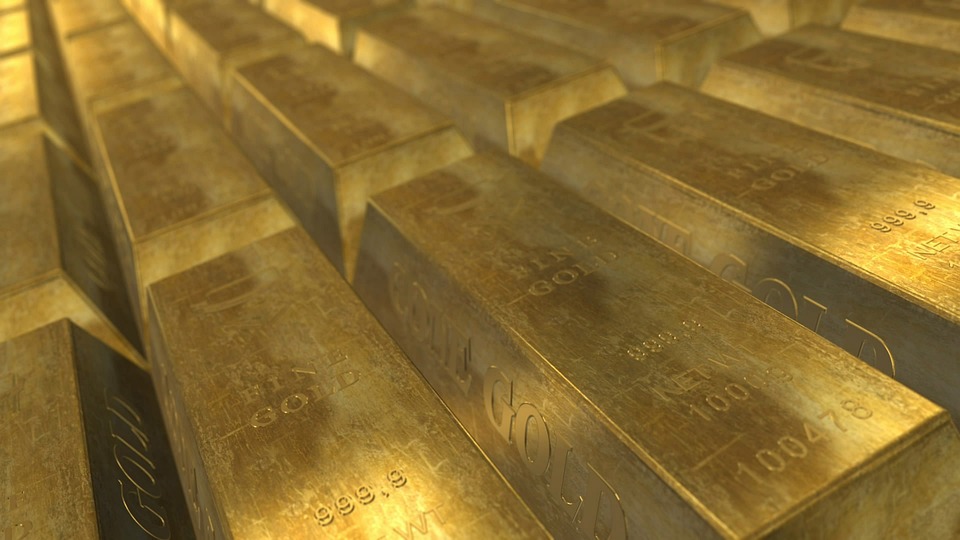
Image Source: Pixabay
Gold is on a historic run. After hitting more than 50 new all-time highs last year, the yellow metal has surged to a new all-time high above $5,000 an ounce, a once-unthinkable amount. It’s now doubled in value since September 2024.
Meanwhile, silver, the “poor man’s gold,” is not so poor any longer, having smashed through $110 an ounce.
As for where we go from here, analysts are making some bold forecasts. Goldmans Sachs just raised its year-end gold price target to $5,400 an ounce, citing strong demand from both institutional and retail buyers, and the London Bullion Market Association’s (LBMA) most recent survey reports bullish forecasts as high as $7,150.
If you recall, back in September, I projected that gold could hit $7,000 by the end of President Trump’s second term on the growing mountain of debt and a cornered Federal Reserve, and I still stand by that projection.
Is this the Perfect Storm?
As I see it, the surge in gold prices is the result of multiple tailwinds converging all at once, including monetary, fiscal, geopolitical and even psychological.
For one, we continue to have runaway government spending and ballooning national debt. The U.S. is on track to add trillions in new deficits over the next few years, and with debt levels approaching 125% of GDP, the government can’t afford significantly higher interest rates.
This puts the Fed between a rock and a hard place. Raising rates would risk a fiscal crisis, while cutting rates would risk an even weaker dollar, which is down about 10% since the start of Trump 2.0.
(Click on image to enlarge)

And speaking of the dollar, there’s a growing crisis of confidence in fiat currencies and central banks, especially the Fed. More on that later.
And finally, central banks around the world are buying gold at a historic pace. China, India, Turkey and others are stockpiling bullion and diversifying away from the dollar and U.S. Treasurys.
Fed Independence Under Fire
One of the most underappreciated forces driving gold’s meteoric rise right now is, I believe, the growing concern about the independence of the Fed.
President Trump has made no secret of his frustration with Fed Chair Jerome Powell. This year, that frustration has escalated into something more serious and potentially dangerous for the credibility of monetary policy.
In an unprecedented move, the Justice Department issued a criminal subpoena to the Fed, targeting Powell over alleged cost overruns in building renovations. The Fed chairman responded with a rare video statement, warning that the investigation could be a pretext to force rate cuts.
To my knowledge, this is the first time a sitting Fed Chair has essentially accused the White House of trying to strong-arm monetary policy.
This should raise some red flags. The whole point of an independent central bank is to ensure long-term economic stability, even when it’s politically inconvenient. When that independence is undermined, markets take note, as they are now.
Turkey’s Cautionary Tale
To understand where this road leads, look no further than Turkey.
Turkish President Recep Erdogan has systemically undermined his country’s central bank over the past decade, firing governors who refused to cut interest rates and replacing them with political loyalists. He embraced the unorthodox belief that higher, rather than lower, rates cause inflation, a theory that runs counter to centuries of economic history.
The result? Turkey’s inflation soared past 80%, the lira collapsed against the dollar and the economy teetered on the edge of catastrophe. Only after the damage was done did Erdogan finally reverse course, bringing in traditional leadership and allowing rates to be hiked (to exorbitant levels).

Like China and India, Turkey has a deep-seated affinity to gold, and when inflation began to rip, many Turkish investors increased their purchases of the metal as a hedge. It all added up! In October, when gold surpassed $4,000, the country’s central bank estimated that households’ total gold holdings had surged to $500 billion.
A Crisis of Confidence in the Dollar
It’s not just Turkey, though, and it’s not just individual investors.
Central banks from China to Switzerland have been steadily increasing their gold reserves. At the same time, they’re scaling back exposure to U.S. Treasuries and reducing dollar holdings.
This global diversification away from the greenback is part of a broader “debasement trade,” a strategy rooted in the belief that the dollar, like other fiat currencies, is losing its long-term value.
Gold has already surpassed U.S. Treasurys as a percent of total global foreign reserves. Is the dollar next?

Gold Stocks Still Have Room to Run
What if you want exposure to gold but don’t want the hassle of storing it? If you’ve been following my work over the years, you know I’m a big believer in gold mining stocks as a leveraged play on rising gold prices.
These companies tend to move two to three times faster than the metal itself—both on the upside and downside.
But what’s different about this cycle is that many miners have cleaned up their balance sheets, reduced debt and focused on shareholder returns. That means they’re in a stronger position than in past gold bull markets.
Also worth watching are royalty and streaming companies, like Wheaton Precious Metals, Franco-Nevada and OR Royalties (formerly Osisko). These firms generate revenue based on production and price, without the same operational risks as traditional miners. OR, for example, just posted 100% earnings growth, and analysts are forecasting more upside ahead.
Stay the Course
If you’ve been investing in gold or gold stocks, congratulations! You’ve been on the right side of history.
If you’re still on the sidelines, I wouldn’t wait for $6,000 to start participating.
We’re living through a period of profound global monetary transition. The cracks are starting to show in the fiat currency system, and investors are waking up to the need for real assets in their portfolios.
As I said back in September, $7,000 gold is no fantasy. I believe it’s a logical destination in a world where confidence in central banks is eroding, debts are exploding and governments are increasingly reaching for control.
More By This Author:
Trump’s Greenland Strategy Is Part Of The New Arctic Power Struggle
Defense Stocks Surge As The U.S. Reasserts Power In Latin America
Silver Surged 145 Percent In 2025 As Commodities Reasserted Themselves


Comments
Log in or sign up to join the conversation.