


The Netherlands has moved part of its gold reserves from North America to London. It has not bought more bullion. Instead, it has put more of its existing holdings closer to the world’s most liquid gold market, where they can be traded more quickly in a crisis
The Dutch central bank has moved around 86 tonnes of gold from New York and Ottawa to London. The aim, the bank said, is to improve its crisis preparedness.
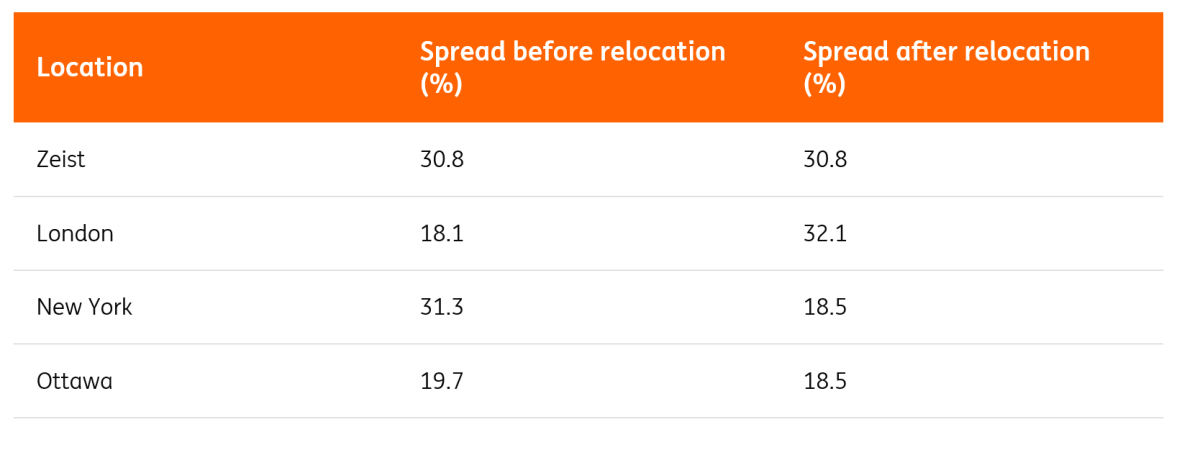
London’s share of Dutch gold reserves has risen from 18.1% to 32.1%. The shares held in New York and Ottawa have fallen to 18.5% each. Just under 31% remains in the Netherlands.
The country’s total gold reserves remain unchanged at 612.4 tonnes. Only their location and tradability have changed.
Central banks keep buying gold
The move comes after several years of strong central bank gold buying. Central banks added more than 1,000 tonnes a year between 2022 and 2024. Purchases slowed to around 863 tonnes in 2025 but remained historically high.
Demand is unlikely to disappear. In the World Gold Council’s latest survey, 89% of reserve managers expected global central bank gold holdings to increase over the following 12 months. A record 45% expected their own institution to buy more.
As official holdings grow, central banks need to think more carefully about how those reserves are managed. Gold may provide protection during a crisis. But it must also be accessible if that crisis arrives.
London makes gold easier to trade
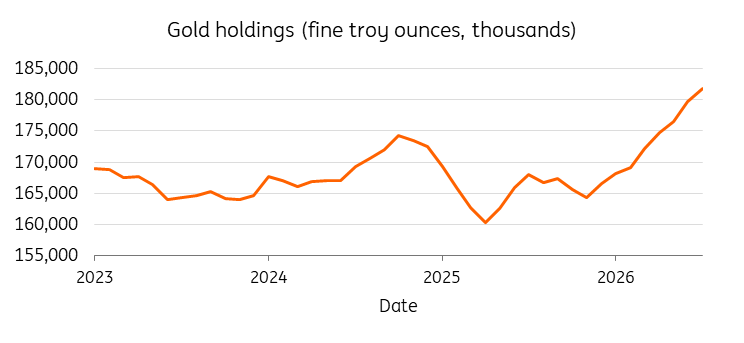
London is the world’s largest over-the-counter market for physical gold, and the Bank of England is one of the world’s largest gold custodians. Its vaults hold around 400,000 bars, or roughly 5,000 tonnes. Only the Federal Reserve Bank of New York holds more.
The gold belongs to foreign central banks, international organisations, and the UK government.
Gold stored there can change ownership without leaving the vault, provided both parties hold accounts at the Bank. This cuts the cost and risk of moving bullion.
The gold is held on an allocated basis, so customers retain ownership of specific bars. The Bank also accepts only bars that meet London Good Delivery standards; this makes them easier to sell or swap for foreign currency during periods of market stress.
Gold holdings at the Bank of England
Source: Bank of England, ING Research
DNB used two routes to move its gold
The Dutch central bank sold around 59 tonnes in New York and bought an equivalent amount in London. It also physically moved more than 27 tonnes from North America to the Netherlands. A similar amount of internationally tradable gold was then transferred from the Netherlands to London.
This meant the DNB did not have to transport the full 86 tonnes across the Atlantic, instead using a mix of gold sales and physical transfers.
For the DNB, the operation was also a useful dry run. The central bank now has experience of both replacing gold through the market and moving physical bars. That could prove useful if one route became unavailable during a crisis.
The Netherland redistributes its gold reserves
Share of total reserves before and after the relocation
Source: De Nederlandsche Bank, ING Research
Greater liquidity does not remove risk
Gold held at the Bank of England remains the property of the foreign central bank, but it is physically located in the UK and is therefore subject to UK jurisdiction.
For the Netherlands, the risk of losing access to its gold in London is remote. But the experience of Venezuela shows how foreign custody can become political.
Venezuela recently renewed its request for the return of around $4 billion of gold held at the Bank of England to help fund reconstruction after the 2026 earthquake. It has been unable to access the bullion since 2018 because of a dispute over which authority can represent its central bank. This case is exceptional – but it shows that the host country’s courts and political recognition decisions can affect access to reserves.
Bringing large amounts of gold home can also take time. It requires secure transport, insurance and suitable storage facilities. Domestic storage gives a country more direct control. It can, however, also make gold harder to sell or swap quickly.
Central banks are taking different paths
France has brought US-held gold back to Paris, while Serbia plans to keep its bullion domestically. The Netherlands has taken a different route. Although it repatriated some gold in 2014, it is now increasing the share held in London to gain quicker access to the market.
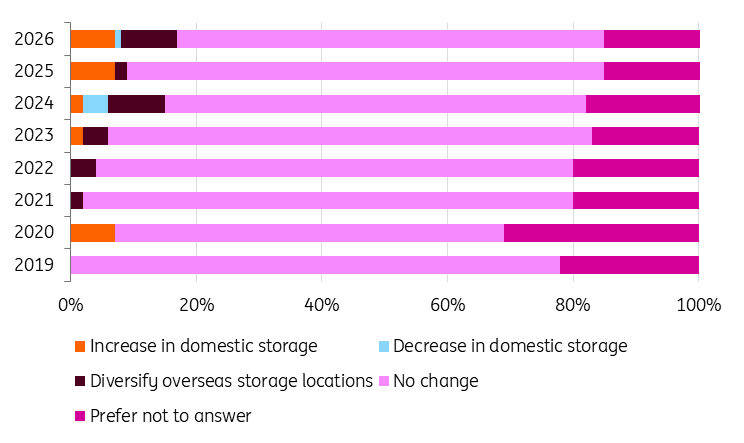
The World Gold Council survey suggests that further changes are planned. Over the next 12 months, 7% of respondents intend to increase domestic storage, while 9% plan to diversify their overseas storage locations.
The Bank of England remains the most widely used storage location outside domestic vaults.
More central banks are reconsidering where they store gold
Planned changes to custody arrangements over the next 12 months
Source: World Gold Council, ING Research
Limited price impact, but a clear signal
The move itself should have little direct impact on gold prices. Dutch reserves have not increased; selling in New York was largely offset by buying in London. But it reinforces gold's role in central banks' crisis planning.
The DNB is not buying more insurance. It is making sure the insurance it already owns can be used.



Comments
Log in or sign up to join the conversation.