

September core inflation was hotter than expected and this has reinforced the view that the Federal Reserve has more work to do to contain price pressures. The risks are skewed towards further policy tightening than we are expecting, but with wage growth looking so benign and the housing market in a weak state, the scope for an eventual reversal is high
Core inflation rises on shelter, energy, airfares and used vehicles
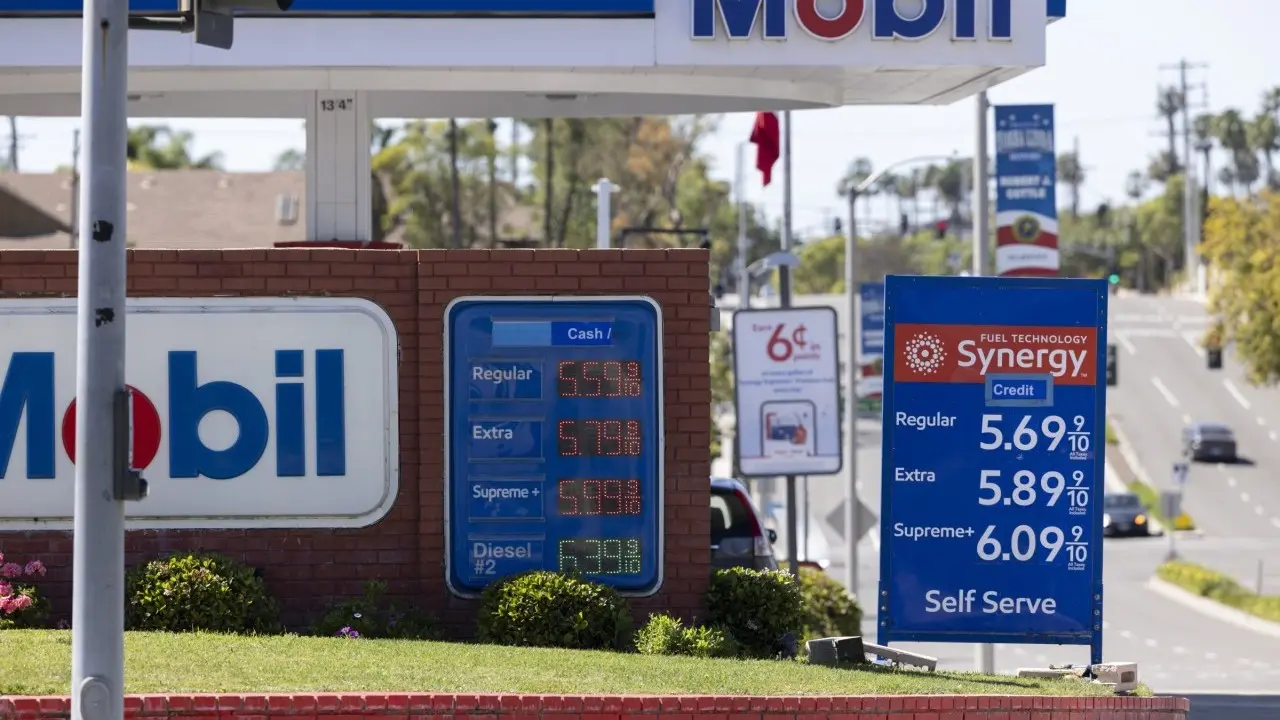
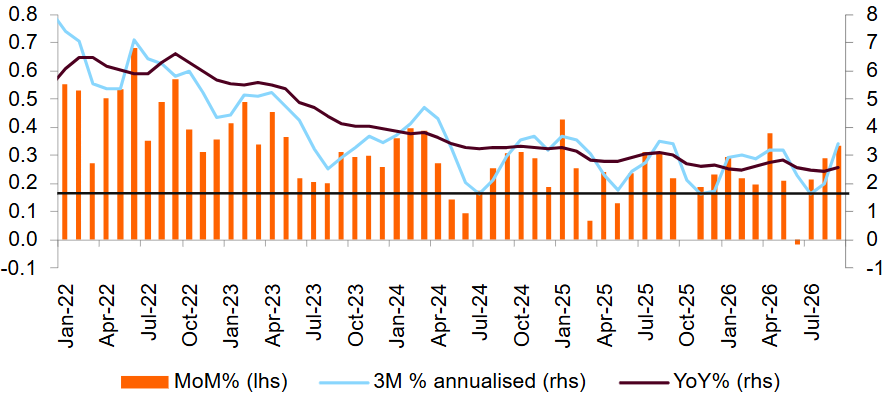
September headline CPI came in at 0.6%MoM/3.7%YoY, as expected, but core inflation was a touch hotter than anticipated, rising 0.3%MoM/2.6%YoY (0.2%/2.5% was the consensus forecast). We'd suggested we saw slight upside risk to the core figure, with the details showing the largest component by weight, shelter, coming in hotter at 0.4% month-on-month after three consecutive softer prints, averaging 0.2% MoM. Airline fares rose 1.2% MoM on higher fuel costs, while the shutdown of Spirit Airlines (SAVE) has removed competition. Meanwhile, used vehicles rose 0.7%, recreation up 0.5%, and a 9.1% MoM jump in gasoline prices led the headline index higher. There are pockets of softer price gains, such as food (0.0%), medical care (+0.1%), and education & communication (0.2%), but as the chart below shows, core inflation continues to track too high for comfort, with the MoM rates (the blue bars) trending well ahead of the 0.17% MoM black line that we need to average to bring the annual inflation rate down to 2% over time.
US core inflation metrics
Risks of additional rate hikes remains high
In aggregate, it probably isn't quite strong enough to push the Federal Reserve to hike again in October given the recent run of comments from officials, who suggest they are in no hurry to hike after September's 25bp move. Nonetheless, markets have moved sharply with futures contracts putting a 45% chance of an October hike, up from around 20% just ahead of the data.
In terms of the outlook for inflation, much hinges on what happens with the Strait of Hormuz. Refined fuel prices continue to rise and run the risk of feeding through into a broader range of categories. At the same time, the tech/AI data centre roll out is adding to price pressures. That said, Federal Reserve rate hikes will have limited impact on these two price drivers. In any case, the cooling housing market should translate into softer shelter inflation prints, while a less onerous tariff regime should also help. The key story though, is wage growth, which is the biggest cost input for corporate America. The low hire, low fire economy means there is little turnover in the jobs market, which is highly correlated with wage growth. Wages are currently running at just 3%, with the risk that we see a further slowdown coming through. While bad news for households, this will help to dampen price pressures over the medium to longer term. Right now our forecast is for a December Federal Reserve rate hike before a long pause, but the risks to that view are skewed towards the Fed moving rates even higher before rate cuts come through.

Comments
Log in or sign up to join the conversation.