

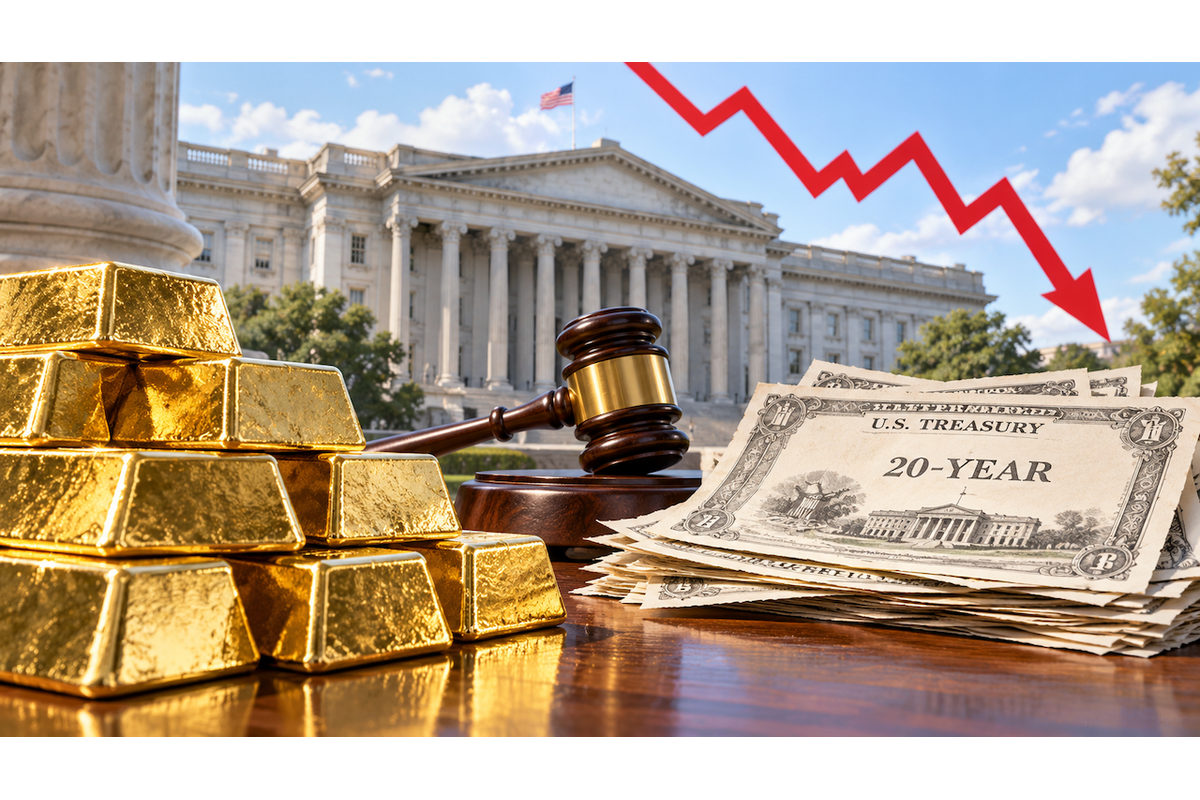
Gold and silver are under renewed pressure to start the week, extending last week's sharp losses as traders continue to favor the U.S. dollar and brace for higher interest rates.
Selling resumed when futures markets opened Sunday evening, with both metals giving back additional ground after an already bruising week.
Gold finished last week down more than 2%, while silver suffered an even steeper decline of more than 8%, extending its losing streak to seven consecutive weeks.
Silver's outsized weakness reflects its greater sensitivity to economic expectations and leveraged speculative positioning, as investors continue to reduce exposure across the precious metals complex.
The Federal Reserve remains the market's primary focus. The money magicians left interest rates unchanged at their June meeting, but their messaging reinforced expectations that monetary policy will stay restrictive until inflation shows more convincing signs of easing.
This has outweighed the safe-haven demand that typically accompanies geopolitical uncertainty.
Events in the Middle East remain an important wildcard. While efforts to stabilize the situation around the Strait of Hormuz initially eased market anxiety, renewed attacks and concerns over regional shipping have reminded investors that geopolitical risks remain elevated.
Despite the difficult price action, the longer-term fundamentals supporting precious metals remain largely intact.
Central banks continue to add gold to their reserves, with China's People's Bank reporting another sizeable purchase in May.
Meanwhile, silver's role in solar power, electrical infrastructure, artificial intelligence, and data-center expansion continues to support a constructive long-term demand outlook, even as short-term macroeconomic forces dominate trading.
From a technical standpoint, both metals are approaching significant support zones after a rapid correction.
Gold briefly dipped below the psychologically important $4,000 level last week before recovering, while silver is testing support in the upper-$50 range.
Although the broader trend remains under pressure, sentiment has become increasingly pessimistic—a condition that has often preceded stabilization or sharp relief rallies once selling pressure begins to subside.
For now, investors will watch this week's inflation data, labor market reports, and additional commentary from Federal Reserve officials for clues as to when the current wave of selling may finally begin to exhaust itself.
The good news about all this is that retail precious metals investors can take advantage of lower spot prices and lower premiums than we've seen all year.
Comments
Log in or sign up to join the conversation.