

If you have a choice between believing the audio or the video, believe the video.
In other words, trust what you see if it’s different than what you hear.
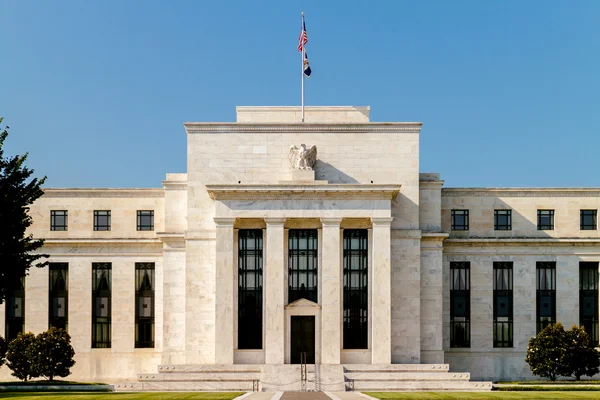
Since Kevin Warsh stepped into his new role as chairman of the Federal Reserve, he’s been talking tough, insisting the central bank will not tolerate price inflation running hotter than the mythical 2 percent target. He doubled down on that messaging after the July FOMC meeting, saying, “You’ve heard this before, but we will deliver price stability.”
But what has the Fed actually done?
Nothing.
Warsh & Company held interest rates steady in June and July. It was the fifth straight meeting without a rate change despite inflation remaining anchored well above the 2 percent target. And the central bank continues to run quantitative easing (QE) operations as evidenced by the expanding balance sheet. Since QE involves buying bonds with money created out of thin air, it is inherently inflationary.
The audio says this is a hawkish Fed. But the video tells a different story.
Believe the video.
The Fed’s Catch-22
I’ve been saying for months that the Fed will have a difficult time raising interest rates due to the Debt Black Hole dominating the economy. It’s easy to say, “We’ll fight inflation to our dying breath.” Engaging in that inflation fight when you know it will lead to the economy’s dying breath is a different matter.
The Fed remains in a Catch-22. It would undoubtedly like to hike rates and strangle price inflation once and for all. But it would also like to avoid crashing the economy.
And make no mistake. The economy is teetering on the edge. We have never reckoned with the malinvestments and bubbles created by the unprecedented monetary policy of the pandemic era, or even the money creation during the Great Recession. The economy is addicted to that easy money. That means it needs to cut rates to keep the debt bubble inflated.
It can’t do both.
Historically, the Fed has picked inflation over allowing the economy to sink. (Think 2008 financial crisis and the pandemic.) There’s no reason to think Warsh will be any different, his rhetoric notwithstanding.
The Markets Don’t Believe Warsh Either
I've been skeptical of Warsh from the beginning. Now the markets don’t seem to believe Warsh’s tough talk either.
Movement in Treasury yields indicates that investors don’t believe the central bank will follow through on its hawkish rhetoric.
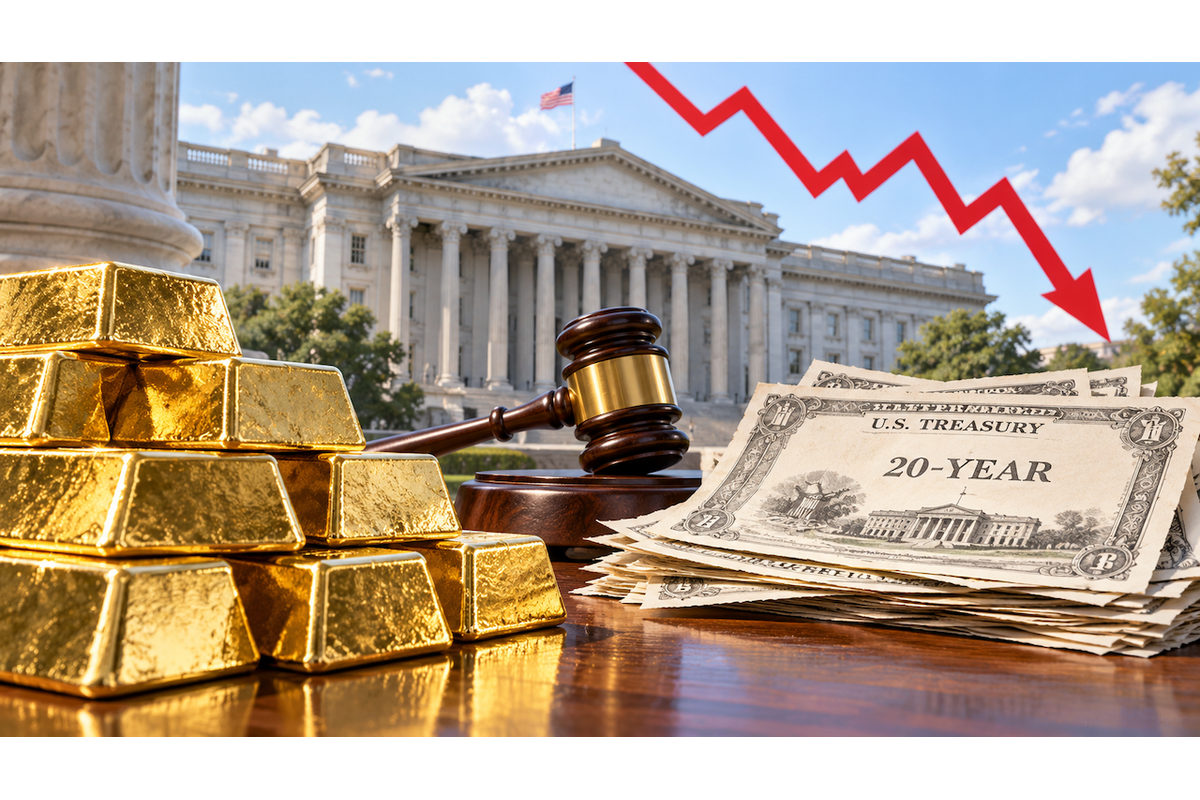
After the Fed announced its decision to stand pat last week, yields on the long end of the curve spiked. The rate on the 10-year Treasury rose 5 basis points to 4.657 percent. Meanwhile, the 30-year Treasury bond yield surged 9 basis points to 5.193 percent.
This indicates that the markets believe the Fed is finished with rate hikes. As a CNBC report put it, “We think you’re going to keep short-term policy rates in check, and it’s going to create a ton of inflation later.”
Reuters explained it this way.
“In this case, the twist that materialized around July 31 carried a clear message. Short-term yields, which are more sensitive to imminent Fed policy, stayed relatively anchored. Meanwhile, long-term yields pushed higher, reflecting expectations about sustained economic growth and persistent inflation rather than fears of additional rate hikes.”
Several mainstream analysts chimed in to argue the Fed’s inflation war is nothing more than a war of words. Citigroup global chief economist and former Fed employee, Nathan Sheets, said the markets appear to be voting "no confidence" in the Fed’s ability to control price inflation.
"He highlighted a problem and gave no strategy for solving it other than, 'I'm a hawk, trust me,' and the markets wanted more than that. I think part of it is if you lean too far into future hikes, then he's disappointing the White House. And it is a balancing act between Warsh the hawk, which he is, and trying to stay on sides relative to 1600 Pennsylvania Avenue."
Meanwhile, Warsh has hinted that the central bank may try to move the goalposts when it comes to calculating price inflation. Historically, the goal has been a Personal Consumption Expenditures Price Index (PCE) reading at 2 percent. (The Fed likes the PCE because it understates inflation the most.)
During his confirmation hearing, Warsh indicated that he preferred “trimmed averages” for price inflation.
As Reuters explained, in theory, this approach “trims off the fastest-rising prices and fastest-falling prices, leaving a more representative middle set of price changes that typically serves as a good indicator of where inflation is heading.”
During his post-meeting press conference last week, Warsh again hinted that the central bank could set a new standard. Initially he insisted the PCE is “our number, we’re sticking with it.” But he added, “Who knows, come after next January, what we might say about strategy. I suspect the task forces might have something to add."
Warsh has formed several task forces to evaluate the mechanizations of the central bank. His statement seemed to hint that the task forces may well move those goalposts.
Reuters summed it up, reporting that “the combination of Warsh's repeated assertions of the need to tame inflation with no action to move it toward the 2 percent target and a hint that the goalposts themselves may change” was behind the recent jump in yields on the long end of the curve.
What Does This Mean for Gold and Silver?
Gold and silver had traded sideways over the last few months because the markets believed the Fed would hold rates higher for longer, and perhaps even hike, to take on persistent price inflation.
What happens if the market has lost faith in the Fed's inflation-fighting credentials?
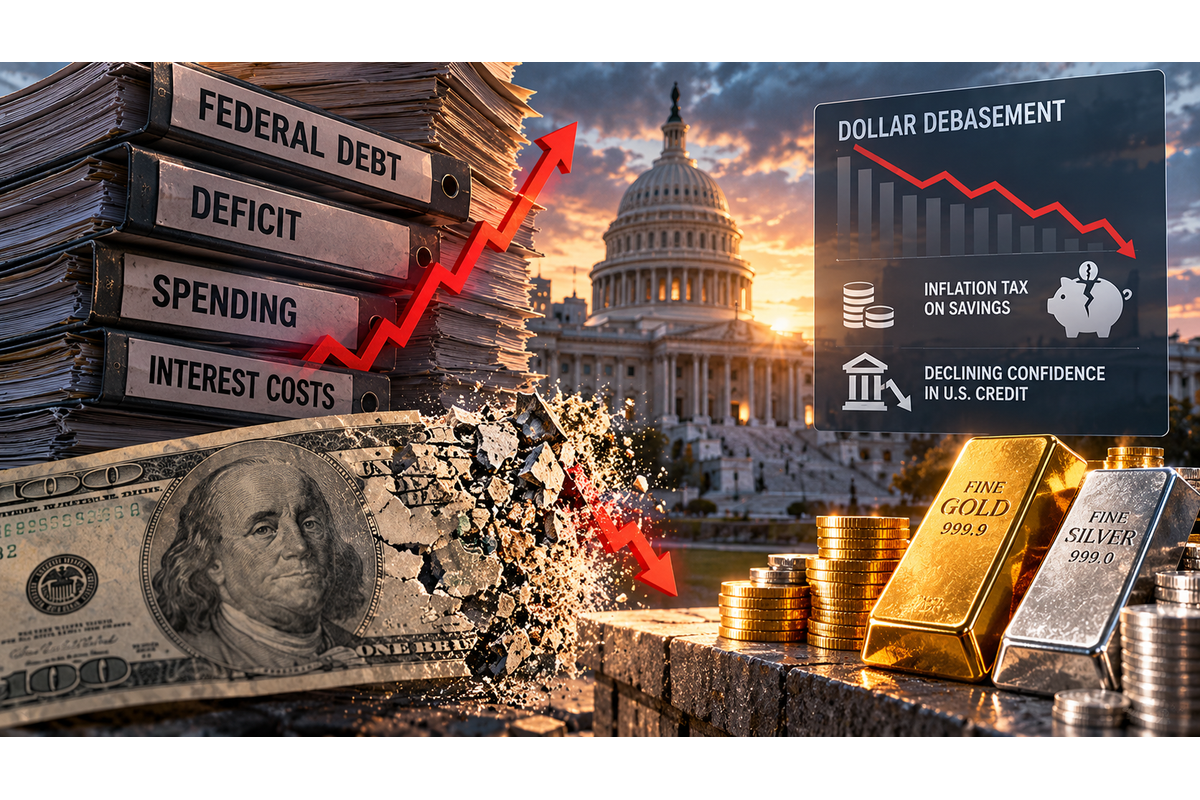
This twist in the yield curve also has implications for the dollar, signaling the possibility of a weaker dollar. Add to that the Treasury Department’s apparent willingness to buy yen to strengthen the Japanese currency, and we could see a persistently weakening dollar.
This is bullish for gold and silver.
While higher interest rates on the long end of the curve could be considered bearish (given that gold and silver are non-yielding assets), higher inflation is bullish because the metals are historically an inflation hedge.
Furthermore, it’s important to consider real interest rates, not just the nominal yields quoted on TV.
The real interest rate is simply the stated rate you see on the news adjusted for price inflation.
To calculate the real interest rate, you take the quoted interest rate and subtract CPI.
The Federal funds rate is currently set at 3.5 percent. When you factor in the CPI of 3.5 percent, the real rate is only 0 percent. (3.5-3.5=0).
Note that in a low-interest rate environment or if price inflation is particularly high, real interest rates can go negative.
For instance, if the CPI is 3.6 percent, the real interest rate would be -0.1 percent.
When you factor in real rates, it’s easy to see higher yields aren’t necessarily bearish for gold and silver. It may feel like you’re earning a good yield, but your gains are eaten up by inflation.
So, even if yields on the long end of the curve continue to rise (and they likely will if we are in fact in the early stages of a secular bear market in bonds), real yields will remain relatively steady, and perhaps even start to fall, as inflation continues to run hot.
And if the economy turns over and the markets collapse, the Fed will almost certainly rush to cut rates and ramp up QE.
Money Metals CEO Stefan Gleason explained how interest rates and price inflation interact in the real world.
Summing it all up, Warsh will undoubtedly continue to talk tough on inflation.
But remember, watch the video.
It appears that’s exactly what the markets are doing.
Comments
Log in or sign up to join the conversation.