

The Fed raised interest rates on 10-year treasuries to 5.15%, the same level it was before the 2007 financial crisis.
The political media went into a frenzy, one side emphasizing a booming economy and the stock market hitting new highs. Opponents scream home prices are cratering, people can’t get mortgages and small businesses are failing. Yeah, OK…..
While I’ve often criticized the Fed’s propeller heads economists, they consider the impact of every rate decision to raise, lower or stay the same. The Fed has been manipulating rates for over a century, and all phases of the economy must adjust. Let’s calm down and take a look.
What is a Bond?
When individuals and small businesses need to borrow money, we go to a bank. When big companies and governments need money, they sell IOUs to the public – called bonds. Bonds include an interest rate, payment terms, and a redemption date, many times 20 years or more in the future. Those factors, along with default risk, determine their market value.
Investment houses purchase these bonds and resell them to investors individually or packaged in a fund. Many of these are held in IRAs, etc.
The big kahuna in the bond market is the US government with over $40 trillion in outstanding debt. US treasury yield serves as a bench mark for the world.
Why bond prices move
Generally, individuals buy bonds for the income and hold them until maturity. Traders buy and sell bonds. The aftermarket resale value may swing wildly, but at maturity, the bond holder receives par value.
Over the life of the bond, there are many factors which cause it to become more/less attractive to investors, resulting in changes in resale value:
|
|
|
|
|
Let’s begin with the first two, interest rate changes and inflation concerns.
US Treasury yieldcurve.com shows since 2020 interest rates on 10-year treasuries have risen ten-fold, from a low of .5% to over 5%.
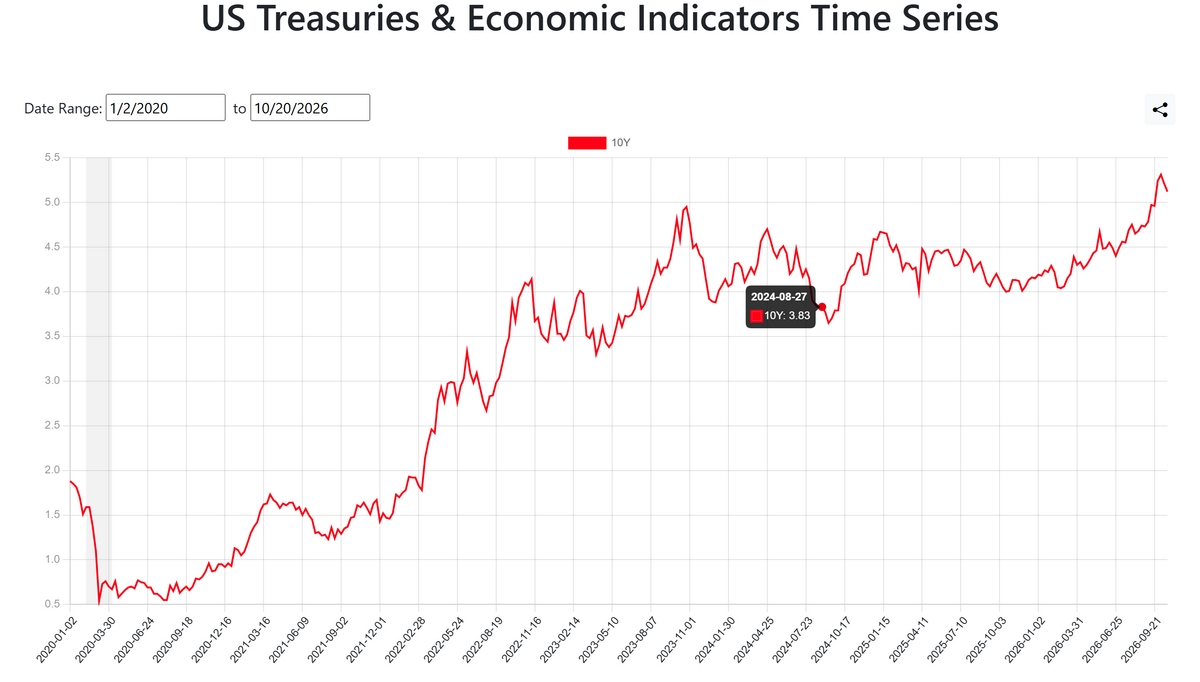
When interest rates increase, resale prices of existing bonds generally decrease. With the adjusted lower price, the yield to the buyer (a combination of interest and gain at redemption) is similar to what would be earned if the buyer bought a new bond at current rates.
Marketbeat tracks the current market value of the Vanguard Long Term Treasury ETF over that time period. This fund holds multiple long-term treasuries with various dates for maturity.
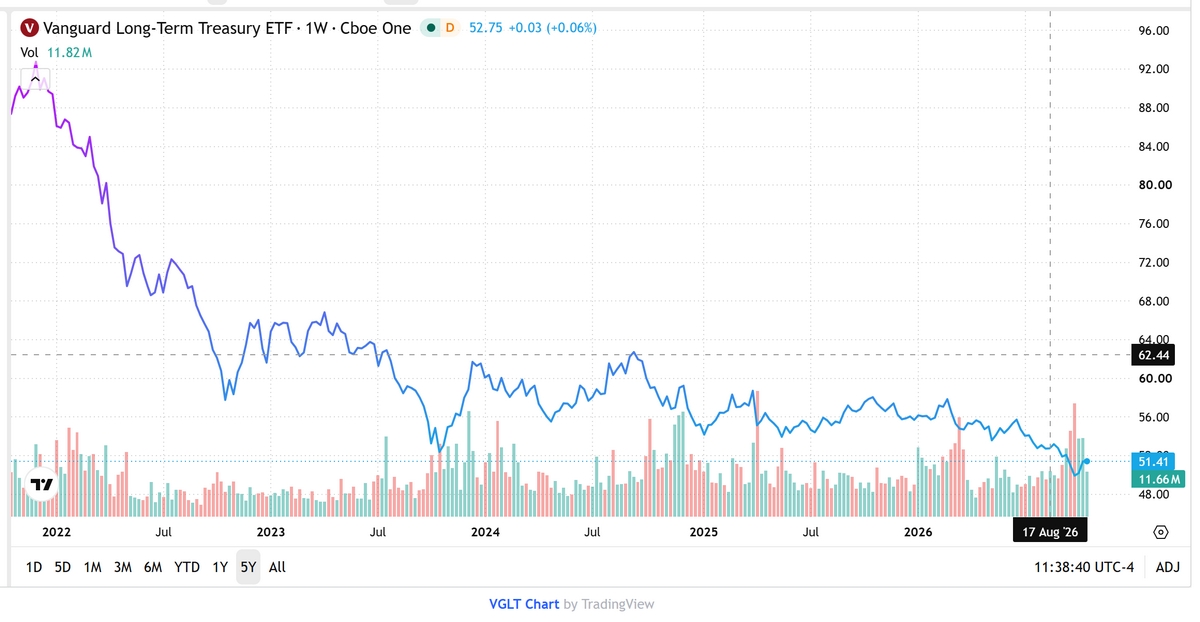
As interest rates have been rising, the share price has dropped almost 45% over the last five years.
What does that mean? If you hold that fund in your 401k, you are likely to say “woe is me” as the share price dropped. If you own individual bonds, you can choose to accept lower than current interest rates and be paid in full at maturity – or you can sell at a loss.
The Underlying Secret in plain sight!
In 1999 the Glass-Steagall Act was repealed allowing banks to consolidate and merge with investment (brokerage) firms. That opened the floodgates; banks lent to anyone and everyone regardless of risk, and packaged those loans and resold them through their investment division.
Within a decade (2008) the entire system collapsed. The government jumped in bailing out the “too big to fail” banks with cheap money, followed by (quantitative easing), with even cheaper money. This added fuel for more reckless lending and speculation. As expected, the economy boomed temporarily and, to no one’s surprise, inflation began to skyrocket.
In an effort to slow down inflation, the Fed slowly began raising rates back to where they were before the whole mess began.
However, this creates a problem. In order to judge bank solvency, banks report their assets as “mark to market;” valuing their assets at current market value. They are required to hold “safe” government bonds, with billions now worth much less if they tried to resell. They soon will be crying foul, looking for another bailout. Screw that, let them earn less profit and hold those debts until maturity.
Winners & Losers
The Real Estate Market. Mortgage rates have risen back to what used to be considered normal, resulting in a real estate slowdown – a regular occurrence. While it is temporary, lenders and builders cry “foul” wanting the cheaper money to keep the gravy train going.
Inflation hit the real estate market big time. Global property guide tells us home values have increased 86.95% over the last decade. Too much, too fast! A realistic adjustment should be expected.
Winners and losers in real estate vary. Friend Chuck Butler finds a winner:
“I told you a month or so ago, that Housing was in trouble… And that’s good news for younger potential buyers that seem to get their arms around the price that people are selling their home for… It’s ridiculous! But it is what it is… But those levels just might be in for a correction, as the Home Builders confidence showed yesterday. ….
I see it coming folks, and the next move by the FOMC will really show housing the path they need to take… One that’s filled with price declines…”
It’s a good trade off. The issue is rapidly declining home prices versus higher mortgage rates. Buy the house when the market is down, within a few years you will be refinancing at a lower interest rate.
A lot of homeowners bought at the top of the market and love their cheap mortgage. Buy low now, and refinance at a lower rate is the best of both worlds.
Borrowers, particularly the government. Cheap money fuels speculation and makes it easier for the politicians to borrow and spend into oblivion. Eventually interest rates normalize. Most people want to get out of debt, governments don’t care. When a .5% bond becomes due, they borrow at current rates to pay off the old one. Interest on current US debt (over $1 trillion annually) will jump radically as trillions in low interest debt must be refinanced.
The Stock Market. Interest rates impact the stock market. Cheap money makes it easier for corporations to do crazy things like borrow to pay higher dividends and buy back their stock at high prices. Eventually those debts have to be paid off or refinanced at a higher rate affecting profits. Personally, I feel the wild market gyrations surrounding fed announcements are way out of proportion. If you are invested in solid, well-run companies paying a nice dividend, you will be fine over the long run.
Avoid highly leveraged speculative investments. Stay off the edge and you will sleep better.
Seniors & Savers. Inflation is the major concern for retirees; their nest egg has to last. Since the 2008 bailouts interest rates have not kept up with inflation. Retirees took more risk heading to the stock market attempting to garner better returns.
Constantly trading stocks to earn a profit to maintain your lifestyle is fraught with risk – and stress. Bad times are inevitable, and many are forced to sell holdings at the very worst time to pay the bills. While selling and taking profits is fun, enjoying regular interest and dividends – and adjusting your lifestyle – makes for a more comfortable retirement.
It took 18 years for interest rates to return to 2008 levels. In the midst of the knee-jerk, bank bailout, low interest rate frenzy there were estimates that savers lost over $4 trillion in interest income. The Fed chairman called the effects on seniors and savers “collateral damage.”
While the media/politicians are blaring “woe is me” before the midterms, I’m in no hurry for another knee-jerk reaction. Banks and the stock market can live on a little less profit just like the public has done for two decades. Seniors never complain about safe, inflation beating income they can depend on!
The Big Loser
While you and I must learn to live within our means, out of control governments never do. Current US Debt is over $40 trillion and the US Debt Clock projects debt between $50T and $59T (predicting a budget showdown) in less than four years.
While the Fed is concerned about protecting bank profits, credit demands of governments worldwide are outpacing supply. Debt, interest rates and inflation are all going to be affected.
Friend Urs Drose at WHVP posted a scary graphic, reinforcing the debt clock showdown prediction:
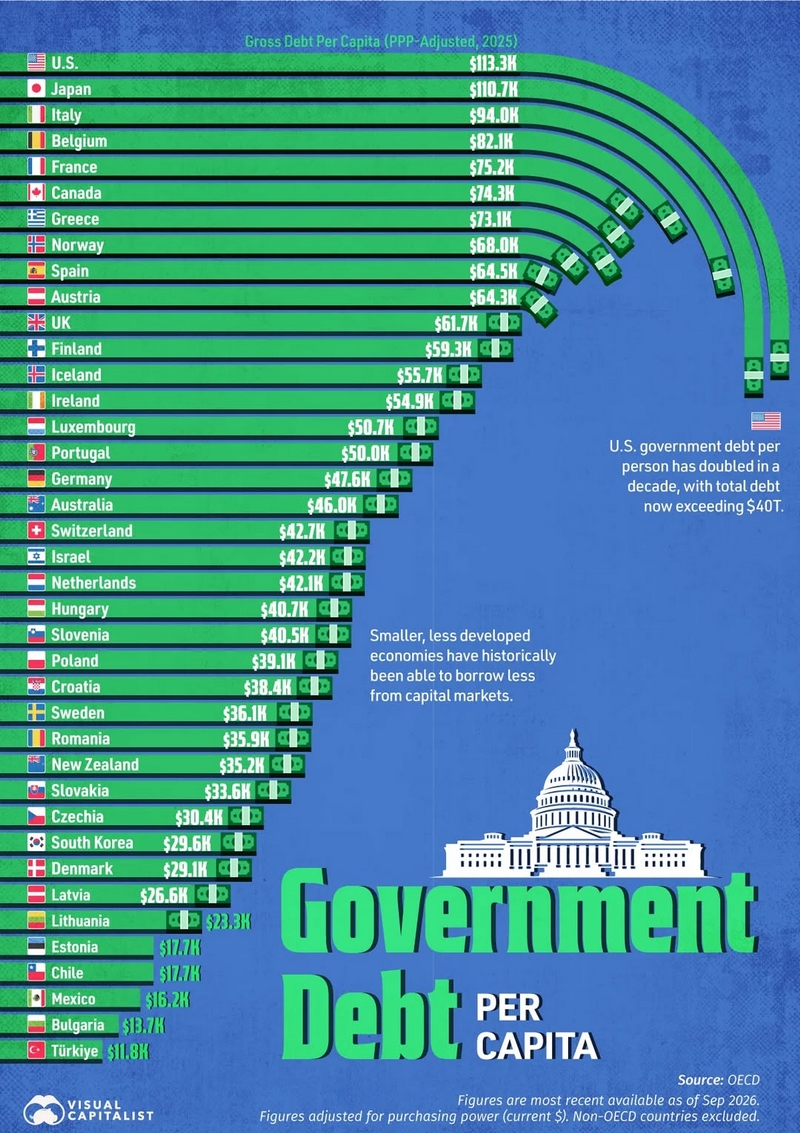
While we can all work hard, sacrifice and live within our means, out of control government spending can destroy much of what we worked for.
Note – “U.S. government debt per person has doubled in a decade, with total debt now exceeding $40T.” Even the most conservative debt clock projection would add another 25% by 2030.
In less than a decade after the Fed was established, we had the Great Depression. In less than a decade after the repeal of Glass-Steagall we had the “too big to fail” bank bailout. It’s all converging with out-of-control government spending. The world is demanding higher rates from the US, fearing inflation and default.
The battle will be between the banks, big spending politicians, and public unrest. Taxpayers are unable to pay for government follies….
Despite all the negativity, I’m still optimistic. Baby Boomers’ elders preached about transitioning from the “Roaring 20’s through the Great Depression”. People, and government, forced to live within their means, learned valuable lessons, changed priorities and used some common sense. They had no choice. That will happen again, to everyone’s benefit.
On The Lighter Side…
Daylight Saving Time changes November 1st, don’t forget to turn your clocks back. I’ve never understood why we had daylight savings time to begin with. While President Trump wants to eliminate it, the divided political class can’t seem to agree on anything.
Next week Jo and I head back to Indiana for the holidays. We leave very early, before the sun rises, as it’s a long day. With the time change it will probably be dark before we get home.
I’ll be glad when the election is behind us. The campaign ads are awful, and I find many insulting. I guess there are some so called “experts” in the media that says what works, but enough already!
As I get ready to send this to production, the Milwaukee Brewers have taken a two-game lead in the World Series; both one run games, tight until the very end. They have played close to flawless baseball.
Quote(s) of the Week…
“If you listen to the political ads, every candidate is corrupt, immoral, a thief and a liar. Perhaps they are all true….”— Dennis Miller
“Elections should be held on April 16th, the day after we pay our income taxes. That is one of the few thing that might discourage politicians from being big spenders.” — Thomas Sowell
And Finally…
Will Rogers offers some humor/truth about politics:
|
|
|
|
|
|
|
|
|
And my favorite….
Many a politician wishes there was a law to burn old records.
Until next time…


Comments
Log in or sign up to join the conversation.