


Wars generally cause a currency to lose relative value, as investors and traders sell to reduce risk and exposure during the time of great military conflict. The Israeli currency continues to buck this notion as it is the strongest performing currency in the G-20. For the first time in 31 years, the Shekel (NIS) has dropped below three to the USD, gaining a staggering 18.8% against the USD. Moreover, the intensity with which the currency gained such prominence, has drawn a lot of attention within the Israeli export industries as they adjust to the country’s new found wealth and trading strength. .
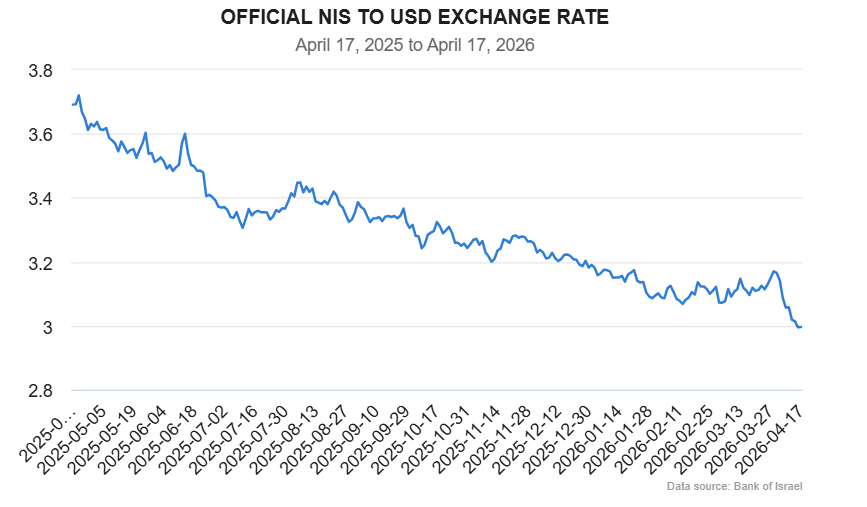
Israel is a rare, if not unique case, in which capital inflows to support the very export industries are the principal reason behind the re-alignment of the currency. Despite two years of extensive military action following the Oct 7,2023 Hamas attack, Israel’s balance of payments has been so resilient, producing a combination of a current account surplus and net capital inflows:
2023 trade surplus reached $16.8 billion, as Q4 imports fell sharply due to the Gazan war;
2024 trade surplus was $12.8 billion, fed by a high tech sector accounting for 53% of all exports;
2025 trade surplus is projected to come in at $13 billion.
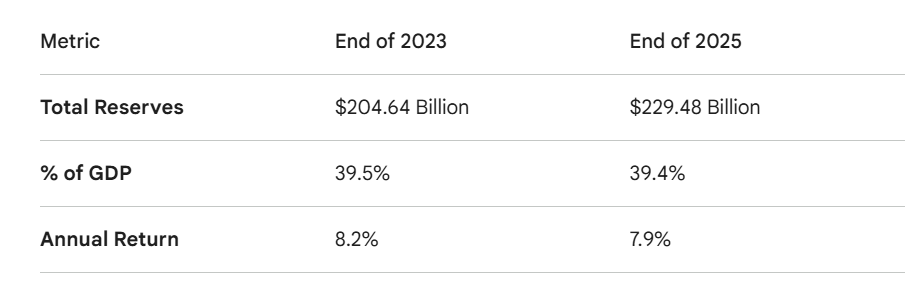
The strength of its trade surplus resulted in a swelling of the USD reserves, increasing by $25 billion over the past 2 years, representing more than a one-third of the size of the economy. A very healthy cushion able to withstand the pressures of the cost of the military.
Foreign investors never felt at risk during the past two years . Foreign Direct Investment (FDI) was $ 16.2 billion in 2023, $14.8 billion in 2024 and recovered to an estimated $18 billion in 2025. The high tech and energy sectors received the bulk of funds. Last year, the Israeli company , Wiz, was acquired by Google for $32 billion, a boost of confidence in the country’s technology leadership.
The Bank of Israel has chosen not to intervene to moderate the appreciation of the Shekel, in line with conventional central banking thinking of allowing market forces to operate freely. With the national inflation rate expected to 2% or better, as import prices fall, the Bank has considerable leeway to cut its rate.
Given this level of foreign reserves Israeli authorities are considering a sovereign wealth fund, similar to Norway and the Gulf states. Israelis have already net overseas investments in private assets exceeding $200 billion, funds that were acquired from the trade surpluses and FDI in past years.
Ironically, it is the export sector and its high tech sector, in particular, is behind currency moves. So, despite the efforts of exporters in other fields, Israeli authorities are wise to take a hands-off approach and not interfere in the name of curtailing the Shekel’ external value. Most of the exports, such as technology products, natural gas, and even diamonds, are less sensitive to a strong currency. Judging by the results of the past two years, these crucial industries are able to generate wealth amidst the country’s involvement in military actions on its borders.

Comments
Log in or sign up to join the conversation.