

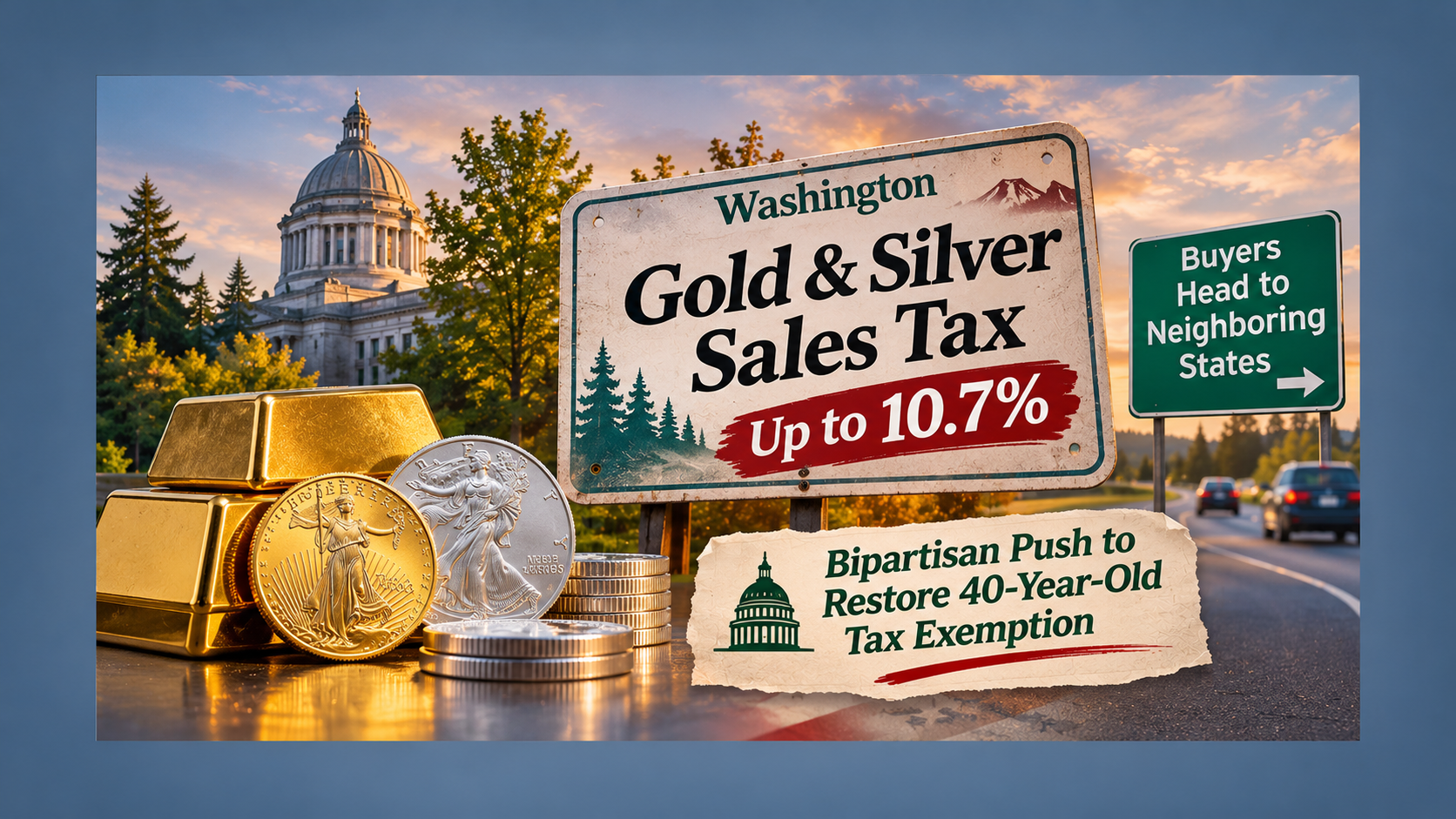
Washington state’s repeal of a 40-year sales tax exemption for gold and silver bullion is hitting coin shops, local investors, and small dealers.
On the Money Metals podcast, host Mike Maharrey spoke with Carolyn Beko, president of the Washington Coin and Bullion Association, and Jp Cortez, executive director of the Sound Money Defense League, about the tax’s effects and their campaign to reverse it.
The repeal passed in 2025 as part of a broader tax bill signed on the final day of the legislative session. The new tax took effect in January 2026. Beko and Cortez say Washington is now pushing precious metals buyers toward neighboring states where bullion purchases are not subject to sales tax.
Washington bullion tax raises buying costs
Washington’s combined sales tax on bullion ranges from 8.9% to 10.7%, depending on location. At Beko’s shop, the rate is 10.4%. A customer buying $10,000 in gold or silver can face more than $1,000 in sales tax.
Beko said a buyer may need the metal’s price to rise by at least 12% just to break even after accounting for the sales tax and the dealer’s resale margin. She said the added cost makes physical gold and silver harder to use as savings or as a hedge against inflation.
Dealers also face Washington’s Business and Occupation tax, which Beko said is 0.5%. With a typical 2% margin, that tax absorbs about 25% of the dealer’s profit. The new sales tax adds pressure to businesses that already operate on narrow margins.
Coin shop sales reportedly fall as customers cross state lines
The Washington Coin and Bullion Association surveyed dealers across the state. Beko said respondents reported sales declines ranging from 50% to 95%, and dealers knew of at least two shops that had closed.
Some Washington buyers are traveling to Oregon or Idaho, where bullion purchases are not subject to sales tax. Beko said customers can combine a metals purchase with other shopping and potentially save on expenses such as clothing, gasoline, and alcohol. That makes crossing the border attractive for buyers able to make the trip.
The tax creates a particular burden for people who buy small amounts of physical metal regularly. Beko said some customers cannot easily travel out of state, and may not have access to other ways of saving, such as a 401(k) or gold and silver investments held on paper.
Dealers warn of lost business and tax revenue
Cortez said Washington is not alone in seeing the consequences of taxing bullion purchases. He pointed to Maryland, where lawmakers restored a sales tax exemption after the state saw harm to the industry. He also cited Louisiana, where lawmakers reportedly recognized within a year that repealing an exemption had hurt local dealers.
The speakers argued that a bullion tax can shift purchases to other states instead of generating the expected revenue. When buyers leave Washington, local businesses can lose sales not only on bullion but also on related products such as coin cases, flips, and safes.
Cortez said states that remove sales taxes on precious metals can attract businesses and customers from neighboring states. He described Pennsylvania dealers advertising to buyers across the border in New Jersey before New Jersey enacted its exemption.
Bipartisan support grows ahead of the next session
Beko said she, other association board members, and their lobbyists had met with more than 80 Washington legislators. She described the effort as bipartisan and said about 28 legislators were expected to sponsor bills to restore the exemption. Another 44 wanted to review more data.
Washington lawmakers can pre-file bills beginning December 7, with the legislative session scheduled to begin January 11. Beko said at least 26 new legislators were expected to join the legislature after the midterms, making outreach and education especially important.
Cortez said many lawmakers do not have a strong position on gold and silver taxation because they know little about the industry. He said educating legislators about local dealers and customers is a central part of the campaign.
How Washington residents can help
Beko urged Washington residents, customers, collectors, and dealers to contact their state senator and representative. She said constituents should explain how the tax affects their savings, their local coin shop, or their ability to buy and sell physical metals, and ask lawmakers to restore the exemption.
She also encouraged dealers to participate in the association’s economic impact survey and support its lobbying work. The Washington Coin and Bullion Association can be found at WashingtonCoinAndBullionAssoc.org.
Cortez said grassroots outreach is important in every state, especially before legislative hearings and key votes. He encouraged listeners to follow the Sound Money Defense League and review its annual Sound Money Index, which ranks all 50 states on policies involving gold and silver taxation, reserves, and legal tender.
The Sound Money Defense League is on X at @SoundMoneyDef and @JpCortez27. Cortez said the organization works with people seeking to change gold and silver policies in their states.
Beko and Cortez’s campaign centers on a policy that had been in place for four decades. As Washington prepares for its next legislative session, they are asking residents to make the economic effects of the new gold and silver sales tax clear to lawmakers.

Comments
Log in or sign up to join the conversation.