

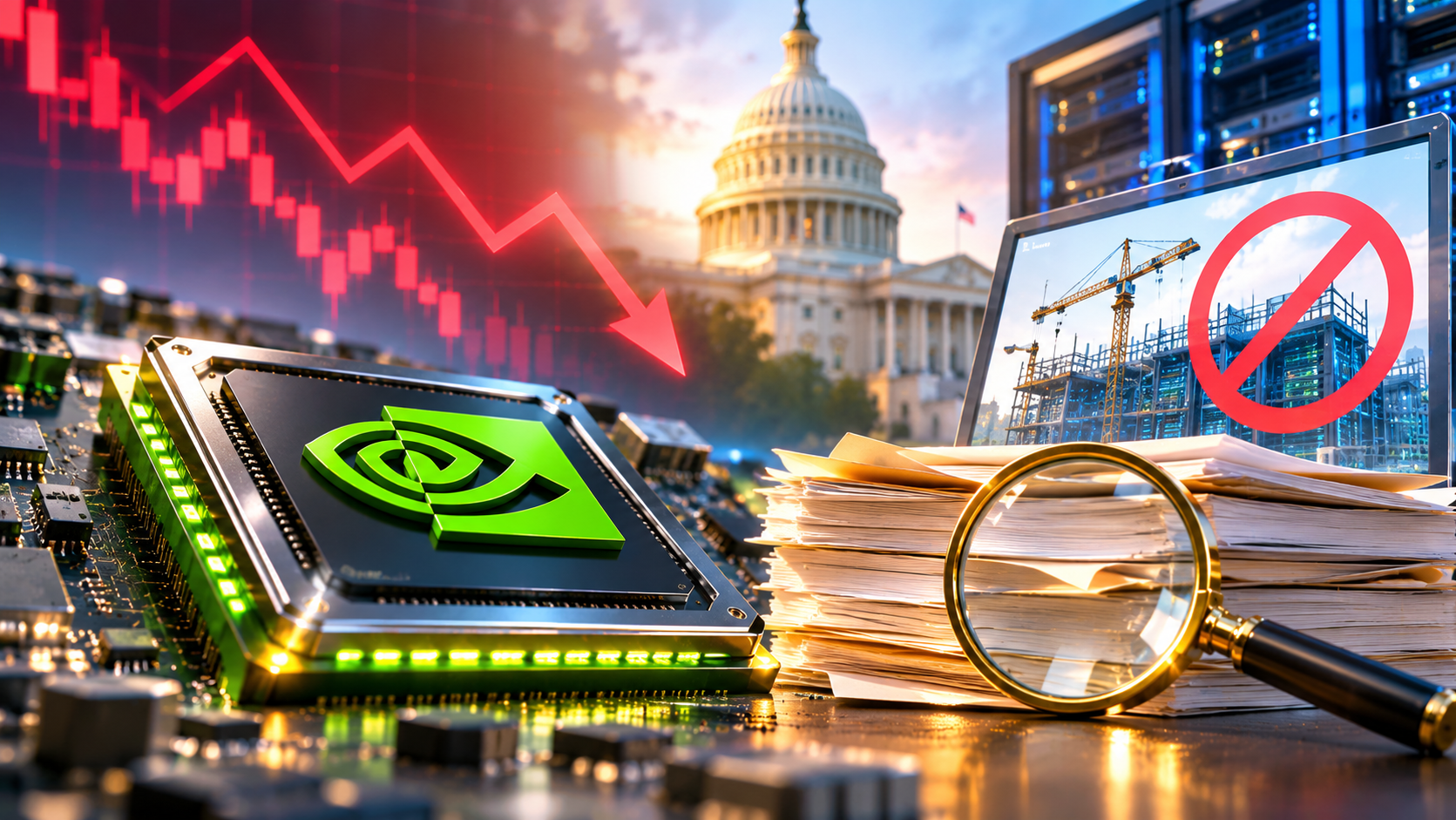
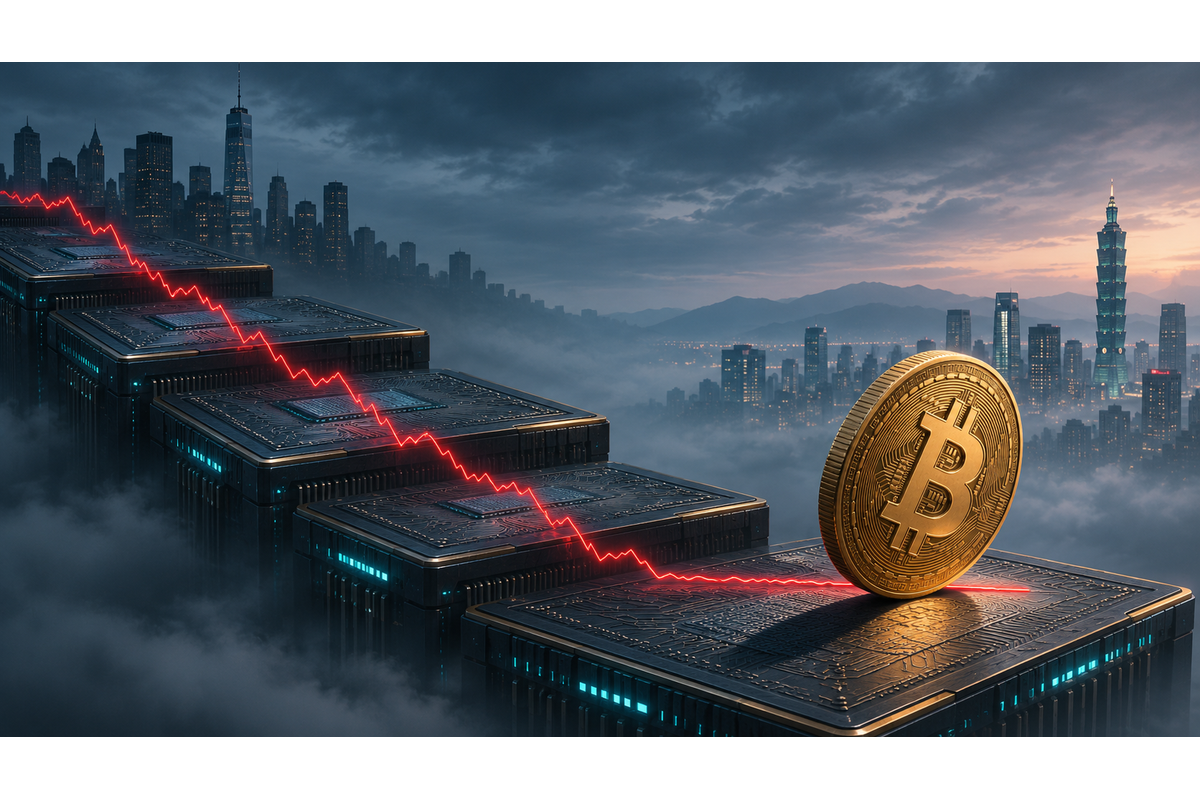
Wall Street’s AI trade took another beating Monday, with the Nasdaq 100 losing 2.4%, the S&P 500 falling 1.9%, and chipmakers getting taken behind the woodshed for another 4.5%. But the real story is no longer simply Nvidia (NVDA)’s share price or Jensen Huang’s spectacular departure. The company that spent three years helping finance the AI gold rush was already reaching for the brakes before its chairman lost the keys. Now the CFO who questioned some of those deals is running the show, Washington is closing the offshore computing loopholes, and Anthropic is preparing to ask public investors to finance the next chapter. The industry’s technology hasn’t suddenly stopped working, but the financial plumbing is looking considerably less glamorous now that somebody has decided to inspect it.
Wall Street Finally Starts Reading the Fine Print
There’s something particularly revealing about a market that keeps selling technology shares even as the familiar chorus of AI evangelists insists that everything is going according to plan. Monday’s tape offered another fairly expensive reminder that a compelling technological revolution and a compelling investment aren’t necessarily the same thing.
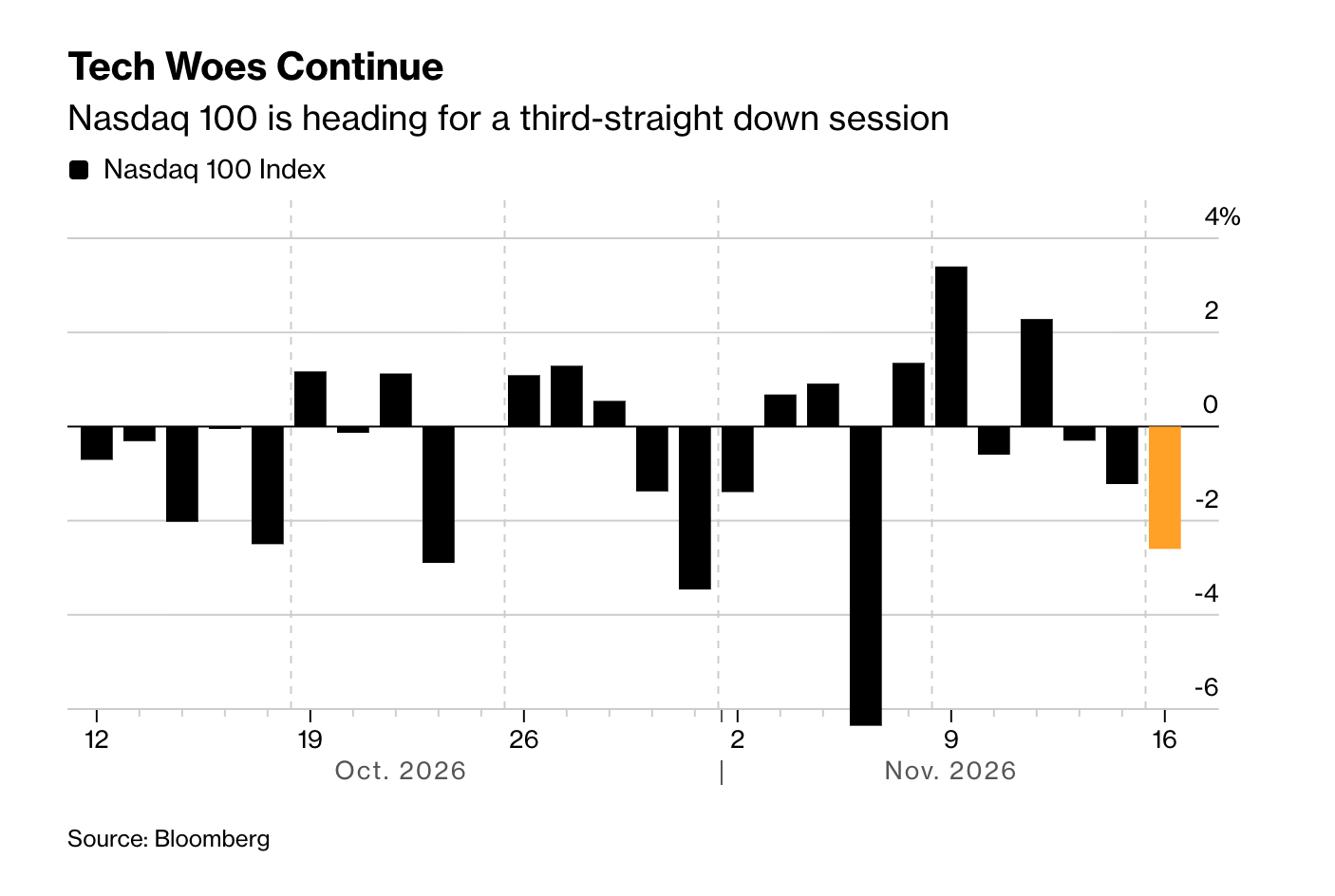
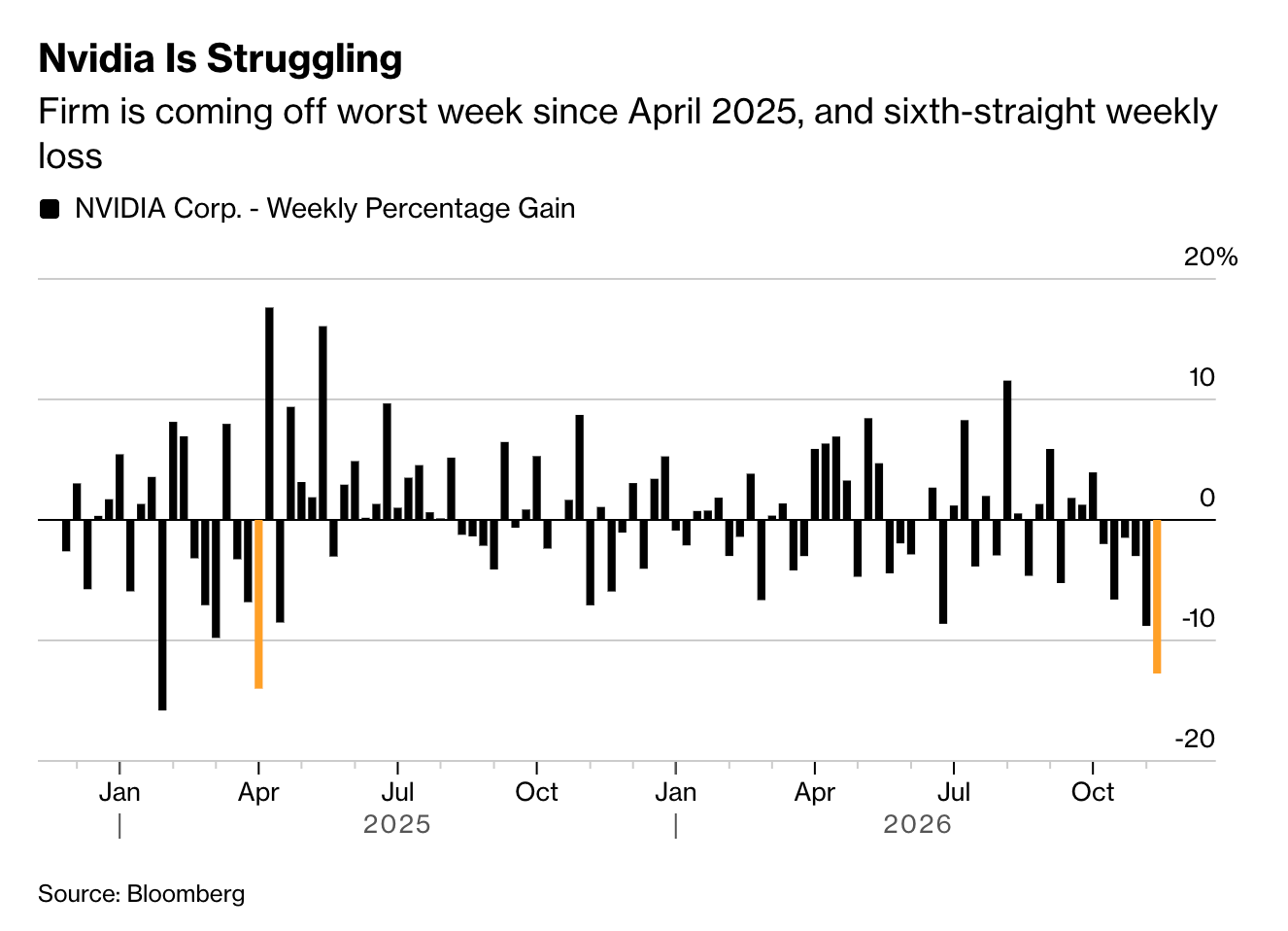
The Nasdaq 100 fell 2.4%, the S&P 500 lost 1.9%, and semiconductor shares surrendered another 4.5%, extending a selloff that has left Nvidia nursing six consecutive weekly declines. Treasury prices rose, oil slipped, and money moved toward consumer staples and other defensive corners of the market. That’s not the sort of rotation you’d expect if investors were simply taking a few profits ahead of another blockbuster earnings report.
The Huang-over is getting worse, and Monday's market carnage suggests Wall Street is running out of aspirin.
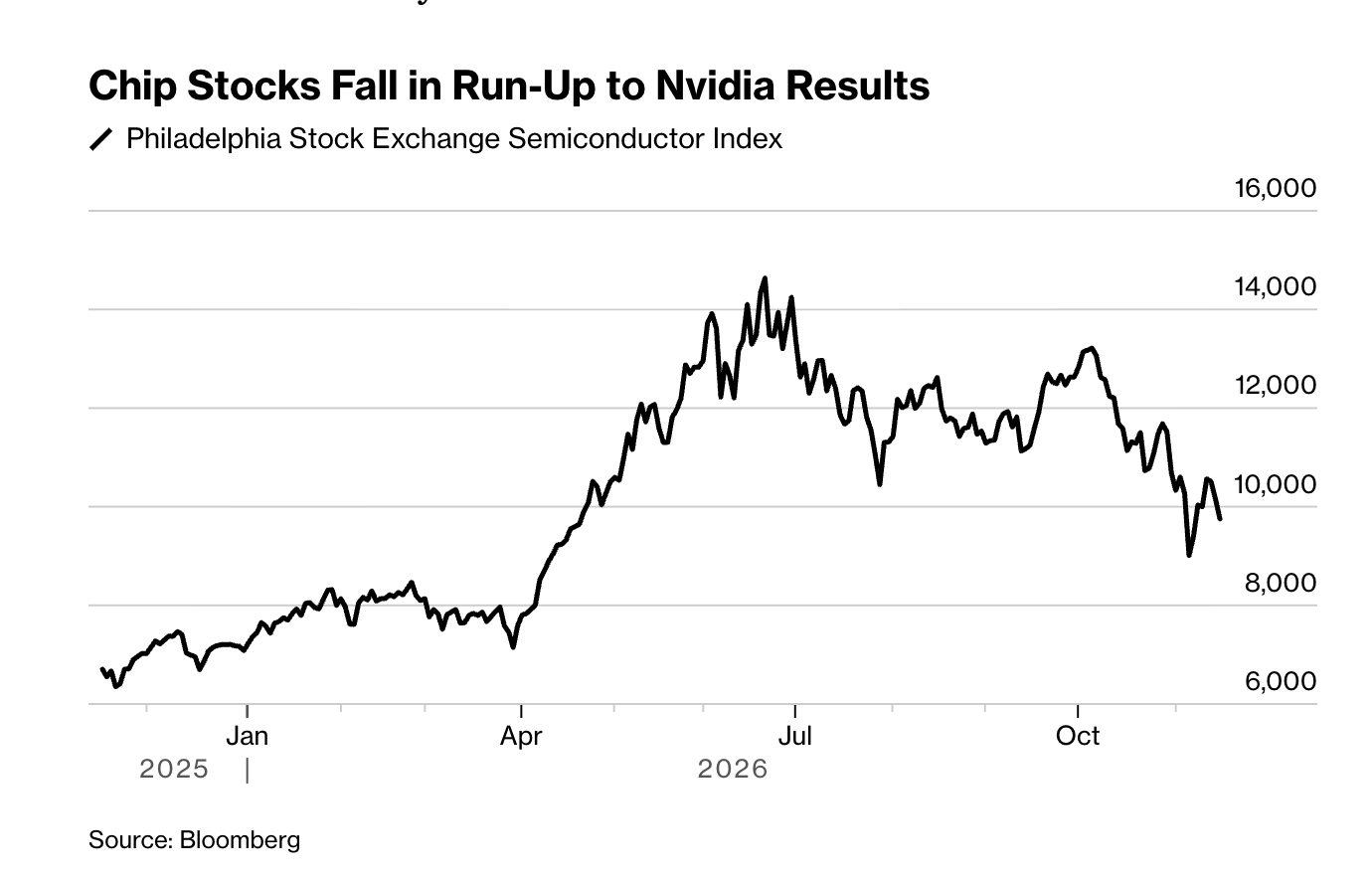
Nvidia reports Tuesday, with Anthropic’s potentially record-breaking IPO expected to price Wednesday and begin trading Thursday. Under more normal circumstances, those two events would have Wall Street arguing over growth forecasts, valuation multiples and just how much more money investors can reasonably throw at artificial intelligence. Instead, the conversation has taken a distinctly less comfortable turn toward corporate governance, regulatory exposure and whether the industry’s financing arrangements can survive without the man who helped assemble them.
And here’s where the story gets considerably more interesting than another round of hand-wringing over Nvidia’s price-to-earnings multiple.
For three years, the AI crowd operated on a wonderfully convenient assumption: find enough land, electricity and GPUs to build another data centre, and somebody would eventually turn up with the money. Nvidia helped make that assumption look remarkably sensible, occasionally investing in the customers buying its chips and supporting the financing arrangements that allowed those customers to place even bigger orders.
A beautiful circle while everything was going up, although anyone who spent time around old-fashioned vendor-financing arrangements might have recognised a few familiar features hiding beneath the technological wizardry.
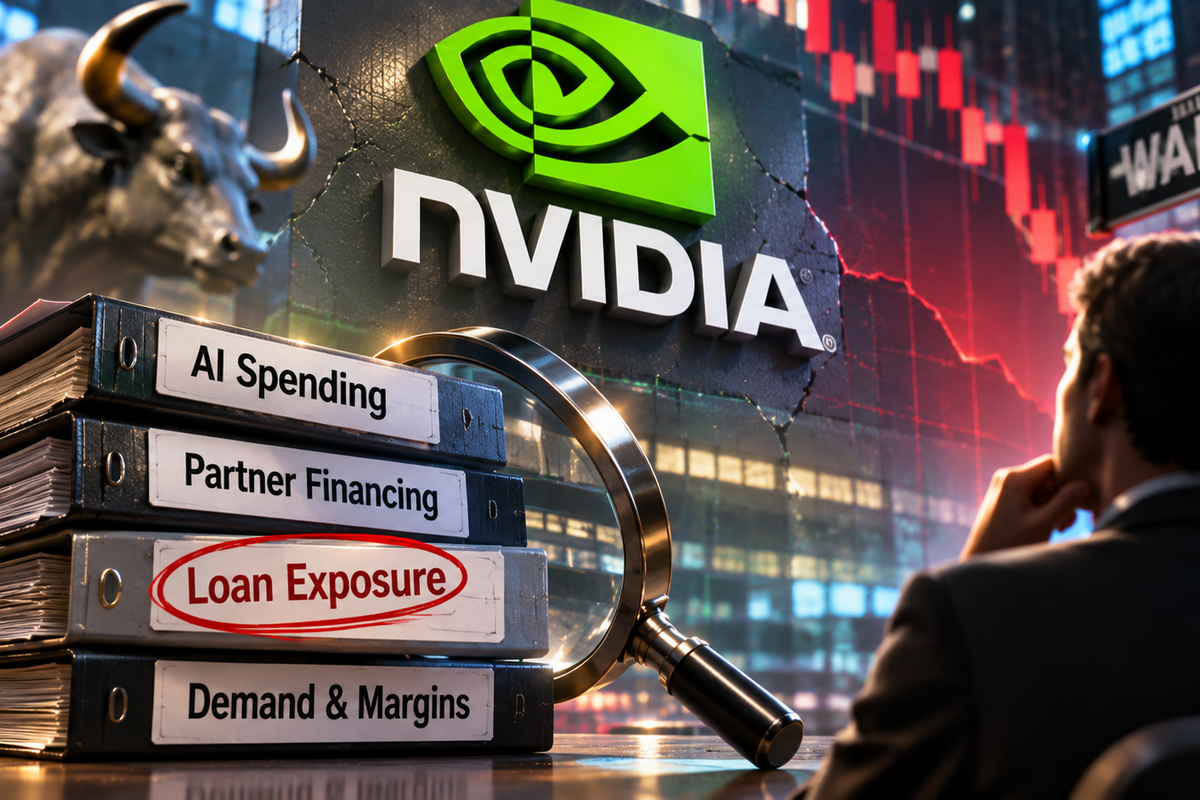
Now comes the awkward part. The company supplying the shovels was already wondering whether it had financed a few too many mines.
Even Jensen Was Reaching for the Brakes
The Wall Street Journal’s account of Nvidia’s internal financing discussions provides perhaps the most revealing detail in the entire saga. Before Huang’s departure, the company was already reconsidering how aggressively it should support customers and infrastructure developers.
At Nvidia’s European AI conference in Berlin last month, Huang reportedly delivered a different message to emerging cloud operators than investors had grown accustomed to hearing. Instead of promising another round of financial assistance, he told neocloud executives to secure upfront payments from their own customers and charge more appropriately for their computing capacity.
He even pointed to Elon Musk’s ability to command better rental rates, suggesting Nvidia could direct more capacity toward customers prepared to pay a proper price.
That’s quite a change of tune from the man who spent years encouraging the industry to build as much computing infrastructure as humanly possible.
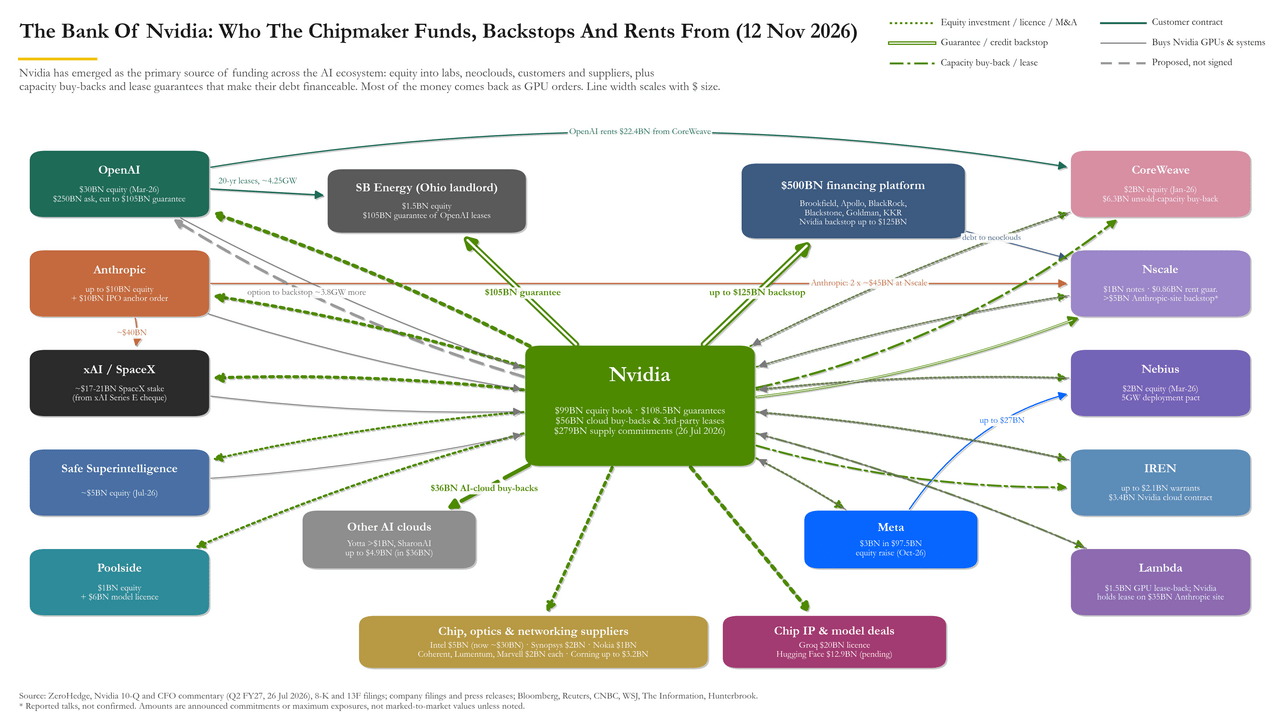
The concerns had been building since August. Major cloud providers were exploring alternative processors, while Nvidia faced substantial commitments to purchase wafers and memory. According to the research, total disclosed off-balance-sheet commitments and guarantees were estimated at approximately $530 billion by the end of July, including $279 billion in supply and capacity purchase obligations, more than double the $119 billion recorded three months earlier.
Those obligations aren’t all loans or equivalent credit exposures, but they do illustrate the enormous commitments supporting Nvidia’s commercial expansion.
More importantly, Huang and CFO Colette Kress were already questioning whether some of the financial support arrangements were producing acceptable returns. Nvidia reduced its commitment to an OpenAI-related data-centre lease in Ohio, while other proposed deals were paused as management reassessed the economics.
UBS analyst Tim Arcuri estimates that a meaningful pullback in Nvidia financing could remove $50 billion or more from the AI ecosystem. For hyperscalers sitting on enormous cash flows, that’s manageable. For heavily leveraged neoclouds relying on strategic financing to build the next generation of data centres, it’s the financial equivalent of discovering that your friendly neighbourhood banker has decided to review the collateral before approving another loan.
And now Kress, who was already challenging the generosity of some arrangements, is running the company.
That’s not simply a management transition. That’s the credit committee taking control of the bank.
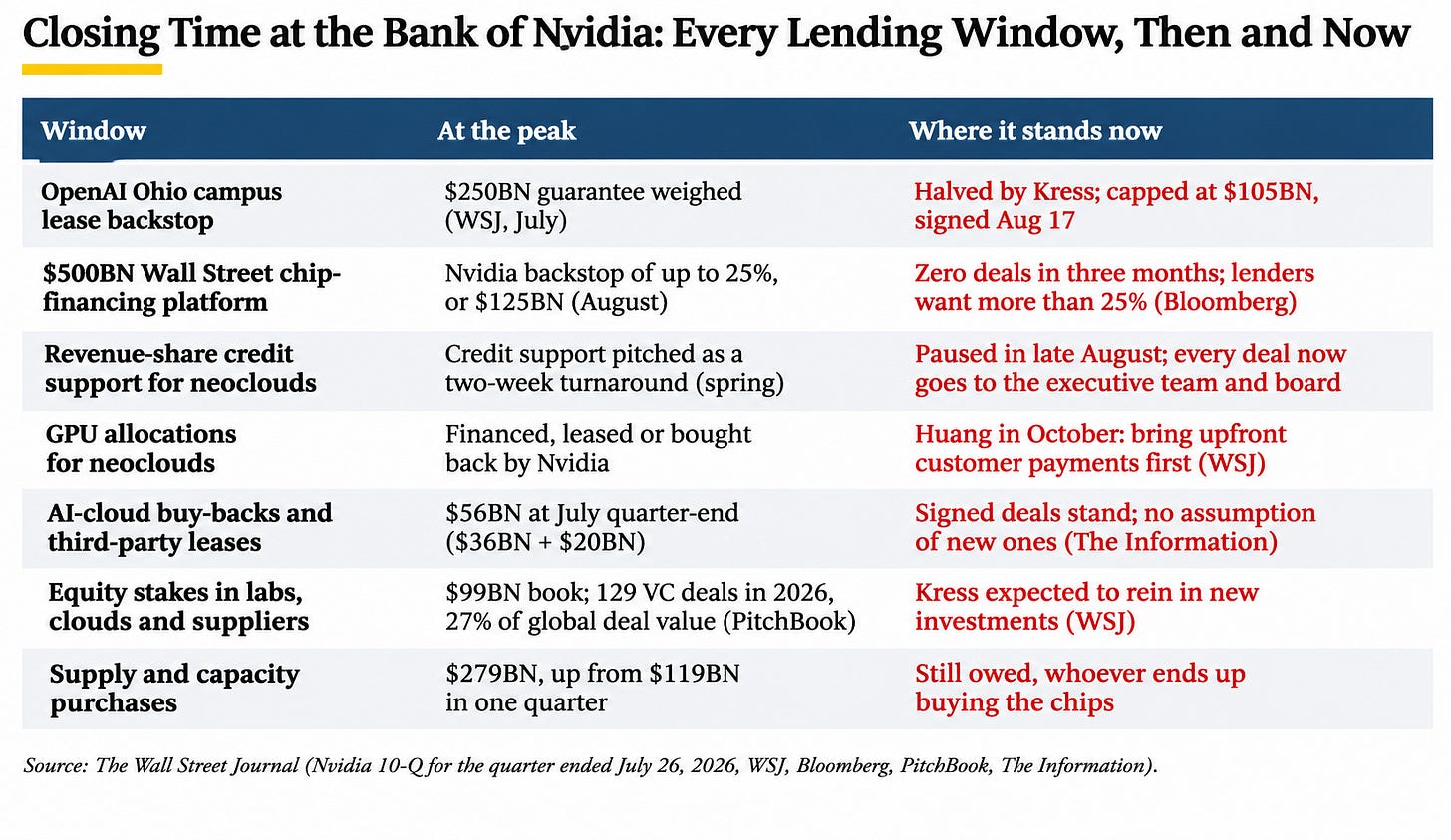
The implications extend well beyond Nvidia’s own balance sheet. The company has participated in 129 venture-capital transactions this year through November 10, compared with 49 in 2023, accounting for 27% of global venture deal value according to PitchBook.
Perplexity reportedly secured a $3 billion Nvidia investment shortly before Huang’s departure and is seeking additional financing at a $38 billion pre-money valuation. Meanwhile, proposed arrangements involving Reflection AI, valued at $25 billion, and Thinking Machines Lab, valued at $40 billion, remain under discussion. Nvidia-backed Nscale is also negotiating financing for a $45 billion West Virginia data centre linked to Anthropic.
Some of these businesses are burning substantial amounts of capital without anything approaching the revenues necessary to support their ambitions independently.
That’s perfectly acceptable in venture capital when investors understand the risks and the eventual returns justify the losses. It becomes considerably more complicated when the entire infrastructure chain assumes strategic financing will remain available almost indefinitely.
The uncomfortable question isn’t whether there’s genuine demand for computing power. There clearly is. It’s whether that demand supports every financing arrangement and valuation assembled around it.
And when the industry’s most important supplier starts asking that question itself, I tend to pay attention.
In the meantime, here is the web one more time. Every arrow on it was drawn by a man who no longer works there, and it is now being reviewed by the one executive who never liked the picture.
Washington Closes the Back Door While Nvidia Tightens the Front
As if the financing squeeze weren’t enough, Washington has decided to make the international distribution of American computing power considerably more complicated.
The Commerce Department moved Monday to restrict remote access to advanced AI processors through overseas data centres, targeting arrangements that allow Chinese companies to rent American computing power even when physical exports of the chips themselves are prohibited.
It’s a fairly obvious loophole. Banning shipments of advanced processors to China accomplishes far less if Chinese customers can access the same hardware through a rented server cluster in Singapore or Malaysia.
The new framework introduces licensing requirements affecting Singapore, Malaysia, Indonesia, Thailand, and Brazil, alongside controls on linked data centres and intermediaries that provide computing services to restricted customers. Certain arrangements involving more than 12 million aggregate processing-performance units would require licences, while qualifying American-headquartered operators would receive exemptions from some destination controls subject to additional reporting.
Existing affected facilities face a 90-day compliance period, giving operators precious little time to untangle commercial relationships that may have taken years to assemble.
The restrictions also tighten scrutiny around advanced-chip manufacturing and packaging arrangements, while replacing the earlier AI Diffusion framework with a more targeted approach.
But the practical difficulty is that computing power is considerably harder to police than a container of semiconductors arriving at Changi Airport. Cloud customers can operate through subsidiaries, intermediaries and complicated ownership structures, leaving regulators dependent on due diligence that may be difficult to enforce.
And there’s another commercial consequence. Restricting access to American processors may encourage Chinese customers to accelerate development of domestic alternatives, including Huawei’s Ascend platform, rather than simply abandoning their demand for computing power.
That’s the double squeeze now confronting Nvidia. The company was already reconsidering how much financing it wanted to provide, while Washington is making certain overseas customers more difficult to serve.
The politics have become almost as entertaining as the market action. Trump has backed calls for Huang’s reinstatement, Treasury Secretary Scott Bessent wants a dramatic leadership shake-up, and CNBC reports that Nvidia’s board isn’t considering bringing its former chief executive back.
Meanwhile, the allegations surrounding Huang’s relationship with Alice Huang remain disputed, with the intelligence questions unresolved. The personal scandal, potential export-control violations and Washington’s wider technology restrictions are related developments, but they shouldn’t be mistaken for proof of the same underlying offence.
From a trading perspective, however, the collision is unmistakable. Nvidia is trying to reassure investors about its leadership while the regulatory environment and commercial assumptions supporting its global business are changing beneath its feet.
Anthropic Arrives With the Collection Plate
And just as the Bank of Nvidia tightens lending standards, Anthropic is preparing to ask Wall Street whether it wants to take over part of the financing business.
The expected IPO is reportedly attracting demand for roughly seven times the shares available, with bankers preparing to price the offering Wednesday ahead of Thursday’s trading debut. That’s an extraordinary reception for a sector that has spent the past month watching investors become increasingly uncomfortable with inflated valuations and expensive capital commitments.
But an oversubscribed order book and a successful investment aren’t remotely the same thing.
I’ve watched enough blockbuster flotations over the years to know that investment bankers are extraordinarily good at organizing a party when everybody wants an invitation. The rather more revealing test comes after the stabilization bid disappears and shareholders discover that an enormous valuation comes with equally enormous expectations.
For Anthropic, however, the opportunity is bigger than a spectacular opening print.
A successful listing could give the company direct access to public equity, convertible bonds and other financing channels, reducing its dependence on strategic arrangements involving Nvidia and infrastructure providers. That’s potentially important for an industry where a one-gigawatt data centre can cost $30 billion or more.
The irony is that public shareholders may now be asked to finance some of the expansion Nvidia itself had begun to question.
And while access to capital is a wonderful thing, it doesn’t magically make the underlying economics more attractive. It simply changes whose money is exposed when the numbers don’t quite add up.
Sam Altman remains confident that strong AI demand and revenue growth will carry the industry through the current uncertainty, and there’s a reasonable argument that the leading laboratories can eventually build very profitable businesses.
But that’s not the same as saying every associated infrastructure investment will deliver an acceptable return.
The market is beginning to make that distinction, and it’s overdue.
The AI Casino Discovers That Technology Risk Isn’t Just About Valuations
The broader selling also reflects a rather unfortunate collection of operational problems across corporate America.
Microsoft's (MSFT) recent outage, reportedly linked to a software defect that went undetected for months, has already embarrassed a company spending enormous sums promoting technology-driven productivity. JPMorgan’s Chase banking app suffered technical problems Monday, while L3Harris came under scrutiny following a nationwide flight grounding linked to its systems.
Individually, those incidents aren’t evidence that the AI investment cycle is fundamentally flawed. But collectively, they’re hardly helping confidence in a technology sector asking investors to believe that ever-greater spending will produce ever-greater efficiency.
It’s difficult to sell Wall Street an immaculate digital future when the email stops working, the banking app goes down, and the airport departure board starts looking like a Christmas tree.
JPMorgan (JPM) shares declined as the KBW Bank Index fell 1.8%, while L3Harris (LHX) also came under pressure. Ballard Power slumped after disappointing results, although Tyson Foods (TSN) jumped 6.9% following stronger earnings and sales.
That last detail is worth remembering. Investors haven’t stopped rewarding companies that deliver. They’re simply becoming less enthusiastic about paying in advance for promises that may take years to materialize.
Consumer staples led the S&P 500’s defensive sectors, Treasuries attracted buying and falling oil prices provided some macro relief. The rotation suggests money managers are looking for places where earnings and cash flows are easier to measure than the projected value of a data centre that hasn’t been built yet.
The AI trade still has strong commercial momentum, and I’d be reluctant to declare the entire technology boom finished just because the semiconductor sector endured another ugly session. But the financing landscape is changing, the regulatory environment is becoming more demanding, and the market is starting to separate companies generating substantial cash flow from those still depending on somebody else’s generosity.
Tuesday’s Nvidia results will therefore be less about whether another spectacular revenue number can be delivered and more about what management intends to do with the balance sheet supporting the ecosystem. Thursday’s Anthropic debut will test whether public investors are prepared to shoulder more of the financial burden.
The Bank of Nvidia isn’t closing its doors, but the days of complimentary credit appear to be ending. And after three years of applauding every new AI project like another winning lottery ticket, Wall Street is finally discovering that even the most revolutionary technology has to pass a credit check.
The chips may be getting faster, but the money is getting harder to find. That’s a much more interesting problem for the market than another argument about whether Nvidia can beat earnings by a few billion dollars.
And finally, as Bloomberg macro strategist Frank Monkam notes, the ‘Fed Put'- or the expectation that monetary policy would cushion equity corrections - appears to be missing. That puts equities in an uncomfortable reality amid the current spike in volatility.
Despite the recent drawdown in equities, markets continue to price in a more hawkish Fed, with June 2027 rate expectations rising even as the SPX tests the bottom of its recent range. Historically, equity corrections have prompted investors to expect a policy backstop in the form of monetary easing. This time, persistent inflation risks are complicating that calculus.
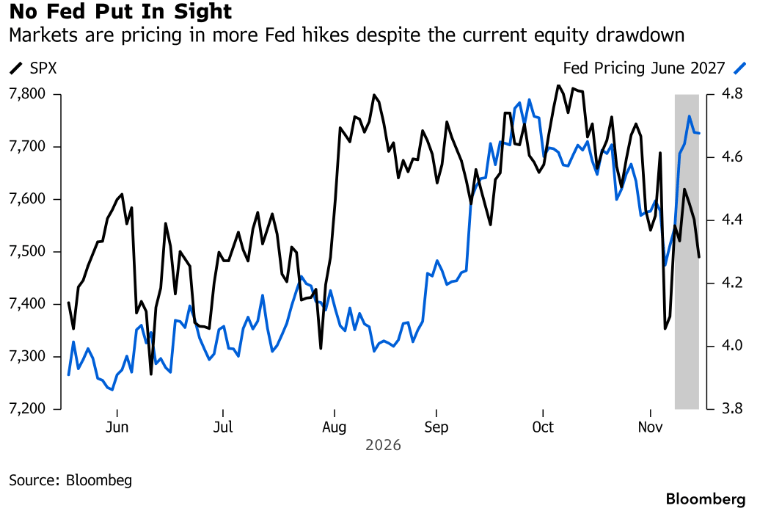
For retail investors in particular, the implications could be dire. Dip alpha, or the alpha historically generated by buying market dips, is becoming increasingly difficult to harvest when the prospect of a monetary policy rescue keeps fading.
So much for the record retail buying last week...
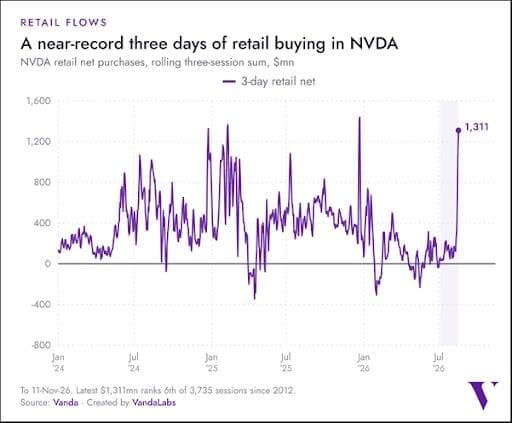
A big ouch ahead of tomorrow night’s earnings... and Anthropic’s IPO

Comments
Log in or sign up to join the conversation.