

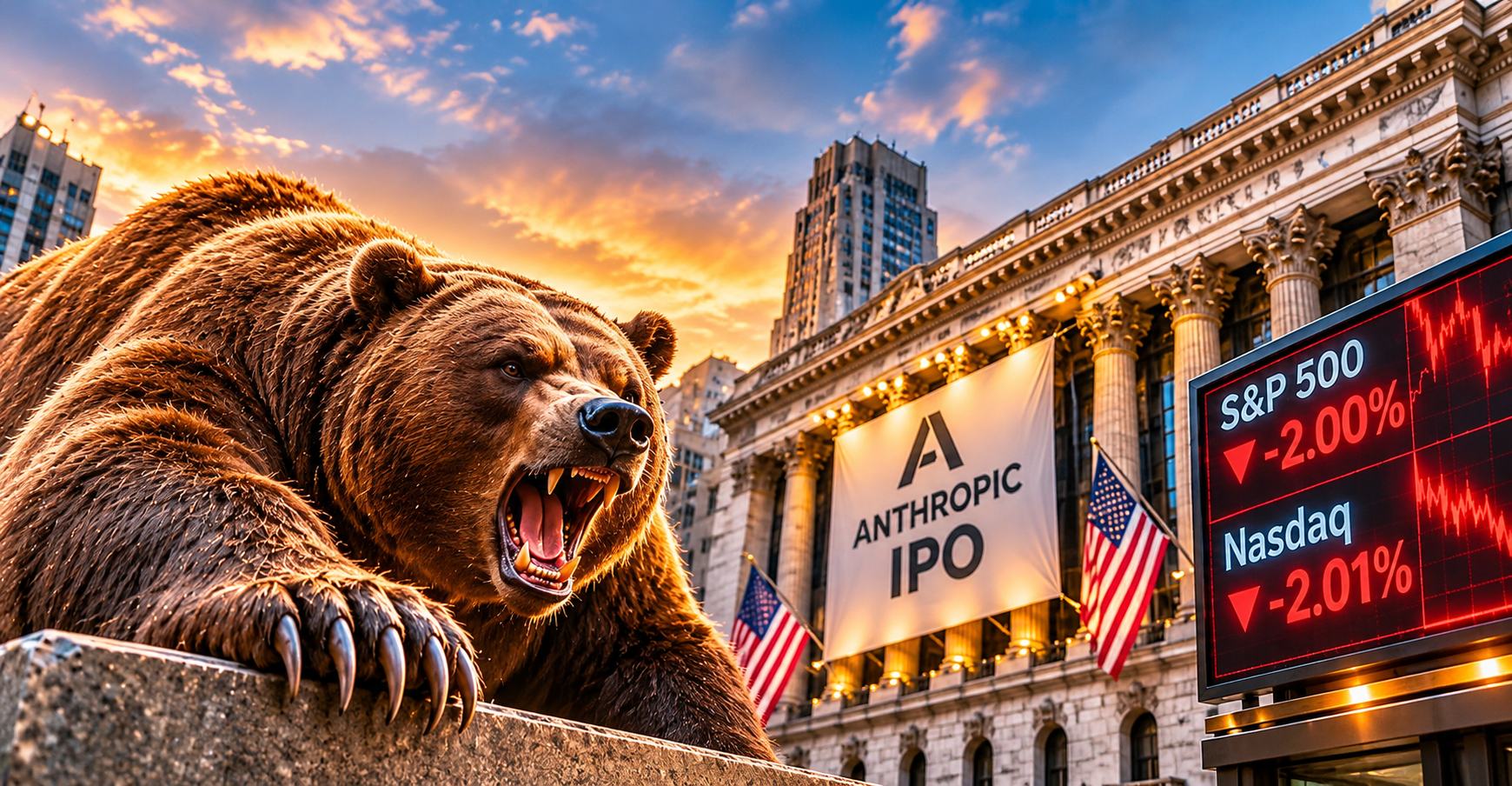
The liquidity arithmetic was hard to ignore. Anthropic (ANT) raised $81.3 billion through its public offering, or $107.3 billion including the $26 billion strategic private placement, while the S&P 500 shed approximately $1.3 trillion in market value during the session. Those numbers aren’t directly comparable, and they certainly don’t establish that IPO funding caused the equity losses. But they capture the uncomfortable optics of a market trying to absorb an enormous new asset while everything surrounding it was being marked down.
Takeaways by Dark Side of the Boom
• The biggest IPO in history delivered a spectacular opening, but Wall Street couldn’t swallow the supply without choking on the rest of the market.
• Anthropic’s success exposed an increasingly uncomfortable divide between investors willing to pay for frontier AI and those still financing the infrastructure beneath it.
• A heavily short gamma market turned an ordinary sell the news reversal into a disorderly liquidation, with options hedging pouring fuel on the fire.
• King Dollar and Treasuries found buyers as equities, precious metals and crypto buckled, leaving Friday’s options expiration as the next potential turning point.
Wall Street Chokes on Anthropic
Wall Street rolled out the red carpet for Anthropic, uncorked the champagne and promptly gagged on the biggest IPO in history. What began as a celebration of artificial intelligence ended with the S&P 500 down 2%, the Nasdaq swinging from gains of more than 2% to losses of roughly the same magnitude, and more than 460 members of the benchmark retreating. The S&P has now fallen for six consecutive sessions, its longest losing streak since April 2024, while the Dow is knocking on the door of a technical correction. For a market supposedly desperate to rediscover its AI mojo, this was an extraordinarily expensive way to demonstrate enthusiasm.
Some context: the S&P 500 lost around $1.3 trillion in market cap today as Anthropic's IPO went out around $1.3 trillion.
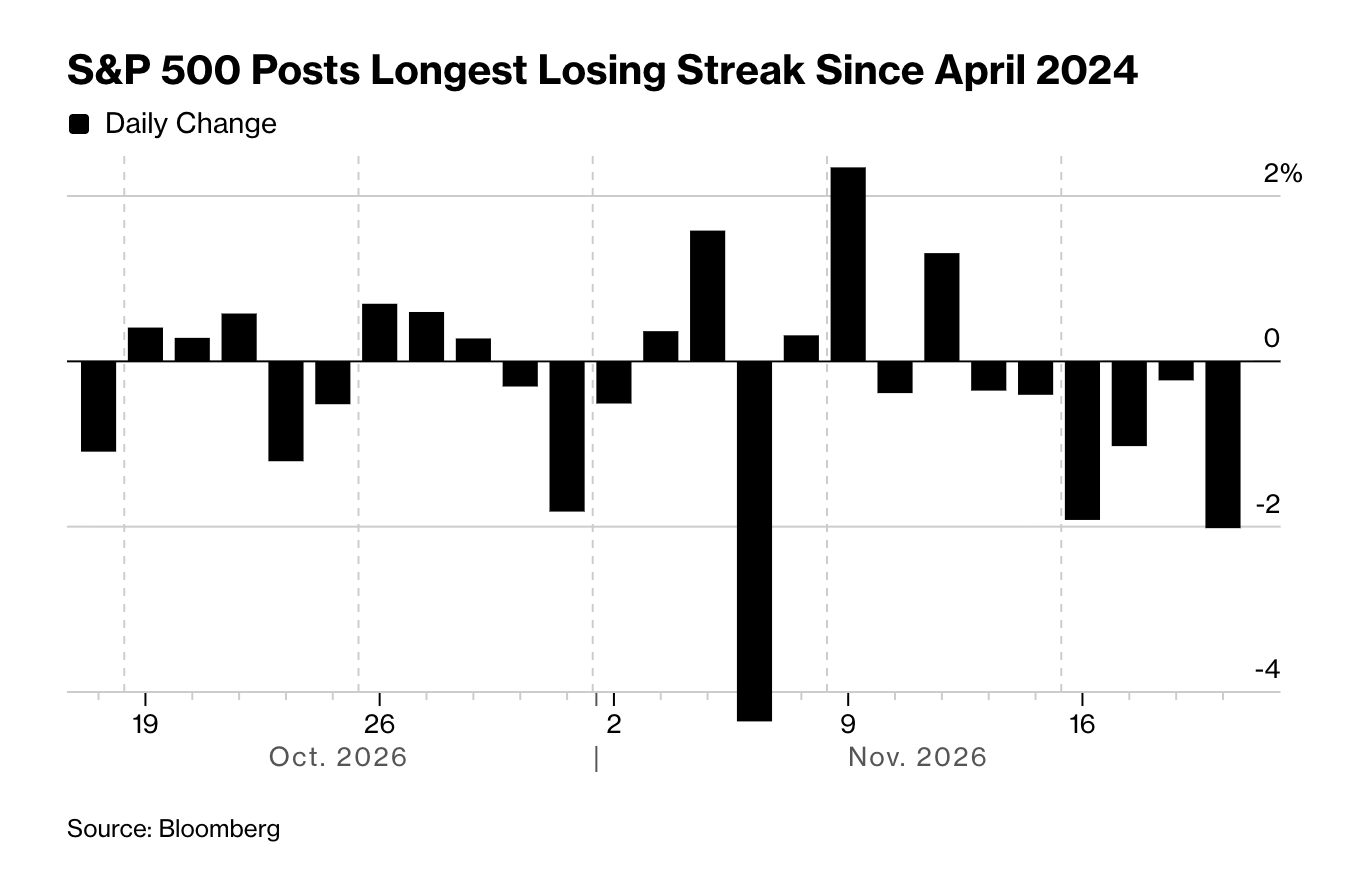
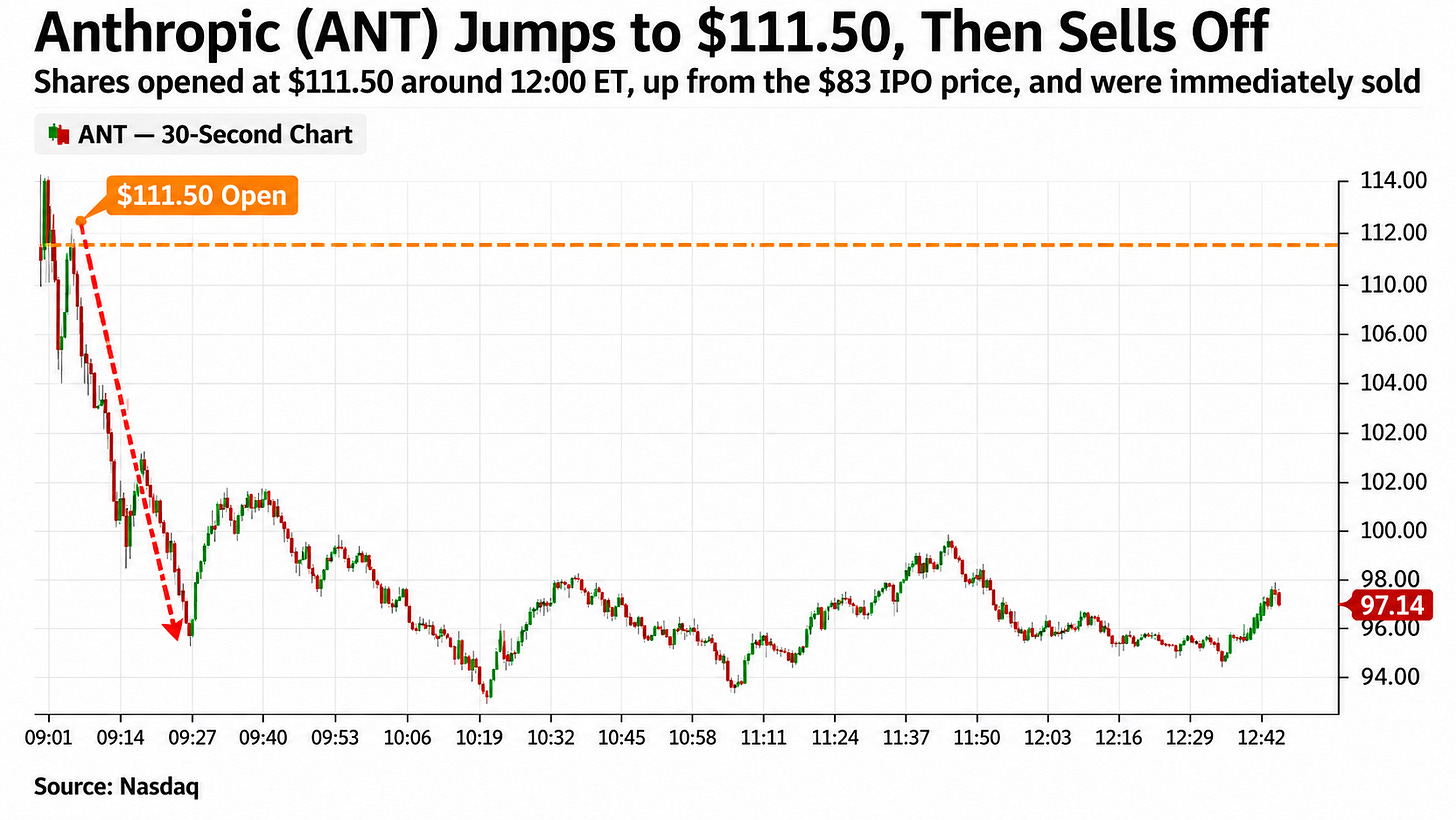
Anthropic itself wasn’t the problem, at least not in the conventional sense. The stock opened at $111.50 against its $83 IPO price, an immediate premium of more than 34%, before sellers descended and whittled the advance to roughly 17% by the close. That still leaves the Claude developer with a fully diluted valuation approaching $1.8 trillion, putting it among the ten largest public companies on the planet. The IPO was a triumph for the underwriters and early shareholders. Unfortunately, the rest of Wall Street appeared to have been invited to the party mainly to pick up the bill.
The timing was almost comical. Equity futures rallied overnight on expectations that Anthropic would restore confidence in the AI complex, only for the broader market to begin losing altitude as the opening indication for ANT climbed. Then came reports that many institutional investors had received little or no allocation. Whether that reflected overwhelming demand or an unusually concentrated distribution, it left the market trying to price a record offering against a backdrop of increasingly fragile risk appetite.
And once ANT began trading around midday, the wheels really came off.
The Biggest IPO Meets Wall Street’s Worst Positioning
The problem wasn’t simply that investors decided to sell the news. The market was carrying a particularly nasty options configuration into the session, with dealers reportedly holding their largest short gamma exposure since 2019. Nomura’s Charlie McElligott had already flagged the dangerous collision between Nvidia, Anthropic and November options expiration, and Thursday delivered the sort of violent price action that makes dealers wish they’d taken the afternoon off.
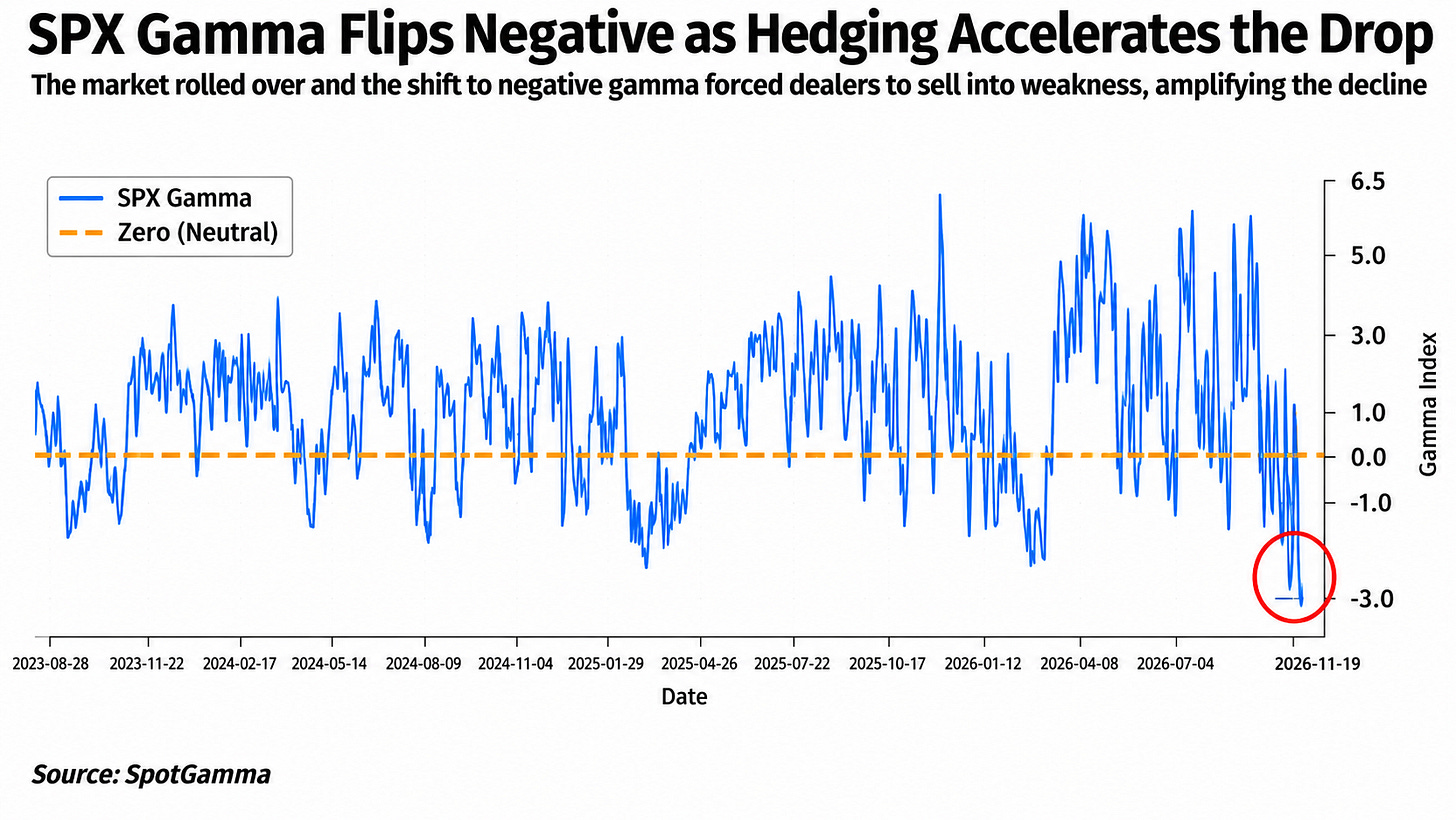
Short gamma doesn’t tell you which direction the market will travel. It tells you how quickly things can get ugly once it chooses one. When dealers are short gamma, their hedging tends to reinforce the prevailing move, buying into rallies and selling into declines. Had the opening enthusiasm survived, the same machinery could have helped launch a spectacular squeeze. Instead, equities rolled over, zero-day options activity amplified the afternoon decline, and the hedging machinery began feeding the very weakness it was supposed to manage.
There was plenty of dry tinder. Goldman’s prime brokerage data showed hedge funds carrying technology exposure of roughly 18% against an index weight near 29%, an extraordinary 11-percentage-point underweight. On paper, that left enormous room for a rally if investors were forced to chase performance. But underweight investors aren’t necessarily eager buyers when the market starts falling through the floor. The hoped-for squeeze never arrived, leaving sellers with precious little resistance.
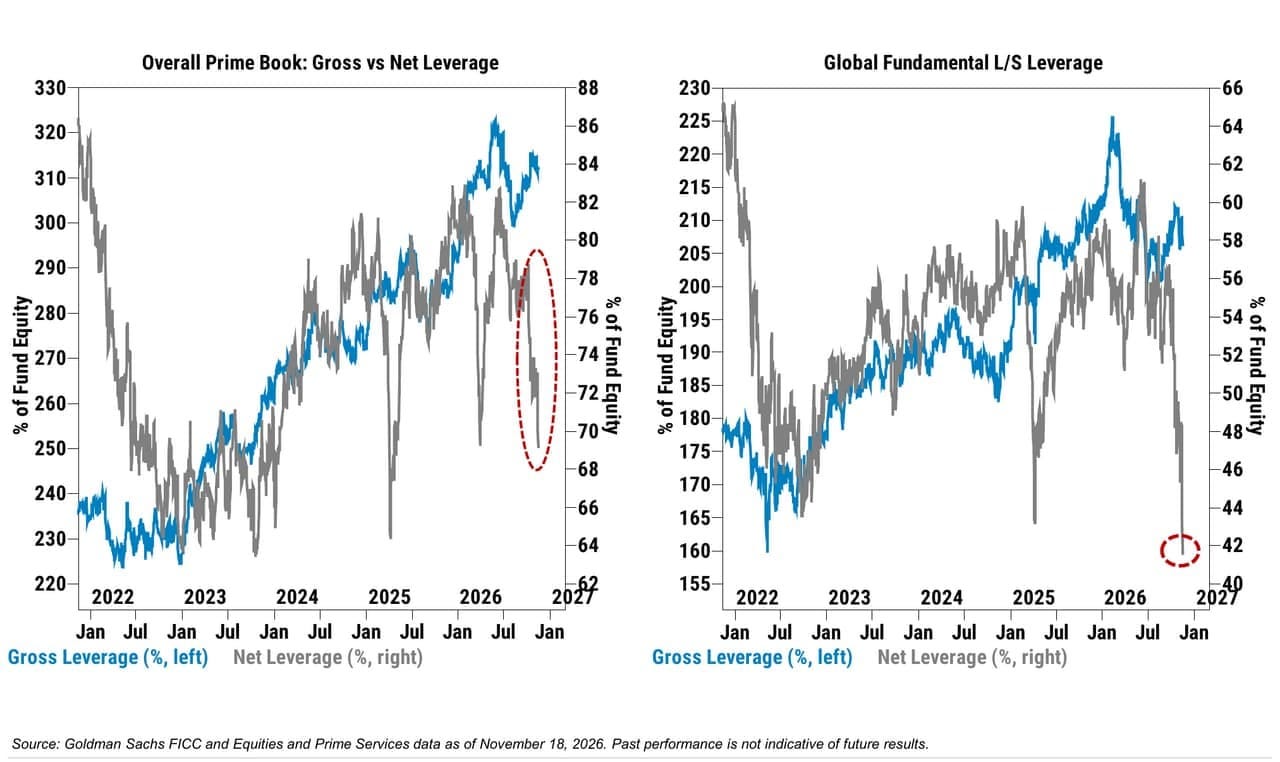
The damage spread well beyond the obvious AI names. The Magnificent Seven surrendered their early gains, neocloud stocks went from roughly 6% higher to 4% lower, and all eleven S&P sectors finished in the red. The VIX approached 28, volatility of volatility climbed above 125, and rising implied correlation suggested that investors were no longer distinguishing much between winners and losers. The market was selling risk rather than carefully selecting casualties.
And the liquidity arithmetic was hard to ignore. Anthropic raised $81.3 billion through its public offering, or $107.3 billion including the $26 billion strategic private placement, while the S&P 500 shed approximately $1.3 trillion in market value during the session. Those numbers aren’t directly comparable, and they certainly don’t establish that IPO funding caused the equity losses. But they capture the uncomfortable optics of a market trying to absorb an enormous new asset while everything surrounding it was being marked down.
The money had to come from somewhere. And judging by the performance of Nvidia (NVDA), copper, gold, and crypto, investors weren’t exactly reaching into their spare-change jars.
The AI Winner Takes the Money, but the Builders Take the Beating
The more revealing fault line is emerging between the businesses developing frontier AI models and the sprawling infrastructure trade that finances their ambitions.
Anthropic’s debut demonstrates that investors remain willing to pay extraordinary prices for a leading model developer. What it doesn’t establish is that the market has rediscovered an unlimited appetite for debt-heavy cloud operators, semiconductor suppliers and the financing arrangements supporting the AI construction boom.
That’s a much tougher proposition, especially as interest rates climb and credit investors become more discriminating.
AMD (AMD) was caught in a separate storm after Hunterbrook Capital disclosed a short position and raised allegations involving China-related risks and financing arrangements. AMD denied wrongdoing, but the stock was hammered nonetheless. New US chip licensing restrictions also pressured Taiwan Semiconductor-exposed companies and Asian data-centre names, adding another layer of uncertainty to an industry already struggling to defend its capital spending assumptions.
Credit markets reflected the broader discomfort. Investment-grade and high-yield spreads swung sharply before finishing wider across sectors, although hyperscaler and data-centre credit held up somewhat better than the equity carnage might suggest.
The distinction between buying a successful AI model developer and underwriting the entire infrastructure race is becoming increasingly important. Anthropic can attract a mountain of equity capital without proving that every supplier, neocloud operator and leveraged data-centre project deserves its previous valuation.
Wall Street appears increasingly willing to finance the perceived winners while demanding a much harder reckoning from everyone selling them the shovels.
Meanwhile, the dollar and Treasuries offered the usual escape routes from a badly bruised equity market. The ten-year Treasury yield drifted back toward 5%, even as crude oil edged higher following renewed attacks on tankers around the Strait of Hormuz. The historic Trump-Xi-Putin summit in Shenzhen produced a declaration supporting increased refined petroleum supply, but the oil market appeared more interested in physical security than diplomatic choreography.
King Dollar extended its advance to seven of the past eight sessions, reaching fresh 18-month highs as high-beta currencies came under pressure. The Colombian peso and offshore yuan were among the casualties of a broader carry unwind, while gold slipped below $3,700 for the first time since September 2025. Bitcoin (BTC.X) suffered another ugly round trip, retreating toward its July lows.
When bonds and the dollar are attracting money while gold, crypto and equities are being liquidated together, the market is telling you that immediate liquidity has become more valuable than long-term investment narratives.
And that’s where Friday’s options expiration becomes particularly important.
The S&P 500 has now slipped further below its 200-day moving average (nothing good happens when any asset slips below the 200-day Dark Side of the Boom), with the sixth consecutive decline adding an uncomfortable technical dimension to the fundamental debate.
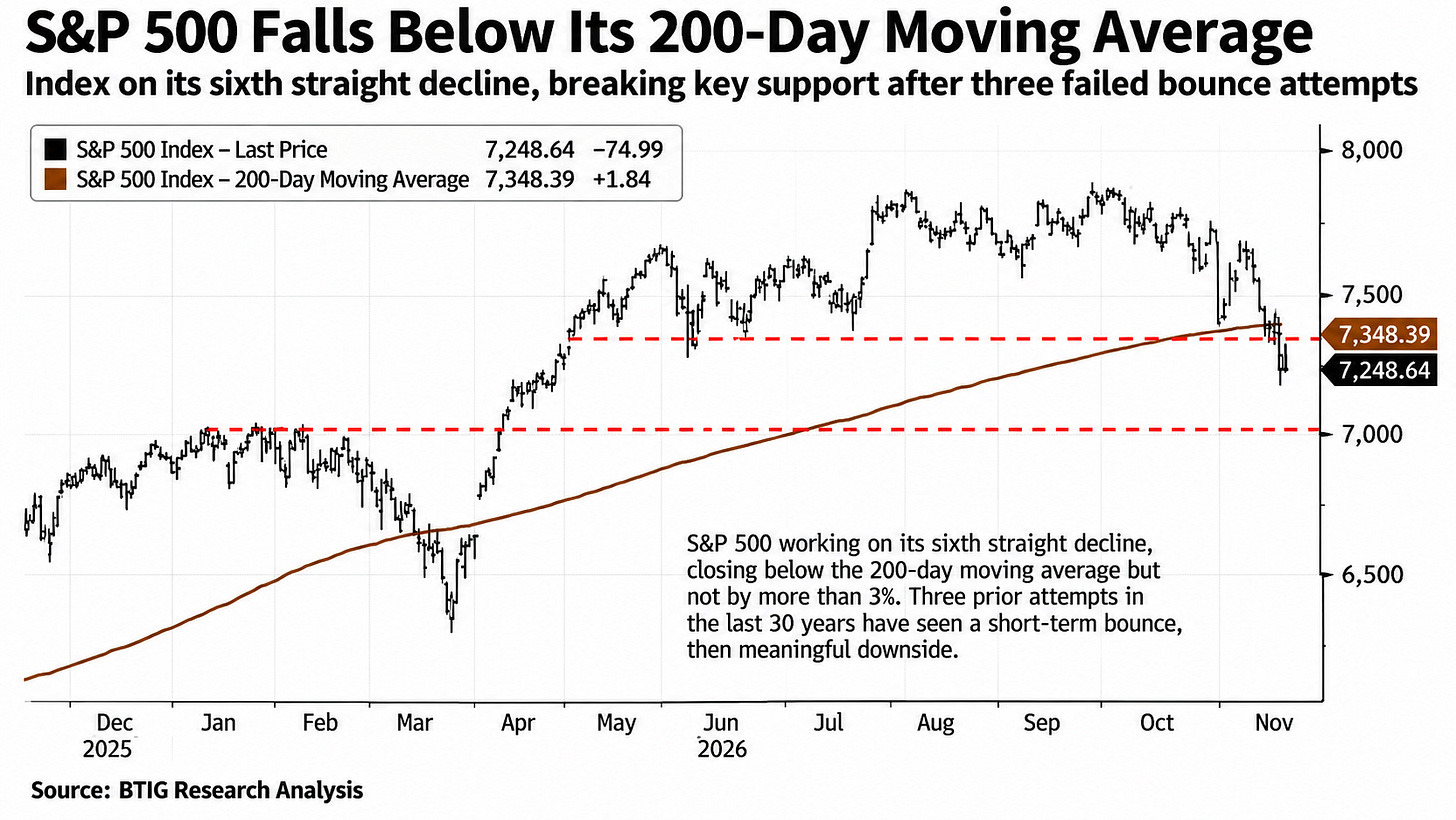
Historical comparisons offer some consolation: on the three previous occasions over the past 30 years when the index posted six straight declines while finishing less than 3% below its 200-day average, equities were higher five sessions later. Unfortunately, each episode was followed by more substantial downside.
With the S&P’s intraday low near 7,193, the 7,000–7,100 area being watched by technical traders is beginning to look considerably less remote.
Friday’s expiration could release some of the negative gamma that helped turn Thursday’s reversal into a rout, potentially allowing the market to stabilise heading toward Thanksgiving. But that would resolve a mechanical pressure point, not the wider argument about AI profitability, borrowing costs and the increasingly selective appetite for technology risk.
Anthropic’s first session proved that Wall Street still has an enormous appetite for the AI crown jewels. The trouble is that investors seem increasingly willing to sell the rest of the kingdom to pay for them. And after Thursday’s spectacular failure to sustain an opening rally, I’d be watching what happens to Nvidia and the broader technology complex after the options machinery resets, rather than taking comfort from another impressive print in ANT.
Comments
Log in or sign up to join the conversation.