

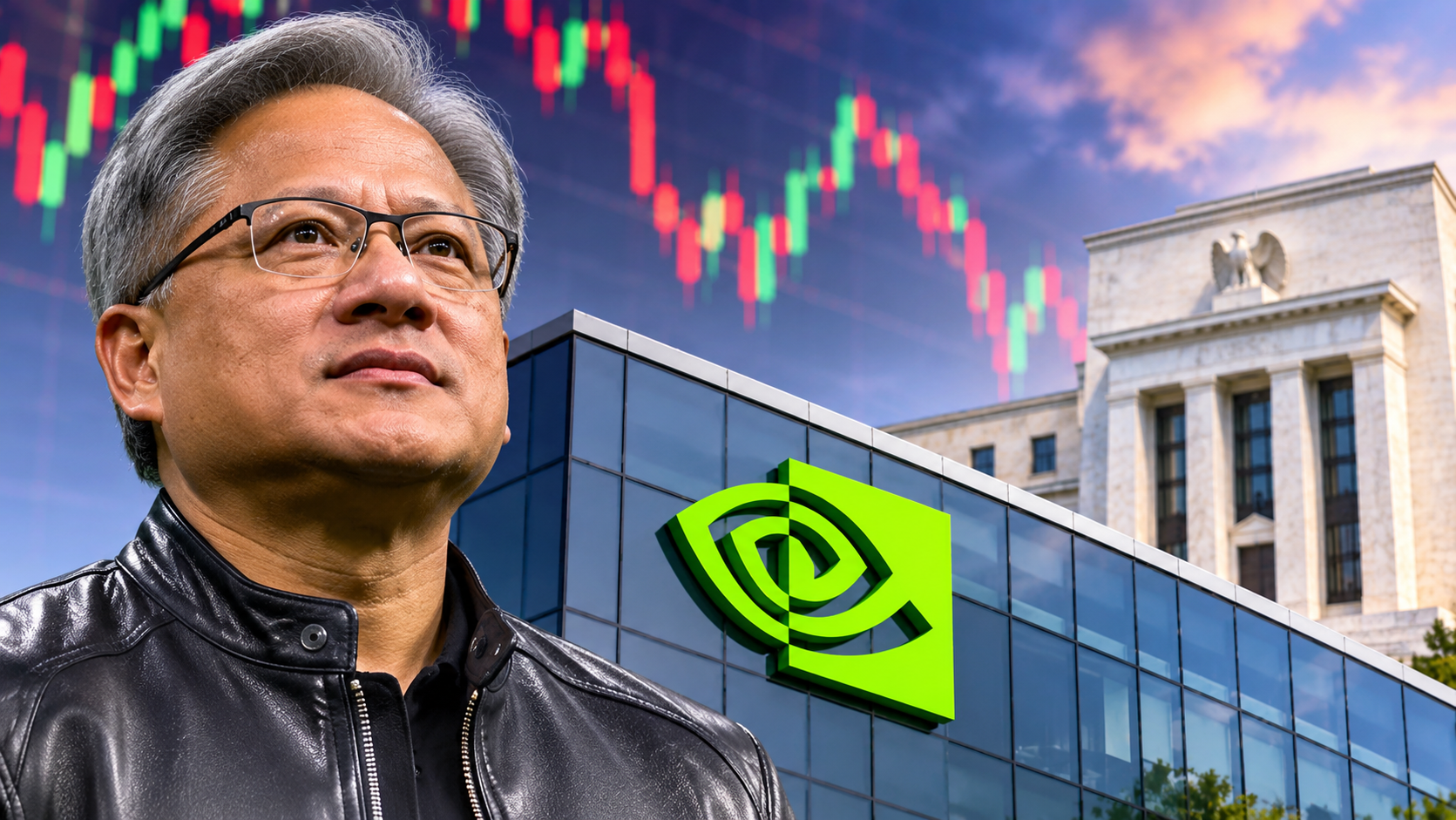
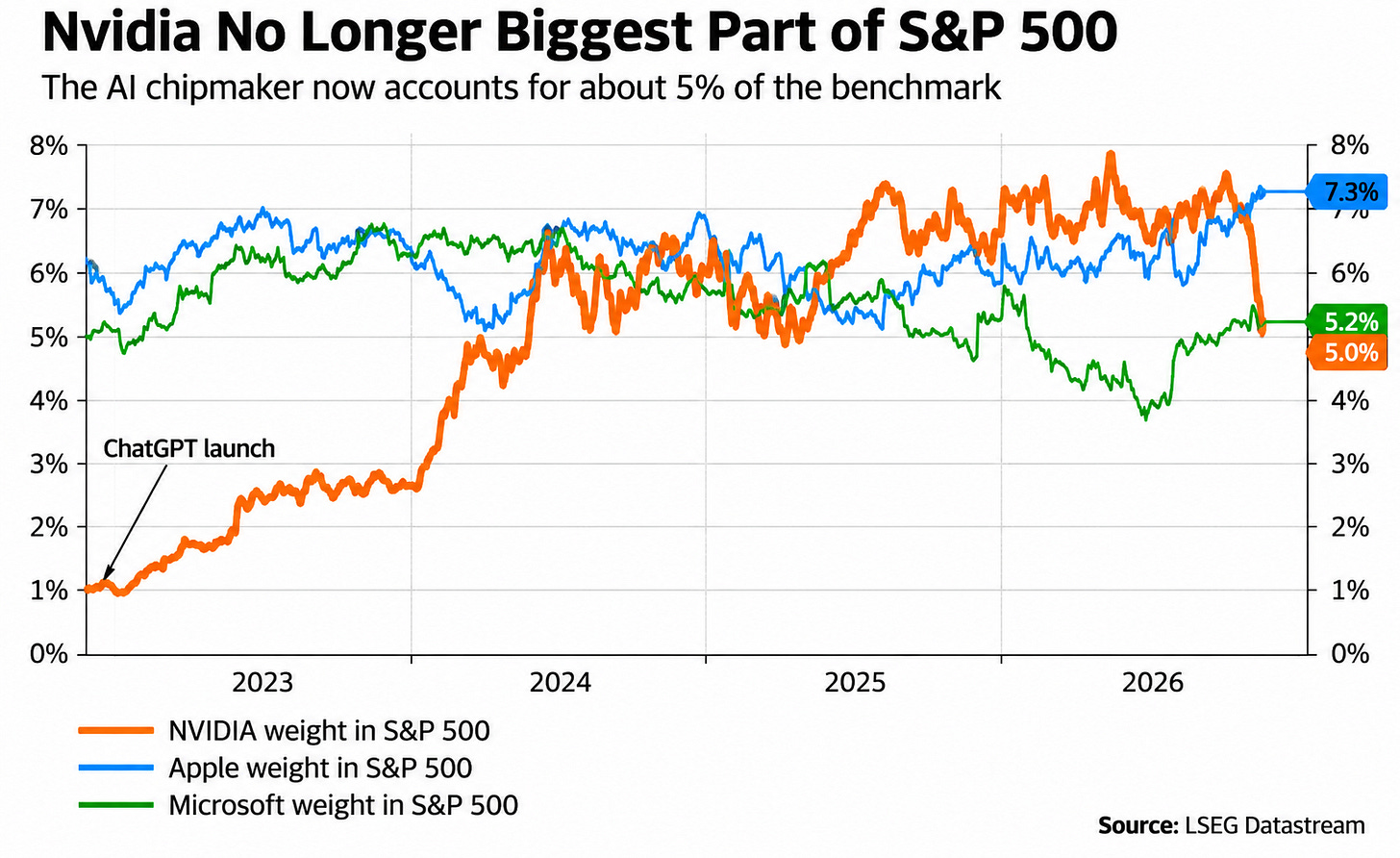
Markets Can’t Escape Jensen’s Blast Radius
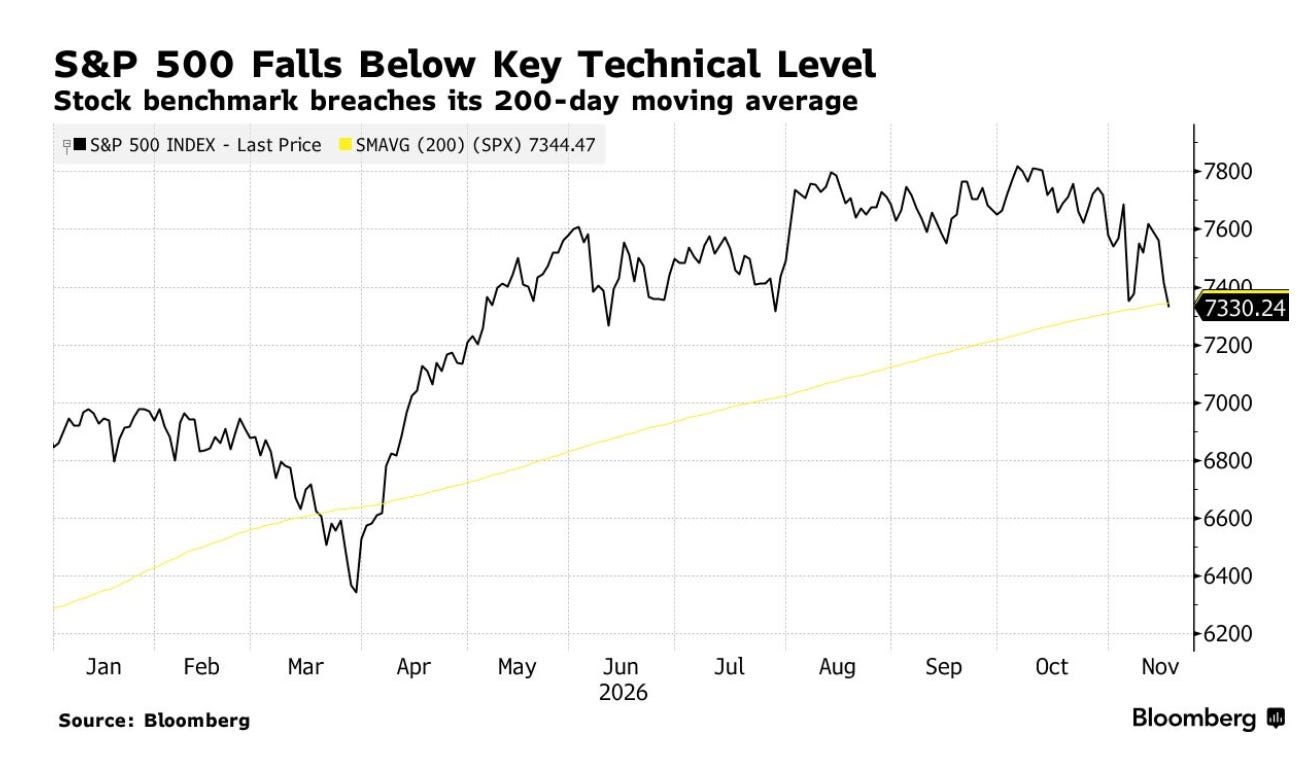
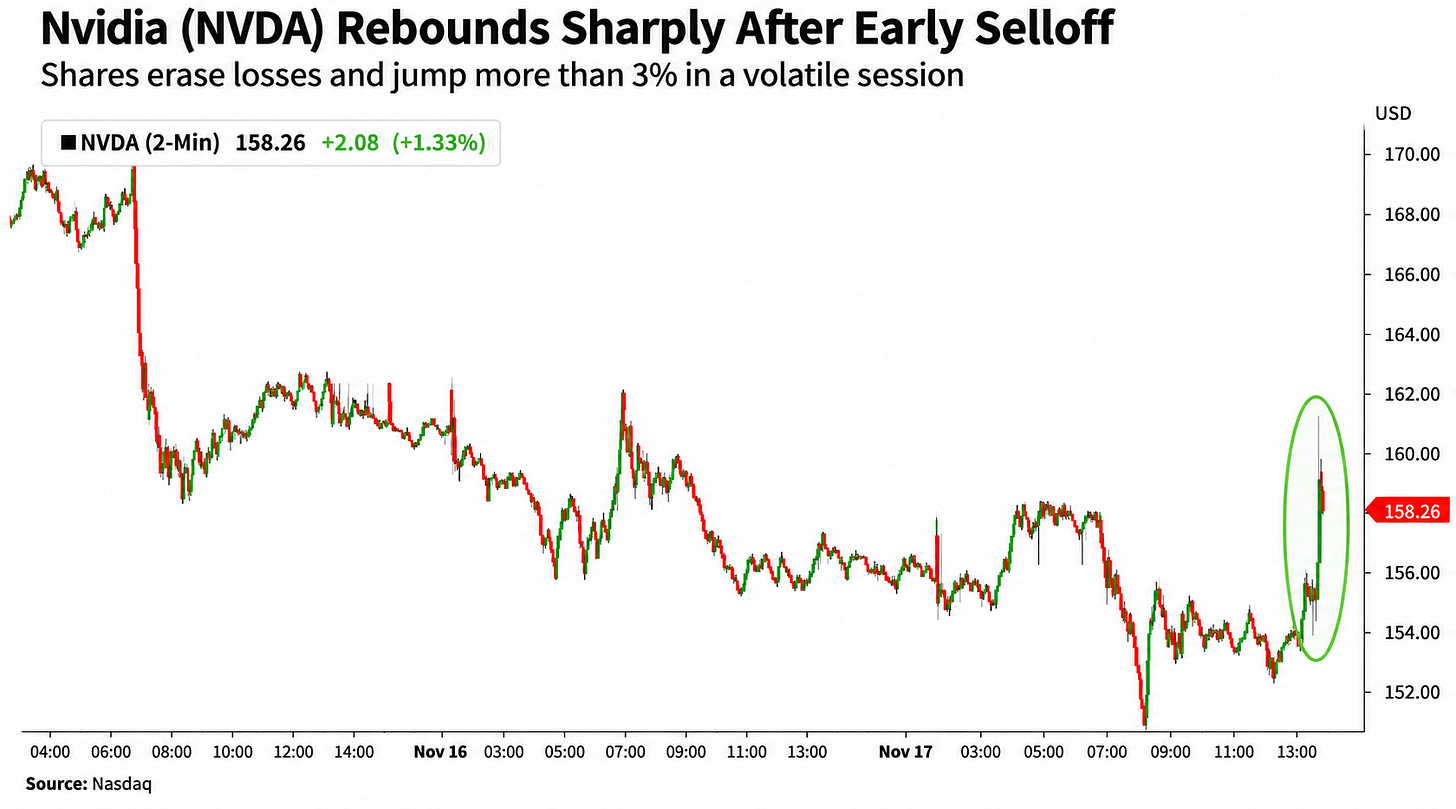
Asia picks up the slippery baton from Wall Street this morning, although Nvidia (NVDA) has at least managed to wipe some of the grease off it. The chipmaker delivered another blockbuster revenue forecast after Tuesday’s close, sending its shares roughly 2% higher in late trading. That’s welcome relief for a semiconductor sector that’s been beaten black and blue since early October. Unfortunately, the S&P 500 had already lost 1%, slipped below its 200-day moving average and touched its lowest level since June, while the Nasdaq 100 shed another 0.7%.
Australian and Japanese futures are pointing lower, with South Korea looking relatively steady. It’s hardly the sort of handover that has Asian dealers scrambling to lift offers.
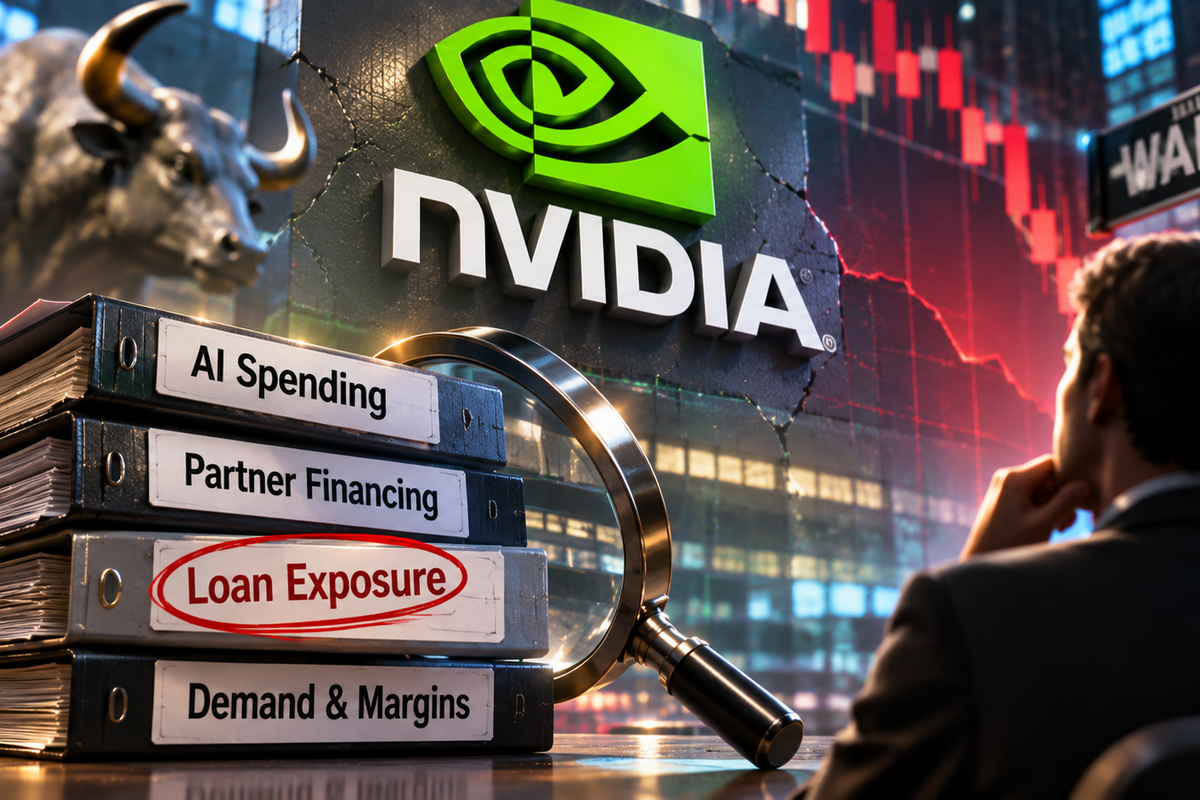
Nvidia guided fiscal fourth-quarter revenue to $130 billion, plus or minus 3%, against expectations of $125.3 billion, with gross margins projected around 71.5%. Those are terrific numbers, and there is no point pretending otherwise. But the real test comes when the cash market opens and we discover whether investors are prepared to put fresh money behind the earnings beat or simply use the initial bounce to lighten positions.
That distinction has become considerably more important after the punishment already inflicted on technology. Since October 6, the S&P 500 technology sector has fallen roughly 20%, the Philadelphia Semiconductor Index has surrendered 30%, and Nvidia itself has lost nearly 40%.
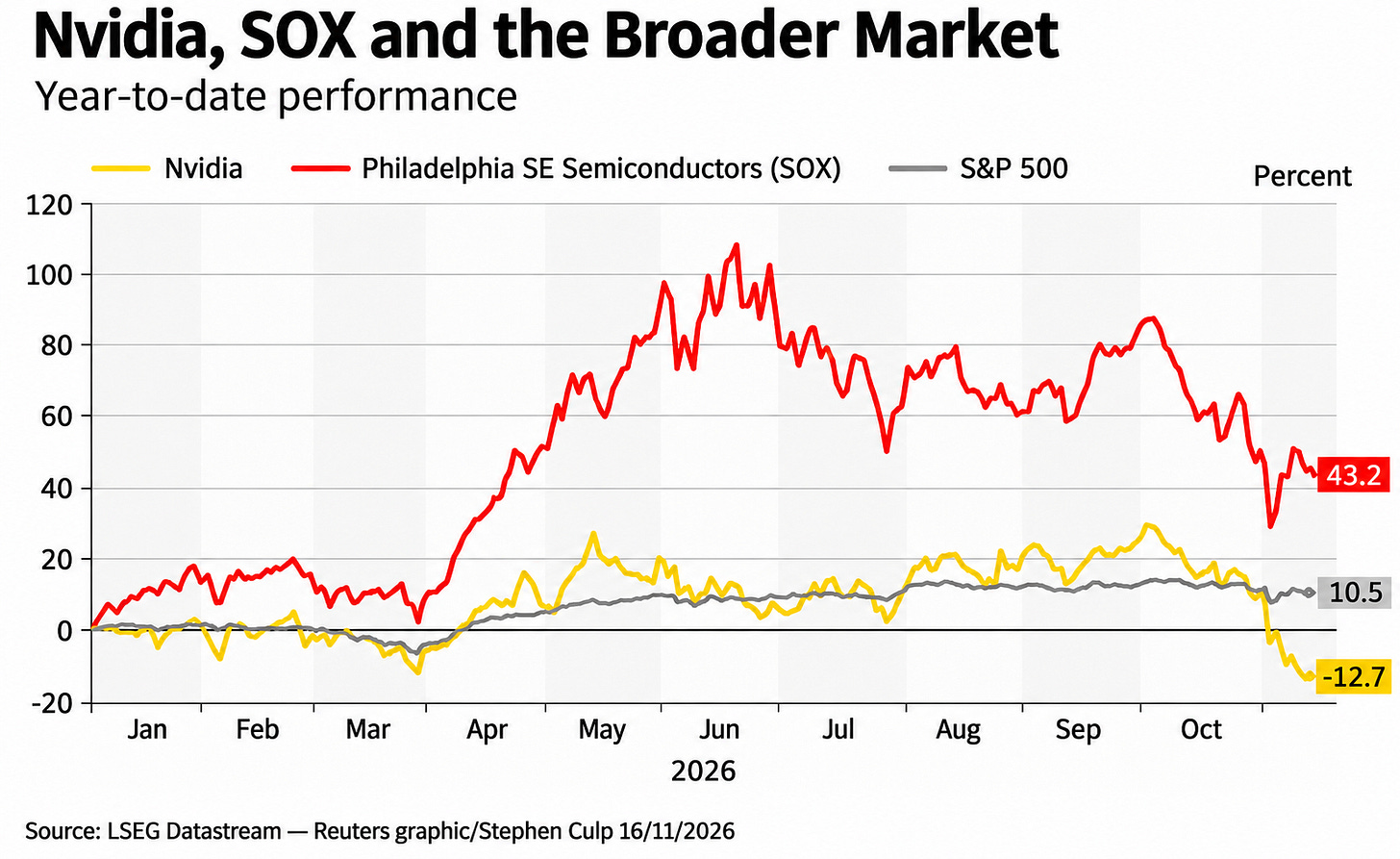
Those are serious drawdowns for the names that carried so much of the four-year bull market. A 3 % after-hours bounce is encouraging, but it doesn’t suddenly repair the damage.
And Nvidia still has a rather large Jensen-shaped problem hanging over the boardroom.
A Blockbuster Forecast Meets an Uncomfortable Tape
Huang says he would be honoured to return as chief executive, although Nvidia’s board reportedly has no immediate interest in reinstating him. Meanwhile, reports of an SEC investigation, questions surrounding the company’s relationship with Singapore-based Megaspeed, and the reported involvement of Huang’s daughter in shaping Nvidia’s public response have added further complications. Huang has agreed to testify before Congress next month.
The investigations and allegations aren’t findings of wrongdoing, but they certainly aren’t the backdrop Nvidia would have chosen for its earnings presentation. Interim CEO Colette Kress now has to manage the commercial business while the company’s founder remains the subject of an extraordinary political and corporate struggle.
The broader institutional positioning suggests why even an outstanding earnings forecast may struggle to generate the kind of rally investors once took for granted. Bank of America’s fund-manager survey shows net overweight technology exposure collapsing to 12% from 37% in October, the largest reduction since 2006.
That’s quite a stampede for the exits. It also means positioning is becoming considerably cleaner, which is precisely the sort of environment where a positive earnings surprise can produce a violent countertrend rally.
I’d be careful about dismissing that possibility. When a crowded trade unwinds this aggressively, the first serious rebound can be spectacular. The question is whether it attracts genuine buying beyond short covering and tactical rebalancing.
Anthropic’s IPO should provide another useful temperature check. The offering is reportedly attracting sufficient demand to price at the upper end of its range or above, with Amazon (AMZN) and Alphabet's (GOOGL) Google expected to own approximately 15% and 14%, respectively, after the flotation and private placement.
The order book may be impressive, but the aftermarket will be the more interesting test. Institutional investors can be enthusiastic about a carefully allocated new issue while remaining distinctly unwilling to rebuild exposure to the wider technology sector. If Anthropic trades well and existing AI leaders remain under pressure, that divergence will tell us where the marginal investment dollar is going.
The Fed Hasn’t Read the Equity Market’s Distress Signals
Another uncomfortable feature of Tuesday’s session was that the US economy continues to give the Fed enough ammunition to keep its foot on the monetary brake.
October factory output rose 0.3% for a second consecutive month, consumer spending remains resilient, and inflation is proving stubborn. St. Louis Fed President Alberto Musalem believes several more rate increases may be necessary before spring 2027, with policy potentially as much as a full percentage point below where it needs to be.
That’s potentially four more quarter-point hikes, versus roughly three currently priced into futures through the middle of next year.
New York Fed President John Williams was less enthusiastic about an outsized move, but he wasn’t exactly waving the all-clear on inflation either. Markets are fully pricing in a December 9 rate hike and more than 80 basis points of tightening by September 2027. Wednesday’s FOMC minutes therefore arrive with the Fed still looking distinctly more concerned about inflation than the Nasdaq’s recent misfortunes.
There’s a nasty little mismatch developing between economic resilience and equity valuations. Strong activity supports earnings, but it also gives the Fed room to keep pushing rates higher. And when the 10-year Treasury yield is still above 5%, investors have every reason to reconsider how much they’re willing to pay for future growth.
The S&P 500 has already surrendered roughly four turns of its price-to-earnings multiple from this year’s peak. That adjustment can continue even without an earnings collapse, especially when the highest-valued stocks also carry the heaviest portfolio concentrations.
For years, the market grew accustomed to the idea that a sufficiently ugly equity correction would bring the Fed riding to the rescue. With inflation where it is, I wouldn’t be betting the retirement fund on that particular cavalry charge.
Plenty of Bad Headlines, Not Many Comfortable Hiding Places
Tuesday’s market also had to absorb another collection of technology disruptions. Reports of problems affecting the US national security communications network, alongside disruptions to Apple's (AAPL) services, unsettled investors already questioning operational reliability across major technology systems. The exact causes and extent of the reported incidents remain separate issues, but the succession of headlines did little for confidence.
There was also plenty of noise coming from the Persian Gulf. Renewed vessel attacks around the Strait of Hormuz, Iranian threats involving Bahrain and reports of US strikes on Qeshm Island kept geopolitical risks firmly on the screen.
Oil, however, remained choppy rather than breaking decisively higher. That’s worth watching. Despite the severity of the reported incidents, traders appear reluctant to price a sustained supply disruption without firmer evidence that physical flows will be materially affected.
Treasuries caught a defensive bid Tuesday, with yields slipping across the curve, but their broader performance has been undermined by the Fed’s hawkish repricing. Gold has fallen below $4,000, Bitcoin (BTC.X) is down roughly 25% since October 6, and even the Swiss franc has struggled against King Dollar. The yen has shown relative resilience as the global AI unwind encourages investors to cut risk.
It’s a peculiar environment when equities are falling, the usual havens aren’t offering dependable shelter, and the Fed is still talking about raising rates.
For Asia, the immediate question is whether Nvidia’s after-hours bounce can arrest the deterioration in semiconductor sentiment. The S&P 500’s 200-day moving average provides another useful reference point, particularly after the recent institutional reduction in technology exposure. I’d expect sharp rallies given the scale of the correction, but the quality of the buying matters far more than the opening percentage gain.
The banks are also preparing their 2027 equity outlooks, and I suspect the annual procession of higher index targets will arrive more or less on schedule. The US economy remains strong, corporate earnings are holding up, and some valuation excess has already been squeezed out. There are perfectly reasonable arguments for the bull market to survive.
There are equally good reasons not to confuse a cheaper market with one that has finished correcting.
Nvidia has delivered the numbers, but Asia is inheriting a market where good news has to fight considerably harder for a positive reaction. With the S&P 500 below its 200-day moving average, technology positioning being cut at a historic pace and the Fed still leaning toward higher rates, the first bounce deserves attention rather than automatic applause.
The earnings beat gives the bulls an opening. What matters now is whether anybody follows through with real money.
Comments
Log in or sign up to join the conversation.