

The US economy expanded at a slower-than-expected 1.5% annualised rate in the second quarter, but the details highlighted a resilient consumer and ongoing strength in investment. Inflation numbers were also softer than anticipated, resulting in a further cooling in Federal Reserve interest rate hike expectations.

Cooler growth and inflation weigh on rate hike expectations
Today's US macro data is, in general, softer than expected. Second-quarter GDP growth came in at just 1.5% annualised versus the 2% consensus (so pretty much matching the eurozone GDP growth number), while the core PCE deflator saw prices rising 0.1% month-on-month versus the 0.2% expected. That combination of cooler activity and more modest near-term price pressures is helping to maintain the yield curve steepening trends set in motion by Federal Reserve Chair Kevin Warsh’s press conference yesterday, while keeping the dollar on the back foot.
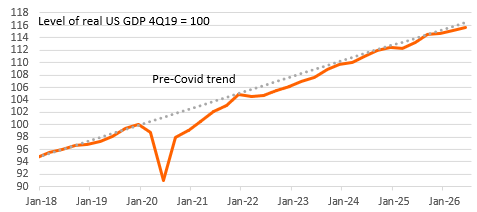
US real GDP levels back in line with the pre-Covid trend
Details highlight strong domestic demand
That said, the GDP details look better than the headline suggests. There was a strong rebound in consumer demand with growth of 3.2% ann. versus 0.5% in Q1, but this did come at the cost of a further decline in the household savings ratio to just 2.7%.
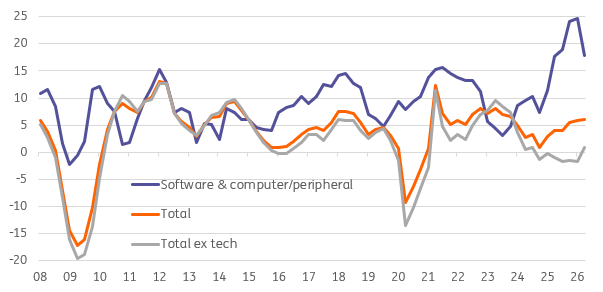
Investment continues to grow nicely, with tech investment still leading the way, although non-tech business investment also showed renewed vigour. Even residential investment made a positive contribution after a torrid run. It was a run-down in inventories (subtracting 0.7ppt from the headline GDP growth rate) and a big jump in imports that proved big drags on growth – both tied to frenzied spending in the tech sector. Government spending fell by 0.8%, which is likely a legacy of the huge swings seen over the previous two quarters linked to the prolonged government shutdown late last year.
Non residential private fixed investment - tech versus non-tech (YoY%)
Inflation data shows improvement
The softer core PCE deflator is encouraging, offering further justification for the Fed’s no-change decision yesterday. We will have major changes to the calculation methodology when the August print is published at the end of September, tied to the measurement of portfolio management fees, computer software and legal services, which could potentially subtract 0.2ppt from the year-on-year inflation rate.
In any case, we expect cooling housing costs and weak wage growth to help keep inflation in check, with tariff refunds being a major boost to corporate cash flow that mitigates cost pressures elsewhere. A de-escalation in the Middle East that yields lower energy prices would also amplify disinflationary trends through the second half of the year. As such, we still think the Federal Reserve’s most likely course of action is a prolonged pause.



Comments
Log in or sign up to join the conversation.