

The May retail sales report showed US consumers continue to spend despite weak sentiment and squeezed household finances. As such, second quarter GDP growth should show a re-acceleration after a couple of subdued quarters
Spending remains resilient
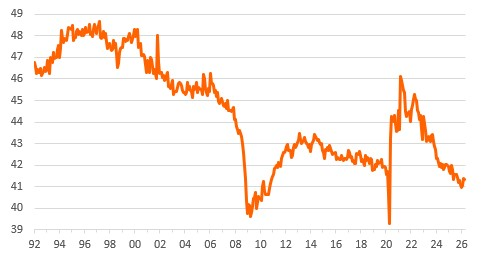
May US retail sales numbers are firmer than anticipated, rising 0.9% month-on-month against the consensus 0.6% forecast. April's growth rate was revised down a tenth of a percentage point to 0.4%, but on balance this is a decent outcome. The control group, which excludes volatile components, such as autos, gasoline, building supplies & eating out, was also better than expected, rising 0.7% versus the 0.4% consensus. That is important as it is a better guide for broader consumer spending trends, given that retail sales account for little more than 41% of total consumer spending today.
Retail sales as a proportion of total consumer spending
The details show that gasoline station sales rose 3.4%, reflecting higher prices, but there was a 2.3% MoM increase in miscellaneous stores after two monthly falls, while non-store retailers (such as Amazon) saw sales rise 1.5% and furniture store sales rose 1% with auto up 1.2%. Clothing and sporting goods reported more modest growth of 0.3%, while electronics sales fell 0.5% and eating/drinking out dropped 0.1%.
K-shaped consumer challenges linger
Remember that these growth numbers are based on nominal dollar values. With consumer price inflation having risen 0.5% MoM in May, it suggests that we will get a respectable real personal spending figure for May of perhaps 0.2%, which leads us to pencil in 2.4% annualised consumer spending growth within the second quarter GDP report with GDP itself rising around 3% annualised. This would be a good outcome considering that consumer confidence is at all-time lows and real household disposable incomes have fallen for three straight months.
For now, households are still prepared to spend, largely funded through saving less and borrowing more. It also likely reflects the K-shaped consumer. High income households, boosted by significant wealth gains, are spending vigorously. Meanwhile, middle and lower income households, who are under more financial strain from high prices and weak income growth, are treading water.



Comments
Log in or sign up to join the conversation.