

French consumers show more optimism in June and signal a greater intention of spending over the summer. However, fears of unemployment should continue to cast a shadow over this picture for some time to come.
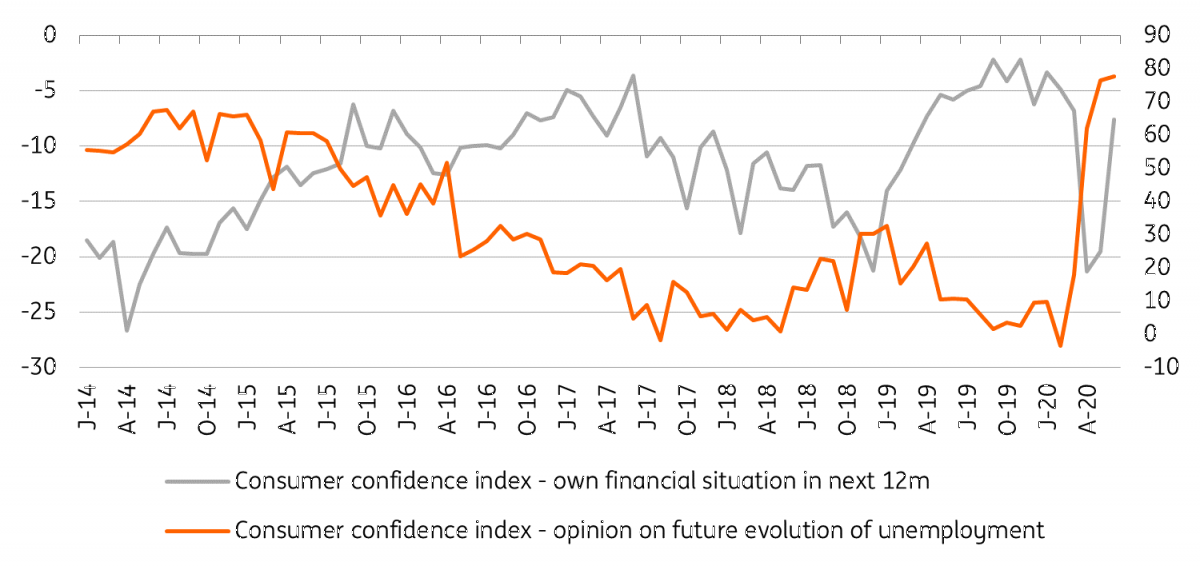
Consumer confidence in France rebounded in June but did not return to its level at the beginning of the year, which was one of the highest in a decade, as confidence had just recovered from strikes and the “yellow vest” crisis. The survey continues to show an improvement in both recent and future savings capacity, which was already the case in May. Households also show more confidence in their future personal financial situation: although they are not as optimistic as they were at the end of 2019, the level of optimism in June is one of the highest in the past decade. As a result, purchasing intentions have also picked up. The only component still preventing household confidence from returning to the levels seen at the beginning of the year is the fear of unemployment. With one in two private employees temporarily unemployed and 1.07 million more people in the unemployed population in two months, the situation on the labor market is exceptional and worrying.
We expect this to continue in the coming months, as while the unemployed population is expected to shrink by about half a million people in the first months of deconfinement, this will still leave the unemployment rate at 10.5% at the beginning of 2021. Indeed, more and more temporary workers will find new jobs, notably thanks to the reopening of the tourism and hotel sector, but they will be partly replaced in the ranks of the unemployed by those who are likely to become victims of their employers going bankrupt and will, therefore, slow down the decline.
Figures published yesterday by DARES showed the start of a decline in the number of unemployed in the A-category of nearly 150,000 in May. This is the first effect of economic unlocking: some temporary workers are back at work (at the same time, the number of short-term unemployed has increased by more than 200,000). The trend should continue, as described above. But once the holidays are over and the euphoria of renewed freedom of movement has worn off, consumers could return to more cautious saving and consumption behaviors after the summer. In any case, today's figures confirm the fact that the rebound in activity in the third quarter will be driven primarily by household consumption. We expect growth to reach 45% quarter-on-quarter annualized in 3Q20, which should allow the 2020 recession to stay below 10%.
French consumers still fear unemployment
INSEE
Comments
Log in or sign up to join the conversation.